Wildlife corridor

A wildlife corridor, also known as a habitat corridor, or (Urban) green corridor,[1] is a designated area that connects wildlife populations that have been separated by human activities or structures, such as development, roads, or land clearings. These corridors enable movement of individuals between populations, which helps to prevent negative effects of inbreeding and reduced genetic diversity, often caused by genetic drift, that can occur in isolated populations.[2] Additionally, corridors support the re-establishment of populations that may have been reduced or wiped out due to random events like fires or disease. They can also mitigate some of the severe impacts of habitat fragmentation,[3] a result of urbanization that divides habitat areas and restricts animal movement. Habitat fragmentation from human development poses an increasing threat to biodiversity, and habitat corridors help to reduce its harmful effects. Corridors aside from their benefit to vulnerable wildlife populations can conflict with communities surrounding them when human-wildlife conflicts are involved.[4] In other communities the benefits of wildlife corridors to wildlife conservation are used and managed by indigenous communities.[5]
Purpose

Habitat corridors can be considered a management tool in areas where the destruction of a natural habitats has severely impacted native species, whether due to human development or natural disasters. When land is fragmented, wildlife populations may become unstable or isolated from larger populations.[6] These management tools are used by ecologists, biologists, indigenous tribes, and other concerned parties that oversee wildlife populations. Corridors help reconnect these fragmented populations and reduce negative population fluctuations by supporting these key aspects that stabilize populations:[7]
- Colonization: Animals can move and occupy new areas when food sources or other natural resources are scarce in their primary habitat.
- Migration: Species that relocate seasonally can do so more safely and effectively without interference from human development barriers.
- Interbreeding: Animals can find new mates in neighboring regions, increasing genetic diversity.
- Tribes: Indigenous groups use wildlife corridors as an effective management strategy to sustain their physical and spiritual needs.[5]
Daniel Rosenberg et al.[8] were among the first to define the concept of wildlife corridors, developing a model that emphasized the corridors' role in facilitating movement unrestricted by the end of native vegetation or intermediate target patches of habitat.[9]

Wildlife corridors also have significant indirect effects on plant populations by increasing pollen and seed dispersal through animals movement, of various species between isolated habitat patches.[10] Corridors must be large enough to support minimum critical populations, reduce migration barriers, and maximize connectivity between populations.[11]
Wildlife corridors may also include aquatic habitats often referred to as riparian ribbons,[12] and are typically found in the form of rivers and streams. Terrestrial corridors take the form of wooded strips connecting forested areas or an urban hedgerows.[11] Additionally, these corridors contribute to climate change mitigation by enhancing the land’s capacity for carbon sequestration.[13]
Human relations
Wildlife corridors can connect into federal, state, private, and tribal land which can influence the opposition or acceptance of including wildlife corridors. The development of man made structures and expansion into natural areas can have an impact on both human and wildlife.[14] Although expressions such as "freedom to roam" promote the idea of wildlife freely moving throughout natural landscapes, this same ideology does not apply to indigenous peoples.[15] The theoretical ideas of landscape connectivity present them in a purely scientific and non-political manner that fails to account for political factors that can impact success within wildlife corridors and restorative ecological practices.[15][16] Attempts to restore habitat over time require support from the local communities that surround the habitat area, oftentimes these communities are indigenous, that a restoration project is being placed around.[17]
Indigenous knowledge of ecological landscape features across history is usually substituted with European explorers' of landscape ecology recollections when developing widescale corridor plans and within the broader ecological field.[15][18][14] As such there is a distinction in the use of ecological and indigenous knowledge when taking into account where wildlife populations are found, species composition within a community, and even seasonal patterns lengths and changes.[17][19] Widespread efforts that actively involve the input of a variety of political and environmental groups are not always used in ecological restoration efforts. Currently there are some collaborations ongoing between indigenous groups surrounding wildlife corridor habitat such as the Yellowstone to Yukon Conservation Initiative which promote the conversion of previously stolen land into indigenously managed land.[15] The concern regarding land once used and lived upon by indigenous people, which now makes up habitat within wildlife corridors, and developed land that corridors cut across contribute to the Land Back movement.[15]
Managing both terrestrial and aquatic lands can have a positive economic impact on Indigenous groups that continue to rely on wildlife populations for cultural practices, fishing, hunting, etc. in a variety of natural landscapes.[14][20] Indigenous groups face financial inequities despite the large benefits of conservation efforts; this if the result of a lack of consideration placed on how wildlife corridors can impact local communities.[14] The overlap of wildlife, specifically larger predator species, poses a physical danger to local communities.[21] Economic revenue for local groups nearby or within heavily forested areas poses a threat to human property, crops, and livestock with higher chances of wildlife encounters; fisheries can also be negatively impacted by wilderness areas.[21] Many indigenous tribes manage wildlife populations within tribal lands that are legally recognized by governments, yet these tribes lack the finances to effectively manage large swathes of habitat.[5] The Tribal Wildlife Corridors Act would allow indigenous groups across the U.S. to implement wildlife corridors with both the finances and cooperation of neighboring governmental allies to help manage tribal lands.[5]
Users
Most species can be categorized into one of two groups: passage users and corridor dwellers.
Passage users occupy corridors for brief periods. These animals use corridors for such events as seasonal migration, juvenile dispersal or moving between different parts of a large home range. Large herbivores, medium to large carnivores, and migratory species are typical passage users.[22] In the context of urban green corridors, human populations similarly act as passage users.[23]
Corridor dwellers, on the other hand, can occupy a corridor for several years. Species such as plants, reptiles, amphibians, birds, insects, and small mammals may spend their entire lives in linear habitats. In such cases, the corridor must provide enough resources to support such species.[22]
Types
Habitat corridors can be categorized based on their width, with wider corridors generally supporting greater wildlife use.[24] However, the overall effectiveness of a corridor depends more on its design that its width.[11] The following are three main categories of corridor widths:
- Regional – (>500 metres (1,600 ft) wide); connect major ecological gradients such as migratory pathways.
- Sub-regional – (>300 metres (980 ft) wide); connect larger vegetated landscape features such as ridge lines and valley floors.
- Local – (some <50 metres (160 ft)); connect remnant patches of gullies, wetlands, ridge lines, etc.
Habitat corridors can also be classified based on their continuity. Continuous corridors are uninterrupted strips of habitat, while "stepping stone" corridors consist of small, separate patches of suitable habitat. However, stepping-stone corridors are more vulnerable to edge effects, which can reduce their effectiveness.

Corridors can also take the form of wildlife crossings, such an underpasses or overpasses that allow animals to cross man-made structures like roads, helping to reduce human-wildlife conflict, such as roadkill. Observations that underpasses tend to be more effective than overpasses, as many animals are too timid to cross over a bridge in front of traffic and prefer the cover of an underpass.[25]
Within cities, the concept of wildlife corridors can be referred to as urban green corridors. They connect major urban green (and also blue) spaces within city limits.[26]
.jpg)
Urban green corridor
Urban green corridors are a subset of wildlife corridors that function as nature-based solutions for climate adaptation within built-up areas. They typically consist of linear or semi-linear green spaces that connect major green areas within a city, including public parks, private green spaces, tree-lined streets, and other vegetated areas and are implemented at the city scale[27] balancing the relationship between ecological protection and urban development.[28]
Urban green corridors are ecological connectors rather than purely recreational or scenic spaces.[29] Nevertheless, they also provide multiple environmental, social, and economic benefits, including biodiversity support, climate regulation, and improved human well-being.
These corridors can also be integrated within urban blue infrastructure, such as rivers, canals, and stormwater systems, forming blue-green corridors that further enhances ecosystem services and climate resilience.
Advantages
- Microclimate Regulation: Green corridors influence the microclimate of urban areas by introducing continuous vegetated spaces that extend through cities.[30] These corridors positively contribute to environmental health by reducing local temperatures and improving air pollution, thereby helping to mitigate environmental pollution.[30] These corridors also play an important role in mitigating the urban heat island effect. A street-scale study of a green corridor in Lima, Peru, demonstrated measureable local cooling effects.[31] Similarly, a study conducted in Barcelona, Spain, found that the presence of green corridors was associated with a maximum temperature reduction of up to 0.42°C per census tract.[32]
- Climate Change Adaptation: Urban green corridors contribute to climate change adaptation by enhancing ecological connectivity, supporting biodiversity and moderating urban microclimates.[33] By linking gardens, woodlands, and other green spaces, these corridors help reduce the negative impacts of habitat fragmentation and enable species movement across urban landscapes, which is essential for maintaining ecological resilience under changing climatic conditions.[34] In addition, green corridors can improve urban ventilation by allowing cooler air from less densely built areas to flow into highly urbanized zones, which supports in mitigating the urban heat island effect.[35] Vegetation within these corridors further contributes to cooling through shading and evapotranspiration, which is a process that reduces local temperatures.[36] Furthermore, connected green infrastructure also enhances water retention, making green corridors an important flood prevention measure, which supports adaptation strategies by helping cities manage increasingly intense rainfall events under climate change.[37]
- Biodiversity and species abundance: The presence of green corridors contributes to the presence of rare species, highlighting their role in promoting urban biodiversity by allowing less common species to colonize cities. In addition, green corridors and their connected green areas also support the presence of common species.[38][39]
- Health Impact: Green corridors can have positive impacts on the health of urban residents. A study illustrates that increased exposure to green corridors could prevent 178 premature deaths per year among adult residents. They express this as 13 deaths prevented per 100,000 inhabitants per year.[40] In addition, another study assessed the mental health benefits of implementing the green corridors and reported a significant reduction in self-perceived poor mental health cases (14%), visits to mental health specialists (13%), and usage of antidepressants (13%) and tranquilizers/sedatives (8%), resulting in notable annual cost savings in mental health care.[41]
- Social benefits: Green corridors have shown to improve overall societal well-being and strengthen social cohesion among citizens.[42] They enhance people’s connection to nature and provide accessible spaces for recreation and relaxation, which contribute to improved physical and mental health. These social benefits align with Sustainable Development Goal 11 by promoting inclusive access to green spaces in urban environments.[43]
- Economic benefits: Urban green corridors provide economic advantages, including the creation of green jobs in planning, construction, restoration, and management of green infrastructure.[44] They can also support local economies by promoting tourism and enhancing the attractiveness of urban areas.[45]
Disadvantages
Like other urban greening strategies, green corridors encounter several barriers, notably technical, financial, political, social, and regulatory factors.[46] One key challenge is that the planning of a green corridor requires strong scientific grounding, as its biodiversity is closely dependent on the ecological quality and land use of adjoining green spaces.[47] A lack of such understanding prior to implementation can result in ineffective or poorly functioning systems; for example, green corridors may unintentionally increase exposure to allergenic pollen and exacerbate allergy symptoms.[48] In addition, it is crucial to note that green corridors, as a form of urban green infrastructure, may require increasing irrigation during periods of rainfall deficit, particularly under climate change; therefore, regional water availability and drought risk should be evaluated before implementing this approach.[49]
In rapidly growing urban areas, prioritising wildlife and green spaces becomes increasingly difficult due to property ownership constraints[50] and community resistance, particularly related to safety concerns. One study found that 58% of users perceive tall grasses as potential habitats for dangerous insects.[47] Additionally, authorities may view green corridors as land that does not directly contribute to economic growth. This perception is reinforced by the fragmentation of green spaces resulting from suburban development, including the construction of local factories and increasing demand for residential areas.[51]
Finally, the global body of research on urban green corridors remains limited, indicating a need for further empirical studies to better understand their design, functioning, and long-term impacts.[52]
Monitoring use
.jpg)
Researchers use mark-recapture techniques and hair snares to assess genetic flow and observe how wildlife utilizes corridors.[53] Marking and recapturing animals helps track individual movement.[47]
Genetic testing is also used to evaluate migration and mating patterns. By analyzing gene flow within a population, researchers can better understand the long- term role of corridors in migration and genetic diversity.[47]
Design
Wildlife corridors are most effective when designed with the ecology of their target species in mind. Factors such as seasonal movement, avoidance behavior, dispersal patterns, and specific habitat requirements must also be considered.[54]
Corridors are more successful when they include some degree of randomness or asymmetry and are oriented perpendicular to habitat patches.[55][11] However, they are vulnerable to edge effects; habitat quality along the edge of a habitat fragment is often much lower than in core habitat areas.
While wildlife corridors are essential for large species that require expensive ranges; they are also crucial for smaller animals and plants, acting as ecological connectors to move between isolated habitat fragments. [56] Additionally wildlife corridors are designed to reduce human-wildlife conflicts.[57][58]
Examples
In Alberta, Canada, overpasses have been constructed to keep animals off the Trans-Canada Highway, which passes through Banff National Park. The tops of the bridges are planted with trees and native grasses, with fences present on either side to help guide animals.[59]

In Southern California, 15 underpasses and drainage culverts were observed to see how many animals used them as corridors. They proved to be especially effective on wide-ranging species such as carnivores, mule deer, small mammals, and reptiles, even though the corridors were not intended specifically for animals. Researchers also learned that factors such as surrounding habitat, underpass dimensions, and human activity played a role in the frequency of usage.[30]
In South Carolina, five remnant areas of land were monitored; one was put in the center with the other four surrounding it. Then, a corridor was put between one of the remnants and the center. Butterflies that were placed in the center habitat were two to four times more likely to move to the connected remnant rather than the disconnected ones. Furthermore, male holly plants were placed in the center region, and female holly plants in the connected region increased by 70 percent in seed production compared to those plants in the disconnected region. Plant seed dispersal through bird droppings was noted to be the dispersal method with the largest increase within the corridor-connected patch of land.[60]
In Florida June 2021, the Florida Wildlife Corridor act was passed, securing a statewide network of nearly 18 million acres of connected ecosystems.[61] Starting from the Alabama state line, through the Florida panhandle and all the way to the Florida Keys. Containing state parks, national forests, and wildlife management areas supporting wildlife and human occupation.
The positive effects on the rates of transfer and interbreeding in vole populations. A control population in which voles were confined to their core habitat with no corridor was compared to a treatment population in their core habitat with passages that they use to move to other regions. Females typically stayed and mated within their founder population, but the rate of transfer through corridors in the males was very high.[62]
In 2001, a wolf corridor was restored through a golf course in Jasper National Park, Alberta, which successfully altered wildlife behavior and showed frequent use by the wolf population.[63][64]

Major wildlife corridors
- The Paséo Pantera (also known as the Mesoamerican Biological Corridor or Paséo del Jaguar)[65]
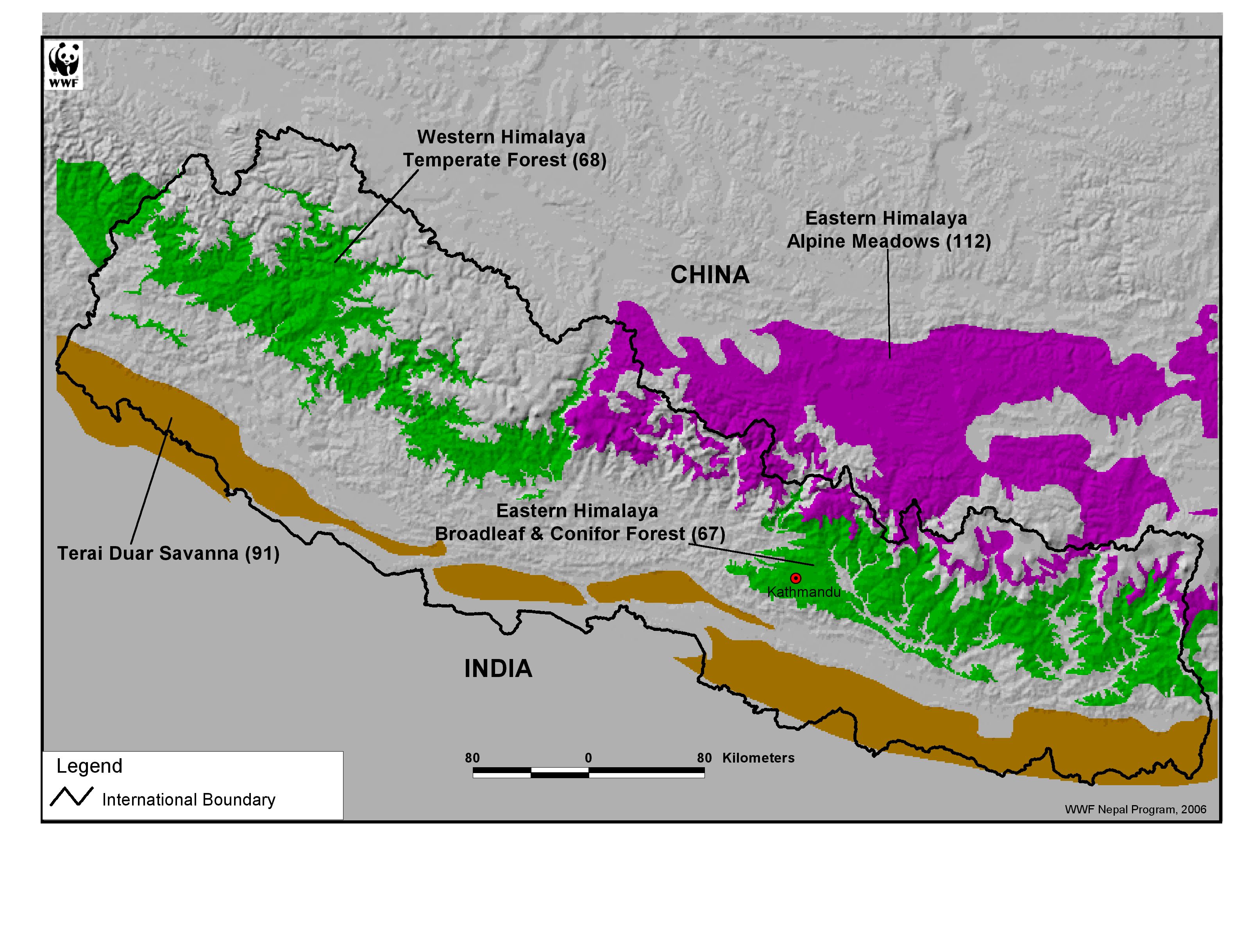
- The Eastern Himalayan Corridor[66]
- China-Russia Tiger Corridor[67]
- Tandai Tiger Corridor[68]
- The European Green Belt[69]
- The Siju-Rewak Corridor, located in the Garo Hills of India, protects an important population of elephants (thought to be approximately 20% of all the elephants that survive in the country). This corridor project links together the Siju Wildlife Sanctuary and the Rewak Reserve Forest in Meghalaya State, close to the India-Bangladesh border. This area lies within the meeting place of the Himalayan Mountain Range and the Indian Peninsula and contains at least 139 other species of mammals, including tigers, clouded leopards and the Himalayan black bear.[70]
- The Ecologische hoofdstructuur is a network of corridors and habitats created for wildlife in the Netherlands[71]
- The long Kanha-Pench elevated corridor on NH 44.[72]
- Two elephant pas16 kilometres (9.9 mi)ses and two minor bridges on NH 54 in Assam's Lumding Reserve Forest.[73][74]
- Three elephant underpasses, each with 6 metres (20 ft) of vertical clearance on NH 72 and NH 58 in Uttarakhand, India.[75]
- Terai Arc Landscapes, Lower Himalayan Region.[76]
Major Urban green corridors
- Wuhan central‑city green corridors, China[77]
- Tekirdağ green corridor network, Turkey [78]
- Passeig de Sant Joan green corridor, Barcelona (Spain)[79]
- Curitiba green corridors, Brazil[80]
- Madrid Río (Manzanares river)[81]
Evaluation
Some species are more likely to utilize habitat corridors depending on migration and mating patterns, making it essential that corridor design is targeted towards a specific species.[82][83]
Due to space constraints, buffers are not usually implemented.[8] Without a buffer zone, corridors can become affected by disturbances from human land use change. There is a possibility that corridors could aid in the spread of invasive species, threatening native populations.[84]
See also
- Colored walls or corridors
- Aquatic organism passage
- Emerald network
- Wildlife crossing, green crossing
- Area and links
Further reading
- Beier, Paul; Noss, Reed F. (December 1998). "Do Habitat Corridors Provide Connectivity?". Conservation Biology. 12 (6): 1241–1252. Bibcode:1998ConBi..12.1241B. doi:10.1111/j.1523-1739.1998.98036.x. S2CID 16770640.
- Bennett, A.F. 1999. Linkages in the Landscape: The Role of Corridors and Connectivity in Wildlife Conservation. The World Conservation Union, Gland, Switzerland.
- De Chant, T. 2007. A Future of Conservation. Northfield Habitat Corridors Community Plan, Northfield, Minnesota.[85]
- Department of Environment and Conservation (DEC). 2004. Wildlife Corridors. DEC, New South Wales.
- Dole, J.W., Ng, S.J., Sauvajot, R.M. 2003. Use of Highway Undercrossings by Wildlife in Southern California. Biology Conservation, 115 (3):499-507.[30]
- Foreman, Dave. Rewilding North America: a Vision for Conservation in the 21st Century. Washington: Island, 2004.
- Fleury, A.M.; Brown, R.D. (1997). "A Framework for the Design of Wildlife Conservation Corridors with Specific Application to Southwestern Ontario". Landscape and Urban Planning. 37 (8): 163–186. Bibcode:1997LUrbP..37..163F. doi:10.1016/S0169-2046(97)80002-3. hdl:10214/4617.
- M., S. 2002. Ecology: Insects, Pollen, Seeds, Travel Wildlife Corridors. Science News, 162 (10):269.
- Mech, S.G.; Hallett, J.G. (2001). "Evaluating the Effectiveness of Corridors: a Genetic Approach". Conservation Biology. 15 (2): 467–474. Bibcode:2001ConBi..15..467M. doi:10.1046/j.1523-1739.2001.015002467.x. S2CID 84520743.
- Roach, J. 2006. First Evidence that Wildlife Corridors Boost Biodiversity, Study Says. National Geographic Society, Washington, D.C.[86]
- Rosenberg, D.K.; Noon, B.R.; Meslow, E.C. (1997). "Biological Corridors: Form, Function, and Efficacy". BioScience. 47 (10): 667–687. doi:10.2307/1313208. JSTOR 1313208.
- Simberloff, D.; Farr, J.A.; Cox, J.; Mehlman, D.W. (1992). "Movement Corridors: Conservation Bargains or Poor Investments?". Conservation Biology. 6 (4): 492–504. Bibcode:1992ConBi...6..493S. doi:10.1046/j.1523-1739.1992.06040493.x.
- Sutcliffe, O.L.; Thomas, C.D. (1996). "Open Corridors Appear to Facilitate Dispersal by Ringlet Butterflies (Aphantopus hyperantus) between Woodland Clearings". Conservation Biology. 10 (5): 1359–1365. Bibcode:1996ConBi..10.1359S. doi:10.1046/j.1523-1739.1996.10051359.x.
- Tewksbury, J.J.; Levey, D.J.; Haddad, N.M.; Sargent, S.; Orrock, J.L.; Weldon, A.; Danielson, B.J.; Brinkerhoff, J.; Damschen, E.I.; Townsend, P. (2002). "Corridors Affect Plants, Animals, and Their Interactions in Fragmented Landscapes". PNAS. 99 (20): 12923–12926. Bibcode:2002PNAS...9912923T. doi:10.1073/pnas.202242699. PMC 130561. PMID 12239344.
References
- ^ "Planning Portal – Glossary: G". Archived from the original on 1 December 2008.
- ^ Barbosa, S.; Mestre, F.; White, T. A.; Paupério, J.; Alves, P. C.; Searle, J. B. (2018). "University of Michigan Dearborn Library Catalog - Database Authentication Screen". Molecular Ecology. 27 (17): 3452–3465. Bibcode:2018MolEc..27.3452B. doi:10.1111/mec.14806. PMID 30030869. Retrieved 4 October 2024.
- ^ Bond, M. (2003). "Principles of Wildlife Corridor Design. Center for Biological Diversity" (PDF). Biologivaldiversity.org. Archived (PDF) from the original on 6 June 2022. Retrieved 11 August 2015.
- ^ Matejcek, Astrid; Verne, Julia (1 August 2021). "Restoration-as-development? Contesting Aspirational Politics Regarding the Restoration of Wildlife Corridors in the Kilombero Valley, Tanzania". The European Journal of Development Research. 33 (4): 1022–1043. doi:10.1057/s41287-021-00403-2. hdl:10419/287555. ISSN 1743-9728.
- ^ a b c d Fallon, Cait (23 August 2021). ""Tribal Wildlife Corridors Act Bolsters Wildlife Conservation on Tribal Lands"". National Wildlife Federation. Retrieved 26 October 2024.
- ^ Beier, Paul; Majka, Daniel R.; Spencer, Wayne D. (August 2008). ""Forks in the Road: Choices in Procedures for Designing Wildland Linkages"". Conservation Biology. 22 (4): 836–851. Bibcode:2008ConBi..22..836B. doi:10.1111/j.1523-1739.2008.00942.x. ISSN 0888-8892. PMID 18544090.
- ^ Barbosa, Soraia; Mestre, Frederico; White, Thomas A.; Paupério, Joana; Alves, Paulo C.; Searle, Jeremy B. (September 2018). ""Integrative approaches to guide conservation decisions: Using genomics to define conservation units and functional corridors"". Molecular Ecology. 27 (17): 3452–3465. Bibcode:2018MolEc..27.3452B. doi:10.1111/mec.14806. ISSN 0962-1083. PMID 30030869.
- ^ a b Rosenberg, Daniel K.; Noon, Barry R.; Meslow, E. Charles (1995). "Towards a definition of wildlife corridor". Integrating People and Wildlife for a Sustainable Future: 436–9. Archived from the original on 31 March 2022. Retrieved 14 September 2018.
- ^ "What is a landscape?". Archived from the original on 13 August 2020.
- ^ Tewksbury, Joshua (1 October 2002). "Corridors affect plants, animals, and their interactions in fragmented landscapes". Proceedings of the National Academy of Sciences of the United States of America. 99 (20): 12923–6. Bibcode:2002PNAS...9912923T. doi:10.1073/pnas.202242699. PMC 130561. PMID 12239344.
- ^ a b c d Fleury, Allison M.; Brown, Robert D. (1997). "A framework for the design of wildlife conservation corridors With specific application to southwestern Ontario". Landscape and Urban Planning. 37 (3–4). Elsevier: 163–186. Bibcode:1997LUrbP..37..163F. doi:10.1016/S0169-2046(97)80002-3. hdl:10214/4617. Archived from the original on 28 October 2022. Retrieved 28 October 2022.
- ^ Repayment", "Debt (30 August 2021). "The Riparian Ribbon". ArcGIS StoryMaps. Archived from the original on 20 May 2023. Retrieved 20 May 2023.
- ^ "Chapter 8: Water Cycle Changes". www.ipcc.ch. Retrieved 5 February 2026.
- ^ a b c d Gurney, Georgina G.; Darling, Emily S.; Ahmadia, Gabby N.; Agostini, Vera N.; Ban, Natalie C.; Blythe, Jessica; Claudet, Joachim; Epstein, Graham; Estradivari; Himes-Cornell, Amber; Jonas, Harry D.; Armitage, Derek; Campbell, Stuart J.; Cox, Courtney; Friedman, Whitney R. (26 July 2021). "Biodiversity needs every tool in the box: use OECMs". Nature. 595 (7869): 646–649. Bibcode:2021Natur.595..646G. doi:10.1038/d41586-021-02041-4. PMID 34312552.
- ^ a b c d e Brown, Nicholas Anthony (4 March 2022). "Continental Land Back: Managing Mobilities and Enacting Relationalities in Indigenous Landscapes". Mobilities. 17 (2): 252–268. doi:10.1080/17450101.2021.2012503. ISSN 1745-0101 – via Taylor & Francis Online.
- ^ Kelly, Jennifer Rebecca (October–December 2019). "A Sociocultural Perspective: Human Conflict with Jaguars and Pumas in Costa Rica". Conservation and Society. 17 (4): 355. doi:10.4103/cs.cs_17_141. ISSN 0972-4923.
- ^ a b Haq, Shiekh Marifatul; Pieroni, Andrea; Bussmann, Rainer W.; Abd-ElGawad, Ahmed M.; El-Ansary, Hosam O. (10 August 2023). "Integrating traditional ecological knowledge into habitat restoration: implications for meeting forest restoration challenges". Journal of Ethnobiology and Ethnomedicine. 19 (1): 33. doi:10.1186/s13002-023-00606-3. ISSN 1746-4269. PMC 10413632. PMID 37559120.
- ^ Gordon (Iñupiaq), Heather Sauyaq Jean; Ross, J. Ashleigh; Cheryl Bauer-Armstrong; Moreno, Maria; Byington (Choctaw), Rachel; Bowman (Lunaape/Mohican), Nicole (1 February 2023). "Integrating Indigenous Traditional Ecological Knowledge of land into land management through Indigenous-academic partnerships". Land Use Policy. 125 106469. Bibcode:2023LUPol.12506469G. doi:10.1016/j.landusepol.2022.106469. ISSN 0264-8377.
- ^ Klein, Julia A.; Hopping, Kelly A.; Yeh, Emily T.; Nyima, Yonten; Boone, Randall B.; Galvin, Kathleen A. (September 2014). "Unexpected climate impacts on the Tibetan Plateau: Local and scientific knowledge in findings of delayed summer". Global Environmental Change. 28: 141–152. Bibcode:2014GEC....28..141K. doi:10.1016/j.gloenvcha.2014.03.007.
- ^ "The Economic, Socio-Cultural, and Ecological Benefits of Indigenous Protected and Conserved Areas in British Columbia" (PDF). Yellowstone to Yukon Conservation Initiative. May 2023. Retrieved 9 December 2024.
- ^ a b Kelly, Jennifer Rebecca (December 2019). "A Sociocultural Perspective: Human Conflict with Jaguars and Pumas in Costa Rica". Conservation and Society. 17 (4): 355. doi:10.4103/cs.cs_17_141. ISSN 0972-4923.
- ^ a b Beier, P.; Loe, S. (1992). "In My Experience: A Checklist for Evaluating Impacts to Wildlife Movement Corridors". Wildlife Society Bulletin. 20 (4): 434–440.
- ^ Alonso Monasterio, M.; Alonso Monasterio, P.; Viñals, María José (1 May 2015). "Actitudes y comportamientos de los Natusers en los corredores verdes urbanos: retos y oportunidades. Caso de estudio del Parc Fluvial del Túria (España)". Boletín de la Asociación de Geógrafos Españoles. doi:10.21138/bage.1866 (inactive 8 February 2026). ISSN 2605-3322.
{{cite journal}}: CS1 maint: DOI inactive as of February 2026 (link) - ^ "Wildlife, forest, and forestry. Principles of managing forests for biological diversity". Biological Conservation. 63 (3): 271. 1993. doi:10.1016/0006-3207(93)90732-g. ISSN 0006-3207.
- ^ Ng, Sandra J.; Dole, Jim W.; Sauvajot, Raymond M.; Riley, Seth P.D; Valone, Thomas J. (2004). "Use of highway undercrossings by wildlife in southern California". Biological Conservation. 115 (3): 499–507. Bibcode:2004BCons.115..499N. doi:10.1016/S0006-3207(03)00166-6. Archived from the original on 31 October 2022. Retrieved 31 October 2022.
- ^ Tan, Kiat W. (2006). "A greenway network for Singapore". Landscape and Urban Planning. 76 (1–4): 45–66. Bibcode:2006LUrbP..76...45T. doi:10.1016/J.LANDURBPLAN.2004.09.040. S2CID 1363047.
- ^ Aman, Aini; Rafiq, Muhammad; Dastane, Omkar; Sabir, Asrar Ahmed (30 August 2022). "Green corridor: A critical perspective and development of research agenda". Frontiers in Environmental Science. 10 982473. Bibcode:2022FrEnS..1082473A. doi:10.3389/fenvs.2022.982473. ISSN 2296-665X.
- ^ Peng, Jian; Zhao, Huijuan; Liu, Yanxu (1 February 2017). "Urban ecological corridors construction: A review". Acta Ecologica Sinica. 37 (1): 23–30. Bibcode:2017AcEcS..37...23P. doi:10.1016/j.chnaes.2016.12.002. ISSN 1872-2032.
- ^ Zhang, Zhenzhen; Meerow, Sara; Newell, Joshua P.; Lindquist, Mark (1 February 2019). "Enhancing landscape connectivity through multifunctional green infrastructure corridor modeling and design". Urban Forestry & Urban Greening. 38: 305–317. Bibcode:2019UFUG...38..305Z. doi:10.1016/j.ufug.2018.10.014. ISSN 1618-8667.
- ^ a b c d Stipanović, Viktorija Brndevska; Čukanović, Jelena; Orlović, Saša; Atanasovska, Jasminka Rizovska; Andonovski, Vlatko; Simovski, Bojan (1 December 2022). "Linear Greenery in Urban Areas and Green Corridors Case Study: Blvd. Bosnia and Herzegovina and Blvd. Hristijan Todorovski Karposh, Skopje, North Macedonia". Contemporary Agriculture. 71 (3–4): 212–221. doi:10.2478/contagri-2022-0028. ISSN 2466-4774. Cite error: The named reference ":0" was defined multiple times with different content (see the help page).
- ^ Battisti, Alessandra; Piselli, Cristina; Strauss, Eric J; Dobjani, Etleva; Kristo, Saimir, eds. (2024). "Greening Our Cities: Sustainable Urbanism for a Greener Future". Advances in Science, Technology & Innovation. doi:10.1007/978-3-031-49495-6. ISBN 978-3-031-49494-9. ISSN 2522-8714.
- ^ Iungman, Tamara; Caballé, Sergi Ventura; Segura-Barrero, Ricard; Cirach, Marta; Mueller, Natalie; Daher, Carolyn; Villalba, Gara; Barboza, Evelise Pereira; Nieuwenhuijsen, Mark (1 February 2025). "Co-benefits of nature-based solutions: A health impact assessment of the Barcelona Green Corridor (Eixos Verds) plan". Environment International. 196 109313. Bibcode:2025EnInt.19609313I. doi:10.1016/j.envint.2025.109313. ISSN 0160-4120. PMC 11839897. PMID 39919507.
- ^ "Green spaces and corridors in urban areas". AdriAdapt. 22 January 2022. Retrieved 2 February 2026.
- ^ "Green spaces and corridors in urban areas". climate-adapt.eea.europa.eu. Retrieved 2 February 2026.
- ^ "Green spaces and corridors in urban areas". AdriAdapt. 22 January 2022. Retrieved 2 February 2026.
- ^ Lin, Haoqiu; Li, Xun (4 July 2025). "The Role of Urban Green Spaces in Mitigating the Urban Heat Island Effect: A Systematic Review from the Perspective of Types and Mechanisms". Sustainability. 17 (13): 6132. Bibcode:2025Sust...17.6132L. doi:10.3390/su17136132. ISSN 2071-1050.
- ^ "Green spaces and corridors in urban areas | PHUSICOS". phusicos.brgm.fr. Retrieved 2 February 2026.
- ^ Vergnes, Alan; Viol, Isabelle Le; Clergeau, Philippe (1 January 2012). "Green corridors in urban landscapes affect the arthropod communities of domestic gardens". Biological Conservation. 145 (1): 171–178. Bibcode:2012BCons.145..171V. doi:10.1016/j.biocon.2011.11.002. ISSN 0006-3207.
- ^ Beaugeard, Erika; Brischoux, François; Angelier, Frédéric (1 June 2021). "Green infrastructures and ecological corridors shape avian biodiversity in a small French city". Urban Ecosystems. 24 (3): 549–560. Bibcode:2021UrbEc..24..549B. doi:10.1007/s11252-020-01062-7. ISSN 1573-1642.
- ^ Iungman, Tamara; Caballé, Sergi Ventura; Segura-Barrero, Ricard; Cirach, Marta; Mueller, Natalie; Daher, Carolyn; Villalba, Gara; Barboza, Evelise Pereira; Nieuwenhuijsen, Mark (1 February 2025). "Co-benefits of nature-based solutions: A health impact assessment of the Barcelona Green Corridor (Eixos Verds) plan". Environment International. 196 109313. Bibcode:2025EnInt.19609313I. doi:10.1016/j.envint.2025.109313. ISSN 0160-4120. PMC 11839897. PMID 39919507.
- ^ Vidal Yañez, Diana; Pereira Barboza, Evelise; Cirach, Marta; Daher, Carolyn; Nieuwenhuijsen, Mark; Mueller, Natalie (1 April 2023). "An urban green space intervention with benefits for mental health: A health impact assessment of the Barcelona "Eixos Verds" Plan". Environment International. 174 107880. Bibcode:2023EnInt.17407880V. doi:10.1016/j.envint.2023.107880. ISSN 0160-4120. PMID 37002012.
- ^ Mancilla, Diego; Robledo, Sayny; Esenarro, Doris; Raymundo, Vanessa; Vega, Violeta (6 July 2024). "Green Corridors and Social Connectivity with a Sustainable Approach in the City of Cuzco in Peru". Urban Science. 8 (3): 79. Bibcode:2024UrbSc...8...79M. doi:10.3390/urbansci8030079. ISSN 2413-8851.
- ^ Peng, Jian; Zhao, Huijuan; Liu, Yanxu (1 February 2017). "Urban ecological corridors construction: A review". Acta Ecologica Sinica. 37 (1): 23–30. Bibcode:2017AcEcS..37...23P. doi:10.1016/j.chnaes.2016.12.002. ISSN 1872-2032.
- ^ Chausson, Alexandre; Smith, Alison; Reger, Ryne Zen-Zhi; O’Callaghan, Brian; Clement, Yadira Mori; Zapata, Florencia; Seddon, Nathalie (28 October 2024). "Harnessing nature-based solutions for economic recovery: A systematic review". PLOS Climate. 3 (10): e0000281. doi:10.1371/journal.pclm.0000281. ISSN 2767-3200.
{{cite journal}}: CS1 maint: article number as page number (link) - ^ Zhang, Yanyan; Wang, Meng; Li, Junyi; Chang, Jianxia; Lu, Huan (16 December 2022). "Do Greener Urban Streets Provide Better Emotional Experiences? An Experimental Study on Chinese Tourists". International Journal of Environmental Research and Public Health. 19 (24): 16918. doi:10.3390/ijerph192416918. ISSN 1660-4601. PMC 9779198. PMID 36554800.
{{cite journal}}: CS1 maint: article number as page number (link) - ^ Chau, Hing-Wah; Abuseif, Majed; Geng, Shiran; Jamei, Elmira (29 April 2025). "Key Barriers and Challenges to Green Infrastructure Implementation: Policy Insights from the Melbourne Case". Land. 14 (5): 961. Bibcode:2025Land...14..961C. doi:10.3390/land14050961. ISSN 2073-445X.
- ^ a b c d Briffett, Sodhi, Yuen, Kong, Clive, Navjot, Belinda, Lily (2004). "Green corridors and the quality of urban life in Singapore". Proceedings 4th International Urban Wildlife Symposium.
{{cite journal}}: CS1 maint: multiple names: authors list (link) Cite error: The named reference ":1" was defined multiple times with different content (see the help page). - ^ Stevanovic, Katarina; Sinkkonen, Aki; Pawankar, Ruby; Zuberbier, Torsten (1 February 2025). "Urban Greening and Pollen Allergy: Balancing Health and Environmental Sustainability". The Journal of Allergy and Clinical Immunology: In Practice. 13 (2): 275–279. doi:10.1016/j.jaip.2024.12.017. ISSN 2213-2198. PMID 39710225.
- ^ Cheng, Haojie; Park, Chae Yeon; Cho, Mingyun; Park, Chan (1 October 2023). "Water requirement of Urban Green Infrastructure under climate change". Science of the Total Environment. 893 164887. Bibcode:2023ScTEn.89364887C. doi:10.1016/j.scitotenv.2023.164887. ISSN 0048-9697. PMID 37329911.
- ^ Pauleit, Stephan; Hansen, Rieke; Rall, Emily Lorance; Zölch, Teresa; Andersson, Erik; Luz, Ana Catarina; Szaraz, Luca; Tosics, Ivan; Vierikko, Kati (28 June 2017), "Urban Landscapes and Green Infrastructure", Oxford Research Encyclopedia of Environmental Science, Oxford University Press, doi:10.1093/acrefore/9780199389414.013.23, ISBN 978-0-19-938941-4, retrieved 2 February 2026
- ^ Wang, Hefei; Pei, Zongping (21 December 2020). "Urban Green Corridors Analysis for a Rapid Urbanization City Exemplified in Gaoyou City, Jiangsu". Forests. 11 (12): 1374. Bibcode:2020Fore...11.1374W. doi:10.3390/f11121374. ISSN 1999-4907.
- ^ Aman, Aini; Rafiq, Muhammad; Dastane, Omkar; Sabir, Asrar Ahmed (30 August 2022). "Green corridor: A critical perspective and development of research agenda". Frontiers in Environmental Science. 10 982473. Bibcode:2022FrEnS..1082473A. doi:10.3389/fenvs.2022.982473. ISSN 2296-665X.
- ^ Dixon, Jeremy D.; Oli, Madan K.; Wooten, Michael C.; Eason, Thomas H.; McCown, J. Walter; Paetkau, David (2006). "Effectiveness of a Regional Corridor in Connecting Two Florida Black Bear Populations". Conservation Biology. 20 (1): 155–162. Bibcode:2006ConBi..20..155D. doi:10.1111/j.1523-1739.2005.00292.x. ISSN 0888-8892. JSTOR 3591161. PMID 16909668. S2CID 15106420.
- ^ Newmark, William D. (1993). "The Role and Design of Wildlife Corridors with Examples from Tanzania". Ambio. 22 (8): 500–504. ISSN 0044-7447. JSTOR 4314138.
- ^ "Designing wildlife corridors". Sciencedaily.com. Archived from the original on 2 November 2022. Retrieved 4 August 2015.
- ^ Benitez-Malvido, Julieta; Arroyo-Rodríguez, Víctor (2008). "Habitat fragmentation, edge effects and biological corridors in tropical ecosystems". Retrieved 2 November 2022.
- ^ Maulana, Rheza (1 April 2023). "Architecture for Wildlife: The Possible Solution to Human-Wildlife Conflicts in Indonesia". IOP Conference Series: Earth and Environmental Science. 1169 (1) 012046. Bibcode:2023E&ES.1169a2046M. doi:10.1088/1755-1315/1169/1/012046.
- ^ Huijser, Marcel P.; Fairbank, Elizabeth R.; Camel-Means, Whisper; Graham, Jonathan; Watson, Vicki; Basting, Pat; Becker, Dale (1 May 2016). "Effectiveness of short sections of wildlife fencing and crossing structures along highways in reducing wildlife–vehicle collisions and providing safe crossing opportunities for large mammals". Biological Conservation. 197: 61–68. Bibcode:2016BCons.197...61H. doi:10.1016/j.biocon.2016.02.002. ISSN 0006-3207.
- ^ Dickie, Gloria (22 July 2022). "As Banff's famed wildlife overpasses turn 20, the world looks to Canada for conservation inspiration". Canadian Geographic. Retrieved 26 February 2024.
- ^ Susan Milius (22 October 2002). "Insects, pollen, seeds travel wildlife corridors". Science News. Archived from the original on 4 November 2022. Retrieved 4 November 2022.
- ^ Realm, Visual. "About The Corridor". Florida Wildlife Corridor Foundation. Retrieved 13 November 2024.
- ^ Aars, Jon; Ims, Rolf A. (1 July 1999). "The Effect of Habitat Corridors on Rates of Transfer and Interbreeding Between Vole Demes". Ecology. 80 (5): 1648. doi:10.1890/0012-9658(1999)080[1648:TEOHCO]2.0.CO;2. ISSN 0012-9658. Archived from the original on 4 November 2022. Retrieved 4 November 2022.
- ^ Shepherd, B; J. Whittington (2006). "Response of wolves to corridor restoration and human use management". Ecology and Society. 11 (2) art1. Bibcode:2006EcSoc..11Tar.1S. doi:10.5751/ES-01813-110201.
- ^ Rosenberg, Daniel K.; Noon, Barry R.; Meslow, E. Charles (November 1997). "Biological Corridors: Form, Function, and Efficacy". BioScience. 47 (10): 677–687. doi:10.2307/1313208. JSTOR 1313208.
- ^ "Paseo Pantera Project". Archived from the original on 9 November 2022. Retrieved 9 November 2022.
- ^ "Map of Nepal". Archived from the original on 12 April 2023.
- ^ "New corridor links Amur tiger habitats in Russia and China". WWF. Archived from the original on 9 November 2022. Retrieved 9 November 2022.
- ^ "Panthera". Panthera.org. Archived from the original on 22 November 2011. Retrieved 4 August 2015.
- ^ "European Green Belt Initiative". Archived from the original on 11 November 2022. Retrieved 9 November 2022.
- ^ "Siju-Rewak Corridor". CONSERVATION CORRIDOR. 2 May 2012. Archived from the original on 9 November 2022. Retrieved 9 November 2022.
- ^ Ecologische Hoofdstructuur
- ^ Gandhi, Divya (7 September 2019). "A wild, wild road". The Hindu. ISSN 0971-751X. Archived from the original on 9 November 2022. Retrieved 17 September 2020.
- ^ "Why This Elevated Stretch On National Highway 44 Is A Hit With Animals In Pench Tiger Reserve". India Infra Hub. 25 February 2020. Archived from the original on 9 November 2022. Retrieved 17 September 2020.
- ^ Singh A.P.; Singh A.K.; Mishra D.K.; Bora P.; Sharma A. (2010). Ensuring safe access to wildlife in Lumding Reserve Forest, Assam, India, Mitigating the impacts of up-gradation of Doboka-Silchar National Highway (NH54E) (PDF). WWF-India. Archived (PDF) from the original on 15 December 2021. Retrieved 17 September 2020.
- ^ Azad, Shivani (18 January 2019). "Elephant underpass in Rajaji hanging for 9 yrs, NGT orders NHAI to deposit Rs 2 cr". The Times of India. Archived from the original on 9 November 2022. Retrieved 9 November 2022.
- ^ Chauhan, Priya (1 April 2021). "26 Important Wildlife Corridors Providing Safe Passage to Species". Planet Custodian. Archived from the original on 23 April 2021. Retrieved 23 April 2021.
- ^ Zhang, Miaomiao; He, Jianhua; Liu, Dianfeng; Huang, Junlong; Yue, Qiaobing; Li, Yajing (2022). "Urban green corridor construction considering daily life circles: A case study of Wuhan city, China". Ecological Engineering. 184 106786. Bibcode:2022EcEng.18406786Z. doi:10.1016/j.ecoleng.2022.106786.
- ^ Ti̇Gen, Meltem GÜNEŞ; öZcan, Osman (27 January 2025). "Sustainable green corridor planning in Tekirdağ, Turkey, using the least-cost path approach". Edelweiss Applied Science and Technology. 9 (2): 276–288. doi:10.55214/25768484.v9i2.4465. ISSN 2576-8484.
- ^ Kotsila, Panagiota; Anguelovski, Isabelle; Baró, Francesc; Langemeyer, Johannes; Sekulova, Filka; JT Connolly, James (2021). "Nature-based solutions as discursive tools and contested practices in urban nature's neoliberalisation processes". Environment and Planning E: Nature and Space. 4 (2): 252–274. Bibcode:2021EnPlE...4..252K. doi:10.1177/2514848620901437. ISSN 2514-8486.
- ^ Lopes, Iran J.C.; Biondi, Daniela; Corte, Ana P.D.; Reis, Allan R.N.; Oliveira, Thiago G.S. (2023). "A methodological framework to create an urban greenway network promoting avian connectivity: A case study of Curitiba City". Urban Forestry & Urban Greening. 87 128050. Bibcode:2023UFUG...8728050L. doi:10.1016/j.ufug.2023.128050.
- ^ Abajo, Lucía López-de; Pérez-Fortes, Ana Patricia; Alberti, Marcos G.; Gálvez, Jaime C.; Ripa, Tomás (21 October 2020). "Sustainability Analysis of the M-30 Madrid Tunnels and Madrid Río after 14 years of Service Life". Applied Sciences. 10 (20): 7368. Bibcode:2020ApSci..10.7368A. doi:10.3390/app10207368. ISSN 2076-3417.
- ^ Fran. "Elephant corridors in Botswana to protect the herds". Your African Safari. Archived from the original on 4 November 2022. Retrieved 4 August 2015.
- ^ Green, Siân E.; Davidson, Zeke; Kaaria, Timothy; Doncaster, C. Patrick (December 2018). "Do wildlife corridors link or extend habitat? Insights from elephant use of a Kenyan wildlife corridor". African Journal of Ecology. 56 (4): 860–871. Bibcode:2018AfJEc..56..860G. doi:10.1111/aje.12541.
- ^ Beier, Paul; Noss, Reed F. (December 1998). "Do Habitat Corridors Provide Connectivity?". Conservation Biology. 12 (6): 1241–1252. Bibcode:1998ConBi..12.1241B. doi:10.1111/j.1523-1739.1998.98036.x. S2CID 16770640. Archived from the original on 13 August 2023. Retrieved 14 May 2022.
- ^ "Northfield Habitat Corridors". De-chant.com. Archived from the original on 3 August 2007. Retrieved 11 August 2015.
- ^ "First Evidence That Wildlife Corridors Boost Biodiversity, Study Says". News.nationalgeographic.com. 28 October 2010. Archived from the original on 21 February 2015. Retrieved 11 August 2015.
External links

- Defragmentation in Belgium (Flanders) - Connecting nature, connecting people. Accessed: 22 January 2009
- Wildlife Corridors Project Regeneration
- Wildlife passages - De-Fragmentation in the Netherlands - How to evaluate their effectiveness? Accessed: 22 January 2009
- CorridorDesign.org - GIS tools for designing wildlife corridors Accessed: 9 March 2010
- ConservationCorridor.org - information, tools and links to connect the science of landscape corridors to conservation in practice. Accessed: 14 September 2012