Kabardia
Grand Principality of Great Kabarda Къэбэрдей Пщыгъуэ (Kabardian) | |||||||||||
|---|---|---|---|---|---|---|---|---|---|---|---|
| c. 1453–c. 1825 | |||||||||||
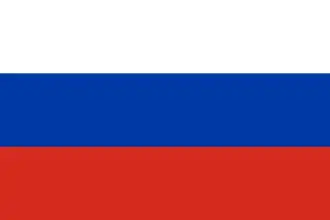
  Flag
 Coat of arms
| |||||||||||
.jpg) Map of Kabardia in c. 1880s in yellow | |||||||||||
| Capital | Various settlements | ||||||||||
| Common languages | East Circassian | ||||||||||
| Religion | |||||||||||
| Government | Princedom | ||||||||||
| List: Inal the Great Tabulda Inarmas Beslan Idar Kaytuk I Temruk Shiapshuk Kambulat Kaytuk II Sholokh Kudenet Aleguko Atajuq I Misost Atajuq II Kurgoqo Atajuq III Misewestiqo Islambek Tatarkhan Qeytuqo Aslanbech Batoko Bamat Muhammad Qasey Atajuq Jankhot Misost II Bematiqwa Atajuq III Atajuq IV Jankhot II Qushuq | |||||||||||
| History | |||||||||||
• Established | c. 1453 | ||||||||||
| 1763–1864 | |||||||||||
• Disestablished | c. 1825 | ||||||||||
| Area | |||||||||||
• Total | 40.000[1] km2 (15.444 sq mi) | ||||||||||
| |||||||||||

The Grand Principality of Great Kabarda, also known as East Circassia or Kabardia (Kabardian: Къэбэрдей), was a historical country in the North Caucasus corresponding partly to modern-day Kabardino-Balkaria. It existed as a political community from the fifteenth century until it came under Russian control in the early nineteenth century after the Russo-Circassian War.
Geography and peoples
The Kabardians are the eastern branch of the Circassian nation. To the north were the Nogai steppe nomads, vassals of the Crimean Khanate. To the west were the Abazins, the Besleney, another Circassian tribe. In the east the Kabardians were sometimes in contact with the Kumyks. The country's boundaries fluctuated, as did its political unity and degree of control over outlying areas. The core of Kabardia was Great Kabardia which extended from somewhat east of the north-flowing part of the Kuban River to somewhat east of the north-flowing part of the Terek River. To the east was Lesser Kabardia between the Terek and Sunzha Rivers in what is now Chechen country. According to the Russian historian V. I. Potto, in the eighteenth century the Kabardians were greatly admired and copied by their neighbors, such that the phrase "he dresses, or rides, like a Kabardian" was an expression of high praise. Yermolov said that the Kabardians were the best fighters in the Caucasus but in his day they were much weakened by plague.
History
In the first half of the 15th century, the Circassian prince Kabard Tambiev led a expedition against the Alanians in Central Caucasus[2][3] and formed the Princedom of Kabardia. with Karachay-Balkars and Ossetians retreating into the mountainous gorges, Eastern Circassians established control with the lands of Kabardia spanning from Malka river to Terek-Sunzha rivers.[4]
Without a native tradition of written history, most of what is known about Kabardian history comes from their contacts with neighbors.
Kabardia during the 16th century
In the start of the 16th century, Kabardia was being ruled by Idar, the son of Inarmas. Idar came to rule after a large scaled civil war where he won the Battle of Kyzburun and emerged into being the Grand Prince of Kabardia. in late 1520, Idar waged war on the Crimean Tatars, which the Kabardians actively fought since the early 15th century. The Kabardians attacked Bakhchisarai, the capital of the Crimean Khanate at the time, located in the southwest of the Peninsula, and were victorious, bringing back great spoil, including 100 chariots packed full with cloth, a precious commodity at the time.
After Idar died, first Saramirza Tokhtamyshov, then Qeytuqo I Beslanov came to rule. after them, the great Kabardian prince Temryuk Idarovich started ruling Kabardia.
Temryuk was skilled ruler and military leader. He noticed the increasing military support from the Ottomans to the Tatars and feared this would affect the Circassians' ability to thwart any possible assault. Temryuk explored the possible allies, and settled his choice on the Tsarist Russia. In 1557, Temryuk sent a delegation to Moscow to seek alliance with the Russians. The delegation included his sons Sultankul and Bulat Gery, who were welcomed by Ivan the Terrible. Ivan agreed to join the alliance with Kabardia.[5]
Temryuk led campaigns against the Crimean Khanate and briefly defeated them together with the help of Tsar Ivan the Terrible.
Temryuk also led several expeditions against other Caucasian peoples. He subjugated Ossetians, expelled the Ingushes, sacked the Svan lands, and established control over all of Kabardia by defeating the Shiapshuk principalities who were allied with the Karachay-Balkar peoples.
In 1553, the Kabardians went to war with the Shamkhalate of Tarki, the forced of Temryuk clashed with the Kumyk shamkhal, Muhammad Shamkhal, and killed him in the battle. this marked the start of the Circassian-Kumyk wars.
Another major battle happened near the Sunzha river in 1566, where the forced of Temryuk once again clashed with the Tarkov Shamkhalate. the Shamkhal, Budai I and his brother Surkhay I allied with the Nogais attacked the Kabardians, but their attacked ended in a fiasco where Budai and Surkhay died and Kabardians temporarily occupied the Kumyk lands.[6][7][8][9]
The Kabardians supported the Tsardom of Russia in the First Russo-Turkish war.
A battle took place between the Circassians and the Crimeans on the Afips River in July 1570; the earliest Russian ambassadorial reports date it to 30 July.[5] According to Circassian folklore, the Tatar commander was enraged upon seeing that Temryuk Idar was aiding the Circassians. The same tradition emphasizes the brutality of the fighting, claiming that Tatar arrows “fell like snow” and struck with the force of cannon fire.[10] During the battle, one such arrow pierced Temryuk, inflicting a mortal wound, while the fortress he had built was captured by the Tatars. Despite his injury, Temryuk continued to fight, and repeated Crimean attempts to cross the river were repelled.[11] Nevertheless, two of his sons, Beberyuk and Mamstruk, were captured by the Tatars.[5] and Temryuk died of his wounds in 1571.
1600–1760
In 1645 a regiment was moved to Tersk (it has been re-established early in the century). Kabardia split into two factions, the pro-Russian Baksan and pro-Crimean Kashkatau (originally the alliances were opposite, but they switched sides some time after 1722.). One side brought in Russians from Astrakhan. The Nekrasov Cossacks settled on the Kuban about 1711. More Cossacks settled on the Terek and Kizlyar was founded in 1736. In 1739 Kabardia was declared a buffer state between the Russian and Ottoman empires.[12] In 1744 Koltsov and 400 Cossacks arrived to support the Baksan faction. Another force was sent in 1753.
Conquest
Kabardia came under Russian control between about 1769 and 1830. They moved west from the Terek country, southwest from Astrakhan and to a lesser degree southeast from Azov. From 1769 Russia intervened in Georgia south of the mountains. This required them to hold the Georgian Military Highway which passed through Kabardia. Georgia was annexed in 1800.
Mozdok was established in 1763 and in 1769 Russia attacked Kabardia for the first time. The 1774 Treaty of Küçük Kaynarca declared Kabardia a vassal of the Crimean Khanate.[13] In 1777 the Mozdok line was begun which was to run from Mozdok northwest to Azov. From 1779 a line of forts was run west along the Malka River, cutting off Kabardian pastures. In 1779 von Shtrandman was sent to the north Caucasus and fought 1500 Kabardians at a place called Fort Pavolosk. There was a major battle on the Malka River and later 3000 Kabardians were defeated in the Baksan country. This led to a treaty but there was more fighting in 1780. By 1783 the Georgian Military Highway had been improved sufficiently to be used by wheeled traffic. In 1785-91 Sheikh Mansur attempted to lead an anti-Russian holy war in the north Caucasus. During the Russo-Turkish War (1787–92) Russian forces thrice crossed Circassian territory attempting to take the Black Sea fort of Anapa. Late in this war Batal Pasha invaded the north Caucasus and was defeated. In 1791 Ust-Labinsk was established in Circassia at the junction of the Kuban and Laba rivers. By 1793 about 25000 Cossacks were settled along the Mozdok line.
In the early nineteenth century a plague struck the north Caucasus which lasted until the 1830s. It is estimated that Kabardia lost 90% of its population, falling from 200,000 in 1790 to 30,000 in 1830. In 1804 there was a general uprising all over the north Caucasus. The Russians won at least three battles mainly because of their artillery. One involved 13000 men on both sides and another involved 7000 Kabardians. Around 1810 Russia destroyed 200 villages. In 1822 new forts were built on the North Caucasus Line. In the 1820s Aleksey Petrovich Yermolov led a campaign which is said to have completely depopulated Lesser Kabardia. After about 1830 the Kabardians had been subdued by plague and war and the Russians turned their attention to the Murid War in the east and the Russo-Circassian War in the west.
-
._F._23._Kabardiens._Mission_scientifique_de_Mr_Ernest_Chantre._1881.jpg) Kabardians, 1881
Kabardians, 1881
Sources
- ^ A Brief History of Kabarda Retrieved 2025-01-29.
- ^ "Историческое топографическое статистическое этнографическое и военное описание Кавказа". runivers.ru. Retrieved 2025-11-12.
- ^ "Activity of Kabard Tambiev" (PDF). kavkaz-forum.com. Archived from the original (PDF) on 2025-09-01. Retrieved 2025-11-12.
- ^ "Кабарда от древности до наших дней/Kabarda from Antiquity to the Present Day" (in Russian). Retrieved 2025-11-16.
- ^ a b c "Domestic and foreign policy of Ivan the Terrible.". Bibliotekar. Retrieved 2021-09-09.
- ^ Кушева Е.Н. *Народы Северного Кавказа и их связи с Россией (вторая половина XVI – 30-е годы XVII в.)*. М., 1963.
- ^ Kayaev, Ali (1890). Materials on the history of Lak people. Tbilisi. p. 256.
{{cite book}}: CS1 maint: location missing publisher (link) - ^ Shikhsaidov, Amri (2021). Dagestan shrines. Book two. Litres. ISBN 978-5-457-68716-5.
- ^ Gadzhiev, Vladilen; Musaev S. A. (2005). History of Dagestan: chronology: from ancient times to 1917. p. 60.
- ^ Кудаева, З.Ж. (2016). "Песни о Кострюке и о кабардинском князе Темрюке: два взгляда" (PDF). CyberLeninka (in Russian). pp. 159–160.
- ^ Kotlyarov, Victor (2014). Mysterious: Kabardino-Balkaria (PDF) (in Russian). Nalchik. pp. 78–79.
- ^ Richmond has Treaty of Belgrade here. Other sources have Treaty of Nish. The diplomatic status of the north Caucasus was always vague.
- ^ Richmond, @kindle 1327. This is contradicted by other sources.
Bibliography
- Richmond, Walter (2008). The Northwest Caucasus Past, present, future. ISBN 9780415693219.
External links
- Chisholm, Hugh, ed. (1911). . Encyclopædia Britannica. Vol. 15 (11th ed.). Cambridge University Press. p. 619.