List of murines

Murinae is a subfamily of mammals in the rodent family Muridae, which in turn is part of the Myomorpha suborder in the order Rodentia. Members of this subfamily are called murines and include the Old World mice and rats. They are found in Africa, Australia, Asia, and Europe, primarily in forests, shrublands, grasslands, and savannas, and deserts, though some species can be found in deserts, rocky areas, wetlands, and coastal areas. They range in size from the African pygmy mouse, at 4 cm (2 in) plus a 2 cm (1 in) tail, to the Alpine woolly rat, at 47 cm (19 in) plus a 37 cm (15 in) tail. Murines generally eat a variety of vegetation and invertebrates. Few murines have population estimates, but 52 species are categorized as endangered, 13 are categorized as critically endangered, and 13 have been driven extinct since 1500.
The 642 extant species of Murinae are divided into 136 genera, ranging in size from 1 to 68 species. The house mouse has been domesticated as the fancy mouse to be kept as pets.[1] Several extinct prehistoric murine species have been discovered, though due to ongoing research and discoveries, the exact number and categorization are not fixed.[2]
Conventions
| Conservation status | |
|---|---|
| EX | Extinct (13 species) |
| EW | Extinct in the wild (0 species) |
| CR | Critically endangered (13 species) |
| EN | Endangered (52 species) |
| VU | Vulnerable (58 species) |
| NT | Near threatened (31 species) |
| LC | Least concern (374 species) |
| Other categories | |
| DD | Data deficient (104 species) |
| NE | Not evaluated (10 species) |
The author citation for the species or genus is given after the scientific name; parentheses around the author citation indicate that this was not the original taxonomic placement. Conservation status codes listed follow the International Union for Conservation of Nature (IUCN) Red List of Threatened Species. Range maps are provided wherever possible; if a range map is not available, a description of the gerbilline's range is provided. Ranges are based on the IUCN Red List for that species unless otherwise noted. All extinct species, subspecies, or genera listed alongside extant species went extinct after 1500 CE, and are indicated by a dagger symbol: "†".
Classification
Murinae is a subfamily of the rodent family Muridae consisting of 642 extant species in 136 genera. These genera range in size from 1 to 68 species. Additionally, 13 species have been driven extinct since 1500. This does not include hybrid species or extinct prehistoric species.
Subfamily Murinae
- Genus Abditomys (Luzon broad-toothed rat): one species
- Genus Abeomelomys (Highland brush mouse): one species
- Genus Aethomys (rock rats): nine species
- Genus Anisomys (squirrel-toothed rat): one species
- Genus Anonymomys (Mindoro climbing rat): one species
- Genus Apodemus (field mice): twenty species
- Genus Apomys (earthworm mice): nineteen species
- Genus Archboldomys (shrew-mice): two species
- Genus Arvicanthis (unstriped grass rats): seven species
- Genus Baiyankamys (mountain water rats): two species
- Genus Bandicota (bandicoot rats): three species
- Genus Batomys (hairy-tailed rats): six species
- Genus Berylmys (white-toothed rats): five species
- Genus Brassomys (white-toothed brush mouse): one species
- Genus Bullimus (large forest rats): three species
- Genus Bunomys (hill rats): seven species
- Genus Carpomys (Luzon tree rats): two species
- Genus Chiromyscus (Fea's tree rat): one species
- Genus Chiropodomys (pencil-tailed tree mice): six species
- Genus Chiruromys (tree mice): two species
- Genus Chrotomys (striped shrew-rats): five species
- Genus Coccymys (brush mice): three species
- Genus Colomys (African wading rat): one species
- Genus Conilurus (rabbit rats): three species (two extinct)
- Genus Crateromys (bushy-tailed cloud rats): four species
- Genus Cremnomys (Cutch rats): two species
- Genus Crossomys (earless water rat): one species
- Genus Crunomys (shrew-rats): four species
- Genus Dacnomys (Millard's rat): one species
- Genus Dasymys (marsh rats): nine species
- Genus Dephomys (Ivory Coast rats): two species
- Genus Desmomys (scrub rats): two species
- Genus Diomys (Crump's mouse): one species
- Genus Diplothrix (Ryukyu long-tailed giant rat): one species
- Genus Echiothrix (echiothrixes): two species
- Genus Eropeplus (Sulawesi soft-furred rat): one species
- Genus Frateromys (northeastern peninsula hill rat): one species
- Genus Golunda (Indian bush rat): one species
- Genus Gracilimus (Sulawesi root rat): one species
- Genus Grammomys (thicket rats): eleven species
- Genus Hadromys (bush rats): two species
- Genus Haeromys (ranee mice): three species
- Genus Halmaheramys (Halmahera spiny rats): two species
- Genus Hapalomys (marmoset rats): three species
- Genus Heimyscus (African smoky mouse): one species
- Genus Hybomys (striped mice): six species
- Genus Hydromys (water rats): four species
- Genus Hylomyscus (wood mice): sixteen species
- Genus Hyomys (white-eared giant rats): two species
- Genus Hyorhinomys (hog-nosed shrew rat): one species
- Genus Kadarsanomys (Sody's tree rat): one species
- Genus Komodomys (Komodo rat): one species
- Genus Lamottemys (Mount Oku rat): one species
- Genus Leggadina (short-tailed mice): two species
- Genus Lemniscomys (striped grass mice): eleven species
- Genus Lenomys (trefoil-toothed giant rat): one species
- Genus Lenothrix (gray tree rat): one species
- Genus Leopoldamys (long-tailed giant rats): seven species
- Genus Leporillus (stick-nest rats): two species (one extinct)
- Genus Leptomys (narrow water rats): five species
- Genus Limnomys (mountain rats): two species
- Genus Lorentzimys (New Guinean jumping mouse): one species
- Genus Macruromys (small-toothed rats): two species
- Genus Madromys (Blanford's rat): one species
- Genus Malacomys (swamp rats): three species
- Genus Mallomys (woolly rats): four species
- Genus Mammelomys (large mosaic-tailed rats): two species
- Genus Margaretamys (margareta rats): four species
- Genus Mastacomys (broad-toothed mouse): one species
- Genus Mastomys (multimammate mice): eight species
- Genus Maxomys (spiny rats): eighteen species
- Genus Melasmothrix (Sulawesian shrew rat): one species
- Genus Melomys (mosaic-tailed rats): twenty-two species (one extinct)
- Genus Mesembriomys (tree-rats): two species
- Genus Micaelamys (rock mice): two species
- Genus Microhydromys (groove-toothed shrew mice): two species
- Genus Micromys (Eurasian harvest mouse): one species
- Genus Millardia (soft-furred rats): four species
- Genus Mirzamys (moss rats): two species
- Genus Muriculus (Ethiopian striped mouse): one species
- Genus Mus (mice): thirty-nine species
- Genus Musseromys (tree-mice): four species
- Genus Mylomys (groove-toothed rats): two species
- Genus Myomyscus (white-footed rats): four species
- Genus Nesokia (short-tailed bandicoot rats): two species
- Genus Nesoromys (Ceram rat): one species
- Genus Nilopegamys (Ethiopian amphibious rat): one species
- Genus Niviventer (white-bellied rats): seventeen species
- Genus Notomys (hopping mice): ten species (five extinct)
- Genus Oenomys (rufous-nosed rats): two species
- Genus Otomys (vlei rats): twenty-eight species
- Genus Palawanomys (Palawan soft-furred mountain rat): one species
- Genus Papagomys (Flores giant rat): one species
- Genus Parahydromys (New Guinea waterside rat): one species
- Genus Paraleptomys (short-haired water rats): two species
- Genus Paramelomys (long-nosed mosaic-tailed rats): nine species
- Genus Parotomys (whistling rats): two species
- Genus Paucidentomys (Edented Sulawesi rat): one species
- Genus Paulamys (paulamys): one species
- Genus Pelomys (groove-toothed swamp rats): five species
- Genus Phloeomys (slender-tailed cloud rats): two species
- Genus Pithecheir (tree rats): two species
- Genus Pithecheirops (Bornean pithecheirops): one species
- Genus Pogonomelomys (lowland brush mice): three species
- Genus Pogonomys (prehensile-tailed rats): five species
- Genus Praomys (soft-furred mice): seventeen species
- Genus Protochromys (red-bellied mosaic-tailed rat): one species
- Genus Pseudohydromys (moss mice): twelve species
- Genus Pseudomys (pebble-mound mice): twenty-three species (two extinct)
- Genus Rattus (rats): sixty-eight species (two extinct)
- Genus Rhabdomys (four-striped grass rats): four species
- Genus Rhynchomys (shrewlike rats): four species
- Genus Saxatilomys (Paulina's limestone rat): one species
- Genus Solomys (naked-tailed rats): four species
- Genus Sommeromys (Sommer's Sulawesi rat): one species
- Genus Soricomys (shrew mice): four species
- Genus Srilankamys (Ohiya rat): one species
- Genus Stenocephalemys (narrow-headed rats): four species
- Genus Stochomys (target rat): one species
- Genus Sundamys (giant Sunda rats): three species
- Genus Taeromys (Sulawesi rats): eight species
- Genus Tarsomys (long-footed rats): two species
- Genus Tateomys (long-tailed shrew rats): two species
- Genus Thallomys (acacia rats): four species
- Genus Thamnomys (thicket rats): four species
- Genus Tokudaia (Ryūkyū spiny rats): three species
- Genus Tonkinomys (Daovantien's limestone rat): one species
- Genus Tryphomys (Luzon short-nosed rat): one species
- Genus Uromys (giant rats): eleven species
- Genus Vandeleuria (long-tailed climbing mice): three species
- Genus Vernaya (red climbing mouse): one species
- Genus Waiomys (Sulawesi water rat): one species
- Genus Xenuromys (mimic tree rat): one species
- Genus Xeromys (water mouse): one species
- Genus Zelotomys (broad-headed mice): two species
- Genus Zyzomys (rock rats): five species
Murines
The following classification is based on the taxonomy described by the reference work Mammal Species of the World (2005), with augmentation by generally accepted proposals made since using molecular phylogenetic analysis, as supported by both the IUCN and the American Society of Mammalogists.[3]
| Common name | Scientific name and subspecies | Range | Size and ecology | IUCN status and estimated population |
|---|---|---|---|---|
| Luzon broad-toothed rat | A. latidens (Sanborn, 1952) |
Philippines
|
Size: 23–27 cm (9–11 in) long, plus 22–24 cm (9 in) tail[4] Habitat: Forest[5] Diet: Vegetation[6] |
DD
|
.svg.png)
| Common name | Scientific name and subspecies | Range | Size and ecology | IUCN status and estimated population |
|---|---|---|---|---|
| Highland brush mouse | A. sevia (Tate & Archbold, 1935) |
Papua New Guinea | Size: 11–14 cm (4–6 in) long, plus 14–20 cm (6–8 in) tail[7] Habitat: Grassland and forest[8] Diet: Plant material and invertebrates[9] |
LC
|
| Common name | Scientific name and subspecies | Range | Size and ecology | IUCN status and estimated population |
|---|---|---|---|---|
| Bocage's rock rat | A. bocagei (Thomas, 1904) |
Western Angola and western Democratic Republic of the Congo | Size: 14–20 cm (6–8 in) long, plus 15–18 cm (6–7 in) tail[10] Habitat: Savanna and forest[11] Diet: Grain, seeds, roots, nuts, and fruit[12] |
LC
|
| Hinde's rock rat | A. hindei (Thomas, 1902) |
Central and eastern Africa | Size: 12–18 cm (5–7 in) long, plus 12–19 cm (5–7 in) tail[10] Habitat: Grassland, savanna, and forest[11] Diet: Grain, seeds, roots, nuts, and fruit[12] |
LC
|
| Kaiser's rock rat | A. kaiseri (Noack, 1887) |
Central Africa | Size: 13–20 cm (5–8 in) long, plus 12–17 cm (5–7 in) tail[10] Habitat: Forest and savanna[11] Diet: Grain, seeds, roots, nuts, and fruit[12] |
LC
|
| Nyika rock rat | A. nyikae (Thomas, 1897) |
Central Africa | Size: 12–16 cm (5–6 in) long, plus 14–18 cm (6–7 in) tail[10] Habitat: Forest[11] Diet: Grain, seeds, roots, nuts, and fruit[12] |
LC
|
| Red rock rat
|
A. chrysophilus (De Winton, 1897) |
Southern and eastern Africa | Size: 12–17 cm (5–7 in) long, plus 13–19 cm (5–7 in) tail[10] Habitat: Savanna and forest[11] Diet: Grain, seeds, roots, nuts, and fruit[12] |
LC
|
| Selinda veld rat | A. silindensis Roberts, 1938 |
Eastern Zimbabwe and western Mozambique | Size: 15–20 cm (6–8 in) long, plus 16–20 cm (6–8 in) tail[10] Habitat: Rocky areas and forest[11] Diet: Grain, seeds, roots, nuts, and fruit[12] |
DD
|
| Tete veld aethomys
|
A. ineptus (Thomas & Wroughton, 1908) |
Southern Africa | Size: 14–16 cm (6 in) long, plus 14–17 cm (6–7 in) tail[10] Habitat: Shrubland, forest, and grassland[11] Diet: Grain, seeds, roots, nuts, and fruit[12] |
LC
|
| Thomas's rock rat | A. thomasi (De Winton, 1897) |
Angola | Size: 14–17 cm (6–7 in) long, plus 11–14 cm (4–6 in) tail[10] Habitat: Shrubland[11] Diet: Grain, seeds, roots, nuts, and fruit[12] |
LC
|
| Tinfields rock rat | A. stannarius (Thomas, 1913) |
Nigeria and northern Cameroon | Size: 12–17 cm (5–7 in) long, plus 12–20 cm (5–8 in) tail[10] Habitat: Savanna, grassland, and shrubland[11] Diet: Grain, seeds, roots, nuts, and fruit[12] |
DD
|

.jpg)
| Common name | Scientific name and subspecies | Range | Size and ecology | IUCN status and estimated population |
|---|---|---|---|---|
| Squirrel-toothed rat | A. imitator Thomas, 1904 |
New Guinea | Size: 21–28 cm (8–11 in) long, plus 27–36 cm (11–14 in) tail[13] Habitat: Forest[14] Diet: Nuts and other vegetation[15] |
LC
|

| Common name | Scientific name and subspecies | Range | Size and ecology | IUCN status and estimated population |
|---|---|---|---|---|
| Mindoro climbing rat | A. mindorensis Musser, 1981 |
Philippines
|
Size: 14–15 cm (6 in) long, plus 19–22 cm (7–9 in) tail[4] Habitat: Forest[16] Diet: Plant material and invertebrates[9] |
DD
|
| Common name | Scientific name and subspecies | Range | Size and ecology | IUCN status and estimated population |
|---|---|---|---|---|
| Alpine field mouse
|
A. alpicola Heinrich, 1952 |
Central Europe | Size: 7–12 cm (3–5 in) long, plus 10–14 cm (4–6 in) tail[17] Habitat: Forest[18] Diet: Roots, grain, seeds, berries, nuts, and insects[19] |
LC
|
| Black Sea field mouse | A. ponticus (Sviridenko, 1936) |
Western Asia | Size: 8–11 cm (3–4 in) long, plus 9–11 cm (4 in) tail[17] Habitat: Shrubland, forest, and grassland[18] Diet: Roots, grain, seeds, berries, nuts, and insects[19] |
LC
|
| Caucasus field mouse | A. hyrcanicus Vorontsov, Boyeskorov, & Mezhzherin, 1992 |
West-central Asia | Size: 9–11 cm (4 in) long, plus 9–11 cm (4 in) tail[17] Habitat: Forest[18] Diet: Roots, grain, seeds, berries, nuts, and insects[19] |
NT
|
| Chevrier's field mouse | A. chevrieri (A. Milne-Edwards, 1868) |
China | Size: 8–11 cm (3–4 in) long, plus 8–11 cm (3–4 in) tail[17] Habitat: Grassland and forest[18] Diet: Roots, grain, seeds, berries, nuts, and insects[19] |
LC
|
| Eastern broad-toothed field mouse
|
A. mystacinus (Alston, 1877) |
Western Asia and Crete | Size: 9–14 cm (4–6 in) long, plus 9–15 cm (4–6 in) tail[17] Habitat: Forest and rocky areas[18] Diet: Roots, grain, seeds, berries, nuts, and insects[19] |
LC
|
| Himalayan field mouse
|
A. gurkha Thomas, 1924 |
Nepal | Size: 8–12 cm (3–5 in) long, plus 9–13 cm (4–5 in) tail[17] Habitat: Forest[18] Diet: Roots, grain, seeds, berries, nuts, and insects[19] |
LC
|
| Kashmir field mouse | A. rusiges Miller, 1913 |
Central Asia | Size: 7–12 cm (3–5 in) long, plus 7–13 cm (3–5 in) tail[17] Habitat: Forest[18] Diet: Roots, grain, seeds, berries, nuts, and insects[19] |
LC
|
| Korean field mouse
|
A. peninsulae (Thomas, 1907) |
Eastern Asia | Size: 8–12 cm (3–5 in) long, plus 7–11 cm (3–4 in) tail[17] Habitat: Grassland, forest, shrubland, and inland wetlands[18] Diet: Roots, grain, seeds, berries, nuts, and insects[19] |
LC
|
| Large Japanese field mouse
|
A. speciosus (Temminck, 1844) |
Japan | Size: 8–14 cm (3–6 in) long, plus 7–13 cm (3–5 in) tail[17] Habitat: Grassland and forest[18] Diet: Roots, grain, seeds, berries, nuts, and insects[19] |
LC
|
| Sichuan field mouse | A. latronum Thomas, 1911 |
East-central Asia
|
Size: 9–11 cm (4 in) long, plus 10–12 cm (4–5 in) tail[17] Habitat: Shrubland, forest, and grassland[18] Diet: Roots, grain, seeds, berries, nuts, and insects[19] |
LC
|
| Small Japanese field mouse
|
A. argenteus (Temminck, 1844) |
Japan | Size: 6–10 cm (2–4 in) long, plus 7–11 cm (3–4 in) tail[17] Habitat: Forest[18] Diet: Roots, grain, seeds, berries, nuts, and insects[19] |
LC
|
| South China field mouse
|
A. draco (Barrett-Hamilton, 1900) |
Eastern Asia
|
Size: Unknown[20] Habitat: Forest, shrubland, and grassland[18] Diet: Roots, grain, seeds, berries, nuts, and insects[19] |
LC
|
| Steppe field mouse
|
A. witherbyi (Thomas, 1902) |
Western Asia and Ukraine | Size: 7–11 cm (3–4 in) long, plus 7–12 cm (3–5 in) tail[17] Habitat: Shrubland[18] Diet: Roots, grain, seeds, berries, nuts, and insects[19] |
LC
|
| Striped field mouse
|
A. agrarius (Pallas, 1771) |
Europe and Asia
|
Size: 7–12 cm (3–5 in) long, plus 6–12 cm (2–5 in) tail[17] Habitat: Inland wetlands, grassland, and forest[18] Diet: Roots, grain, seeds, berries, nuts, and insects[19] |
LC
|
| Taiwan field mouse
|
A. semotus Thomas, 1908 |
Taiwan | Size: 8–10 cm (3–4 in) long, plus 10–12 cm (4–5 in) tail[17] Habitat: Grassland, forest, and shrubland[18] Diet: Roots, grain, seeds, berries, nuts, and insects[19] |
LC
|
| Ural field mouse
|
A. uralensis (Pallas, 1811) |
Europe and western and central Asia
|
Size: 7–11 cm (3–4 in) long, plus 6–11 cm (2–4 in) tail[17] Habitat: Grassland, forest, inland wetlands, and shrubland[18] Diet: Roots, grain, seeds, berries, nuts, and insects[19] |
LC
|
| Ward's field mouse
|
A. pallipes (Barrett-Hamilton, 1900) |
Central Asia | Size: 7–11 cm (3–4 in) long, plus 7–11 cm (3–4 in) tail[17] Habitat: Forest[18] Diet: Roots, grain, seeds, berries, nuts, and insects[19] |
LC
|
| Western broad-toothed field mouse | A. epimelas (Nehring, 1902) |
Southeastern Asia | Size: 10–15 cm (4–6 in) long, plus 10–15 cm (4–6 in) tail[17] Habitat: Rocky areas[18] Diet: Roots, grain, seeds, berries, nuts, and insects[19] |
LC
|
| Wood mouse
|
A. sylvaticus (Linnaeus, 1758) |
Europe, northern Africa, and western Russia
|
Size: 8–11 cm (3–4 in) long, plus 7–12 cm (3–5 in) tail[17] Habitat: Shrubland, forest, coastal marine, and grassland[18] Diet: Roots, grain, seeds, berries, nuts, and insects[19] |
LC
|
| Yellow-necked mouse
|
A. flavicollis (Melchior, 1834) |
Europe and western Asia
|
Size: 8–13 cm (3–5 in) long, plus 8–14 cm (3–6 in) tail[17] Habitat: Forest, inland wetlands, and shrubland[18] Diet: Roots, grain, seeds, berries, nuts, and insects[19] |
LC
|


.jpg)


| Common name | Scientific name and subspecies | Range | Size and ecology | IUCN status and estimated population |
|---|---|---|---|---|
| Camiguin forest mouse | A. camiguinensis Heaney & Tabaranza, 2006 |
Philippines
|
Size: About 11 cm (4 in) long, plus 14–16 cm (6 in) tail[13] Habitat: Forest[21] Diet: Omnivorous[22] |
VU
|
| Large Mindoro forest mouse
|
A. gracilirostris Ruedas, 1995 |
Philippines
|
Size: 13–15 cm (5–6 in) long, plus 13–19 cm (5–7 in) tail[13] Habitat: Forest[21] Diet: Omnivorous[22] |
LC
|
| Least forest mouse
|
A. musculus Miller, 1911 |
Philippines
|
Size: 7–13 cm (3–5 in) long, plus 9–13 cm (4–5 in) tail[13] Habitat: Forest[21] Diet: Omnivorous[22] |
LC
|
| Long-nosed Luzon forest mouse
|
A. sacobianus Johnson, 1962 |
Philippines
|
Size: 13–16 cm (5–6 in) long, plus 11–16 cm (4–6 in) tail[13] Habitat: Forest[21] Diet: Omnivorous[22] |
LC
|
| Lubang forest mouse | A. lubangensis Heaney, Balete, Veluz, Steppan, Esseltyn, Pfeiffer, & Rickart, 2014 |
Philippines
|
Size: 14–16 cm (6 in) long, plus 12–16 cm (5–6 in) tail[13] Habitat: Forest[21] Diet: Omnivorous[22] |
LC
|
| Luzon Aurora forest mouse | A. aurorae Heaney, Balete, Rickart, Alviola, Duya, Duya, Veluz, VandeVrede, & Steppan, 2011 |
Philippines
|
Size: 12–16 cm (5–6 in) long, plus 12–16 cm (5–6 in) tail[13] Habitat: Forest[21] Diet: Omnivorous[22] |
LC
|
| Luzon Cordillera forest mouse | A. abrae (Sanborn, 1952) |
Philippines
|
Size: 12–15 cm (5–6 in) long, plus 12–15 cm (5–6 in) tail[13] Habitat: Forest and grassland[21] Diet: Omnivorous[22] |
LC
|
| Luzon Zambales forest mouse | A. zambalensis Heaney, Balete, Rickart, Alviola, Duya, Duya, Veluz, VandeVrede, & Steppan, 2011 |
Philippines
|
Size: 12–17 cm (5–7 in) long, plus 12–16 cm (5–6 in) tail[13] Habitat: Forest[21] Diet: Omnivorous[22] |
LC
|
| Luzon giant forest mouse | A. magnus Heaney, Balete, Rickart, Alviola, Duya, Duya, Veluz, VandeVrede, & Steppan, 2011 |
Philippines
|
Size: 13–16 cm (5–6 in) long, plus 13–16 cm (5–6 in) tail[13] Habitat: Forest[21] Diet: Omnivorous[22] |
LC
|
| Luzon montane forest mouse
|
A. datae (Von Meyer, 1899) |
Philippines
|
Size: 12–16 cm (5–6 in) long, plus 12–14 cm (5–6 in) tail[13] Habitat: Forest and shrubland[21] Diet: Omnivorous[22] |
LC
|
| Mindanao lowland forest mouse | A. littoralis (Sanborn, 1952) |
Philippines
|
Size: 10–11 cm (4 in) long, plus 12–13 cm (5 in) tail[13] Habitat: Forest[21] Diet: Omnivorous[22] |
DD
|
| Mindanao montane forest mouse
|
A. insignis Mearns, 1905 |
Philippines
|
Size: 7–13 cm (3–5 in) long, plus 13–18 cm (5–7 in) tail[13] Habitat: Forest[21] Diet: Omnivorous[22] |
LC
|
| Mount Apo forest mouse | A. hylocetes Mearns, 1905 |
Philippines
|
Size: 11–12 cm (4–5 in) long, plus 12–15 cm (5–6 in) tail[13] Habitat: Forest[21] Diet: Omnivorous[22] |
LC
|
| Mount Banahaw forest mouse | A. banahao Heaney, 2011 |
Philippines
|
Size: 12–16 cm (5–6 in) long, plus 11–14 cm (4–6 in) tail[13] Habitat: Forest[21] Diet: Omnivorous[22] |
LC
|
| Mount Irid forest mouse | A. iridensis Heaney, Balete, Veluz, Steppan, Esseltyn, Pfeiffer, & Rickart, 2014 |
Philippines
|
Size: 13–16 cm (5–6 in) long, plus 13–16 cm (5–6 in) tail[13] Habitat: Forest[21] Diet: Omnivorous[22] |
LC
|
| Mount Mingan forest mouse | A. minganensis Heaney, Balete, Rickart, Alviola, Duya, Duya, Veluz, VandeVrede, & Steppan, 2011 |
Philippines
|
Size: 13–14 cm (5–6 in) long, plus 11–14 cm (4–6 in) tail[13] Habitat: Forest[21] Diet: Omnivorous[22] |
LC
|
| Mount Tapulao forest mouse | A. brownorum Heaney, 2011 |
Philippines
|
Size: 12–14 cm (5–6 in) long, plus 10–12 cm (4–5 in) tail[13] Habitat: Forest[21] Diet: Omnivorous[22] |
DD
|
| Sierra Madre forest mouse | A. sierrae Heaney, 2011 |
Philippines
|
Size: 12–18 cm (5–7 in) long, plus 11–16 cm (4–6 in) tail[13] Habitat: Forest[21] Diet: Omnivorous[22] |
LC
|
| Small Luzon forest mouse
|
A. microdon Hollister, 1913 |
Philippines
|
Size: 9–11 cm (4 in) long, plus 12–15 cm (5–6 in) tail[13] Habitat: Forest[21] Diet: Omnivorous[22] |
LC
|


| Common name | Scientific name and subspecies | Range | Size and ecology | IUCN status and estimated population |
|---|---|---|---|---|
| Large Cordillera shrew-mouse | A. maximus Balete, Rickart, Heaney, Alviola, Duya, Duya, Sosa, & Jansa, 2012 |
Philippines
|
Size: 10–12 cm (4–5 in) long, plus 9–11 cm (4 in) tail[23] Habitat: Forest[24] Diet: Worms and soft-bodied invertebrates[25] |
DD
|
| Mount Isarog shrew-mouse | A. luzonensis Musser, 1982 |
Philippines
|
Size: 10–12 cm (4–5 in) long, plus 6–8 cm (2–3 in) tail[23] Habitat: Forest[24] Diet: Worms and soft-bodied invertebrates[25] |
VU
|
| Common name | Scientific name and subspecies | Range | Size and ecology | IUCN status and estimated population |
|---|---|---|---|---|
| Abyssinian grass rat
|
A. abyssinicus (Rüppell, 1842) |
Ethiopia | Size: 12–15 cm (5–6 in) long, plus 9–11 cm (4 in) tail[26] Habitat: Grassland[27] Diet: Seeds, leaves, grass, and grain[28] |
LC
|
| African grass rat
|
A. niloticus (É. Geoffrey, 1803) |
Northern and central Africa | Size: 12–19 cm (5–7 in) long, plus 9–16 cm (4–6 in) tail[26] Habitat: Savanna, shrubland, and grassland[27] Diet: Seeds, leaves, grass, and grain[28] |
LC
|
| Blick's grass rat
|
A. blicki Frick, 1914 |
Ethiopia | Size: 16–18 cm (6–7 in) long, plus 10–12 cm (4–5 in) tail[26] Habitat: Grassland[27] Diet: Seeds, leaves, grass, and grain[28] |
NT
|
| Guinean grass rat | A. rufinus (Temminck, 1853) |
Western Africa | Size: 11–18 cm (4–7 in) long, plus 12–15 cm (5–6 in) tail[26] Habitat: Shrubland and savanna[27] Diet: Seeds, leaves, grass, and grain[28] |
LC
|
| Nairobi grass rat | A. nairobae J. A. Allen, 1909 |
Kenya and Tanzania | Size: 11–17 cm (4–7 in) long, plus 9–13 cm (4–5 in) tail[26] Habitat: Savanna[27] Diet: Seeds, leaves, grass, and grain[28] |
LC
|
| Neumann's grass rat
|
A. neumanni (Matschie, 1894) |
Eastern Africa | Size: 11–16 cm (4–6 in) long, plus 8–12 cm (3–5 in) tail[26] Habitat: Savanna and shrubland[27] Diet: Seeds, leaves, grass, and grain[28] |
LC
|
| Sudanian grass rat | A. ansorgei Thomas, 1910 |
Western Africa | Size: 12–18 cm (5–7 in) long, plus 11–16 cm (4–6 in) tail[26] Habitat: Shrubland and grassland[27] Diet: Seeds, leaves, grass, and grain[28] |
LC
|


.jpg)

| Common name | Scientific name and subspecies | Range | Size and ecology | IUCN status and estimated population |
|---|---|---|---|---|
| Mountain water rat | B. habbema (Tate & Archbold, 1941) |
Western New Guinea
|
Size: 13–16 cm (5–6 in) long, plus 15–19 cm (6–7 in) tail[29] Habitat: Shrubland, grassland, and inland wetlands[30] Diet: Fish and aquatic insects, as well as spiders, crustaceans, mussels, frogs, turtles, birds, and bats[31] |
DD
|
| Shaw Mayer's water rat | B. shawmayeri Hinton, 1943 |
Papua New Guinea
|
Size: 13–16 cm (5–6 in) long, plus 14–19 cm (6–7 in) tail[29] Habitat: Forest and inland wetlands[30] Diet: Fish and aquatic insects, as well as spiders, crustaceans, mussels, frogs, turtles, birds, and bats[31] |
LC
|
| Common name | Scientific name and subspecies | Range | Size and ecology | IUCN status and estimated population |
|---|---|---|---|---|
| Greater bandicoot rat
|
B. indica (Bechstein, 1800) |
Southern and southeastern Asia
|
Size: 18–35 cm (7–14 in) long, plus 14–28 cm (6–11 in) tail[32] Habitat: Grassland, shrubland, and inland wetlands[33] Diet: Omnivorous[34] |
LC
|
| Lesser bandicoot rat
|
B. bengalensis Gray, 1835 |
Southern and southeastern Asia
|
Size: 16–24 cm (6–9 in) long, plus 11–19 cm (4–7 in) tail[32] Habitat: Grassland, forest, shrubland, and inland wetlands[33] Diet: Omnivorous[34] |
LC
|
| Savile's bandicoot rat | B. savilei Thomas, 1916 |
Southeastern Asia
|
Size: 14–22 cm (6–9 in) long, plus 7–18 cm (3–7 in) tail[32] Habitat: [33] Diet: Omnivorous[34] |
LC
|


| Common name | Scientific name and subspecies | Range | Size and ecology | IUCN status and estimated population |
|---|---|---|---|---|
| Dinagat hairy-tailed rat | B. russatus Musser, Heaney, & Tabaranza, 1998 |
Philippines
|
Size: 14–16 cm (6 in) long, plus 10–12 cm (4–5 in) tail[35] Habitat: Forest[36] Diet: Leaves, seeds, and fruit[37] |
EN
|
| Hamiguitan hairy-tailed rat
|
B. hamiguitan Balete, Heaney, Rickart, Quidlat, & Ibanez, 2008 |
Philippines
|
Size: 17–19 cm (7 in) long, plus 11–13 cm (4–5 in) tail[35] Habitat: Forest[36] Diet: Leaves, seeds, and fruit[37] |
DD
|
| Large-toothed hairy-tailed rat
|
B. dentatus Miller, 1911 |
Philippines
|
Size: About 20 cm (8 in) long, plus about 19 cm (7 in) tail[38] Habitat: Forest[36] Diet: Leaves, seeds, and fruit[37] |
DD
|
| Luzon Cordillera hairy-tailed rat
|
B. granti Thomas, 1895 |
Philippines
|
Size: 18–20 cm (7–8 in) long, plus 14–18 cm (6–7 in) tail[38] Habitat: Forest[36] Diet: Leaves, seeds, and fruit[37] |
LC
|
| Mindanao hairy-tailed rat
|
B. salomonseni (Sanborn, 1953) |
Philippines
|
Size: 13–20 cm (5–8 in) long, plus 13–17 cm (5–7 in) tail[35] Habitat: Forest[36] Diet: Leaves, seeds, and fruit[37] |
LC
|
| Mount Isarog hairy-tailed rat | B. uragon Balete, Rickart, Heaney, & Jansa, 2015 |
Philippines | Size: 17–21 cm (7–8 in) long, plus 12–18 cm (5–7 in) tail[35] Habitat: Forest[36] Diet: Leaves, seeds, and fruit[37] |
LC
|


| Common name | Scientific name and subspecies | Range | Size and ecology | IUCN status and estimated population |
|---|---|---|---|---|
| Bower's white-toothed rat
|
B. bowersi (Anderson, 1878) |
Southeastern Asia
|
Size: 23–30 cm (9–12 in) long, plus 24–31 cm (9–12 in) tail[39] Habitat: Forest and shrubland[40] Diet: Leaves, grass, seeds, fruit, insects, molluscs, and worms[41] |
LC
|
| Kenneth's white-toothed rat | B. mackenziei (Thomas, 1916) |
Southeastern Asia
|
Size: 15–24 cm (6–9 in) long, plus 15–25 cm (6–10 in) tail[39] Habitat: Forest[40] Diet: Leaves, grass, seeds, fruit, insects, molluscs, and worms[41] |
LC
|
| Manipur white-toothed rat | B. manipulus (Thomas, 1916) |
Southeastern Asia
|
Size: 13–19 cm (5–7 in) long, plus 14–19 cm (6–7 in) tail[39] Habitat: Forest, shrubland, and grassland[40] Diet: Leaves, grass, seeds, fruit, insects, molluscs, and worms[41] |
LC
|
| Small white-toothed rat | B. berdmorei (Blyth, 1851) |
Southeastern Asia
|
Size: 19–25 cm (7–10 in) long, plus 14–20 cm (6–8 in) tail[39] Habitat: Forest[40] Diet: Leaves, grass, seeds, fruit, insects, molluscs, and worms[41] |
LC
|
| West Chinese white-toothed rat | B. latouchei Thomas, 1897 |
Eastern China | Size: 23–30 cm (9–12 in) long, plus 24–31 cm (9–12 in) tail[39] Habitat: Forest[40] Diet: Leaves, grass, seeds, fruit, insects, molluscs, and worms[41] |
LC
|

| Common name | Scientific name and subspecies | Range | Size and ecology | IUCN status and estimated population |
|---|---|---|---|---|
| White-toothed brush mouse | B. albidens (Tate, 1951) |
Western New Guinea
|
Size: 11–13 cm (4–5 in) long, plus 14–17 cm (6–7 in) tail[7] Habitat: Grassland and shrubland[42] Diet: Leaves and other vegetation[43] |
DD
|
| Common name | Scientific name and subspecies | Range | Size and ecology | IUCN status and estimated population |
|---|---|---|---|---|
| Bagobo rat
|
B. bagobus Mearns, 1905 |
Philippines
|
Size: 23–27 cm (9–11 in) long, plus 17–20 cm (7–8 in) tail[39] Habitat: Forest[44] Diet: Plant material and invertebrates[9] |
LC
|
| Camiguin forest rat | B. gamay Rickart, Heaney, & Tabaranza, 2002 |
Philippines
|
Size: 22–24 cm (9 in) long, plus 14–20 cm (6–8 in) tail[39] Habitat: Forest[44] Diet: Plant material and invertebrates[9] |
VU
|
| Large Luzon forest rat | B. luzonicus (Thomas, 1895) |
Philippines
|
Size: 23–27 cm (9–11 in) long, plus 19–23 cm (7–9 in) tail[39] Habitat: Forest and shrubland[44] Diet: Plant material and invertebrates[9] |
LC
|

| Common name | Scientific name and subspecies | Range | Size and ecology | IUCN status and estimated population |
|---|---|---|---|---|
| Andrew's hill rat | B. andrewsi (J. A. Allen, 1911) |
Indonesia
|
Size: 13–20 cm (5–8 in) long, plus 11–17 cm (4–7 in) tail[32] Habitat: Shrubland and forest[45] Diet: Fruit, insects, snails, and worms[46] |
LC
|
| Heavenly hill rat | B. coelestis (Thomas, 1896) |
Indonesia
|
Size: 14–18 cm (6–7 in) long, plus 13–17 cm (5–7 in) tail[32] Habitat: Forest[45] Diet: Fruit, insects, snails, and worms[46] |
EN
|
| Inland hill rat | B. penitus (Miller & Hollister, 1921) |
Indonesia
|
Size: 15–24 cm (6–9 in) long, plus 13–19 cm (5–7 in) tail[32] Habitat: Forest[45] Diet: Fruit, insects, snails, and worms[46] |
LC
|
| Karoko hill rat | B. karokophilus Musser, 2014 |
Indonesia | Size: 15–19 cm (6–7 in) long, plus 13–20 cm (5–8 in) tail[32] Habitat: Forest[45] Diet: Fruit, insects, snails, and worms[46] |
VU
|
| Long-headed hill rat | B. prolatus Musser, 1991 |
Indonesia
|
Size: 15–18 cm (6–7 in) long, plus 12–15 cm (5–6 in) tail[32] Habitat: Forest[45] Diet: Fruit, insects, snails, and worms[46] |
VU
|
| Tana Toraja hill rat | B. torajae Musser, 2014 |
Indonesia | Size: 15–18 cm (6–7 in) long, plus 16–17 cm (6–7 in) tail[32] Habitat: Forest[45] Diet: Fruit, insects, snails, and worms[46] |
NT
|
| Yellow-haired hill rat
|
B. chrysocomus (Hoffmann, 1887) |
Indonesia | Size: 9–18 cm (4–7 in) long, plus 9–18 cm (4–7 in) tail[32] Habitat: Forest[45] Diet: Fruit, insects, snails, and worms[46] |
LC
|

| Common name | Scientific name and subspecies | Range | Size and ecology | IUCN status and estimated population |
|---|---|---|---|---|
| Short-footed Luzon tree rat
|
C. melanurus Thomas, 1895 |
Philippines
|
Size: 18–19 cm (7 in) long, plus 18–19 cm (7 in) tail[38] Habitat: Forest[47] Diet: Plant material and invertebrates[9] |
DD
|
| White-bellied Luzon tree rat
|
C. phaeurus Thomas, 1895 |
Philippines
|
Size: 16–18 cm (6–7 in) long, plus 15–17 cm (6–7 in) tail[38] Habitat: Forest[47] Diet: Plant material and invertebrates[9] |
LC
|


| Common name | Scientific name and subspecies | Range | Size and ecology | IUCN status and estimated population |
|---|---|---|---|---|
| Fea's tree rat | C. chiropus (Thomas, 1891) |
Southeastern Asia
|
Size: 13–16 cm (5–6 in) long, plus 20–23 cm (8–9 in) tail[48] Habitat: Shrubland and forest[49] Diet: Plant material and invertebrates[9] |
LC
|
| Common name | Scientific name and subspecies | Range | Size and ecology | IUCN status and estimated population |
|---|---|---|---|---|
| Gray-bellied pencil-tailed tree mouse | C. muroides Medway, 1965 |
Southeastern Asia | Size: 6–9 cm (2–4 in) long, plus 8–10 cm (3–4 in) tail[23] Habitat: Forest[50] Diet: Vegetation[51] |
DD
|
| Indomalayan pencil-tailed tree mouse | C. gliroides (Blyth, 1856) |
Southeastern Asia
|
Size: 6–11 cm (2–4 in) long, plus 9–15 cm (4–6 in) tail[23] Habitat: Forest[50] Diet: Vegetation[51] |
LC
|
| Koopman's pencil-tailed tree mouse | C. karlkoopmani Musser, 1979 |
Malaysia | Size: About 11 cm (4 in) long, plus about 17 cm (7 in) tail[23] Habitat: Forest[50] Diet: Vegetation[51] |
VU
|
| Large pencil-tailed tree mouse | C. major Thomas, 1893 |
Malaysia and Indonesia | Size: 9–12 cm (4–5 in) long, plus 10–15 cm (4–6 in) tail[23] Habitat: Forest[50] Diet: Vegetation[51] |
LC
|
| Palawan pencil-tailed tree mouse | C. calamianensis (Taylor, 1934) |
Philippines
|
Size: 10–13 cm (4–5 in) long, plus 14–18 cm (6–7 in) tail[23] Habitat: Forest[50] Diet: Vegetation[51] |
DD
|
| Small pencil-tailed tree mouse | C. pusillus Thomas, 1893 |
Island of Borneo | Size: 6–8 cm (2–3 in) long, plus 8–10 cm (3–4 in) tail[23] Habitat: Forest[50] Diet: Vegetation[51] |
DD
|
| Common name | Scientific name and subspecies | Range | Size and ecology | IUCN status and estimated population |
|---|---|---|---|---|
| Broad-headed tree mouse | C. lamia Thomas, 1897 |
Papua New Guinea | Size: 9–12 cm (4–5 in) long, plus 14–18 cm (6–7 in) tail[13] Habitat: Forest[52] Diet: Leaves and grass and bamboo shoots[53] |
LC
|
| Greater tree mouse | C. forbesi Thomas, 1888 |
Papua New Guinea | Size: 13–17 cm (5–7 in) long, plus 21–23 cm (8–9 in) tail[13] Habitat: Forest[52] Diet: Leaves and grass and bamboo shoots[53] |
LC
|
| Lesser tree mouse | C. vates (Thomas, 1908) |
Papua New Guinea | Size: 8–13 cm (3–5 in) long, plus 12–19 cm (5–7 in) tail[13] Habitat: Forest[52] Diet: Leaves and grass and bamboo shoots[53] |
LC
|
| Common name | Scientific name and subspecies | Range | Size and ecology | IUCN status and estimated population |
|---|---|---|---|---|
| Blazed Luzon shrew-rat
|
C. silaceus (Thomas, 1895) |
Philippines
|
Size: 13–18 cm (5–7 in) long, plus 9–13 cm (4–5 in) tail[23] Habitat: Forest[54] Diet: Sweet potatoes, grass, and worms[55] |
LC
|
| Isarog striped shrew-rat | C. gonzalesi Heaney, 1991 |
Philippines
|
Size: 16–19 cm (6–7 in) long, plus 8–11 cm (3–4 in) tail[23] Habitat: Forest[54] Diet: Sweet potatoes, grass, and worms[55] |
NT
|
| Luzon striped rat
|
C. whiteheadi Thomas, 1895 |
Philippines
|
Size: 14–18 cm (6–7 in) long, plus 9–14 cm (4–6 in) tail[23] Habitat: Forest[54] Diet: Sweet potatoes, grass, and worms[55] |
LC
|
| Mindoro striped rat
|
C. mindorensis Kellogg, 1945 |
Philippines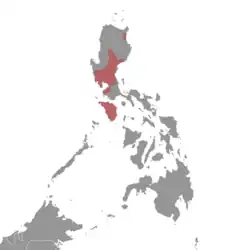
|
Size: 15–19 cm (6–7 in) long, plus 9–13 cm (4–5 in) tail[23] Habitat: Forest[54] Diet: Sweet potatoes, grass, and worms[55] |
LC
|
| Sibuyan striped shrew-rat | C. sibuyanensis Rickart, Heaney, Goodman, & Jansa, 2005 |
Philippines
|
Size: About 16 cm (6 in) long, plus about 8 cm (3 in) tail[23] Habitat: Forest[54] Diet: Sweet potatoes, grass, and worms[55] |
DD
|


| Common name | Scientific name and subspecies | Range | Size and ecology | IUCN status and estimated population |
|---|---|---|---|---|
| Central Cordillera brush mouse | C. shawmayeri Musser & Lunde, 2009 |
Papua New Guinea | Size: 8–11 cm (3–4 in) long, plus 13–17 cm (5–7 in) tail[7] Habitat: Grassland and forest[56] Diet: Leaves and other vegetation[43] |
LC
|
| Rümmler's brush mouse | C. ruemmleri (Tate & Archbold, 1941) |
New Guinea | Size: 9–12 cm (4–5 in) long, plus 12–18 cm (5–7 in) tail[7] Habitat: Forest and grassland[56] Diet: Leaves and other vegetation[43] |
LC
|
| Tawny brush mouse | C. kirrhos Musser & Lunde, 2009 |
Papua New Guinea | Size: 8–11 cm (3–4 in) long, plus 14–16 cm (6 in) tail[7] Habitat: Forest[56] Diet: Leaves and other vegetation[43] |
DD
|
| Common name | Scientific name and subspecies | Range | Size and ecology | IUCN status and estimated population |
|---|---|---|---|---|
| African wading rat | C. goslingi Thomas & Wroughton, 1907 |
Central Africa | Size: 10–16 cm (4–6 in) long, plus 14–19 cm (6–7 in) tail[57] Habitat: Savanna, forest, grassland, and inland wetlands[58] Diet: Worms, slugs, crustaceans, and aquatic insects, as well as small vertebrates and some vegetation[59] |
LC
|
| Common name | Scientific name and subspecies | Range | Size and ecology | IUCN status and estimated population |
|---|---|---|---|---|
| Brush-tailed rabbit rat
|
C. penicillatus (Gould, 1842) |
Northern Australia and Papua New Guinea | Size: 15–20 cm (6–8 in) long, plus 17–21 cm (7–8 in) tail[60] Habitat: Savanna and forest[61] Diet: Plant material and invertebrates[9] |
VU
|
| Capricorn rabbit rat † | C. capricornensis Cramb & Hocknull, 2010 |
Northeastern Australia | Size: Unknown[60] Habitat: Savanna and forest[61] Diet: Plant material and invertebrates[9] |
EX
|
| White-footed rabbit rat †
|
C. albipes (Lichtenstein, 1829) |
Southeastern Australia | Size: Unknown[60] Habitat: Forest[61] Diet: Plant material and invertebrates[9] |
EX
|


| Common name | Scientific name and subspecies | Range | Size and ecology | IUCN status and estimated population |
|---|---|---|---|---|
| Dinagat bushy-tailed cloud rat
|
C. australis Musser, Heaney, & Rabor, 1985 |
Philippines
|
Size: About 26 cm (10 in) long, plus 28 cm (11 in) tail[35] Habitat: Forest[62] Diet: Fruit and pine tree sprouts, buds, and bark[22] |
EN
|
| Giant bushy-tailed cloud rat
|
C. schadenbergi (Von Meyer, 1895) |
Philippines
|
Size: 30–37 cm (12–15 in) long, plus 30–39 cm (12–15 in) tail[35] Habitat: Forest[62] Diet: Fruit and pine tree sprouts, buds, and bark[22] |
EN
|
| Ilin Island cloudrunner
|
C. paulus Musser & Gordon, 1981 |
Philippines
|
Size: About 25 cm (10 in) long, plus about 21 cm (8 in) tail[35] Habitat: Forest[62] Diet: Fruit and pine tree sprouts, buds, and bark[22] |
DD
|
| Panay cloudrunner
|
C. heaneyi Gonzales & Kennedy, 1996 |
Philippines
|
Size: About 28 cm (11 in) long, plus 30–34 cm (12–13 in) tail[35] Habitat: Forest[62] Diet: Fruit and pine tree sprouts, buds, and bark[22] |
EN
|


| Common name | Scientific name and subspecies | Range | Size and ecology | IUCN status and estimated population |
|---|---|---|---|---|
| Cutch rat
|
C. cutchicus Wroughton, 1912 |
India | Size: 10–15 cm (4–6 in) long, plus 12–18 cm (5–7 in) tail[63] Habitat: Forest, grassland, desert, and shrubland[64] Diet: Plant material and invertebrates[9] |
LC
|
| Elvira rat | C. elvira (Ellerman, 1946) |
Southern India | Size: 12–15 cm (5–6 in) long, plus 18–20 cm (7–8 in) tail[63] Habitat: Shrubland, forest, and rocky areas[64] Diet: Plant material and invertebrates[9] |
CR
|

| Common name | Scientific name and subspecies | Range | Size and ecology | IUCN status and estimated population |
|---|---|---|---|---|
| Earless water rat | C. moncktoni Thomas, 1907 |
New Guinea
|
Size: 17–23 cm (7–9 in) long, plus 21–27 cm (8–11 in) tail[29] Habitat: Forest and inland wetlands[65] Diet: Tadpoles, insects, mollusks, and small aquatic vertebrates[66] |
LC
|
| Common name | Scientific name and subspecies | Range | Size and ecology | IUCN status and estimated population |
|---|---|---|---|---|
| Celebes shrew-rat | C. celebensis Musser, 1982 |
Indonesia
|
Size: 11–13 cm (4–5 in) long, plus 8–9 cm (3–4 in) tail[38] Habitat: Forest[67] Diet: Plant material and invertebrates[9] |
NT
|
| Katanglad shrew-mouse | C. suncoides Rickart, Heaney, Tabaranza, & Balete, 1998 |
Philippines
|
Size: About 11 cm (4 in) long, plus about 8 cm (3 in) tail[38] Habitat: Forest[67] Diet: Plant material and invertebrates[9] |
DD
|
| Mindanao shrew-rat | C. melanius Thomas, 1907 |
Philippines
|
Size: 9–14 cm (4–6 in) long, plus 6–10 cm (2–4 in) tail[38] Habitat: Forest[67] Diet: Plant material and invertebrates[9] |
LC
|
| Northern Luzon shrew-rat
|
C. fallax Thomas, 1897 |
Philippines
|
Size: About 11 cm (4 in) long, plus about 8 cm (3 in) tail[38] Habitat: Forest[67] Diet: Plant material and invertebrates[9] |
DD
|

| Common name | Scientific name and subspecies | Range | Size and ecology | IUCN status and estimated population |
|---|---|---|---|---|
| Millard's rat | D. millardi Thomas, 1916 |
Southeastern Asia
|
Size: 21–27 cm (8–11 in) long, plus 29–33 cm (11–13 in) tail[68] Habitat: Forest[69] Diet: Plant material and invertebrates[9] |
LC
|
| Common name | Scientific name and subspecies | Range | Size and ecology | IUCN status and estimated population |
|---|---|---|---|---|
| African marsh rat | D. incomtus (Sundevall, 1847) |
Sub-Saharan Africa (dark teal)
|
Size: 13–20 cm (5–8 in) long, plus 11–16 cm (4–6 in) tail[70] Habitat: Forest, grassland, savanna, shrubland, and inland wetlands[71] Diet: Aquatic plants, as well as insects[72] |
LC
|
| Angolan marsh rat | D. nudipes (Peters, 1870) |
Angola (red)
|
Size: 15–20 cm (6–8 in) long, plus 14–19 cm (6–7 in) tail[70] Habitat: Inland wetlands and grassland[71] Diet: Aquatic plants, as well as insects[72] |
DD
|
| Crawford-Cabral's shaggy rat | D. cabrali Hulselmans, Dierckx, Colyn, Leirs, Verheyen, & Verheyen, 2003 |
Namibia (dark blue)
|
Size: About 16 cm (6 in) long, plus about 16 cm (6 in) tail[70] Habitat: Forest, grassland, savanna, shrubland, and inland wetlands[71] Diet: Aquatic plants, as well as insects[72] |
NE
|
| Fox's shaggy rat | D. foxi Thomas, 1912 |
Nigeria (pink)
|
Size: About 15 cm (6 in) long, plus about 13 cm (5 in) tail[70] Habitat: Inland wetlands, savanna, and grassland[71] Diet: Aquatic plants, as well as insects[72] |
DD
|
| Glover Allen's dasymys | D. alleni Lawrence & Loveridge, 1953 |
Tanzania (green)
|
Size: 11–18 cm (4–7 in) long, plus 10–14 cm (4–6 in) tail[70] Habitat: Forest, grassland, savanna, shrubland, and inland wetlands[71] Diet: Aquatic plants, as well as insects[72] |
NE
|
| Montane shaggy rat | D. montanus Thomas, 1906 |
Western Uganda and eastern Democratic Republic of the Congo (brown)
|
Size: 13–16 cm (5–6 in) long, plus 9–12 cm (4–5 in) tail[70] Habitat: Inland wetlands, forest, and grassland[71] Diet: Aquatic plants, as well as insects[72] |
EN
|
| Rwandan shaggy rat | D. rwandae Hulselmans, Dierckx, Colyn, Leirs, Verheyen, & Verheyen, 2003 |
Rwanda (light blue)
|
Size: About 12 cm (5 in) long, plus about 11 cm (4 in) tail[70] Habitat: Forest, grassland, savanna, shrubland, and inland wetlands[71] Diet: Aquatic plants, as well as insects[72] |
NE
|
| Tanzanian shaggy rat | D. sua Hulselmans, Dierckx, Colyn, Leirs, Verheyen, & Verheyen, 2003 |
Tanzania (light green)
|
Size: About 14 cm (6 in) long, plus about 13 cm (5 in) tail[70] Habitat: Forest, grassland, savanna, shrubland, and inland wetlands[71] Diet: Aquatic plants, as well as insects[72] |
NE
|
| West African shaggy rat | D. rufulus Miller, 1900 |
Western Africa (yellow)
|
Size: 13–17 cm (5–7 in) long, plus 12–16 cm (5–6 in) tail[70] Habitat: Inland wetlands and grassland[71] Diet: Aquatic plants, as well as insects[72] |
LC
|
| Common name | Scientific name and subspecies | Range | Size and ecology | IUCN status and estimated population |
|---|---|---|---|---|
| Defua rat | D. defua (Miller, 1900) |
Western Africa | Size: 11–14 cm (4–6 in) long, plus 18–20 cm (7–8 in) tail[10] Habitat: Forest[73] Diet: Fruit and insects[74] |
LC
|
| Ivory Coast rat | D. eburneae (Heim de Balsac & Bellier, 1967) |
Western Africa | Size: 12–15 cm (5–6 in) long, plus 18–20 cm (7–8 in) tail[10] Habitat: Forest[73] Diet: Fruit and insects[74] |
NE
|
| Common name | Scientific name and subspecies | Range | Size and ecology | IUCN status and estimated population |
|---|---|---|---|---|
| Harrington's rat | D. harringtoni (Thomas, 1902) |
Ethiopia | Size: 12–15 cm (5–6 in) long, plus 12–14 cm (5–6 in) tail[70] Habitat: Shrubland and forest[75] Diet: Plant material and invertebrates[9] |
LC
|
| Yalden's rat | D. yaldeni Lavrenchenko, 2003 |
Ethiopia | Size: 11–14 cm (4–6 in) long, plus 14–15 cm (6 in) tail[70] Habitat: Forest[75] Diet: Plant material and invertebrates[9] |
VU
|
| Common name | Scientific name and subspecies | Range | Size and ecology | IUCN status and estimated population |
|---|---|---|---|---|
| Crump's mouse | D. crumpi Thomas, 1917 |
Scattered southern Asia
|
Size: 10–14 cm (4–6 in) long, plus 10–13 cm (4–5 in) tail[76] Habitat: Forest[77] Diet: Plant material and invertebrates[9] |
DD
|
| Common name | Scientific name and subspecies | Range | Size and ecology | IUCN status and estimated population |
|---|---|---|---|---|
| Ryukyu long-tailed giant rat
|
D. legata (Thomas, 1906) |
Southern islands of Japan | Size: About 23 cm (9 in) long, plus about 25 cm (10 in) tail[32] Habitat: Forest[78] Diet: Plant material and invertebrates[9] |
EN
|
.jpg)
| Common name | Scientific name and subspecies | Range | Size and ecology | IUCN status and estimated population |
|---|---|---|---|---|
| Central Sulawesi echiothrix
|
E. centrosa Miller & Hollister, 1921 |
Indonesia
|
Size: 18–22 cm (7–9 in) long, plus 23–26 cm (9–10 in) tail[38] Habitat: Forest[79] Diet: Worms[80] |
VU
|
| Northern Sulawesi echiothrix
|
E. leucura Gray, 1867 |
Indonesia
|
Size: 19–23 cm (7–9 in) long, plus 21–27 cm (8–11 in) tail[38] Habitat: Forest[79] Diet: Worms[80] |
VU
|


| Common name | Scientific name and subspecies | Range | Size and ecology | IUCN status and estimated population |
|---|---|---|---|---|
| Sulawesi soft-furred rat | E. canus Miller, 1921 |
Indonesia | Size: 23–25 cm (9–10 in) long, plus 27–30 cm (11–12 in) tail[32] Habitat: Forest[81] Diet: Plant material and invertebrates[9] |
LC
|
| Common name | Scientific name and subspecies | Range | Size and ecology | IUCN status and estimated population |
|---|---|---|---|---|
| Northeastern peninsula hill rat | F. fratrorum Thomas, 1896 |
Indonesia | Size: 15–19 cm (6–7 in) long, plus 15–20 cm (6–8 in) tail[32] Habitat: Forest[82] Diet: Plant material and invertebrates[9] |
LC
|
| Common name | Scientific name and subspecies | Range | Size and ecology | IUCN status and estimated population |
|---|---|---|---|---|
| Indian bush rat
|
G. ellioti Gray, 1837 |
Southern Asia | Size: 9–17 cm (4–7 in) long, plus 7–14 cm (3–6 in) tail[83] Habitat: Shrubland, forest, and grassland[84] Diet: Roots and grass, as well as other vegetation[85] |
LC
|

| Common name | Scientific name and subspecies | Range | Size and ecology | IUCN status and estimated population |
|---|---|---|---|---|
| Sulawesi root rat
|
G. radix Rowe, Achmadi, & Esselstyn, 2016 |
Indonesia | Size: 10–13 cm (4–5 in) long, plus 16–17 cm (6–7 in) tail[68] Habitat: Forest[86] Diet: Plant material and invertebrates[9] |
DD
|

| Common name | Scientific name and subspecies | Range | Size and ecology | IUCN status and estimated population |
|---|---|---|---|---|
| Arid thicket rat | G. aridulus Thomas & Hinton, 1923 |
Sudan | Size: 11–12 cm (4–5 in) long, plus 18–19 cm (7 in) tail[70] Habitat: Shrubland[87] Diet: Stems, fruit, nuts, flowers, and other vegetation, as well as insects[88] |
DD
|
| Bunting's thicket rat | G. buntingi (Thomas, 1911) |
Western Africa | Size: 10–13 cm (4–5 in) long, plus 16–18 cm (6–7 in) tail[10] Habitat: Forest and shrubland[87] Diet: Stems, fruit, nuts, flowers, and other vegetation, as well as insects[88] |
DD
|
| Eastern rainforest grammomys | G. kuru Thomas & Wroughton, 1907 |
Central and western Africa | Size: 10–15 cm (4–6 in) long, plus 14–18 cm (6–7 in) tail[10] Habitat: Forest and shrubland[87] Diet: Stems, fruit, nuts, flowers, and other vegetation, as well as insects[88] |
LC
|
| Ethiopian thicket rat | G. minnae Hutterer & Dieterlen, 1984 |
Ethiopia | Size: About 11 cm (4 in) long, plus about 17 cm (7 in) tail[70] Habitat: Shrubland[87] Diet: Stems, fruit, nuts, flowers, and other vegetation, as well as insects[88] |
VU
|
| Forest thicket rat | G. dryas (Thomas, 1907) |
Central Africa | Size: 10–13 cm (4–5 in) long, plus 14–18 cm (6–7 in) tail[10] Habitat: Forest and savanna[87] Diet: Stems, fruit, nuts, flowers, and other vegetation, as well as insects[88] |
LC
|
| Giant thicket rat | G. gigas (Dollman, 1911) |
Kenya | Size: 10–13 cm (4–5 in) long, plus 14–18 cm (6–7 in) tail[10] Habitat: Forest and shrubland[87] Diet: Stems, fruit, nuts, flowers, and other vegetation, as well as insects[88] |
EN
|
| Gray-headed thicket rat | G. caniceps Hutterer & Dieterlen, 1984 |
Kenya and Somalia | Size: 8–11 cm (3–4 in) long, plus 14–16 cm (6 in) tail[70] Habitat: Shrubland[87] Diet: Stems, fruit, nuts, flowers, and other vegetation, as well as insects[88] |
DD
|
| Macmillan's thicket rat | G. macmillani (Wroughton, 1907) |
Eastern Africa | Size: 9–11 cm (4 in) long, plus 14–19 cm (6–7 in) tail[70] Habitat: Forest, grassland, and inland wetlands[87] Diet: Stems, fruit, nuts, flowers, and other vegetation, as well as insects[88] |
LC
|
| Mozambique thicket rat | G. cometes (Thomas & Wroughton, 1908) |
Southern Africa | Size: 11–13 cm (4–5 in) long, plus 14–20 cm (6–8 in) tail[10] Habitat: Forest and shrubland[87] Diet: Stems, fruit, nuts, flowers, and other vegetation, as well as insects[88] |
LC
|
| Ruwenzori thicket rat | G. ibeanus (Osgood, 1910) |
Eastern Africa | Size: 11–13 cm (4–5 in) long, plus 12–22 cm (5–9 in) tail[10] Habitat: Forest and shrubland[87] Diet: Stems, fruit, nuts, flowers, and other vegetation, as well as insects[88] |
LC
|
| Woodland thicket rat
|
G. dolichurus (Smuts, 1832) |
Central and southern Africa | Size: 9–14 cm (4–6 in) long, plus 12–19 cm (5–7 in) tail[10] Habitat: Forest, shrubland, and grassland[87] Diet: Stems, fruit, nuts, flowers, and other vegetation, as well as insects[88] |
LC
|
_(6042197622).jpg)
| Common name | Scientific name and subspecies | Range | Size and ecology | IUCN status and estimated population |
|---|---|---|---|---|
| Manipur bush rat
|
H. humei (Thomas, 1886) |
Eastern India | Size: 9–14 cm (4–6 in) long, plus 12–14 cm (5–6 in) tail[26] Habitat: Forest[89] Diet: Grass[90] |
EN
|
| Yunnan bush rat | H. yunnanensis Yang & Wang, 1987 |
Southern China | Size: 12–14 cm (5–6 in) long, plus 11–14 cm (4–6 in) tail[17] Habitat: Unknown[89] Diet: Grass[90] |
DD
|

| Common name | Scientific name and subspecies | Range | Size and ecology | IUCN status and estimated population |
|---|---|---|---|---|
| Lesser ranee mouse | H. pusillus (Thomas, 1893) |
Borneo and Philippines
|
Size: About 7 cm (3 in) long, plus about 12 cm (5 in) tail[23] Habitat: Forest[91] Diet: Seeds[92] |
VU
|
| Minahassa ranee mouse | H. minahassae (Thomas, 1896) |
Indonesia | Size: 7–8 cm (3–3 in) long, plus 12–14 cm (5–6 in) tail[23] Habitat: Forest[91] Diet: Seeds[92] |
NT
|
| Ranee mouse | H. margarettae (Thomas, 1893) |
Borneo | Size: About 8 cm (3 in) long, plus about 14 cm (6 in) tail[23] Habitat: Forest[91] Diet: Seeds[92] |
DD
|
| Common name | Scientific name and subspecies | Range | Size and ecology | IUCN status and estimated population |
|---|---|---|---|---|
| Spiny Boki Mekot rat | H. bokimekot Fabre, Pagès, Musser, Fitriana, Semiadi, & Helgen, 2013 |
Indonesia
|
Size: 14–17 cm (6–7 in) long, plus 11–14 cm (4–6 in) tail[39] Habitat: Forest[93] Diet: Plant material and invertebrates[9] |
DD
|
| Wallace's large spiny rat | H. wallacei Fabre, Reever, Fitriana, Aplin, & Helgen, 2018 |
Indonesia | Size: 20–24 cm (8–9 in) long, plus 16–21 cm (6–8 in) tail[39] Habitat: Forest[93] Diet: Plant material and invertebrates[9] |
EN
|
| Common name | Scientific name and subspecies | Range | Size and ecology | IUCN status and estimated population |
|---|---|---|---|---|
| Delacour's marmoset rat
|
H. delacouri Thomas, 1927 |
Southeastern Asia
|
Size: 10–15 cm (4–6 in) long, plus 13–18 cm (5–7 in) tail[94] Habitat: Forest[95] Diet: Bamboo shoots, flowers, and fruit[96] |
NT
|
| Marmoset rat | H. longicaudatus Blyth, 1859 |
Scattered southeastern Asia
|
Size: 14–17 cm (6–7 in) long, plus 17–20 cm (7–8 in) tail[94] Habitat: Forest[95] Diet: Bamboo shoots, flowers, and fruit[96] |
EN
|
| Suntsov's marmoset rat | H. suntsovi Abramov, Balakirev, & Rozhnov, 2017 |
Cambodia and Vietnam | Size: 12–15 cm (5–6 in) long, plus 15–17 cm (6–7 in) tail[94] Habitat: Forest[95] Diet: Bamboo shoots, flowers, and fruit[96] |
LC
|

| Common name | Scientific name and subspecies | Range | Size and ecology | IUCN status and estimated population |
|---|---|---|---|---|
| African smoky mouse | H. fumosus (Brosset, DuBost, & Heim de Balsac, 1965) |
West-central Africa | Size: 8–10 cm (3–4 in) long, plus 8–12 cm (3–5 in) tail[97] Habitat: Forest[98] Diet: Plant material and invertebrates[9] |
LC
|
| Common name | Scientific name and subspecies | Range | Size and ecology | IUCN status and estimated population |
|---|---|---|---|---|
| Eisentraut's striped mouse | H. badius Osgood, 1936 |
Cameroon | Size: 10–14 cm (4–6 in) long, plus 10–13 cm (4–5 in) tail[83] Habitat: Forest[99] Diet: Fruit, roots, and insects[100] |
EN
|
| Father Basilio's striped mouse | H. basilii Eisentraut, 1965 |
Cameroon | Size: 11–16 cm (4–6 in) long, plus 9–14 cm (4–6 in) tail[83] Habitat: Forest[99] Diet: Fruit, roots, and insects[100] |
EN
|
| Miller's striped mouse | H. planifrons (Miller, 1900) |
Western Africa | Size: 12–13 cm (5 in) long, plus 9–11 cm (4 in) tail[83] Habitat: Forest[99] Diet: Fruit, roots, and insects[100] |
LC
|
| Moon striped mouse | H. lunaris (Thomas, 1906) |
Western Uganda and eastern Democratic Republic of the Congo | Size: About 11 cm (4 in) long, plus about 12 cm (5 in) tail[83] Habitat: Forest[99] Diet: Fruit, roots, and insects[100] |
VU
|
| Peters's striped mouse | H. univittatus (Peters, 1876) |
Central Africa | Size: 11–14 cm (4–6 in) long, plus 10–13 cm (4–5 in) tail[83] Habitat: Forest[99] Diet: Fruit, roots, and insects[100] |
LC
|
| Temminck's striped mouse | H. trivirgatus (Temminck, 1853) |
Western Africa | Size: 10–13 cm (4–5 in) long, plus 8–11 cm (3–4 in) tail[83] Habitat: Forest[99] Diet: Fruit, roots, and insects[100] |
LC
|
| Common name | Scientific name and subspecies | Range | Size and ecology | IUCN status and estimated population |
|---|---|---|---|---|
| New Britain water rat | H. neobritannicus Tate & Archbold, 1935 |
Papua New Guinea | Size: About 29 cm (11 in) long, plus about 29 cm (11 in) tail[29] Habitat: Inland wetlands, unknown, and forest[101] Diet: Fish and aquatic insects, as well as spiders, crustaceans, mussels, frogs, turtles, birds, and bats[31] |
DD
|
| Rakali
|
H. chrysogaster Geoffroy, 1804 |
Australia and southeastern Asia
|
Size: 19–39 cm (7–15 in) long, plus 20–32 cm (8–13 in) tail[29] Habitat: Coastal marine, inland wetlands, forest, and neritic marine[101] Diet: Fish and aquatic insects, as well as spiders, crustaceans, mussels, frogs, turtles, birds, and bats[31] |
LC
|
| Western water rat | H. hussoni Musser & Piik, 1982 |
Western New Guinea
|
Size: 12–17 cm (5–7 in) long, plus 10–16 cm (4–6 in) tail[29] Habitat: Inland wetlands, unknown, and forest[101] Diet: Fish and aquatic insects, as well as spiders, crustaceans, mussels, frogs, turtles, birds, and bats[31] |
DD
|
| Ziegler's water rat | H. ziegleri Helgen, 2005 |
Papua New Guinea
|
Size: About 13 cm (5 in) long, plus about 12 cm (5 in) tail[29] Habitat: Forest and inland wetlands[101] Diet: Fish and aquatic insects, as well as spiders, crustaceans, mussels, frogs, turtles, birds, and bats[31] |
DD
|

| Common name | Scientific name and subspecies | Range | Size and ecology | IUCN status and estimated population |
|---|---|---|---|---|
| Albertine Rift wood mouse | H. vulcanorum Lönnberg & Gyldenstolpe, 1925 |
Central Africa | Size: 8–11 cm (3–4 in) long, plus 11–16 cm (4–6 in) tail[97] Habitat: Forest[102] Diet: Fruit and other vegetation, as well as animals[103] |
LC
|
| Allen's wood mouse | H. alleni (Waterhouse, 1838) |
Central and western Africa | Size: 6–10 cm (2–4 in) long, plus 10–16 cm (4–6 in) tail[97] Habitat: Forest[102] Diet: Fruit and other vegetation, as well as animals[103] |
LC
|
| Angolan wood mouse | H. carillus (Thomas, 1904) |
Angola | Size: 8–10 cm (3–4 in) long, plus 11–15 cm (4–6 in) tail[97] Habitat: Forest[102] Diet: Fruit and other vegetation, as well as animals[103] |
LC
|
| Ansell's wood mouse | H. anselli Bishop, 1979 |
Central Africa | Size: 9–11 cm (4 in) long, plus 14–16 cm (6 in) tail[97] Habitat: Forest[102] Diet: Fruit and other vegetation, as well as animals[103] |
LC
|
| Arc Mountain wood mouse | H. arcimontensis Stanley & Carleton, 2005 |
Tanzania and Malawi | Size: 7–11 cm (3–4 in) long, plus 12–14 cm (5–6 in) tail[97] Habitat: Forest[102] Diet: Fruit and other vegetation, as well as animals[103] |
LC
|
| Baer's wood mouse | H. baeri Heim de Balsac & Aellen, 1965 |
Western Africa | Size: 9–12 cm (4–5 in) long, plus 11–15 cm (4–6 in) tail[97] Habitat: Forest[102] Diet: Fruit and other vegetation, as well as animals[103] |
EN
|
| Beaded wood mouse | H. aeta (Thomas, 1911) |
Central Africa | Size: Unknown[97] Habitat: Forest[102] Diet: Fruit and other vegetation, as well as animals[103] |
LC
|
| Dahomey Gap wood mouse | H. pamfi Nicolas, Olayemi, Wendelen, & Colyn, 2010 |
Western Africa | Size: 5–11 cm (2–4 in) long, plus 5–13 cm (2–5 in) tail[97] Habitat: Forest[102] Diet: Fruit and other vegetation, as well as animals[103] |
DD
|
| Heinrich's wood mouse | H. heinrichorum Banasiak, Stanley, & Carleton, 2015 |
Angola | Size: 8–11 cm (3–4 in) long, plus 12–15 cm (5–6 in) tail[97] Habitat: Forest[102] Diet: Fruit and other vegetation, as well as animals[103] |
DD
|
| Kerbis Peterhans's wood mouse | H. kerbispeterhansi Demos, Agwanda, & Hickerson, 2014 |
Kenya and Uganda | Size: 7–10 cm (3–4 in) long, plus 11–14 cm (4–6 in) tail[97] Habitat: Forest[102] Diet: Fruit and other vegetation, as well as animals[103] |
LC
|
| Little wood mouse | H. parvus Brosset, DuBost, & Heim de Balsac, 1965 |
Central Africa | Size: 5–8 cm (2–3 in) long, plus 8–13 cm (3–5 in) tail[97] Habitat: Forest[102] Diet: Fruit and other vegetation, as well as animals[103] |
LC
|
| Montane wood mouse | H. denniae (Thomas, 1906) |
Western Uganda and eastern Democratic Republic of the Congo | Size: 9–12 cm (4–5 in) long, plus 12–16 cm (5–6 in) tail[97] Habitat: Forest[102] Diet: Fruit and other vegetation, as well as animals[103] |
LC
|
| Mount Kenya wood mouse | H. endorobae (Heller, 1910) |
Kenya | Size: 9–12 cm (4–5 in) long, plus 12–18 cm (5–7 in) tail[97] Habitat: Forest[102] Diet: Fruit and other vegetation, as well as animals[103] |
LC
|
| Mount Oku hylomyscus | H. grandis Eisentraut, 1969 |
Cameroon | Size: 8–11 cm (3–4 in) long, plus 13–15 cm (5–6 in) tail[97] Habitat: Forest[102] Diet: Fruit and other vegetation, as well as animals[103] |
EN
|
| Stella wood mouse | H. stella (Thomas, 1911) |
Central Africa | Size: 7–11 cm (3–4 in) long, plus 11–14 cm (4–6 in) tail[97] Habitat: Forest[102] Diet: Fruit and other vegetation, as well as animals[103] |
LC
|
| Walter Verheyen's mouse | H. walterverheyeni (Nicolas, Wendelen, Barriere, Dudu, & Colyn, 2008) |
Central Africa | Size: 6–10 cm (2–4 in) long, plus 10–16 cm (4–6 in) tail[97] Habitat: Forest[102] Diet: Fruit and other vegetation, as well as animals[103] |
LC
|
| Common name | Scientific name and subspecies | Range | Size and ecology | IUCN status and estimated population |
|---|---|---|---|---|
| Eastern white-eared giant rat | H. goliath (A. Milne-Edwards, 1900) |
Papua New Guinea | Size: 36–39 cm (14–15 in) long, plus 30–38 cm (12–15 in) tail[7] Habitat: Forest[104] Diet: Shoots as well as other vegetation[105] |
LC
|
| Western white-eared giant rat | H. dammermani Stein, 1933 |
New Guinea | Size: 29–32 cm (11–13 in) long, plus 24–32 cm (9–13 in) tail[7] Habitat: Forest[104] Diet: Shoots as well as other vegetation[105] |
DD
|
| Common name | Scientific name and subspecies | Range | Size and ecology | IUCN status and estimated population |
|---|---|---|---|---|
| Hog-nosed shrew rat
|
H. stuempkei Esselstyn, Achmadi, Handika, & Rowe, 2015 |
Indonesia | Size: 11–13 cm (4–5 in) long, plus 8–10 cm (3–4 in) tail[68] Habitat: Forest[106] Diet: Plant material and invertebrates[9] |
DD
|

| Common name | Scientific name and subspecies | Range | Size and ecology | IUCN status and estimated population |
|---|---|---|---|---|
| Sody's tree rat | K. sodyi (Bartels, 1937) |
Indonesia
|
Size: 16–21 cm (6–8 in) long, plus 25–30 cm (10–12 in) tail[32] Habitat: Forest[107] Diet: Plant material and invertebrates[9] |
EN
|
| Common name | Scientific name and subspecies | Range | Size and ecology | IUCN status and estimated population |
|---|---|---|---|---|
| Komodo rat
|
K. rintjanus (Sody, 1941) |
Indonesia | Size: 12–18 cm (5–7 in) long, plus 12–17 cm (5–7 in) tail[39] Habitat: Shrubland and forest[108] Diet: Plant material and invertebrates[9] |
VU
|

| Common name | Scientific name and subspecies | Range | Size and ecology | IUCN status and estimated population |
|---|---|---|---|---|
| Mount Oku rat | L. okuensis Petter, 1986 |
Cameroon | Size: 13–15 cm (5–6 in) long, plus 12–14 cm (5–6 in) tail[70] Habitat: Forest[109] Diet: Plant material and invertebrates[9] |
EN
|
| Common name | Scientific name and subspecies | Range | Size and ecology | IUCN status and estimated population |
|---|---|---|---|---|
| Forrest's mouse | L. forresti (Thomas, 1906) |
Central Australia | Size: 7–10 cm (3–4 in) long, plus 5–7 cm (2–3 in) tail[60] Habitat: Shrubland and desert[110] Diet: Seeds and vegetation[111] |
LC
|
| Lakeland Downs mouse
|
L. lakedownensis Watts, 1976 |
Northern Australia | Size: 5–10 cm (2–4 in) long, plus 4–8 cm (2–3 in) tail[60] Habitat: Shrubland, savanna, and grassland[110] Diet: Seeds and vegetation[111] |
LC
|
.png)
| Common name | Scientific name and subspecies | Range | Size and ecology | IUCN status and estimated population |
|---|---|---|---|---|
| Barbary striped grass mouse
|
L. barbarus (Linnaeus, 1766) |
Northern Africa | Size: 10–13 cm (4–5 in) long, plus 11–15 cm (4–6 in) tail[26] Habitat: Shrubland[112] Diet: Grass, seeds, grains, and insects[113] |
LC
|
| Bellier's striped grass mouse | L. bellieri Van der Straeten, 1975 |
Western Africa | Size: 9–13 cm (4–5 in) long, plus 9–14 cm (4–6 in) tail[26] Habitat: Savanna[112] Diet: Grass, seeds, grains, and insects[113] |
LC
|
| Buffoon striped grass mouse | L. macculus (Thomas & Wroughton, 1910) |
East-central Africa | Size: 8–12 cm (3–5 in) long, plus 7–15 cm (3–6 in) tail[26] Habitat: Grassland and savanna[112] Diet: Grass, seeds, grains, and insects[113] |
LC
|
| Griselda's striped grass mouse | L. griselda (Thomas, 1904) |
South-central Africa | Size: 11–14 cm (4–6 in) long, plus 11–15 cm (4–6 in) tail[26] Habitat: Savanna[112] Diet: Grass, seeds, grains, and insects[113] |
LC
|
| Heuglin's striped grass mouse | L. zebra (Heuglin, 1864) |
Northern Sub-Saharan Africa | Size: 9–12 cm (4–5 in) long, plus 11–14 cm (4–6 in) tail[26] Habitat: Savanna, shrubland, and grassland[112] Diet: Grass, seeds, grains, and insects[113] |
LC
|
| Hoogstraal's striped grass mouse | L. hoogstraali Dieterlen, 1991 |
Northern South Sudan | Size: About 13 cm (5 in) long, plus about 13 cm (5 in) tail[26] Habitat: Savanna[112] Diet: Grass, seeds, grains, and insects[113] |
DD
|
| Mittendorf's striped grass mouse | L. mittendorfi Eisentraut, 1968 |
Cameroon | Size: 8–10 cm (3–4 in) long, plus 7–9 cm (3–4 in) tail[26] Habitat: Grassland[112] Diet: Grass, seeds, grains, and insects[113] |
LC
|
| Rosevear's striped grass mouse | L. roseveari Van der Straeten, 1980 |
Zambia | Size: 11–14 cm (4–6 in) long, plus 12–16 cm (5–6 in) tail[26] Habitat: Forest[112] Diet: Grass, seeds, grains, and insects[113] |
DD
|
| Senegal one-striped grass mouse | L. linulus (Thomas, 1910) |
Western Africa | Size: 9–13 cm (4–5 in) long, plus 9–14 cm (4–6 in) tail[26] Habitat: Savanna[112] Diet: Grass, seeds, grains, and insects[113] |
LC
|
| Single-striped grass mouse
|
L. rosalia (Thomas, 1904) |
Sub-Saharan Africa | Size: 9–17 cm (4–7 in) long, plus 8–16 cm (3–6 in) tail[26] Habitat: Savanna[112] Diet: Grass, seeds, grains, and insects[113] |
LC
|
| Typical striped grass mouse
|
L. striatus (Linnaeus, 1758) |
Northern Sub-Saharan Africa | Size: 9–14 cm (4–6 in) long, plus 9–16 cm (4–6 in) tail[26] Habitat: Shrubland, savanna, forest, and grassland[112] Diet: Grass, seeds, grains, and insects[113] |
LC
|


.jpg)
| Common name | Scientific name and subspecies | Range | Size and ecology | IUCN status and estimated population |
|---|---|---|---|---|
| Trefoil-toothed giant rat
|
L. meyeri (Jentink, 1879) |
Indonesia | Size: 23–30 cm (9–12 in) long, plus 24–30 cm (9–12 in) tail[39] Habitat: Forest[114] Diet: Plant material and invertebrates[9] |
LC
|

| Common name | Scientific name and subspecies | Range | Size and ecology | IUCN status and estimated population |
|---|---|---|---|---|
| Gray tree rat
|
L. canus Miller, 1903 |
Malaysia and Brunei | Size: 14–21 cm (6–8 in) long, plus 19–29 cm (7–11 in) tail[68] Habitat: Forest[115] Diet: Plant material and invertebrates[9] |
LC
|

| Common name | Scientific name and subspecies | Range | Size and ecology | IUCN status and estimated population |
|---|---|---|---|---|
| Diwangkara's long-tailed giant rat | L. diwangkarai Maryanto & Sinaga, 2008 |
Indonesia | Size: 19–22 cm (7–9 in) long, plus 29–32 cm (11–13 in) tail[68] Habitat: Forest[116] Diet: Insects, other invertebrates, and a wide variety of vegetation[117] |
LC
|
| Edwards's long-tailed giant rat | L. edwardsi (Thomas, 1882) |
Southeastern Asia
|
Size: 21–29 cm (8–11 in) long, plus 26–31 cm (10–12 in) tail[68] Habitat: Forest[116] Diet: Insects, other invertebrates, and a wide variety of vegetation[117] |
LC
|
| Long-tailed giant rat
|
L. sabanus (Thomas, 1887) |
Southeastern Asia
|
Size: 20–27 cm (8–11 in) long, plus 27–41 cm (11–16 in) tail[68] Habitat: Forest[116] Diet: Insects, other invertebrates, and a wide variety of vegetation[117] |
LC
|
| Mentawai long-tailed giant rat | L. siporanus (Thomas, 1895) |
Indonesia | Size: 17–29 cm (7–11 in) long, plus 22–33 cm (9–13 in) tail[68] Habitat: Forest[116] Diet: Insects, other invertebrates, and a wide variety of vegetation[117] |
VU
|
| Millet's leopoldamys | L. milleti Robinson & Kloss, 1922 |
Vietnam | Size: 21–28 cm (8–11 in) long, plus 29–36 cm (11–14 in) tail[68] Habitat: Forest[116] Diet: Insects, other invertebrates, and a wide variety of vegetation[117] |
LC
|
| Neill's long-tailed giant rat | L. neilli (Marshall, 1976) |
Southeastern Asia
|
Size: 20–23 cm (8–9 in) long, plus 24–30 cm (9–12 in) tail[68] Habitat: Forest[116] Diet: Insects, other invertebrates, and a wide variety of vegetation[117] |
LC
|
| Sundaic mountain leopoldamys | L. ciliatus (Bonhote, 1900) |
Malaysia and Indonesia | Size: 21–25 cm (8–10 in) long, plus 30–39 cm (12–15 in) tail[68] Habitat: Forest[116] Diet: Insects, other invertebrates, and a wide variety of vegetation[117] |
LC
|

| Common name | Scientific name and subspecies | Range | Size and ecology | IUCN status and estimated population |
|---|---|---|---|---|
| Greater stick-nest rat
|
L. conditor (Sturt, 1848) |
Scattered southern and western Australia.png)
|
Size: 17–26 cm (7–10 in) long, plus 14–18 cm (6–7 in) tail[60] Habitat: Grassland, desert, shrubland, and rocky areas[118] Diet: Succulents and other vegetation[119] |
NT
|
| Lesser stick-nest rat †
|
L. apicalis (Gould, 1853) |
Western Australia | Size: Unknown[60] Habitat: Caves, desert, shrubland, grassland, savanna, and rocky areas[118] Diet: Succulents and other vegetation[119] |
EX
|


| Common name | Scientific name and subspecies | Range | Size and ecology | IUCN status and estimated population |
|---|---|---|---|---|
| Arfak water rat | L. arfakensis Musser, Helgen, & Lunde, 2008 |
Western New Guinea | Size: 13–16 cm (5–6 in) long, plus about 15 cm (6 in) tail[120] Habitat: Forest[121] Diet: Insects and small animals[122] |
DD
|
| Ernst Mayr's water rat | L. ernstmayri Rümmler, 1938 |
New Guinea
|
Size: 12–16 cm (5–6 in) long, plus 13–18 cm (5–7 in) tail[29] Habitat: Forest[121] Diet: Insects and small animals[122] |
LC
|
| Fly River water rat | L. signatus Tate & Archbold, 1938 |
Papua New Guinea
|
Size: 14–16 cm (6 in) long, plus 14–16 cm (6 in) tail[120] Habitat: Forest and unknown[121] Diet: Insects and small animals[122] |
LC
|
| Long-footed water rat | L. elegans Thomas, 1897 |
Papua New Guinea
|
Size: 14–20 cm (6–8 in) long, plus 12–17 cm (5–7 in) tail[120] Habitat: Forest[121] Diet: Insects and small animals[122] |
LC
|
| Small water rat | L. paulus Musser, Helgen, & Lunde, 2008 |
Papua New Guinea | Size: 11–14 cm (4–6 in) long, plus 13–17 cm (5–7 in) tail[29] Habitat: Forest[121] Diet: Insects and small animals[122] |
DD
|
| Common name | Scientific name and subspecies | Range | Size and ecology | IUCN status and estimated population |
|---|---|---|---|---|
| Gray-bellied mountain rat | L. bryophilus Rickart, Heaney, & Tabaranza, 2003 |
Philippines
|
Size: 12–14 cm (5–6 in) long, plus 15–19 cm (6–7 in) tail[4] Habitat: Forest[123] Diet: Plant material and invertebrates[9] |
LC
|
| Mindanao mountain rat
|
L. sibuanus Mearns, 1905 |
Philippines
|
Size: 11–15 cm (4–6 in) long, plus 14–18 cm (6–7 in) tail[4] Habitat: Forest[123] Diet: Plant material and invertebrates[9] |
LC
|

| Common name | Scientific name and subspecies | Range | Size and ecology | IUCN status and estimated population |
|---|---|---|---|---|
| New Guinean jumping mouse | L. nouhuysi Jentink, 1911 |
New Guinea | Size: 5–9 cm (2–4 in) long, plus 11–13 cm (4–5 in) tail[13] Habitat: Forest[124] Diet: Insects, vegetation, and fungi[125] |
LC
|
| Common name | Scientific name and subspecies | Range | Size and ecology | IUCN status and estimated population |
|---|---|---|---|---|
| Eastern small-toothed rat | M. major Rümmler, 1935 |
New Guinea | Size: 22–26 cm (9–10 in) long, plus 31–34 cm (12–13 in) tail[7] Habitat: Forest[126] Diet: Vegetation[125] |
LC
|
| Lesser small-toothed rat | M. elegans Stein, 1933 |
Western New Guinea | Size: 15–16 cm (6 in) long, plus 21–22 cm (8–9 in) tail[7] Habitat: Forest and unknown[126] Diet: Vegetation[125] |
DD
|
| Common name | Scientific name and subspecies | Range | Size and ecology | IUCN status and estimated population |
|---|---|---|---|---|
| Blanford's rat
|
M. blanfordi (Thomas, 1881) |
Southern Asia | Size: 15–19 cm (6–7 in) long, plus 18–21 cm (7–8 in) tail[76] Habitat: Caves, forest, and shrubland[127] Diet: Plant material and invertebrates[9] |
LC
|

| Common name | Scientific name and subspecies | Range | Size and ecology | IUCN status and estimated population |
|---|---|---|---|---|
| Big-eared swamp rat
|
M. longipes H. Milne-Edwards, 1877 |
Central Africa | Size: 13–18 cm (5–7 in) long, plus 17–20 cm (7–8 in) tail[20] Habitat: Inland wetlands and forest[128] Diet: Fruit, seeds, nuts, roots, insects, slugs, snails, and crabs[129] |
LC
|
| Cansdale's swamp rat | M. cansdalei Ansell, 1958 |
Western Africa | Size: 13–17 cm (5–7 in) long, plus 17–21 cm (7–8 in) tail[20] Habitat: Forest[128] Diet: Fruit, seeds, nuts, roots, insects, slugs, snails, and crabs[129] |
LC
|
| Edward's swamp rat | M. edwardsi Rochebrune, 1885 |
Western Africa | Size: 12–16 cm (5–6 in) long, plus 15–18 cm (6–7 in) tail[20] Habitat: Forest and shrubland[128] Diet: Fruit, seeds, nuts, roots, insects, slugs, snails, and crabs[129] |
LC
|
.jpg)
| Common name | Scientific name and subspecies | Range | Size and ecology | IUCN status and estimated population |
|---|---|---|---|---|
| Alpine woolly rat
|
M. gunung Flannery, Aplin, & Groves, 1989 |
Western New Guinea | Size: 41–47 cm (16–19 in) long, plus 35–37 cm (14–15 in) tail[7] Habitat: Rocky areas and grassland[130] Diet: Shoots as well as other vegetation[131] |
EN
|
| De Vis's woolly rat | M. aroaensis (De Vis, 1907) |
Papua New Guinea | Size: 34–41 cm (13–16 in) long, plus 33–43 cm (13–17 in) tail[120] Habitat: Forest[130] Diet: Shoots as well as other vegetation[131] |
LC
|
| Rothschild's woolly rat | M. rothschildi Thomas, 1898 |
New Guinea | Size: 34–40 cm (13–16 in) long, plus 34–42 cm (13–17 in) tail[120] Habitat: Caves and forest[130] Diet: Shoots as well as other vegetation[131] |
LC
|
| Subalpine woolly rat | M. istapantap Flannery, Aplin, & Groves, 1989 |
New Guinea | Size: 40–43 cm (16–17 in) long, plus 28–37 cm (11–15 in) tail[7] Habitat: Grassland, shrubland, and forest[130] Diet: Shoots as well as other vegetation[131] |
LC
|

| Common name | Scientific name and subspecies | Range | Size and ecology | IUCN status and estimated population |
|---|---|---|---|---|
| Large mosaic-tailed rat | M. rattoides (Thomas, 1922) |
New Guinea | Size: 15–22 cm (6–9 in) long, plus 13–15 cm (5–6 in) tail[7] Habitat: Forest[132] Diet: Plant material and invertebrates[9] |
LC
|
| Large-scaled mosaic-tailed rat | M. lanosus (Thomas, 1922) |
New Guinea | Size: 13–18 cm (5–7 in) long, plus 10–15 cm (4–6 in) tail[7] Habitat: Forest[132] Diet: Plant material and invertebrates[9] |
LC
|
| Common name | Scientific name and subspecies | Range | Size and ecology | IUCN status and estimated population |
|---|---|---|---|---|
| Beccari's margareta rat
|
M. beccarii (Jentink, 1880) |
Indonesia | Size: 11–15 cm (4–6 in) long, plus 15–21 cm (6–8 in) tail[68] Habitat: Forest[133] Diet: Plant material and invertebrates[9] |
LC
|
| Christine's margareta rat | M. christinae Mortelliti, Castiglia, Amori, Maryanto, & Musser, 2012 |
Indonesia
|
Size: About 11 cm (4 in) long, plus about 18 cm (7 in) tail[68] Habitat: Forest[133] Diet: Plant material and invertebrates[9] |
VU
|
| Elegant margareta rat | M. elegans Musser, 1981 |
Indonesia | Size: 16–20 cm (6–8 in) long, plus 22–29 cm (9–11 in) tail[68] Habitat: Forest[133] Diet: Plant material and invertebrates[9] |
VU
|
| Little margareta rat | M. parvus Musser, 1981 |
Indonesia | Size: 9–12 cm (4–5 in) long, plus 15–19 cm (6–7 in) tail[68] Habitat: Forest[133] Diet: Plant material and invertebrates[9] |
DD
|

| Common name | Scientific name and subspecies | Range | Size and ecology | IUCN status and estimated population |
|---|---|---|---|---|
| Broad-toothed mouse
|
M. fuscus Thomas, 1882 |
Southeastern Australia | Size: 14–20 cm (6–8 in) long, plus 10–14 cm (4–6 in) tail[76] Habitat: Forest, shrubland, grassland, and inland wetlands[134] Diet: Plant material and invertebrates[9] |
NT
|

| Common name | Scientific name and subspecies | Range | Size and ecology | IUCN status and estimated population |
|---|---|---|---|---|
| Awash multimammate mouse | M. awashensis Lavrenchenko, Likhnova, & Baskevich, 1998 |
Ethiopia | Size: 11–13 cm (4–5 in) long, plus 11–13 cm (4–5 in) tail[135] Habitat: Savanna[136] Diet: Grass, seeds, and insects[137] |
LC
|
| Dwarf multimammate mouse | M. pernanus (Kershaw, 1921) |
East-central Africa | Size: 7–9 cm (3–4 in) long, plus 6–8 cm (2–3 in) tail[97] Habitat: Savanna[136] Diet: Grass, seeds, and insects[137] |
DD
|
| Guinea multimammate mouse | M. erythroleucus (Temminck, 1853) |
Morocco and northern Sub-Saharan Africa | Size: 9–18 cm (4–7 in) long, plus 8–16 cm (3–6 in) tail[135] Habitat: Shrubland, savanna, and forest[136] Diet: Grass, seeds, and insects[137] |
LC
|
| Hubert's multimammate mouse | M. huberti (Wroughton, 1909) |
Western Africa | Size: 7–15 cm (3–6 in) long, plus 6–12 cm (2–5 in) tail[135] Habitat: Grassland and savanna[136] Diet: Grass, seeds, and insects[137] |
LC
|
| Natal multimammate mouse
|
M. natalensis Smith, 1834 |
Sub-Saharan Africa | Size: 7–16 cm (3–6 in) long, plus 7–18 cm (3–7 in) tail[135] Habitat: Shrubland and savanna[136] Diet: Grass, seeds, and insects[137] |
LC
|
| Shortridge's multimammate mouse | M. shortridgei (St. Leger, 1933) |
Southwestern Africa | Size: 10–14 cm (4–6 in) long, plus 8–12 cm (3–5 in) tail[135] Habitat: Savanna, grassland, and inland wetlands[136] Diet: Grass, seeds, and insects[137] |
LC
|
| Southern multimammate mouse
|
M. coucha (Smith, 1834) |
Southern Africa | Size: 8–12 cm (3–5 in) long, plus 7–11 cm (3–4 in) tail[135] Habitat: Shrubland and savanna[136] Diet: Grass, seeds, and insects[137] |
LC
|
| Verheyen's multimammate mouse | M. kollmannspergeri (Petter, 1957) |
North-central Africa | Size: 11–17 cm (4–7 in) long, plus 9–14 cm (4–6 in) tail[135] Habitat: Inland wetlands and savanna[136] Diet: Grass, seeds, and insects[137] |
LC
|


| Common name | Scientific name and subspecies | Range | Size and ecology | IUCN status and estimated population |
|---|---|---|---|---|
| Bartels's spiny rat
|
M. bartelsii (Jentink, 1910) |
Indonesia | Size: 12–18 cm (5–7 in) long, plus 11–17 cm (4–7 in) tail[38] Habitat: Forest[138] Diet: Roots, fruit, and other vegetation, as well as invertebrates and small vertebrates[139] |
LC
|
| Chestnut-bellied spiny rat | M. ochraceiventer (Thomas, 1894) |
Borneo | Size: 14–18 cm (6–7 in) long, plus 13–18 cm (5–7 in) tail[38] Habitat: Forest[138] Diet: Roots, fruit, and other vegetation, as well as invertebrates and small vertebrates[139] |
DD
|
| Dollman's spiny rat | M. dollmani (Ellerman, 1941) |
Indonesia | Size: 14–21 cm (6–8 in) long, plus 18–26 cm (7–10 in) tail[38] Habitat: Forest[138] Diet: Roots, fruit, and other vegetation, as well as invertebrates and small vertebrates[139] |
LC
|
| Fat-nosed spiny rat | M. inflatus (Kloss, 1916) |
Indonesia | Size: 16–20 cm (6–8 in) long, plus 14–19 cm (6–7 in) tail[38] Habitat: Forest[138] Diet: Roots, fruit, and other vegetation, as well as invertebrates and small vertebrates[139] |
VU
|
| Hellwald's spiny rat
|
M. hellwaldii (Jentink, 1878) |
Indonesia | Size: 18–22 cm (7–9 in) long, plus 16–20 cm (6–8 in) tail[38] Habitat: Forest[138] Diet: Roots, fruit, and other vegetation, as well as invertebrates and small vertebrates[139] |
LC
|
| Malayan mountain spiny rat | M. inas (Bonhote, 1906) |
Malaysia | Size: 12–17 cm (5–7 in) long, plus 13–17 cm (5–7 in) tail[38] Habitat: Forest[138] Diet: Roots, fruit, and other vegetation, as well as invertebrates and small vertebrates[139] |
LC
|
| Mo's spiny rat | M. moi (Kloss, 1922) |
Vietnam and Laos
|
Size: 14–21 cm (6–8 in) long, plus 15–20 cm (6–8 in) tail[38] Habitat: Shrubland and forest[138] Diet: Roots, fruit, and other vegetation, as well as invertebrates and small vertebrates[139] |
LC
|
| Mountain spiny rat | M. alticola (Thomas, 1888) |
Malaysia | Size: 13–18 cm (5–7 in) long, plus 12–18 cm (5–7 in) tail[38] Habitat: Forest[138] Diet: Roots, fruit, and other vegetation, as well as invertebrates and small vertebrates[139] |
LC
|
| Musschenbroek's spiny rat | M. musschenbroekii (Jentink, 1878) |
Indonesia | Size: 11–17 cm (4–7 in) long, plus 11–16 cm (4–6 in) tail[38] Habitat: Forest and shrubland[138] Diet: Roots, fruit, and other vegetation, as well as invertebrates and small vertebrates[139] |
LC
|
| Pagai spiny rat | M. pagensis (Miller, 1903) |
Indonesia | Size: 17–22 cm (7–9 in) long, plus 16–20 cm (6–8 in) tail[38] Habitat: Forest[138] Diet: Roots, fruit, and other vegetation, as well as invertebrates and small vertebrates[139] |
VU
|
| Palawan spiny rat | M. panglima (Robinson, 1921) |
Philippines
|
Size: 16–22 cm (6–9 in) long, plus 18–23 cm (7–9 in) tail[38] Habitat: Forest[138] Diet: Roots, fruit, and other vegetation, as well as invertebrates and small vertebrates[139] |
LC
|
| Rajah spiny rat | M. rajah (Thomas, 1894) |
Southeastern Asia
|
Size: 16–23 cm (6–9 in) long, plus 16–21 cm (6–8 in) tail[38] Habitat: Forest[138] Diet: Roots, fruit, and other vegetation, as well as invertebrates and small vertebrates[139] |
VU
|
| Red spiny rat
|
M. surifer (Miller, 1900) |
Southeastern Asia
|
Size: 15–23 cm (6–9 in) long, plus 14–23 cm (6–9 in) tail[38] Habitat: Forest[138] Diet: Roots, fruit, and other vegetation, as well as invertebrates and small vertebrates[139] |
LC
|
| Small Bornean maxomys | M. baeodon (Thomas, 1894) |
Indonesia | Size: 12–14 cm (5–6 in) long, plus 11–14 cm (4–6 in) tail[38] Habitat: Forest[138] Diet: Roots, fruit, and other vegetation, as well as invertebrates and small vertebrates[139] |
DD
|
| Sumatran spiny rat | M. hylomyoides (Robinson & Kloss, 1916) |
Borneo | Size: 11–14 cm (4–6 in) long, plus 9–14 cm (4–6 in) tail[38] Habitat: Forest and shrubland[138] Diet: Roots, fruit, and other vegetation, as well as invertebrates and small vertebrates[139] |
DD
|
| Tajuddin's spiny rat | M. tajuddinii Achmadi, Maryanto, & Maharadatunkamsi, 2012 |
Southeastern Asia | Size: 9–13 cm (4–5 in) long, plus 10–13 cm (4–5 in) tail[38] Habitat: Forest[138] Diet: Roots, fruit, and other vegetation, as well as invertebrates and small vertebrates[139] |
LC
|
| Watts's spiny rat | M. wattsi Musser, 1991 |
Indonesia | Size: 16–19 cm (6–7 in) long, plus 12–16 cm (5–6 in) tail[38] Habitat: Forest[138] Diet: Roots, fruit, and other vegetation, as well as invertebrates and small vertebrates[139] |
VU
|
| Whitehead's spiny rat
|
M. whiteheadi (Thomas, 1894) |
Southeastern Asia
|
Size: 10–13 cm (4–5 in) long, plus 8–11 cm (3–4 in) tail[38] Habitat: Forest[138] Diet: Roots, fruit, and other vegetation, as well as invertebrates and small vertebrates[139] |
VU
|


| Common name | Scientific name and subspecies | Range | Size and ecology | IUCN status and estimated population |
|---|---|---|---|---|
| Sulawesian shrew rat | M. naso Miller & Hollister, 1921 |
Indonesia | Size: 11–13 cm (4–5 in) long, plus 8–10 cm (3–4 in) tail[68] Habitat: Forest[140] Diet: Worms and insect larvae[141] |
NT
|
| Common name | Scientific name and subspecies | Range | Size and ecology | IUCN status and estimated population |
|---|---|---|---|---|
| Bannister's rat | M. bannisteri Kitchener & Maryanto, 1993 |
Indonesia | Size: About 14 cm (6 in) long, plus about 13 cm (5 in) tail[142] Habitat: Forest and unknown[143] Diet: Fruit, berries, and other vegetation[144] |
EN
|
| Black-tailed mosaic-tailed rat
|
M. rufescens (Alston, 1877) |
New Guinea and nearby islands | Size: 11–15 cm (4–6 in) long, plus 10–18 cm (4–7 in) tail[142] Habitat: Forest[143] Diet: Fruit, berries, and other vegetation[144] |
LC
|
| Bougainville mosaic-tailed rat | M. bougainville Troughton, 1936 |
Papua New Guinea and Solomon Islands | Size: 14–17 cm (6–7 in) long, plus 9–14 cm (4–6 in) tail[142] Habitat: Unknown[143] Diet: Fruit, berries, and other vegetation[144] |
DD
|
| Bramble Cay melomys †
|
M. rubicola Thomas, 1924 |
Bramble Cay in Australia | Size: Unknown[142] Habitat: Shrubland[143] Diet: Fruit, berries, and other vegetation[144] |
EX
|
| Cape York melomys | M. capensis Tate, 1951 |
Northern Australia | Size: 11–17 cm (4–7 in) long, plus 12–18 cm (5–7 in) tail[142] Habitat: Forest[143] Diet: Fruit, berries, and other vegetation[144] |
LC
|
| Dollman's melomys | M. dollmani Rümmler, 1935 |
Papua New Guinea | Size: Unknown[142] Habitat: Forest[143] Diet: Fruit, berries, and other vegetation[144] |
LC
|
| Dusky mosaic-tailed rat | M. aerosus (Thomas, 1920) |
Seram Island in Indonesia | Size: 15–16 cm (6 in) long, plus 12–14 cm (5–6 in) tail[142] Habitat: Forest[143] Diet: Fruit, berries, and other vegetation[144] |
EN
|
| Fawn-footed mosaic-tailed rat
|
M. cervinipes (Gould, 1852) |
Eastern Australia
|
Size: 9–20 cm (4–8 in) long, plus 10–18 cm (4–7 in) tail[142] Habitat: Forest[143] Diet: Fruit, berries, and other vegetation[144] |
LC
|
| Grassland mosaic-tailed rat | M. burtoni (Ramsay, 1887) |
Northern and eastern Australia and New Guinea | Size: 12–14 cm (5–6 in) long, plus 10–14 cm (4–6 in) tail[142] Habitat: Grassland, forest, savanna, and inland wetlands[143] Diet: Fruit, berries, and other vegetation[144] |
LC
|
| Long-tailed Talaud mosaic-tailed rat | M. talaudium Thomas, 1921 |
Philippines | Size: 17–18 cm (7 in) long, plus 15–19 cm (6–7 in) tail[142] Habitat: Forest[143] Diet: Fruit, berries, and other vegetation[144] |
EN
|
| Manus Island mosaic-tailed rat | M. matambuai Flannery, Colgan, & Trimble, 1994 |
Manus Island in Papua New Guinea | Size: About 15 cm (6 in) long, plus about 14 cm (6 in) tail[142] Habitat: Forest[143] Diet: Fruit, berries, and other vegetation[144] |
EN
|
| Manusela mosaic-tailed rat | M. fraterculus (Thomas, 1920) |
Seram Island in Indonesia | Size: About 12 cm (5 in) long, plus 15–16 cm (6 in) tail[142] Habitat: Forest[143] Diet: Fruit, berries, and other vegetation[144] |
EN
|
| Obi mosaic-tailed rat | M. obiensis (Thomas, 1911) |
Indonesia | Size: 12–13 cm (5 in) long, plus 14–18 cm (6–7 in) tail[142] Habitat: Forest[143] Diet: Fruit, berries, and other vegetation[144] |
LC
|
| Papua grassland mosaic-tailed rat | M. lutillus (Thomas, 1913) |
New Guinea | Size: 9–12 cm (4–5 in) long, plus 11–12 cm (4–5 in) tail[142] Habitat: Grassland and savanna[143] Diet: Fruit, berries, and other vegetation[144] |
LC
|
| Pavel's Seram mosaic-tailed rat | M. paveli Helgen, 2003 |
Seram Island in Indonesia | Size: About 12 cm (5 in) long, plus about 13 cm (5 in) tail[142] Habitat: Forest[143] Diet: Fruit, berries, and other vegetation[144] |
DD
|
| Riama mosaic-tailed rat | M. howi Kitchener, 1996 |
Riama Island in Indonesia | Size: 11–12 cm (4–5 in) long, plus 13–14 cm (5–6 in) tail[142] Habitat: Forest[143] Diet: Fruit, berries, and other vegetation[144] |
DD
|
| Rossel Island melomys | M. arcium Thomas, 1913 |
Rossel Island in Papua New Guinea | Size: About 14 cm (6 in) long, plus about 13 cm (5 in) tail[142] Habitat: Unknown[143] Diet: Fruit, berries, and other vegetation[144] |
DD
|
| Seram long-tailed mosaic-tailed rat | M. fulgens (Thomas, 1920) |
Seram Island in Indonesia | Size: About 15 cm (6 in) long, plus about 20–21 cm (8 in) tail[142] Habitat: Forest[143] Diet: Fruit, berries, and other vegetation[144] |
VU
|
| Short-tailed Talaud mosaic-tailed rat | M. caurinus Thomas, 1921 |
Philippines | Size: About 18 cm (7 in) long, plus 13–14 cm (5–6 in) tail[142] Habitat: Forest[143] Diet: Fruit, berries, and other vegetation[144] |
EN
|
| Snow Mountains grassland mosaic-tailed rat | M. frigicola (Tate, 1951) |
Western New Guinea | Size: 10–14 cm (4–6 in) long, plus 12–14 cm (5–6 in) tail[142] Habitat: Grassland[143] Diet: Fruit, berries, and other vegetation[144] |
LC
|
| White-bellied mosaic-tailed rat | M. leucogaster (Jentink, 1908) |
New Guinea | Size: About 21 cm (8 in) long, plus tail[142] Habitat: Forest[143] Diet: Fruit, berries, and other vegetation[144] |
LC
|
| Yamdena mosaic-tailed rat | M. cooperae Kitchener, 1995 |
Yamdena island in Indonesia | Size: 11–14 cm (4–6 in) long, plus 14–17 cm (6–7 in) tail[142] Habitat: Forest[143] Diet: Fruit, berries, and other vegetation[144] |
DD
|


| Common name | Scientific name and subspecies | Range | Size and ecology | IUCN status and estimated population |
|---|---|---|---|---|
| Black-footed tree-rat
|
M. gouldii (Gray, 1843) |
Northern Australia | Size: 25–30 cm (10–12 in) long, plus 32–41 cm (13–16 in) tail[60] Habitat: Forest and savanna[145] Diet: Seeds, nuts, and insects[146] |
VU
|
| Golden-backed tree-rat
|
M. macrurus (Peters, 1876) |
Northwestern Australia
|
Size: 18–24 cm (7–9 in) long, plus 29–36 cm (11–14 in) tail[60] Habitat: Forest[145] Diet: Seeds, nuts, and insects[146] |
NT
|


| Common name | Scientific name and subspecies | Range | Size and ecology | IUCN status and estimated population |
|---|---|---|---|---|
| Grant's rock mouse | M. granti (Wroughton, 1908) |
South Africa | Size: 9–13 cm (4–5 in) long, plus 9–14 cm (4–6 in) tail[10] Habitat: Rocky areas and shrubland[147] Diet: Grain, seeds, roots, nuts, and fruit[12] |
LC
|
| Namaqua rock rat
|
M. namaquensis (A. Smith, 1834) |
Southern Africa | Size: 8–15 cm (3–6 in) long, plus 10–20 cm (4–8 in) tail[10] Habitat: Desert, rocky areas, forest, grassland, shrubland, and savanna[147] Diet: Grain, seeds, roots, nuts, and fruit[12] |
LC
|

| Common name | Scientific name and subspecies | Range | Size and ecology | IUCN status and estimated population |
|---|---|---|---|---|
| Northern groove-toothed shrew mouse | M. richardsoni Tate & Archbold, 1941 |
New Guinea
|
Size: 7–9 cm (3–4 in) long, plus 8–10 cm (3–4 in) tail[120] Habitat: Forest and savanna[148] Diet: Insects[149] |
DD
|
| Southern groove-toothed moss mouse | M. argenteus Helgen, Leary, & Aplin, 2010 |
Papua New Guinea | Size: 7–9 cm (3–4 in) long, plus 7–9 cm (3–4 in) tail[120] Habitat: Forest[148] Diet: Insects[149] |
DD
|
| Common name | Scientific name and subspecies | Range | Size and ecology | IUCN status and estimated population |
|---|---|---|---|---|
| Eurasian harvest mouse
|
M. minutus (Pallas, 1771) |
Europe and Asia
|
Size: 4–8 cm (2–3 in) long, plus 3–8 cm (1–3 in) tail[38] Habitat: Forest and inland wetlands[150] Diet: Seeds, vegetation, and insects, as well as bird eggs[151] |
LC
|

| Common name | Scientific name and subspecies | Range | Size and ecology | IUCN status and estimated population |
|---|---|---|---|---|
| Kondana rat | M. kondana Mishra & Dhanda, 1975 |
Southwestern India | Size: 15–20 cm (6–8 in) long, plus 11–19 cm (4–7 in) tail[76] Habitat: Shrubland, forest, and rocky areas[152] Diet: Grain, seeds, and swamp vegetation[153] |
EN
|
| Miss Ryley's soft-furred rat | M. kathleenae Thomas, 1914 |
Myanmar
|
Size: 13–17 cm (5–7 in) long, plus 12–16 cm (5–6 in) tail[63] Habitat: Shrubland[152] Diet: Grain, seeds, and swamp vegetation[153] |
LC
|
| Sand-colored soft-furred rat
|
M. gleadowi (Murray, 1886) |
Pakistan and western India | Size: 7–10 cm (3–4 in) long, plus 6–10 cm (2–4 in) tail[76] Habitat: Desert, shrubland, and grassland[152] Diet: Grain, seeds, and swamp vegetation[153] |
LC
|
| Soft-furred rat | M. meltada (Gray, 1837) |
Southern Asia | Size: 10–16 cm (4–6 in) long, plus 9–14 cm (4–6 in) tail[76] Habitat: Grassland, forest, and shrubland[152] Diet: Grain, seeds, and swamp vegetation[153] |
LC
|

| Common name | Scientific name and subspecies | Range | Size and ecology | IUCN status and estimated population |
|---|---|---|---|---|
| Mirza's eastern moss rat | M. norahae Helgen & Helgen, 2009 |
New Guinea | Size: 10–12 cm (4–5 in) long, plus 8–10 cm (3–4 in) tail[120] Habitat: Forest and grassland[154] Diet: Plant material and invertebrates[9] |
DD
|
| Mirza's western moss rat | M. louiseae Helgen & Helgen, 2009 |
Papua New Guinea | Size: 9–12 cm (4–5 in) long, plus 10–13 cm (4–5 in) tail[120] Habitat: Forest and grassland[154] Diet: Plant material and invertebrates[9] |
LC
|
| Common name | Scientific name and subspecies | Range | Size and ecology | IUCN status and estimated population |
|---|---|---|---|---|
| Ethiopian striped mouse | M. imberbis Rüppell, 1842 |
Ethiopia | Size: 7–8 cm (3–3 in) long, plus 4–6 cm (2–2 in) tail[155] Habitat: Grassland[156] Diet: Plant material and invertebrates[9] |
LC
|
| Common name | Scientific name and subspecies | Range | Size and ecology | IUCN status and estimated population |
|---|---|---|---|---|
| African pygmy mouse
|
M. minutoides (Smith, 1834) |
Sub-Saharan Africa | Size: 4–8 cm (2–3 in) long, plus 2–6 cm (1–2 in) tail[155] Habitat: Grassland, savanna, shrubland, and forest[157] Diet: Seeds, roots, leaves, stems, and other vegetation, as well as insects and some meat[158] |
LC
|
| Algerian mouse
|
M. spretus Lataste, 1883 |
Northern Africa and southwestern Europe
|
Size: 7–10 cm (3–4 in) long, plus 4–8 cm (2–3 in) tail[155] Habitat: Forest, grassland, shrubland, and savanna[157] Diet: Seeds, roots, leaves, stems, and other vegetation, as well as insects and some meat[158] |
LC
|
| Baoule's mouse | M. baoulei (Vermeiren & Verheyen, 1980) |
Western Africa | Size: 5–7 cm (2–3 in) long, plus 3–5 cm (1–2 in) tail[155] Habitat: Savanna[157] Diet: Seeds, roots, leaves, stems, and other vegetation, as well as insects and some meat[158] |
LC
|
| Callewaert's mouse | M. callewaerti (Thomas, 1925) |
Democratic Republic of the Congo | Size: 8–9 cm (3–4 in) long, plus 4–6 cm (2–2 in) tail[155] Habitat: Forest and savanna[157] Diet: Seeds, roots, leaves, stems, and other vegetation, as well as insects and some meat[158] |
DD
|
| Ceylon spiny mouse | M. fernandoni (Phillips, 1932) |
Sri Lanka
|
Size: 9–11 cm (4 in) long, plus 6–7 cm (2–3 in) tail[20] Habitat: Forest and grassland[157] Diet: Seeds, roots, leaves, stems, and other vegetation, as well as insects and some meat[158] |
EN
|
| Cook's mouse | M. cookii Ryley, 1914 |
Southeastern Asia
|
Size: 7–10 cm (3–4 in) long, plus 8–10 cm (3–4 in) tail[20] Habitat: Forest and grassland[157] Diet: Seeds, roots, leaves, stems, and other vegetation, as well as insects and some meat[158] |
LC
|
| Cypriot mouse
|
M. cypriacus Cucchi, Orth, Auffray, Renaud, Fabre, Catalan, Hadjisterkotis, Bonhomme & Vigne, 2006 |
Cyprus | Size: 7–10 cm (3–4 in) long, plus 6–10 cm (2–4 in) tail[155] Habitat: Forest and shrubland[157] Diet: Seeds, roots, leaves, stems, and other vegetation, as well as insects and some meat[158] |
LC
|
| Delicate mouse | M. tenellus (Thomas, 1903) |
Eastern Africa | Size: 4–7 cm (2–3 in) long, plus 3–5 cm (1–2 in) tail[155] Habitat: Savanna[157] Diet: Seeds, roots, leaves, stems, and other vegetation, as well as insects and some meat[158] |
LC
|
| Desert pygmy mouse
|
M. indutus (Thomas, 1910) |
Southern Africa | Size: 4–7 cm (2–3 in) long, plus 3–6 cm (1–2 in) tail[155] Habitat: Grassland and savanna[157] Diet: Seeds, roots, leaves, stems, and other vegetation, as well as insects and some meat[158] |
LC
|
| Earth-colored mouse | M. terricolor Blyth, 1851 |
Southern Asia | Size: 5–7 cm (2–3 in) long, plus 5–7 cm (2–3 in) tail[20] Habitat: Grassland, shrubland, and forest[157] Diet: Seeds, roots, leaves, stems, and other vegetation, as well as insects and some meat[158] |
LC
|
| Fawn-colored mouse | M. cervicolor Hodgson, 1845 |
Southern and southeastern Asia
|
Size: 5–7 cm (2–3 in) long, plus 5–7 cm (2–3 in) tail[20] Habitat: Grassland, shrubland, and forest[157] Diet: Seeds, roots, leaves, stems, and other vegetation, as well as insects and some meat[158] |
LC
|
| Gairdner's shrewmouse
|
M. pahari Thomas, 1916 |
Southeastern Asia
|
Size: 7–11 cm (3–4 in) long, plus 7–10 cm (3–4 in) tail[20] Habitat: Forest[157] Diet: Seeds, roots, leaves, stems, and other vegetation, as well as insects and some meat[158] |
LC
|
| Gounda mouse | M. goundae Petter & Genest, 1970 |
Central African Republic | Size: 5–7 cm (2–3 in) long, plus 3–4 cm (1–2 in) tail[155] Habitat: Savanna[157] Diet: Seeds, roots, leaves, stems, and other vegetation, as well as insects and some meat[158] |
DD
|
| Gray-bellied pygmy mouse | M. triton (Thomas, 1909) |
Central Africa | Size: 5–9 cm (2–4 in) long, plus 4–7 cm (2–3 in) tail[155] Habitat: Grassland and forest[157] Diet: Seeds, roots, leaves, stems, and other vegetation, as well as insects and some meat[158] |
LC
|
| Harenna mouse | M. harennensis Lavrenchenko & Bryja, 2022 |
Ethiopia | Size: 6–9 cm (2–4 in) long, plus 5–7 cm (2–3 in) tail[155] Habitat: Shrubland and grassland Diet: Seeds, roots, leaves, stems, and other vegetation, as well as insects and some meat[158] |
VU
|
| Hausa mouse | M. haussa (Thomas & Hinton, 1920) |
Western Africa | Size: 4–6 cm (2–2 in) long, plus 3–5 cm (1–2 in) tail[155] Habitat: Savanna[157] Diet: Seeds, roots, leaves, stems, and other vegetation, as well as insects and some meat[158] |
LC
|
| House mouse
|
M. musculus Linnaeus, 1758 Five subspecies
|
Western and central Africa
|
Size: 7–11 cm (3–4 in) long, plus 6–11 cm (2–4 in) tail[155] Habitat: Coastal marine, grassland, inland wetlands, and shrubland[157] Diet: Seeds, roots, leaves, stems, and other vegetation, as well as insects and some meat[158] |
LC
|
| Little Indian field mouse
|
M. booduga (Gray, 1837) |
Southern Asia
|
Size: 5–7 cm (2–3 in) long, plus 5–8 cm (2–3 in) tail[20] Habitat: Grassland, shrubland, and forest[157] Diet: Seeds, roots, leaves, stems, and other vegetation, as well as insects and some meat[158] |
LC
|
| Macedonian mouse
|
M. macedonicus Petrov & Ružić, 1983 |
Western Asia and southeastern Europe | Size: 6–10 cm (2–4 in) long, plus 5–9 cm (2–4 in) tail[155] Habitat: Shrubland and coastal marine[157] Diet: Seeds, roots, leaves, stems, and other vegetation, as well as insects and some meat[158] |
LC
|
| Mahomet mouse | M. mahomet Rhoads, 1896 |
Ethiopia | Size: 6–8 cm (2–3 in) long, plus 4–6 cm (2–2 in) tail[155] Habitat: Shrubland and forest[157] Diet: Seeds, roots, leaves, stems, and other vegetation, as well as insects and some meat[158] |
LC
|
| Matthey's mouse
|
M. mattheyi Petter, 1969 |
Western Africa | Size: 4–7 cm (2–3 in) long, plus 3–5 cm (1–2 in) tail[155] Habitat: Savanna[157] Diet: Seeds, roots, leaves, stems, and other vegetation, as well as insects and some meat[158] |
LC
|
| Mayor's mouse | M. mayori (Thomas, 1915) |
Sri Lanka
|
Size: About 10 cm (4 in) long, plus about 10 cm (4 in) tail[20] Habitat: Grassland and forest[157] Diet: Seeds, roots, leaves, stems, and other vegetation, as well as insects and some meat[158] |
VU
|
| Neave's mouse | M. neavei (Thomas, 1910) |
Southern Africa | Size: 5–11 cm (2–4 in) long, plus 3–5 cm (1–2 in) tail[155] Habitat: Savanna, rocky areas, and grassland[157] Diet: Seeds, roots, leaves, stems, and other vegetation, as well as insects and some meat[158] |
DD
|
| Oubangui mouse | M. oubanguii Petter & Genest, 1970 |
Central African Republic | Size: 5–7 cm (2–3 in) long, plus 2–5 cm (1–2 in) tail[155] Habitat: Savanna[157] Diet: Seeds, roots, leaves, stems, and other vegetation, as well as insects and some meat[158] |
DD
|
| Peters's mouse | M. setulosus Peters, 1876 |
Northern Sub-Saharan Africa | Size: 5–9 cm (2–4 in) long, plus 4–7 cm (2–3 in) tail[155] Habitat: Forest, savanna, and shrubland[157] Diet: Seeds, roots, leaves, stems, and other vegetation, as well as insects and some meat[158] |
LC
|
| Phillips's mouse | M. phillipsi Wroughton, 1912 |
India | Size: 6–8 cm (2–3 in) long, plus 5–7 cm (2–3 in) tail[20] Habitat: Grassland, forest, and shrubland[157] Diet: Seeds, roots, leaves, stems, and other vegetation, as well as insects and some meat[158] |
LC
|
| Rock-loving mouse | M. saxicola Elliot, 1839 |
Southern Asia | Size: 7–12 cm (3–5 in) long, plus 5–10 cm (2–4 in) tail[20] Habitat: Shrubland, forest, and grassland[157] Diet: Seeds, roots, leaves, stems, and other vegetation, as well as insects and some meat[158] |
LC
|
| Ryukyu mouse
|
M. caroli Bonhote, 1902 |
Southeastern Asia
|
Size: 6–10 cm (2–4 in) long, plus 6–10 cm (2–4 in) tail[20] Habitat: Grassland and shrubland[157] Diet: Seeds, roots, leaves, stems, and other vegetation, as well as insects and some meat[158] |
LC
|
| Servant mouse | M. famulus Bonhote, 1898 |
Southern India | Size: 9–10 cm (4 in) long, plus 7–10 cm (3–4 in) tail[20] Habitat: Grassland and forest[157] Diet: Seeds, roots, leaves, stems, and other vegetation, as well as insects and some meat[158] |
EN
|
| Setzer's pygmy mouse | M. setzeri Petter, 1978 |
Southern Africa | Size: About 6 cm (2 in) long, plus 3–5 cm (1–2 in) tail[155] Habitat: Inland wetlands, grassland, and savanna[157] Diet: Seeds, roots, leaves, stems, and other vegetation, as well as insects and some meat[158] |
LC
|
| Sheath-tailed mouse | M. fragilicauda Auffray, Orth, Catalan, Gonzalez, Desmarais & Bonhomme, |
Thailand and Laos
|
Size: 6–7 cm (2–3 in) long, plus 5–7 cm (2–3 in) tail[20] Habitat: Grassland and shrubland[157] Diet: Seeds, roots, leaves, stems, and other vegetation, as well as insects and some meat[158] |
LC
|
| Shortridge's mouse | M. shortridgei Thomas, 1914 |
Southeastern Asia
|
Size: 9–12 cm (4–5 in) long, plus 6–9 cm (2–4 in) tail[20] Habitat: Grassland and shrubland[157] Diet: Seeds, roots, leaves, stems, and other vegetation, as well as insects and some meat[158] |
LC
|
| Steppe mouse
|
M. spicilegus Petényi, 1882 |
Eastern Europe and Russia
|
Size: 5–10 cm (2–4 in) long, plus 5–7 cm (2–3 in) tail[155] Habitat: Grassland[157] Diet: Seeds, roots, leaves, stems, and other vegetation, as well as insects and some meat[158] |
LC
|
| Stone-loving mouse
|
M. platythrix Bennett, 1832 |
India | Size: 7–13 cm (3–5 in) long, plus 5–9 cm (2–4 in) tail[20] Habitat: Grassland, shrubland, and forest[157] Diet: Seeds, roots, leaves, stems, and other vegetation, as well as insects and some meat[158] |
LC
|
| Sumatran shrewlike mouse | M. crociduroides (Robinson & Kloss, 1916) |
Indonesia | Size: 7–10 cm (3–4 in) long, plus 11–13 cm (4–5 in) tail[20] Habitat: Forest[157] Diet: Seeds, roots, leaves, stems, and other vegetation, as well as insects and some meat[158] |
DD
|
| Temminck's mouse
|
M. musculoides (Temminck, 1853) |
Sub-Saharan Africa | Size: 5–8 cm (2–3 in) long, plus 4–6 cm (2–2 in) tail[155] Habitat: Shrubland, grassland, forest, savanna, and rocky areas[157] Diet: Seeds, roots, leaves, stems, and other vegetation, as well as insects and some meat[158] |
LC
|
| Thomas's pygmy mouse | M. sorella (Thomas, 1909) |
Democratic Republic of the Congo | Size: 5–8 cm (2–3 in) long, plus 3–5 cm (1–2 in) tail[155] Habitat: Forest and savanna[157] Diet: Seeds, roots, leaves, stems, and other vegetation, as well as insects and some meat[158] |
LC
|
| Toad mouse | M. bufo (Thomas, 1906) |
Central Africa | Size: 6–8 cm (2–3 in) long, plus 6–7 cm (2–3 in) tail[155] Habitat: Forest[157] Diet: Seeds, roots, leaves, stems, and other vegetation, as well as insects and some meat[158] |
LC
|
| Volcano mouse | M. vulcani (Robinson & Kloss, 1919) |
Indonesia | Size: 8–10 cm (3–4 in) long, plus 8–10 cm (3–4 in) tail[20] Habitat: Shrubland and forest[157] Diet: Seeds, roots, leaves, stems, and other vegetation, as well as insects and some meat[158] |
LC
|


.jpg)


| Common name | Scientific name and subspecies | Range | Size and ecology | IUCN status and estimated population |
|---|---|---|---|---|
| Amuyao tree-mouse | M. inopinatus Heaney, Balete, Rickart, Veluz, & Jansa, 2014 |
Philippines | Size: About 8 cm (3 in) long, plus 8–9 cm (3–4 in) tail[35] Habitat: Forest[159] Diet: Plant material and invertebrates[9] |
DD
|
| Banahaw tree mouse | M. gulantang Heaney, Balete, Rickart, Veluz, & Jansa, 2014 |
Philippines | Size: About 8 cm (3 in) long, plus about 10 cm (4 in) tail[35] Habitat: Forest[159] Diet: Plant material and invertebrates[9] |
DD
|
| Mount Pulag tree-mouse | M. beneficus Heaney, Balete, Rickart, Veluz, & Jansa, 2014 |
Philippines | Size: 7–9 cm (3–4 in) long, plus about 8 cm (3 in) tail[35] Habitat: Forest[159] Diet: Plant material and invertebrates[9] |
DD
|
| Sierra Madre tree-mouse | M. anacuao Heaney, Balete, Rickart, Veluz, & Jansa, 2014 |
Philippines | Size: 7–9 cm (3–4 in) long, plus 8–9 cm (3–4 in) tail[35] Habitat: Forest[159] Diet: Plant material and invertebrates[9] |
DD
|
| Common name | Scientific name and subspecies | Range | Size and ecology | IUCN status and estimated population |
|---|---|---|---|---|
| African groove-toothed rat | M. dybowskii (Pousargues, 1893) |
Northern Sub-Saharan Africa | Size: 12–20 cm (5–8 in) long, plus 10–18 cm (4–7 in) tail[26] Habitat: Savanna and forest[160] Diet: Grass and leaves[161] |
LC
|
| Ethiopian mylomys | M. rex (Thomas, 1906) |
Ethiopia | Size: About 21 cm (8 in) long, plus about 18 cm (7 in) tail[26] Habitat: Forest[160] Diet: Grass and leaves[161] |
DD
|
| Common name | Scientific name and subspecies | Range | Size and ecology | IUCN status and estimated population |
|---|---|---|---|---|
| Brockman's rock mouse | M. brockmani (Thomas, 1908) |
Central and eastern Africa | Size: 9–13 cm (4–5 in) long, plus 11–18 cm (4–7 in) tail[135] Habitat: Rocky areas and savanna[162] Diet: Insects, leaves, and shoots[137] |
LC
|
| Myomyscus angolensis | M. angolensis (Bocage, 1890) |
Angola | Size: 10–13 cm (4–5 in) long, plus 10–13 cm (4–5 in) tail[135] Habitat: Savanna[162] Diet: Insects, leaves, and shoots[137] |
LC
|
| Verreaux's mouse
|
M. verreauxii (Smith, 1834) |
South Africa | Size: 9–12 cm (4–5 in) long, plus 13–15 cm (5–6 in) tail[57] Habitat: Shrubland[162] Diet: Insects, leaves, and shoots[137] |
LC
|
| Yemeni mouse | M. yemeni (Sanborn & Hoogstraal, 1953) |
Southern Saudi Arabia and Yemen | Size: 7–12 cm (3–5 in) long, plus 15–18 cm (6–7 in) tail[135] Habitat: Shrubland[162] Diet: Insects, leaves, and shoots[137] |
DD
|

| Common name | Scientific name and subspecies | Range | Size and ecology | IUCN status and estimated population |
|---|---|---|---|---|
| Bunn's short-tailed bandicoot rat | N. bunnii (Khajuria, 1981) |
Iraq | Size: 23–26 cm (9–10 in) long, plus 20–27 cm (8–11 in) tail[32] Habitat: Inland wetlands and grassland[163] Diet: Grass, grain, roots, fruit, and vegetables[153] |
EN
|
| Short-tailed bandicoot rat
|
N. indica (Gray, 1830) |
Scattered Asia and Egypt | Size: 15–20 cm (6–8 in) long, plus 9–15 cm (4–6 in) tail[32] Habitat: Grassland, shrubland, and forest[163] Diet: Grass, grain, roots, fruit, and vegetables[153] |
LC
|

| Common name | Scientific name and subspecies | Range | Size and ecology | IUCN status and estimated population |
|---|---|---|---|---|
| Ceram rat | N. ceramicus (Thomas, 1920) |
Seram Island in Indonesia | Size: 11–14 cm (4–6 in) long, plus 12–14 cm (5–6 in) tail[32] Habitat: Forest[164] Diet: Plant material and invertebrates[9] |
EN
|
| Common name | Scientific name and subspecies | Range | Size and ecology | IUCN status and estimated population |
|---|---|---|---|---|
| Ethiopian amphibious rat
|
N. plumbeus Osgood, 1928 |
Ethiopia
|
Size: About 15 cm (6 in) long, plus about 18 cm (7 in) tail[57] Habitat: Inland wetlands[165] Diet: Plant material and invertebrates[9] |
CR
|

| Common name | Scientific name and subspecies | Range | Size and ecology | IUCN status and estimated population |
|---|---|---|---|---|
| Anderson's white-bellied rat | N. andersoni (Thomas, 1911) |
China | Size: 13–20 cm (5–8 in) long, plus 20–27 cm (8–11 in) tail[48] Habitat: Forest[166] Diet: Plant material and invertebrates[9] |
LC
|
| Brahma white-bellied rat | N. brahma (Thomas, 1914) |
Southern Asia
|
Size: 13–16 cm (5–6 in) long, plus 20–24 cm (8–9 in) tail[48] Habitat: Forest[166] Diet: Plant material and invertebrates[9] |
LC
|
| Cameron Highlands white-bellied rat | N. cameroni Chasen, 1940 |
Malaysia | Size: 13–17 cm (5–7 in) long, plus 20–27 cm (8–11 in) tail[48] Habitat: Forest[166] Diet: Plant material and invertebrates[9] |
VU
|
| Chestnut white-bellied rat
|
N. fulvescens (Gray, 1847) |
Southern and southeastern Asia
|
Size: 10–16 cm (4–6 in) long, plus 15–22 cm (6–9 in) tail[48] Habitat: Forest[166] Diet: Plant material and invertebrates[9] |
LC
|
| Chinese white-bellied rat
|
N. confucianus (A. Milne-Edwards, 1871) |
Eastern and southeastern Asia
|
Size: 11–21 cm (4–8 in) long, plus 11–19 cm (4–7 in) tail[48] Habitat: Forest[166] Diet: Plant material and invertebrates[9] |
LC
|
| Coxing's white-bellied rat
|
N. coninga (Swinhoe, 1864) |
Taiwan | Size: 14–20 cm (6–8 in) long, plus 17–26 cm (7–10 in) tail[48] Habitat: Shrubland and forest[166] Diet: Plant material and invertebrates[9] |
LC
|
| Dark-tailed tree rat
|
N. cremoriventer (Miller, 1900) |
Southeastern Asia
|
Size: 12–15 cm (5–6 in) long, plus 15–20 cm (6–8 in) tail[48] Habitat: Forest[166] Diet: Plant material and invertebrates[9] |
LC
|
| Lang Bian white-bellied rat | N. langbianis (Robinson & Kloss, 1922) |
Southeastern Asia
|
Size: 13–16 cm (5–6 in) long, plus 15–20 cm (6–8 in) tail[48] Habitat: Forest[166] Diet: Plant material and invertebrates[9] |
LC
|
| Large white-bellied rat | N. excelsior (Thomas, 1911) |
China | Size: 12–15 cm (5–6 in) long, plus 18–22 cm (7–9 in) tail[48] Habitat: Forest[166] Diet: Plant material and invertebrates[9] |
LC
|
| Limestone rat | N. hinpoon (Marshall, 1976) |
Thailand
|
Size: 12–16 cm (5–6 in) long, plus 12–16 cm (5–6 in) tail[48] Habitat: Shrubland and forest[166] Diet: Plant material and invertebrates[9] |
EN
|
| Long-tailed mountain rat | N. rapit (Bonhote, 1903) |
Borneo | Size: About 14 cm (6 in) long, plus about 20 cm (8 in) tail[48] Habitat: Shrubland and forest[166] Diet: Plant material and invertebrates[9] |
LC
|
| Montane Sumatran white-bellied rat | N. fraternus (Robinson & Kloss, 1916) |
Indonesia | Size: About 16 cm (6 in) long, plus about 23 cm (9 in) tail[48] Habitat: Forest[166] Diet: Plant material and invertebrates[9] |
LC
|
| Narrow-tailed white-bellied rat | N. lepturus (Jentink, 1879) |
Indonesia | Size: About 14 cm (6 in) long, plus about 18 cm (7 in) tail[48] Habitat: Forest[166] Diet: Plant material and invertebrates[9] |
LC
|
| Oldfield white-bellied rat
|
N. culturatus (Thomas, 1911) |
Taiwan | Size: 13–15 cm (5–6 in) long, plus 17–20 cm (7–8 in) tail[48] Habitat: Forest[166] Diet: Plant material and invertebrates[9] |
LC
|
| Smoke-bellied rat | N. eha (Wroughton, 1916) |
Southern Asia
|
Size: 11–13 cm (4–5 in) long, plus 16–20 cm (6–8 in) tail[48] Habitat: Forest[166] Diet: Plant material and invertebrates[9] |
LC
|
| Tenasserim white-bellied rat | N. tenaster (Thomas, 1916) |
Southeastern Asia
|
Size: 12–19 cm (5–7 in) long, plus 17–23 cm (7–9 in) tail[48] Habitat: Forest[166] Diet: Plant material and invertebrates[9] |
LC
|
| White-bellied rat
|
N. niviventer (Hodgson, 1836) |
Southern Asia | Size: 13–16 cm (5–6 in) long, plus about 21 cm (8 in) tail[48] Habitat: Forest[166] Diet: Plant material and invertebrates[9] |
LC
|


| Common name | Scientific name and subspecies | Range | Size and ecology | IUCN status and estimated population |
|---|---|---|---|---|
| Big-eared hopping mouse † | N. macrotis Thomas, 1921 |
Western Australia | Size: Unknown[60] Habitat: Unknown[167] Diet: Berries, leaves, seeds, and other vegetation[111] |
EX
|
| Darling Downs hopping mouse † | N. mordax Thomas, 1922 |
Northeastern Australia | Size: Unknown[60] Habitat: Unknown[167] Diet: Berries, leaves, seeds, and other vegetation[111] |
EX
|
| Dusky hopping mouse
|
N. fuscus Jones, 1925 |
Central Australia.jpg)
|
Size: 7–12 cm (3–5 in) long, plus 11–16 cm (4–6 in) tail[60] Habitat: Desert and shrubland[167] Diet: Berries, leaves, seeds, and other vegetation[111] |
NT
|
| Fawn hopping mouse
|
N. cervinus (Gould, 1853) |
Central Australia | Size: 9–12 cm (4–5 in) long, plus 10–16 cm (4–6 in) tail[60] Habitat: Desert[167] Diet: Berries, leaves, seeds, and other vegetation[111] |
NT
|
| Great hopping mouse † | N. robustus Mahoney, Smith, & Medlin, 2008 |
Southern Australia | Size: Unknown[60] Habitat: Shrubland, rocky areas, savanna, and grassland[167] Diet: Berries, leaves, seeds, and other vegetation[111] |
EX
|
| Long-tailed hopping mouse †
|
N. longicaudatus (Gould, 1844) |
Australia | Size: Unknown[60] Habitat: Shrubland, desert, savanna, and grassland[167] Diet: Berries, leaves, seeds, and other vegetation[111] |
EX
|
| Mitchell's hopping mouse
|
N. mitchellii (Ogilby, 1838) |
Southern Australia | Size: 10–13 cm (4–5 in) long, plus 14–16 cm (6 in) tail[60] Habitat: Shrubland and savanna[167] Diet: Berries, leaves, seeds, and other vegetation[111] |
LC
|
| Northern hopping mouse
|
N. aquilo Thomas, 1921 |
Northern Australia | Size: 8–12 cm (3–5 in) long, plus 15–18 cm (6–7 in) tail[60] Habitat: Forest, shrubland, and grassland[167] Diet: Berries, leaves, seeds, and other vegetation[111] |
EN
|
| Short-tailed hopping mouse †
|
N. amplus Brazenor, 1936 |
Australia | Size: Unknown[60] Habitat: Unknown[167] Diet: Berries, leaves, seeds, and other vegetation[111] |
EX
|
| Spinifex hopping mouse
|
N. alexis Thomas, 1922 |
Australia | Size: 9–12 cm (4–5 in) long, plus 11–15 cm (4–6 in) tail[60] Habitat: Desert and shrubland[167] Diet: Berries, leaves, seeds, and other vegetation[111] |
LC
|


| Common name | Scientific name and subspecies | Range | Size and ecology | IUCN status and estimated population |
|---|---|---|---|---|
| Common rufous-nosed rat
|
O. hypoxanthus (Pucheran, 1855) |
Central Africa | Size: 13–19 cm (5–7 in) long, plus 15–20 cm (6–8 in) tail[83] Habitat: Forest, shrubland, and grassland[168] Diet: Vegetation, as well as insects[169] |
LC
|
| Ghana rufous-nosed rat | O. ornatus Thomas, 1911 |
Western Africa | Size: 13–16 cm (5–6 in) long, plus 17–20 cm (7–8 in) tail[83] Habitat: Savanna and forest[168] Diet: Vegetation, as well as insects[169] |
DD
|

| Common name | Scientific name and subspecies | Range | Size and ecology | IUCN status and estimated population |
|---|---|---|---|---|
| Afroalpine vlei rat
|
O. orestes Thomas, 1900 |
Kenya | Size: 13–18 cm (5–7 in) long, plus 6–10 cm (2–4 in) tail[83] Habitat: Grassland[170] Diet: Grass, semiaquatic plants, and shoots, as well as grain, seeds, berries, roots, and bark[171] |
NE
|
| Angolan vlei rat | O. anchietae Bocage, 1882 |
Angola | Size: 19–22 cm (7–9 in) long, plus 8–13 cm (3–5 in) tail[63] Habitat: Savanna[170] Diet: Grass, semiaquatic plants, and shoots, as well as grain, seeds, berries, roots, and bark[171] |
LC
|
| Angoni vlei rat | O. angoniensis Wroughton, 1906 |
Scattered Sub-Saharan Africa | Size: 12–20 cm (5–8 in) long, plus 4–10 cm (2–4 in) tail[63] Habitat: Savanna and inland wetlands[170] Diet: Grass, semiaquatic plants, and shoots, as well as grain, seeds, berries, roots, and bark[171] |
LC
|
| Barbour's vlei rat | O. barbouri Lawrence & Loveridge, 1953 |
Eastern Uganda and western Kenya | Size: 12–21 cm (5–8 in) long, plus 5–10 cm (2–4 in) tail[63] Habitat: Shrubland and grassland[170] Diet: Grass, semiaquatic plants, and shoots, as well as grain, seeds, berries, roots, and bark[171] |
EN
|
| Burton's vlei rat | O. burtoni Thomas, 1918 |
Cameroon | Size: 14–17 cm (6–7 in) long, plus 7–9 cm (3–4 in) tail[83] Habitat: Grassland[170] Diet: Grass, semiaquatic plants, and shoots, as well as grain, seeds, berries, roots, and bark[171] |
EN
|
| Charada vlei rat | O. fortior Thomas, 1906 |
Ethiopia | Size: 14–19 cm (6–7 in) long, plus 8–10 cm (3–4 in) tail[63] Habitat: Forest[170] Diet: Grass, semiaquatic plants, and shoots, as well as grain, seeds, berries, roots, and bark[171] |
VU
|
| Cheesman's vlei rat | O. cheesmani Taylor, Lavrenchenko, Carleton, Verheyen, Bennett, Oosthuizen, & Maree, 2011 |
Ethiopia | Size: 16–21 cm (6–8 in) long, plus 7–11 cm (3–4 in) tail[83] Habitat: Grassland[170] Diet: Grass, semiaquatic plants, and shoots, as well as grain, seeds, berries, roots, and bark[171] |
CR
|
| Cuanza vlei rat | O. cuanzensis Hill & Carter, 1937 |
Angola | Size: 13–19 cm (5–7 in) long, plus 8–12 cm (3–5 in) tail[63] Habitat: Inland wetlands and grassland[170] Diet: Grass, semiaquatic plants, and shoots, as well as grain, seeds, berries, roots, and bark[171] |
LC
|
| Dent's vlei rat | O. denti Thomas, 1906 |
Central Africa | Size: 13–17 cm (5–7 in) long, plus 7–11 cm (3–4 in) tail[63] Habitat: Shrubland, grassland, and forest[170] Diet: Grass, semiaquatic plants, and shoots, as well as grain, seeds, berries, roots, and bark[171] |
LC
|
| Dollman's vlei rat | O. dollmani Heller, 1912 |
Kenya | Size: 13–15 cm (5–6 in) long, plus 8–11 cm (3–4 in) tail[83] Habitat: Inland wetlands and grassland[170] Diet: Grass, semiaquatic plants, and shoots, as well as grain, seeds, berries, roots, and bark[171] |
NE
|
| Ethiopian vlei rat | O. typus (Heuglin, 1877) |
Ethiopia | Size: 15–18 cm (6–7 in) long, plus 7–10 cm (3–4 in) tail[63] Habitat: Grassland and shrubland[170] Diet: Grass, semiaquatic plants, and shoots, as well as grain, seeds, berries, roots, and bark[171] |
LC
|
| Fynbos vlei rat | O. karoensis Roberts, 1931 |
South Africa | Size: 11–16 cm (4–6 in) long, plus 8–12 cm (3–5 in) tail[63] Habitat: Inland wetlands and grassland[170] Diet: Grass, semiaquatic plants, and shoots, as well as grain, seeds, berries, roots, and bark[171] |
LC
|
| Heller's vlei rat | O. helleri Frick, 1914 |
Ethiopia | Size: 12–19 cm (5–7 in) long, plus 6–10 cm (2–4 in) tail[63] Habitat: Shrubland and grassland[170] Diet: Grass, semiaquatic plants, and shoots, as well as grain, seeds, berries, roots, and bark[171] |
LC
|
| Karoo vlei rat
|
O. unisulcatus F. Cuvier, 1829 |
South Africa and Namibia | Size: 11–20 cm (4–8 in) long, plus 6–11 cm (2–4 in) tail[63] Habitat: Shrubland[170] Diet: Grass, semiaquatic plants, and shoots, as well as grain, seeds, berries, roots, and bark[171] |
LC
|
| Laminate vlei rat | O. laminatus Thomas & Schwann, 1905 |
South Africa | Size: 15–21 cm (6–8 in) long, plus 9–12 cm (4–5 in) tail[63] Habitat: Inland wetlands and grassland[170] Diet: Grass, semiaquatic plants, and shoots, as well as grain, seeds, berries, roots, and bark[171] |
NT
|
| Mount Elgon vlei rat
|
O. jacksoni Thomas, 1891 |
Eastern Uganda and western Kenya
|
Size: 12–18 cm (5–7 in) long, plus 5–9 cm (2–4 in) tail[83] Habitat: Grassland[170] Diet: Grass, semiaquatic plants, and shoots, as well as grain, seeds, berries, roots, and bark[171] |
NT
|
| Mount Kilimanjaro vlei rat | O. zinki Bohmann, 1943 |
Tanzania | Size: 13–19 cm (5–7 in) long, plus 6–11 cm (2–4 in) tail[83] Habitat: Forest and shrubland[170] Diet: Grass, semiaquatic plants, and shoots, as well as grain, seeds, berries, roots, and bark[171] |
VU
|
| Ruwenzori vlei rat | O. dartmouthi Thomas, 1906 |
Western Uganda and eastern Democratic Republic of the Congo | Size: About 15 cm (6 in) long, plus about 9 cm (4 in) tail[83] Habitat: Grassland[170] Diet: Grass, semiaquatic plants, and shoots, as well as grain, seeds, berries, roots, and bark[171] |
DD
|
| Simien vlei rat | O. simiensis Taylor, Lavrenchenko, Carleton, Verheyen, Bennett, Oosthuizen, & Maree, 2011 |
Ethiopia | Size: 13–18 cm (5–7 in) long, plus 7–9 cm (3–4 in) tail[83] Habitat: Shrubland[170] Diet: Grass, semiaquatic plants, and shoots, as well as grain, seeds, berries, roots, and bark[171] |
LC
|
| Sloggett's vlei rat
|
O. sloggetti (Thomas, 1902) |
South Africa and Lesotho | Size: 12–17 cm (5–7 in) long, plus 8–12 cm (3–5 in) tail[63] Habitat: Rocky areas, grassland, and inland wetlands[170] Diet: Grass, semiaquatic plants, and shoots, as well as grain, seeds, berries, roots, and bark[171] |
LC
|
| South East African vlei rat | O. auratus Wroughton, 1906 |
Southern Africa | Size: 13–20 cm (5–8 in) long, plus 5–12 cm (2–5 in) tail[63] Habitat: Inland wetlands and grassland[170] Diet: Grass, semiaquatic plants, and shoots, as well as grain, seeds, berries, roots, and bark[171] |
NT
|
| Southern African vlei rat
|
O. irroratus (Brants, 1827) |
South Africa | Size: 13–19 cm (5–7 in) long, plus 8–12 cm (3–5 in) tail[63] Habitat: Grassland and inland wetlands[170] Diet: Grass, semiaquatic plants, and shoots, as well as grain, seeds, berries, roots, and bark[171] |
LC
|
| Tanzanian vlei rat | O. lacustris Allen & Loveridge, 1933 |
Tanzania and Zambia | Size: 15–19 cm (6–7 in) long, plus 9–11 cm (4 in) tail[63] Habitat: Inland wetlands and grassland[170] Diet: Grass, semiaquatic plants, and shoots, as well as grain, seeds, berries, roots, and bark[171] |
LC
|
| Thomas's vlei rat | O. thomasi Osgood, 1910 |
Kenya | Size: 16–19 cm (6–7 in) long, plus 8–10 cm (3–4 in) tail[83] Habitat: Grassland[170] Diet: Grass, semiaquatic plants, and shoots, as well as grain, seeds, berries, roots, and bark[171] |
VU
|
| Tropical vlei rat | O. tropicalis Thomas, 1902 |
East-central Africa | Size: 12–20 cm (5–8 in) long, plus 5–11 cm (2–4 in) tail[83] Habitat: Inland wetlands and grassland[170] Diet: Grass, semiaquatic plants, and shoots, as well as grain, seeds, berries, roots, and bark[171] |
LC
|
| Uzungwe vlei rat | O. uzungwensis Lawrence & Loveridge, 1953 |
Tanzania and Malawi | Size: Unknown[83] Habitat: Forest[170] Diet: Grass, semiaquatic plants, and shoots, as well as grain, seeds, berries, roots, and bark[171] |
NT
|
| Western vlei rat | O. occidentalis Dieterlen & Van der Straeten, 1992 |
Eastern Nigeria and western Cameroon | Size: 13–16 cm (5–6 in) long, plus 6–9 cm (2–4 in) tail[83] Habitat: Grassland[170] Diet: Grass, semiaquatic plants, and shoots, as well as grain, seeds, berries, roots, and bark[171] |
VU
|
| Yalden's vlei rat | O. yaldeni Taylor, Lavrenchenko, Carleton, Verheyen, Bennett, Oosthuizen, & Maree, 2011 |
Ethiopia | Size: 12–16 cm (5–6 in) long, plus 7–8 cm (3–3 in) tail[83] Habitat: Forest and grassland[170] Diet: Grass, semiaquatic plants, and shoots, as well as grain, seeds, berries, roots, and bark[171] |
VU
|


| Common name | Scientific name and subspecies | Range | Size and ecology | IUCN status and estimated population |
|---|---|---|---|---|
| Palawan soft-furred mountain rat | P. furvus Musser & Newcomb, 1983 |
Philippines
|
Size: 13–16 cm (5–6 in) long, plus 14–17 cm (6–7 in) tail[4] Habitat: Forest[172] Diet: Plant material and invertebrates[9] |
LC
|
| Common name | Scientific name and subspecies | Range | Size and ecology | IUCN status and estimated population |
|---|---|---|---|---|
| Flores giant rat
|
P. armandvillei (Jentink, 1892) |
Indonesia | Size: 27–43 cm (11–17 in) long, plus 26–36 cm (10–14 in) tail[39] Habitat: Forest[173] Diet: Unknown[174] |
NT
|

| Common name | Scientific name and subspecies | Range | Size and ecology | IUCN status and estimated population |
|---|---|---|---|---|
| New Guinea waterside rat | P. asper (Thomas, 1906) |
New Guinea
|
Size: 21–23 cm (8–9 in) long, plus 23–27 cm (9–11 in) tail[29] Habitat: Inland wetlands and forest[175] Diet: Insects and other invertebrates[149] |
LC
|
| Common name | Scientific name and subspecies | Range | Size and ecology | IUCN status and estimated population |
|---|---|---|---|---|
| Northern water rat | P. rufilatus Osgood, 1945 |
Northern New Guinea
|
Size: 11–14 cm (4–6 in) long, plus 12–15 cm (5–6 in) tail[120] Habitat: Forest[176] Diet: Plant material and invertebrates[9] |
EN
|
| Short-haired water rat | P. wilhelmina Tate & Archbold, 1941 |
New Guinea
|
Size: 10–13 cm (4–5 in) long, plus 12–14 cm (5–6 in) tail[120] Habitat: Forest[176] Diet: Plant material and invertebrates[9] |
DD
|
| Common name | Scientific name and subspecies | Range | Size and ecology | IUCN status and estimated population |
|---|---|---|---|---|
| Gressitt's mosaic-tailed rat | P. gressitti (Menzies, 1996) |
Papua New Guinea | Size: 13–17 cm (5–7 in) long, plus tail[60] Habitat: Forest[177] Diet: Fruit, berries, and other vegetation[144] |
EN
|
| Long-nosed mosaic-tailed rat | P. levipes (Thomas, 1897) |
Papua New Guinea | Size: 12–17 cm (5–7 in) long, plus 11–14 cm (4–6 in) tail[60] Habitat: Forest[177] Diet: Fruit, berries, and other vegetation[144] |
LC
|
| Long-nosed paramelomys | P. naso Thomas, 1911 |
Western New Guinea | Size: 15–20 cm (6–8 in) long, plus about 13 cm (5 in) tail[60] Habitat: Forest[177] Diet: Fruit, berries, and other vegetation[144] |
LC
|
| Lorentz's mosaic-tailed rat | P. lorentzii (Jentink, 1908) |
New Guinea | Size: 13–20 cm (5–8 in) long, plus 10–14 cm (4–6 in) tail[60] Habitat: Savanna and forest[177] Diet: Fruit, berries, and other vegetation[144] |
LC
|
| Lowland mosaic-tailed rat
|
P. platyops (Thomas, 1906) |
Papua New Guinea | Size: 13–16 cm (5–6 in) long, plus 10–13 cm (4–5 in) tail[60] Habitat: Forest[177] Diet: Fruit, berries, and other vegetation[144] |
LC
|
| Moncton's mosaic-tailed rat | P. moncktoni (Thomas, 1904) |
New Guinea and nearby islands | Size: 13–17 cm (5–7 in) long, plus 11–15 cm (4–6 in) tail[60] Habitat: Forest[177] Diet: Fruit, berries, and other vegetation[144] |
LC
|
| Mountain mosaic-tailed rat | P. rubex (Thomas, 1922) |
New Guinea | Size: 10–13 cm (4–5 in) long, plus 9–14 cm (4–6 in) tail[60] Habitat: Forest[177] Diet: Fruit, berries, and other vegetation[144] |
LC
|
| Stein's paramelomys | P. steini Rümmler, 1935 |
Western New Guinea | Size: 12–14 cm (5–6 in) long, plus about 13 cm (5 in) tail[60] Habitat: Forest[177] Diet: Fruit, berries, and other vegetation[144] |
DD
|
| Thomas's mosaic-tailed rat | P. mollis (Thomas, 1913) |
New Guinea | Size: 13–19 cm (5–7 in) long, plus about 14 cm (6 in) tail[60] Habitat: Forest[177] Diet: Fruit, berries, and other vegetation[144] |
LC
|

| Common name | Scientific name and subspecies | Range | Size and ecology | IUCN status and estimated population |
|---|---|---|---|---|
| Brants's whistling rat
|
P. brantsii (Smith, 1834) |
Southern Africa
|
Size: 14–16 cm (6 in) long, plus 9–12 cm (4–5 in) tail[63] Habitat: Shrubland[178] Diet: Grass, seeds, and shoots[179] |
LC
|
| Littledale's whistling rat | P. littledalei Thomas, 1918 |
South Africa and Namibia | Size: 12–17 cm (5–7 in) long, plus 8–11 cm (3–4 in) tail[63] Habitat: Shrubland and desert[178] Diet: Grass, seeds, and shoots[179] |
LC
|

| Common name | Scientific name and subspecies | Range | Size and ecology | IUCN status and estimated population |
|---|---|---|---|---|
| Edented Sulawesi rat | P. vermidax Rowe, Achmadi, & Esselstyn, 2012 |
Indonesia
|
Size: 15–17 cm (6–7 in) long, plus 19–20 cm (7–8 in) tail[38] Habitat: Forest[180] Diet: Plant material and invertebrates[9] |
NT
|
| Common name | Scientific name and subspecies | Range | Size and ecology | IUCN status and estimated population |
|---|---|---|---|---|
| Paulamys | P. naso (Musser, 1981) |
Indonesia | Size: About 16 cm (6 in) long, plus about 12 cm (5 in) tail[39] Habitat: Forest[181] Diet: Insects, snails, worms, fungi, and fruit[46] |
EN
|
| Common name | Scientific name and subspecies | Range | Size and ecology | IUCN status and estimated population |
|---|---|---|---|---|
| Bell groove-toothed swamp rat | P. campanae (Huet, 1888) |
West-central Africa | Size: 12–17 cm (5–7 in) long, plus 13–15 cm (5–6 in) tail[70] Habitat: Savanna and grassland[182] Diet: Grass, swamp vegetation, and grains[183] |
LC
|
| Creek groove-toothed swamp rat | P. fallax (Peters, 1852) |
Central Africa | Size: 13–17 cm (5–7 in) long, plus 10–17 cm (4–7 in) tail[70] Habitat: Savanna[182] Diet: Grass, swamp vegetation, and grains[183] |
LC
|
| Hopkins's groove-toothed swamp rat | P. hopkinsi Hayman, 1955 |
Central Africa | Size: 11–13 cm (4–5 in) long, plus 13–17 cm (5–7 in) tail[70] Habitat: Inland wetlands[182] Diet: Grass, swamp vegetation, and grains[183] |
DD
|
| Issel's groove-toothed swamp rat | P. isseli (de Beaux, 1924) |
Uganda and Kenya | Size: 13–15 cm (5–6 in) long, plus 14–16 cm (6 in) tail[70] Habitat: Inland wetlands[182] Diet: Grass, swamp vegetation, and grains[183] |
NT
|
| Least groove-toothed swamp rat | P. minor Cabrera & Ruxton, 1926 |
Angola and Democratic Republic of the Congo | Size: 10–17 cm (4–7 in) long, plus 10–14 cm (4–6 in) tail[70] Habitat: Savanna[182] Diet: Grass, swamp vegetation, and grains[183] |
LC
|
| Common name | Scientific name and subspecies | Range | Size and ecology | IUCN status and estimated population |
|---|---|---|---|---|
| Northern Luzon giant cloud rat
|
P. pallidus Nehring, 1890 |
Philippines
|
Size: 39–42 cm (15–17 in) long, plus 32–34 cm (13 in) tail[35] Habitat: Forest and shrubland[184] Diet: Vegetation[185] |
LC
|
| Southern giant slender-tailed cloud rat
|
P. cumingi (Waterhouse, 1839) |
Philippines
|
Size: 40–44 cm (16–17 in) long, plus 27–31 cm (11–12 in) tail[35] Habitat: Forest[184] Diet: Vegetation[185] |
LC
|

_22.12.2010_b.jpg)
| Common name | Scientific name and subspecies | Range | Size and ecology | IUCN status and estimated population |
|---|---|---|---|---|
| Malayan tree rat | P. parvus Kloss, 1916 |
Malaysia | Size: 12–18 cm (5–7 in) long, plus 15–22 cm (6–9 in) tail[63] Habitat: Forest[186] Diet: Vegetation and insects[187] |
DD
|
| Red tree rat | P. melanurus Lesson, 1840 |
Indonesia | Size: 15–18 cm (6–7 in) long, plus 19–21 cm (7–8 in) tail[63] Habitat: Forest[186] Diet: Vegetation and insects[187] |
VU
|
| Common name | Scientific name and subspecies | Range | Size and ecology | IUCN status and estimated population |
|---|---|---|---|---|
| Bornean pithecheirops | P. otion Emmons, 1993 |
Eastern Malaysia | Size: About 11 cm (4 in) long, plus about 129 cm (51 in) tail[63] Habitat: Forest[188] Diet: Plant material and invertebrates[9] |
DD
|
| Common name | Scientific name and subspecies | Range | Size and ecology | IUCN status and estimated population |
|---|---|---|---|---|
| Grey pogonomelomys | P. brassi Tate & Archbold, 1941 |
New Guinea | Size: 17–18 cm (7 in) long, plus 19–20 cm (7–8 in) tail[7] Habitat: Forest[189] Diet: Plant material and invertebrates[9] |
LC
|
| Lowland brush mouse
|
P. bruijni (Peters & Doria, 1876) |
Western New Guinea | Size: About 18 cm (7 in) long, plus about 19 cm (7 in) tail[7] Habitat: Forest[189] Diet: Plant material and invertebrates[9] |
LC
|
| Shaw Mayer's brush mouse | P. mayeri (Rothschild & Dollman, 1932) |
New Guinea | Size: 13–16 cm (5–6 in) long, plus 15–20 cm (6–8 in) tail[7] Habitat: Forest[189] Diet: Plant material and invertebrates[9] |
LC
|
_(17788593324).jpg)
| Common name | Scientific name and subspecies | Range | Size and ecology | IUCN status and estimated population |
|---|---|---|---|---|
| Champion's tree mouse | P. championi Flannery, 1988 |
Papua New Guinea | Size: 11–14 cm (4–6 in) long, plus 14–17 cm (6–7 in) tail[7] Habitat: Forest[190] Diet: Leaves and grass and bamboo shoots[191] |
DD
|
| Chestnut tree mouse
|
P. macrourus (A. Milne-Edwards, 1877) |
Northern Australia and New Guinea and nearby islands | Size: 9–17 cm (4–7 in) long, plus 12–21 cm (5–8 in) tail[7] Habitat: Forest[190] Diet: Leaves and grass and bamboo shoots[191] |
LC
|
| D'Entrecasteaux Archipelago pogonomys | P. fergussoniensis Laurie, 1952 |
D'Entrecasteaux Islands in Papua New Guinea | Size: 17–20 cm (7–8 in) long, plus 25–26 cm (10 in) tail[7] Habitat: Forest[190] Diet: Leaves and grass and bamboo shoots[191] |
EN
|
| Gray-bellied tree mouse | P. sylvestris Thomas, 1920 |
New Guinea | Size: 11–13 cm (4–5 in) long, plus 13–17 cm (5–7 in) tail[7] Habitat: Forest[190] Diet: Leaves and grass and bamboo shoots[191] |
LC
|
| Large tree mouse | P. loriae Thomas, 1897 |
New Guinea | Size: 12–17 cm (5–7 in) long, plus 18–25 cm (7–10 in) tail[7] Habitat: Forest[190] Diet: Leaves and grass and bamboo shoots[191] |
LC
|

| Common name | Scientific name and subspecies | Range | Size and ecology | IUCN status and estimated population |
|---|---|---|---|---|
| Cameroon soft-furred mouse | P. morio (Trouessart, 1881) |
Cameroon | Size: 10–13 cm (4–5 in) long, plus 11–15 cm (4–6 in) tail[57] Habitat: Forest[192] Diet: Fruit, seeds, vegetation, and insects[103] |
EN
|
| Coetzee's soft-furred mouse | P. coetzeei Van der Straeten, 2008 |
Angola | Size: 9–14 cm (4–6 in) long, plus 12–17 cm (5–7 in) tail[57] Habitat: Forest[192] Diet: Fruit, seeds, vegetation, and insects[103] |
DD
|
| Dalton's mouse
|
P. daltoni (Thomas, 1892) |
Western and central Africa | Size: 9–14 cm (4–6 in) long, plus 10–15 cm (4–6 in) tail[57] Habitat: Rocky areas and savanna[192] Diet: Fruit, seeds, vegetation, and insects[103] |
LC
|
| De Graaff's soft-furred mouse | P. degraaffi Van der Straeten & Peterhans, 1999 |
Central Africa | Size: 9–13 cm (4–5 in) long, plus 11–16 cm (4–6 in) tail[57] Habitat: Forest[192] Diet: Fruit, seeds, vegetation, and insects[103] |
LC
|
| Delectable soft-furred mouse | P. delectorum (Thomas, 1910) |
Eastern Africa | Size: 9–12 cm (4–5 in) long, plus 11–15 cm (4–6 in) tail[97] Habitat: Forest[192] Diet: Fruit, seeds, vegetation, and insects[103] |
LC
|
| Deroo's mouse | P. derooi (Van der Straeten & Verheyen, 1978) |
Western Africa | Size: 9–14 cm (4–6 in) long, plus 10–15 cm (4–6 in) tail[57] Habitat: Savanna[192] Diet: Fruit, seeds, vegetation, and insects[103] |
LC
|
| Forest soft-furred mouse | P. rostratus (Miller, 1900) |
Western Africa | Size: 10–15 cm (4–6 in) long, plus 12–18 cm (5–7 in) tail[57] Habitat: Forest[192] Diet: Fruit, seeds, vegetation, and insects[103] |
LC
|
| Gotel Mountain soft-furred mouse | P. obscurus Hutterer & Dieterlen, 1992 |
Nigeria | Size: 10–14 cm (4–6 in) long, plus 14–18 cm (6–7 in) tail[57] Habitat: Grassland and forest[192] Diet: Fruit, seeds, vegetation, and insects[103] |
EN
|
| Hartwig's soft-furred mouse | P. hartwigi Eisentraut, 1968 |
Cameroon | Size: 11–14 cm (4–6 in) long, plus 15–18 cm (6–7 in) tail[57] Habitat: Forest[192] Diet: Fruit, seeds, vegetation, and insects[103] |
VU
|
| Jackson's soft-furred mouse | P. jacksoni (De Winton, 1897) |
Sub-Saharan Africa | Size: 9–14 cm (4–6 in) long, plus 12–17 cm (5–7 in) tail[57] Habitat: Forest[192] Diet: Fruit, seeds, vegetation, and insects[103] |
LC
|
| Least soft-furred mouse | P. minor Hatt, 1934 |
Democratic Republic of the Congo and Zambia | Size: 8–12 cm (3–5 in) long, plus 10–15 cm (4–6 in) tail[57] Habitat: Forest[192] Diet: Fruit, seeds, vegetation, and insects[103] |
LC
|
| Lukolela swamp rat | P. lukolelae (Hatt, 1934) |
Democratic Republic of the Congo | Size: 10–15 cm (4–6 in) long, plus 11–16 cm (4–6 in) tail[57] Habitat: Forest[192] Diet: Fruit, seeds, vegetation, and insects[103] |
LC
|
| Misonne's soft-furred mouse | P. misonnei Van der Straeten & Dieterlen, 1987 |
Democratic Republic of the Congo | Size: 8–13 cm (3–5 in) long, plus 11–17 cm (4–7 in) tail[57] Habitat: Forest[192] Diet: Fruit, seeds, vegetation, and insects[103] |
LC
|
| Muton's soft-furred mouse | P. mutoni Van der Straeten & Dudu, 1990 |
Democratic Republic of the Congo | Size: 11–14 cm (4–6 in) long, plus 11–18 cm (4–7 in) tail[57] Habitat: Inland wetlands and forest[192] Diet: Fruit, seeds, vegetation, and insects[103] |
NT
|
| Petter's soft-furred mouse | P. petteri Van der Straeten, Lecompte, & Denys, 2003 |
West-central Africa | Size: 9–15 cm (4–6 in) long, plus 10–17 cm (4–7 in) tail[57] Habitat: Forest[192] Diet: Fruit, seeds, vegetation, and insects[103] |
LC
|
| Tullberg's soft-furred mouse | P. tullbergi (Thomas, 1888) |
Western Africa | Size: 10–14 cm (4–6 in) long, plus 11–16 cm (4–6 in) tail[57] Habitat: Forest[192] Diet: Fruit, seeds, vegetation, and insects[103] |
LC
|
| Verschuren's swamp rat | P. verschureni (Verheyen & Van der Straeten, 1977) |
Democratic Republic of the Congo | Size: 10–14 cm (4–6 in) long, plus 12–17 cm (5–7 in) tail[57] Habitat: Forest[192] Diet: Fruit, seeds, vegetation, and insects[103] |
DD
|

| Common name | Scientific name and subspecies | Range | Size and ecology | IUCN status and estimated population |
|---|---|---|---|---|
| Red-bellied mosaic-tailed rat | P. fellowsi (Hinton, 1943) |
Papua New Guinea | Size: 13–18 cm (5–7 in) long, plus 18–21 cm (7–8 in) tail[142] Habitat: Forest[193] Diet: Fruit, berries, and other vegetation[144] |
LC
|
| Common name | Scientific name and subspecies | Range | Size and ecology | IUCN status and estimated population |
|---|---|---|---|---|
| Laurie's moss mouse | P. elanorae Helgen & Helgen, 2009 |
Papua New Guinea | Size: 7–8 cm (3–3 in) long, plus 7–9 cm (3–4 in) tail[120] Habitat: Forest[194] Diet: Insects[149] |
NE
|
| Musser's shrew mouse | P. musseri Flannery, 1989 |
Papua New Guinea | Size: About 11 cm (4 in) long, plus about 10 cm (4 in) tail[120] Habitat: Forest[194] Diet: Insects[149] |
DD
|
| Bishop's moss mouse | P. berniceae Helgen & Helgen, 2009 |
Papua New Guinea | Size: 7–8 cm (3–3 in) long, plus 7–9 cm (3–4 in) tail[120] Habitat: Forest[194] Diet: Insects[149] |
LC
|
| Eastern shrew mouse | P. murinus Rümmler, 1934 |
Papua New Guinea | Size: 7–11 cm (3–4 in) long, plus 8–11 cm (3–4 in) tail[120] Habitat: Forest[194] Diet: Insects[149] |
LC
|
| German's one-toothed moss mouse | P. germani (Helgen, 2005) |
Papua New Guinea | Size: 8–11 cm (3–4 in) long, plus 9–11 cm (4 in) tail[120] Habitat: Forest[194] Diet: Insects[149] |
DD
|
| Huon small-toothed moss mouse | P. carlae Helgen & Helgen, 2009 |
Papua New Guinea | Size: 8–11 cm (3–4 in) long, plus 8–10 cm (3–4 in) tail[120] Habitat: Forest[194] Diet: Insects[149] |
DD
|
| Mottled-tailed shrew mouse | P. fuscus (Laurie, 1952) |
Papua New Guinea | Size: 8–11 cm (3–4 in) long, plus 7–9 cm (3–4 in) tail[120] Habitat: Forest, shrubland, and grassland[194] Diet: Insects[149] |
LC
|
| One-toothed shrew mouse | P. ellermani (Laurie & Hill, 1954) |
New Guinea | Size: 8–11 cm (3–4 in) long, plus 9–12 cm (4–5 in) tail[120] Habitat: Forest[194] Diet: Insects[149] |
LC
|
| Southern small-toothed moss mouse | P. pumehanae Helgen & Helgen, 2009 |
Papua New Guinea | Size: 9–11 cm (4 in) long, plus 10–11 cm (4 in) tail[120] Habitat: Forest[194] Diet: Insects[149] |
DD
|
| Western shrew mouse | P. occidentalis Tate, 1951 |
New Guinea | Size: 8–12 cm (3–5 in) long, plus 8–10 cm (3–4 in) tail[120] Habitat: Forest[194] Diet: Insects[149] |
DD
|
| White-bellied moss mouse | P. sandrae Helgen & Helgen, 2009 |
Papua New Guinea | Size: About 11 cm (4 in) long, plus about 10 cm (4 in) tail[120] Habitat: Forest[194] Diet: Insects[149] |
LC
|
| Woolley's moss mouse | P. patriciae Helgen & Helgen, 2009 |
Western New Guinea | Size: 9–10 cm (4 in) long, plus 8–9 cm (3–4 in) tail[120] Habitat: Forest[194] Diet: Insects[149] |
DD
|
| Common name | Scientific name and subspecies | Range | Size and ecology | IUCN status and estimated population |
|---|---|---|---|---|
| Ash-grey mouse
|
P. albocinereus (Gould, 1845) |
Western Australia | Size: 6–11 cm (2–4 in) long, plus 8–12 cm (3–5 in) tail[76] Habitat: Shrubland[195] Diet: Seeds, roots, other vegetation, and insects[196] |
LC
|
| Blue-gray mouse † | P. glaucus Thomas, 1910 |
Eastern Australia | Size: Unknown[76] Habitat: Forest[195] Diet: Seeds, roots, other vegetation, and insects[196] |
EX
|
| Bolam's mouse
|
P. bolami (Troughton, 1932) |
Southern Australia | Size: 5–8 cm (2–3 in) long, plus 7–11 cm (3–4 in) tail[76] Habitat: Shrubland and savanna[195] Diet: Seeds, roots, other vegetation, and insects[196] |
LC
|
| Central pebble-mound mouse | P. johnsoni Kitchener, 1985 |
Northern Australia | Size: 5–8 cm (2–3 in) long, plus 6–10 cm (2–4 in) tail[76] Habitat: Grassland, forest, savanna, and shrubland[195] Diet: Seeds, roots, other vegetation, and insects[196] |
LC
|
| Country mouse | P. patrius (Thomas & Dollman, 1909) |
Eastern Australia | Size: 5–8 cm (2–3 in) long, plus 5–9 cm (2–4 in) tail[76] Habitat: Rocky areas, savanna, grassland, and shrubland[195] Diet: Seeds, roots, other vegetation, and insects[196] |
LC
|
| Desert mouse
|
P. desertor (Troughton, 1932) |
Australia
|
Size: 7–11 cm (3–4 in) long, plus 8–11 cm (3–4 in) tail[76] Habitat: Grassland, savanna, desert, and shrubland[195] Diet: Seeds, roots, other vegetation, and insects[196] |
LC
|
| Eastern chestnut mouse
|
P. gracilicaudatus (Gould, 1845) |
Eastern Australia | Size: 9–15 cm (4–6 in) long, plus 7–12 cm (3–5 in) tail[76] Habitat: Shrubland, inland wetlands, and forest[195] Diet: Seeds, roots, other vegetation, and insects[196] |
LC
|
| Gould's mouse
|
P. gouldii (Waterhouse, 1839) |
Australia | Size: 8–12 cm (3–5 in) long, plus 11–13 cm (4–5 in) tail[76] Habitat: Shrubland and forest[195] Diet: Seeds, roots, other vegetation, and insects[196] |
VU
|
| Hastings River mouse
|
P. oralis Thomas, 1921 |
Eastern Australia | Size: 12–16 cm (5–6 in) long, plus 11–14 cm (4–6 in) tail[76] Habitat: Forest[195] Diet: Seeds, roots, other vegetation, and insects[196] |
VU
|
| Heath mouse
|
P. shortridgei (Thomas, 1907) |
Southern Australia | Size: 9–12 cm (4–5 in) long, plus 8–10 cm (3–4 in) tail[76] Habitat: Shrubland[195] Diet: Seeds, roots, other vegetation, and insects[196] |
EN
|
| Kakadu pebble-mound mouse | P. calabyi Kitchener & Humphreys, 1987 |
Northern Australia | Size: 6–10 cm (2–4 in) long, plus 6–10 cm (2–4 in) tail[76] Habitat: Forest and savanna[195] Diet: Seeds, roots, other vegetation, and insects[196] |
VU
|
| Little native mouse
|
P. delicatulus (Gould, 1842) |
Australia and Papua New Guinea | Size: 5–8 cm (2–3 in) long, plus 5–8 cm (2–3 in) tail[76] Habitat: Grassland, savanna, and shrubland[195] Diet: Seeds, roots, other vegetation, and insects[196] |
LC
|
| Long-eared mouse † | P. auritus Thomas, 1910 |
Southern Australia | Size: Unknown[76] Habitat: Shrubland, savanna, and forest[195] Diet: Seeds, roots, other vegetation, and insects[196] |
EX
|
| Long-tailed mouse
|
P. higginsi Trouessart, 1897 |
Southern Australia | Size: 11–15 cm (4–6 in) long, plus 14–20 cm (6–8 in) tail[76] Habitat: Forest and rocky areas[195] Diet: Seeds, roots, other vegetation, and insects[196] |
LC
|
| New Holland mouse
|
P. novaehollandiae (Waterhouse, 1843) |
Southeastern Australia | Size: 6–10 cm (2–4 in) long, plus 8–11 cm (3–4 in) tail[76] Habitat: Shrubland and forest[195] Diet: Seeds, roots, other vegetation, and insects[196] |
VU
|
| Pilliga mouse
|
P. pilligaensis Fox & Briscoe, 1980 |
Eastern Australia | Size: 5–8 cm (2–3 in) long, plus 5–8 cm (2–3 in) tail[76] Habitat: Forest and shrubland[195] Diet: Seeds, roots, other vegetation, and insects[196] |
DD
|
| Plains rat
|
P. australis Gray, 1832 |
Central Australia
|
Size: 9–15 cm (4–6 in) long, plus 8–13 cm (3–5 in) tail[76] Habitat: Shrubland and desert[195] Diet: Seeds, roots, other vegetation, and insects[196] |
VU
|
| Sandy inland mouse
|
P. hermannsburgensis (Waite, 1896) |
Australia
|
Size: 6–9 cm (2–4 in) long, plus 7–9 cm (3–4 in) tail[76] Habitat: Shrubland, grassland, and desert[195] Diet: Seeds, roots, other vegetation, and insects[196] |
LC
|
| Silky mouse
|
P. apodemoides Finlayson, 1932 |
Southern Australia | Size: 6–10 cm (2–4 in) long, plus 9–12 cm (4–5 in) tail[76] Habitat: Shrubland[195] Diet: Seeds, roots, other vegetation, and insects[196] |
LC
|
| Smoky mouse
|
P. fumeus Brazenor, 1934 |
Southern Australia | Size: 8–13 cm (3–5 in) long, plus 11–16 cm (4–6 in) tail[76] Habitat: Forest and shrubland[195] Diet: Seeds, roots, other vegetation, and insects[196] |
VU
|
| Western chestnut mouse | P. nanus (Gould, 1858) |
Northern Australia | Size: 7–13 cm (3–5 in) long, plus 7–13 cm (3–5 in) tail[76] Habitat: Shrubland, grassland, and savanna[195] Diet: Seeds, roots, other vegetation, and insects[196] |
LC
|
| Western mouse
|
P. occidentalis Tate, 1951 |
Southwestern Australia | Size: 8–11 cm (3–4 in) long, plus 12–14 cm (5–6 in) tail[76] Habitat: Shrubland[195] Diet: Seeds, roots, other vegetation, and insects[196] |
NT
|
| Western pebble-mound mouse | P. chapmani Kitchener, 1980 |
Western Australia | Size: 5–7 cm (2–3 in) long, plus 7–8 cm (3–3 in) tail[76] Habitat: Grassland and shrubland[195] Diet: Seeds, roots, other vegetation, and insects[196] |
LC
|

_.jpeg)


| Common name | Scientific name and subspecies | Range | Size and ecology | IUCN status and estimated population |
|---|---|---|---|---|
| Aceh rat | R. blangorum Miller, 1942 |
Indonesia | Size: 13–15 cm (5–6 in) long, plus 16–18 cm (6–7 in) tail[197] Habitat: Forest[198] Diet: A wide variety of plant, insects, and animals[199] |
DD
|
| Andaman rat | R. stoicus (Miller, 1902) |
Andaman Islands in India | Size: 22–26 cm (9–10 in) long, plus 19–21 cm (7–8 in) tail[200] Habitat: Forest[198] Diet: A wide variety of plant, insects, and animals[199] |
VU
|
| Annandale's rat | R. annandalei (Bonhote, 1903) |
Malaysia and Indonesia | Size: 17–22 cm (7–9 in) long, plus 22–26 cm (9–10 in) tail[39] Habitat: Shrubland and forest[198] Diet: A wide variety of plant, insects, and animals[199] |
LC
|
| Arianus's rat | R. omichlodes Misonne, 1979 |
Western New Guinea | Size: 12–14 cm (5–6 in) long, plus 9–11 cm (4 in) tail[200] Habitat: Shrubland and inland wetlands[198] Diet: A wide variety of plant, insects, and animals[199] |
DD
|
| Australian swamp rat
|
R. lutreolus (Gray, 1841) |
Eastern Australia | Size: 12–20 cm (5–8 in) long, plus 8–15 cm (3–6 in) tail[4] Habitat: Inland wetlands, shrubland, and forest[198] Diet: A wide variety of plant, insects, and animals[199] |
LC
|
| Black rat
|
R. rattus (Linnaeus, 1758) |
Europe, Africa, Asia | Size: 11–26 cm (4–10 in) long, plus 12–26 cm (5–10 in) tail[197] Habitat: Shrubland[198] Diet: A wide variety of plant, insects, and animals[199] |
LC
|
| Bonthain rat | R. bontanus Thomas, 1921 |
Indonesia | Size: 18–24 cm (7–9 in) long, plus 23–30 cm (9–12 in) tail[4] Habitat: Forest[198] Diet: A wide variety of plant, insects, and animals[199] |
LC
|
| Brown rat
|
R. norvegicus (Berkenhout, 1769) |
Europe and Asia | Size: 16–29 cm (6–11 in) long, plus 12–25 cm (5–10 in) tail[200] Habitat: [198] Diet: A wide variety of plant, insects, and animals[199] |
LC
|
| Bulldog rat †
|
R. nativitatis (Thomas, 1889) |
Christmas Island in Australia | Size: Unknown[200] Habitat: Forest[198] Diet: A wide variety of plant, insects, and animals[199] |
EX
|
| Bush rat
|
R. fuscipes (Waterhouse, 1839) |
Southern and eastern Australia
|
Size: 10–20 cm (4–8 in) long, plus 10–20 cm (4–8 in) tail[4] Habitat: Forest, savanna, and shrubland[198] Diet: A wide variety of plant, insects, and animals[199] |
LC
|
| Cape York rat
|
R. leucopus (Gray, 1867) |
Northern Australia and New Guinea | Size: 13–21 cm (5–8 in) long, plus 14–21 cm (6–8 in) tail[200] Habitat: Forest[198] Diet: A wide variety of plant, insects, and animals[199] |
LC
|
| Dusky field rat
|
R. sordidus (Gould, 1858) |
Northern Australia and New Guinea | Size: 11–21 cm (4–8 in) long, plus 10–16 cm (4–6 in) tail[4] Habitat: Savanna, grassland, and forest[198] Diet: A wide variety of plant, insects, and animals[199] |
LC
|
| Dusky rat | R. colletti (Thomas, 1904) |
Northern Australia | Size: 6–21 cm (2–8 in) long, plus 7–15 cm (3–6 in) tail[200] Habitat: Grassland[198] Diet: A wide variety of plant, insects, and animals[199] |
LC
|
| Eastern rat | R. mordax (Thomas, 1904) |
Papua New Guinea and nearby islands | Size: 14–25 cm (6–10 in) long, plus 11–20 cm (4–8 in) tail[200] Habitat: Forest, shrubland, and savanna[198] Diet: A wide variety of plant, insects, and animals[199] |
LC
|
| Enggano rat | R. enganus (Miller, 1906) |
Enggano Island in Indonesia | Size: About 23 cm (9 in) long, plus about 26 cm (10 in) tail[197] Habitat: Forest[198] Diet: A wide variety of plant, insects, and animals[199] |
DD
|
| Giluwe rat | R. giluwensis Hill, 1960 |
Papua New Guinea | Size: 13–19 cm (5–7 in) long, plus 8–11 cm (3–4 in) tail[200] Habitat: Grassland and forest[198] Diet: A wide variety of plant, insects, and animals[199] |
LC
|
| Glacier rat | R. richardsoni Tate, 1949 |
Western New Guinea | Size: 12–14 cm (5–6 in) long, plus 12–15 cm (5–6 in) tail[200] Habitat: Shrubland, grassland, and rocky areas[198] Diet: A wide variety of plant, insects, and animals[199] |
VU
|
| Hainald's Flores Island Rat | R. hainaldi Kitchener, How, & Maharadatunkamsi, 1991 |
Flores island in Indonesia | Size: About 13 cm (5 in) long, plus about 16 cm (6 in) tail[4] Habitat: Forest[198] Diet: A wide variety of plant, insects, and animals[199] |
EN
|
| Himalayan field rat | R. nitidus (Hodgson, 1845) |
Southeastern and eastern Asia
|
Size: 14–18 cm (6–7 in) long, plus 13–21 cm (5–8 in) tail[200] Habitat: Shrubland, forest, and grassland[198] Diet: A wide variety of plant, insects, and animals[199] |
LC
|
| Hoffmann's rat
|
R. hoffmanni (Matschie, 1901) |
Indonesia | Size: 14–21 cm (6–8 in) long, plus 14–21 cm (6–8 in) tail[197] Habitat: Forest and shrubland[198] Diet: A wide variety of plant, insects, and animals[199] |
LC
|
| Hoogerwerf's rat | R. hoogerwerfi Chasen, 1939 |
Philippines | Size: 16–20 cm (6–8 in) long, plus 21–26 cm (8–10 in) tail[197] Habitat: Forest[198] Diet: A wide variety of plant, insects, and animals[199] |
VU
|
| Japen rat | R. jobiensis Rümmler, 1935 |
Western New Guinea and nearby islands | Size: 21–25 cm (8–10 in) long, plus 18–23 cm (7–9 in) tail[200] Habitat: Forest[198] Diet: A wide variety of plant, insects, and animals[199] |
LC
|
| Kerala rat | R. ranjiniae Agrawal & Ghosal, 1969 |
Southern India | Size: 16–26 cm (6–10 in) long, plus 18–23 cm (7–9 in) tail[200] Habitat: [198] Diet: A wide variety of plant, insects, and animals[199] |
EN
|
| Koopman's rat | R. koopmani Musser & Holden, 1991 |
Indonesia | Size: About 23 cm (9 in) long, plus about 21 cm (8 in) tail[197] Habitat: Unknown[198] Diet: A wide variety of plant, insects, and animals[199] |
DD
|
| Korinch's rat | R. korinchi (Robinson & Kloss, 1916) |
Indonesia | Size: 16–17 cm (6–7 in) long, plus 21–22 cm (8–9 in) tail[197] Habitat: Forest[198] Diet: A wide variety of plant, insects, and animals[199] |
DD
|
| Large New Guinea spiny rat | R. praetor (Thomas, 1888) |
New Guinea and Solomon Islands | Size: 15–24 cm (6–9 in) long, plus 14–19 cm (6–7 in) tail[200] Habitat: Forest and grassland[198] Diet: A wide variety of plant, insects, and animals[199] |
LC
|
| Lesser ricefield rat
|
R. losea (Swinhoe, 1871) |
Southeastern and eastern Asia
|
Size: 12–19 cm (5–7 in) long, plus 11–18 cm (4–7 in) tail[197] Habitat: Shrubland, grassland, and forest[198] Diet: A wide variety of plant, insects, and animals[199] |
LC
|
| Little soft-furred rat | R. mollicomulus Tate & Archbold, 1935 |
Indonesia | Size: 15–16 cm (6 in) long, plus 14–16 cm (6 in) tail[197] Habitat: Forest[198] Diet: A wide variety of plant, insects, and animals[199] |
EN
|
| Long-haired rat
|
R. villosissimus Waite, 1898 |
Australia | Size: 13–22 cm (5–9 in) long, plus 12–18 cm (5–7 in) tail[4] Habitat: Desert and shrubland[198] Diet: A wide variety of plant, insects, and animals[199] |
LC
|
| Lore Lindu xanthurus rat | R. facetus Miller & Hollister, 1921 |
Indonesia | Size: 13–23 cm (5–9 in) long, plus 17–26 cm (7–10 in) tail[4] Habitat: Forest[198] Diet: A wide variety of plant, insects, and animals[199] |
LC
|
| Maclear's rat †
|
R. macleari (Thomas, 1887) |
Christmas Island in Australia | Size: Unknown[4] Habitat: Forest[198] Diet: A wide variety of plant, insects, and animals[199] |
EX
|
| Malayan field rat | R. tiomanicus (Miller, 1900) |
Southeastern Asia
|
Size: 14–19 cm (6–7 in) long, plus 15–20 cm (6–8 in) tail[197] Habitat: Forest and grassland[198] Diet: A wide variety of plant, insects, and animals[199] |
LC
|
| Manus Island spiny rat | R. detentus Timm, Weijola, Aplin, Flannery, & Pine, 2016 |
Manus Island in Papua New Guinea
|
Size: About 26 cm (10 in) long, plus about 15 cm (6 in) tail[200] Habitat: [198] Diet: A wide variety of plant, insects, and animals[199] |
CR
|
| Mentawai rat | R. lugens (Miller, 1903) |
Indonesia | Size: About 23 cm (9 in) long, plus about 21 cm (8 in) tail[197] Habitat: Forest[198] Diet: A wide variety of plant, insects, and animals[199] |
VU
|
| Mindoro black rat | R. mindorensis (Thomas, 1898) |
Philippines
|
Size: About 19 cm (7 in) long, plus about 16 cm (6 in) tail[197] Habitat: Forest[198] Diet: A wide variety of plant, insects, and animals[199] |
LC
|
| Moluccan prehensile-tailed rat | R. morotaiensis Kellogg, 1945 |
Indonesia | Size: 12–21 cm (5–8 in) long, plus 16–22 cm (6–9 in) tail[4] Habitat: Forest[198] Diet: A wide variety of plant, insects, and animals[199] |
LC
|
| Moss-forest rat | R. niobe (Thomas, 1906) |
Papua New Guinea | Size: 10–14 cm (4–6 in) long, plus 11–14 cm (4–6 in) tail[200] Habitat: Forest[198] Diet: A wide variety of plant, insects, and animals[199] |
LC
|
| New Guinean rat
|
R. novaeguineae Taylor & Calaby, 1982 |
Papua New Guinea | Size: 15–23 cm (6–9 in) long, plus 13–18 cm (5–7 in) tail[200] Habitat: Forest and grassland[198] Diet: A wide variety of plant, insects, and animals[199] |
LC
|
| New Ireland forest rat | R. sanila Flannery & White, 1991 |
Papua New Guinea | Size: 14–25 cm (6–10 in) long, plus 11–20 cm (4–8 in) tail[200] Habitat: Forest[198] Diet: A wide variety of plant, insects, and animals[199] |
NE
|
| Nillu rat | R. montanus Phillips, 1932 |
Sri Lanka
|
Size: 16–17 cm (6–7 in) long, plus 21–23 cm (8–9 in) tail[200] Habitat: Forest and grassland[198] Diet: A wide variety of plant, insects, and animals[199] |
EN
|
| Nonsense rat | R. burrus (Miller, 1902) |
Indonesia | Size: 17–21 cm (7–8 in) long, plus 18–21 cm (7–8 in) tail[197] Habitat: Forest[198] Diet: A wide variety of plant, insects, and animals[199] |
EN
|
| Opossum rat | R. marmosurus Thomas, 1921 |
Indonesia | Size: 13–23 cm (5–9 in) long, plus 17–26 cm (7–10 in) tail[4] Habitat: Forest[198] Diet: A wide variety of plant, insects, and animals[199] |
LC
|
| Osgood's rat | R. osgoodi Musser & Newcomb, 1985 |
Southern Vietnam | Size: 12–18 cm (5–7 in) long, plus 14–17 cm (6–7 in) tail[197] Habitat: Grassland, forest, and shrubland[198] Diet: A wide variety of plant, insects, and animals[199] |
LC
|
| Pale field rat
|
R. tunneyi Thomas, 1904 |
Northern and eastern Australia | Size: 11–20 cm (4–8 in) long, plus 7–19 cm (3–7 in) tail[4] Habitat: Savanna, grassland, and shrubland[198] Diet: A wide variety of plant, insects, and animals[199] |
LC
|
| Palm rat | R. palmarum (Zelebor, 1869) |
Indonesia | Size: 22–24 cm (9 in) long, plus 22–23 cm (9 in) tail[197] Habitat: Forest[198] Diet: A wide variety of plant, insects, and animals[199] |
VU
|
| Peleng rat | R. pelurus Sody, 1941 |
Indonesia | Size: 24–27 cm (9–11 in) long, plus 24–28 cm (9–11 in) tail[4] Habitat: Unknown[198] Diet: A wide variety of plant, insects, and animals[199] |
DD
|
| Philippine forest rat | R. everetti (Günther, 1879) |
Philippines
|
Size: 21–24 cm (8–9 in) long, plus 18–24 cm (7–9 in) tail[4] Habitat: Forest and shrubland[198] Diet: A wide variety of plant, insects, and animals[199] |
LC
|
| Pocock's highland rat | R. pococki Ellerman, 1941 |
New Guinea | Size: About 13 cm (5 in) long, plus about 13 cm (5 in) tail[200] Habitat: Forest[198] Diet: A wide variety of plant, insects, and animals[199] |
LC
|
| Polynesian rat
|
R. exulans (Peale, 1848) |
Southeastern Asia and Oceania
|
Size: 7–17 cm (3–7 in) long, plus 10–20 cm (4–8 in) tail[197] Habitat: Intertidal marine, grassland, shrubland, forest, coastal marine, and rocky areas[198] Diet: A wide variety of plant, insects, and animals[199] |
LC
|
| Ricefield rat
|
R. argentiventer (Robinson & Kloss, 1916) |
Southeastern Asia
|
Size: 13–23 cm (5–9 in) long, plus 14–21 cm (6–8 in) tail[197] Habitat: Grassland[198] Diet: A wide variety of plant, insects, and animals[199] |
LC
|
| Sahyadris forest rat
|
R. satarae Hinton, 1918 |
Southern India | Size: 15–19 cm (6–7 in) long, plus 15–23 cm (6–9 in) tail[200] Habitat: Forest[198] Diet: A wide variety of plant, insects, and animals[199] |
VU
|
| Sikkim rat | R. andamanensis (Blyth, 1860) |
Southern and southeastern Asia
|
Size: 15–20 cm (6–8 in) long, plus 18–24 cm (7–9 in) tail[197] Habitat: Forest[198] Diet: A wide variety of plant, insects, and animals[199] |
LC
|
| Simalur rat | R. simalurensis (Miller, 1903) |
Indonesia | Size: 20–21 cm (8 in) long, plus 17–20 cm (7–8 in) tail[197] Habitat: Forest[198] Diet: A wide variety of plant, insects, and animals[199] |
EN
|
| Slender rat | R. verecundus (Thomas, 1904) |
New Guinea | Size: 12–17 cm (5–7 in) long, plus 14–18 cm (6–7 in) tail[200] Habitat: Forest[198] Diet: A wide variety of plant, insects, and animals[199] |
LC
|
| Southeastern xanthurus rat | R. salocco Tate & Archbold, 1935 |
Indonesia | Size: About 21 cm (8 in) long, plus 26 cm (10 in) tail[4] Habitat: Forest[198] Diet: A wide variety of plant, insects, and animals[199] |
VU
|
| Spiny Ceram rat | R. feliceus Thomas, 1920 |
Indonesia | Size: 16–28 cm (6–11 in) long, plus 16–19 cm (6–7 in) tail[4] Habitat: Forest[198] Diet: A wide variety of plant, insects, and animals[199] |
NT
|
| Stein's rat
|
R. steini Rümmler, 1935 |
New Guinea | Size: 14–20 cm (6–8 in) long, plus 14–20 cm (6–8 in) tail[200] Habitat: Forest[198] Diet: A wide variety of plant, insects, and animals[199] |
LC
|
| Sula rat | R. elaphinus Sody, 1941 |
Indonesia | Size: 12–21 cm (5–8 in) long, plus 15–20 cm (6–8 in) tail[4] Habitat: Forest[198] Diet: A wide variety of plant, insects, and animals[199] |
NT
|
| Summit rat
|
R. baluensis (Thomas, 1894) |
Eastern Malaysia | Size: 15–19 cm (6–7 in) long, plus 17–20 cm (7–8 in) tail[197] Habitat: Shrubland and forest[198] Diet: A wide variety of plant, insects, and animals[199] |
LC
|
| Sunburned rat
|
R. adustus Sody, 1940 |
Indonesia | Size: About 18 cm (7 in) long, plus about 15 cm (6 in) tail[197] Habitat: Forest[198] Diet: A wide variety of plant, insects, and animals[199] |
DD
|
| Tanezumi rat
|
R. tanezumi Temminck, 1844 |
Southern, eastern, and southeastern Asia
|
Size: 10–21 cm (4–8 in) long, plus 12–23 cm (5–9 in) tail[197] Habitat: Shrubland, grassland, and forest[198] Diet: A wide variety of plant, insects, and animals[199] |
LC
|
| Tawitawi forest rat | R. tawitawiensis Musser & Heaney, 1985 |
Philippines
|
Size: 16–21 cm (6–8 in) long, plus 14–18 cm (6–7 in) tail[197] Habitat: Unknown[198] Diet: A wide variety of plant, insects, and animals[199] |
DD
|
| Timor rat | R. timorensis Kitchener, Aplin, & Boeadi, 1991 |
Indonesia | Size: About 16 cm (6 in) long, plus about 8 cm (3 in) tail[4] Habitat: Forest[198] Diet: A wide variety of plant, insects, and animals[199] |
DD
|
| Turkestan rat | R. pyctoris (Hodgson, 1845) |
Central Asia | Size: 14–21 cm (6–8 in) long, plus 13–21 cm (5–8 in) tail[197] Habitat: Forest and rocky areas[198] Diet: A wide variety of plant, insects, and animals[199] |
LC
|
| Van Deusen's rat | R. vandeuseni Taylor & Calaby, 1982 |
Papua New Guinea | Size: 12–16 cm (5–6 in) long, plus 12–16 cm (5–6 in) tail[200] Habitat: Forest[198] Diet: A wide variety of plant, insects, and animals[199] |
NT
|
| Vogelkop mountain rat | R. arfakiensis Rümmler, 1935 |
Western New Guinea | Size: About 13 cm (5 in) long, plus about 14 cm (6 in) tail[200] Habitat: Unknown[198] Diet: A wide variety of plant, insects, and animals[199] |
DD
|
| Western New Guinea mountain rat | R. arrogans Thomas, 1922 |
Western New Guinea | Size: About 13 cm (5 in) long, plus about 11 cm (4 in) tail[200] Habitat: Forest, shrubland, and grassland[198] Diet: A wide variety of plant, insects, and animals[199] |
LC
|
| Yellow-tailed rat
|
R. xanthurus (Gray, 1867) |
Indonesia | Size: 23–26 cm (9–10 in) long, plus 29–33 cm (11–13 in) tail[4] Habitat: Forest[198] Diet: A wide variety of plant, insects, and animals[199] |
LC
|


.jpg)
.jpg)


_(5984634185).jpg)
| Common name | Scientific name and subspecies | Range | Size and ecology | IUCN status and estimated population |
|---|---|---|---|---|
| Four-striped grass mouse
|
R. pumilio (Sparrman, 1784) |
South Africa | Size: 9–14 cm (4–6 in) long, plus 9–13 cm (4–5 in) tail[26] Habitat: Shrubland and savanna[201] Diet: Roots, seeds, berries, and grains, as well as insects and eggs[202] |
LC
|
| Karoo four-striped grass rat
|
R. intermedius Wroughton, 1905 |
South Africa | Size: 9–14 cm (4–6 in) long, plus 9–13 cm (4–5 in) tail[26] Habitat: Grassland and shrubland[201] Diet: Roots, seeds, berries, and grains, as well as insects and eggs[202] |
LC
|
| Mesic four-striped grass rat
|
R. dilectus De Winton, 1897 |
Scattered Sub-Saharan Africa | Size: 9–13 cm (4–5 in) long, plus 7–9 cm (3–4 in) tail[26] Habitat: Grassland, shrubland, and savanna[201] Diet: Roots, seeds, berries, and grains, as well as insects and eggs[202] |
LC
|
| West-central four-striped grass rat
|
R. bechuanae Thomas, 1893 |
Southern Africa | Size: About 11 cm (4 in) long, plus 9–12 cm (4–5 in) tail[26] Habitat: Grassland, shrubland, and savanna[201] Diet: Roots, seeds, berries, and grains, as well as insects and eggs[202] |
LC
|


| Common name | Scientific name and subspecies | Range | Size and ecology | IUCN status and estimated population |
|---|---|---|---|---|
| Banahao shrew-rat | R. banahao Balete, Rickart, Rosell-Ambal, Jansa, & Heaney, 2007 |
Philippines
|
Size: 17–19 cm (7 in) long, plus 12–13 cm (5 in) tail[13] Habitat: Forest[203] Diet: Insects and worms[204] |
LC
|
| Isarog shrew-rat | R. isarogensis Musser & Freeman, 1981 |
Philippines
|
Size: 17–19 cm (7 in) long, plus 10–13 cm (4–5 in) tail[23] Habitat: Forest[203] Diet: Insects and worms[204] |
VU
|
| Mount Data shrew-rat
|
R. soricoides Thomas, 1895 |
Philippines
|
Size: 17–20 cm (7–8 in) long, plus 13–17 cm (5–7 in) tail[23] Habitat: Forest[203] Diet: Insects and worms[204] |
NT
|
| Tapulao shrew-rat | R. tapulao Balete, Rickart, Rosell-Ambal, Jansa, & Heaney, 2007 |
Philippines
|
Size: 16–19 cm (6–7 in) long, plus 12–13 cm (5 in) tail[23] Habitat: Forest[203] Diet: Insects and worms[204] |
DD
|

| Common name | Scientific name and subspecies | Range | Size and ecology | IUCN status and estimated population |
|---|---|---|---|---|
| Paulina's limestone rat
|
S. paulinae Musser, Smith, Robinson, & Lunde, 2005 |
Indonesia
|
Size: 15–17 cm (6–7 in) long, plus 18–20 cm (7–8 in) tail[68] Habitat: Forest and rocky areas[205] Diet: Plant material and invertebrates[9] |
DD
|

| Common name | Scientific name and subspecies | Range | Size and ecology | IUCN status and estimated population |
|---|---|---|---|---|
| Bougainville naked-tailed rat | S. salebrosus Troughton, 1936 |
Papua New Guinea and Solomon Islands | Size: 22–33 cm (9–13 in) long, plus 24–25 cm (9–10 in) tail[142] Habitat: Forest[206] Diet: Coconuts and nuts[144] |
VU
|
| Isabel naked-tailed rat | S. sapientis (Thomas, 1902) |
Solomon Islands | Size: 18–25 cm (7–10 in) long, plus 19–26 cm (7–10 in) tail[142] Habitat: Forest[206] Diet: Coconuts and nuts[144] |
EN
|
| Poncelet's giant rat | S. ponceleti (Troughton, 1935) |
Papua New Guinea and Solomon Islands | Size: About 33 cm (13 in) long, plus 34–36 cm (13–14 in) tail[29] Habitat: Forest[206] Diet: Coconuts and nuts[144] |
CR
|
| Ugi naked-tailed rat | S. salamonis (Ramsay, 1883) |
Solomon Islands | Size: About 22 cm (9 in) long, plus about 22 cm (9 in) tail[29] Habitat: Unknown[206] Diet: Coconuts and nuts[144] |
DD
|
| Common name | Scientific name and subspecies | Range | Size and ecology | IUCN status and estimated population |
|---|---|---|---|---|
| Sommer's Sulawesi rat | S. macrorhinos Musser & Durden, 2002 |
Indonesia | Size: 9–11 cm (4 in) long, plus 17–20 cm (7–8 in) tail[68] Habitat: Forest[207] Diet: Plant material and invertebrates[9] |
NT
|
| Common name | Scientific name and subspecies | Range | Size and ecology | IUCN status and estimated population |
|---|---|---|---|---|
| Co's shrew mouse | S. leonardicoi Balete, Rickart, Heaney, Alviola, Duya, Duya, Sosa, & Jansa, 2012 |
Philippines | Size: 9–12 cm (4–5 in) long, plus 8–10 cm (3–4 in) tail[23] Habitat: Forest[208] Diet: Worms and soft-bodied invertebrates[25] |
DD
|
| Kalinga shrew mouse
|
S. kalinga Balete, Rickart, & Heaney, 2006 |
Philippines | Size: 9–11 cm (4 in) long, plus 8–11 cm (3–4 in) tail[23] Habitat: Forest[208] Diet: Worms and soft-bodied invertebrates[25] |
LC
|
| Sierra Madre shrew mouse | S. musseri Rickart, Heaney, Tabaranza, & Balete, 1998 |
Philippines
|
Size: 9–11 cm (4 in) long, plus 8–10 cm (3–4 in) tail[23] Habitat: Forest[208] Diet: Worms and soft-bodied invertebrates[25] |
LC
|
| Southern Cordillera shrew mouse | S. montanus Balete, Rickart, Heaney, Alviola, Duya, Duya, Sosa, & Jansa, 2012 |
Philippines | Size: 9–11 cm (4 in) long, plus 8–10 cm (3–4 in) tail[23] Habitat: Forest[208] Diet: Worms and soft-bodied invertebrates[25] |
LC
|

| Common name | Scientific name and subspecies | Range | Size and ecology | IUCN status and estimated population |
|---|---|---|---|---|
| Ohiya rat | S. ohiensis (Phillips, 1929) |
Sri Lanka
|
Size: About 15 cm (6 in) long, plus about 18 cm (7 in) tail[39] Habitat: Forest[209] Diet: Plant material and invertebrates[9] |
VU
|
| Common name | Scientific name and subspecies | Range | Size and ecology | IUCN status and estimated population |
|---|---|---|---|---|
| Ethiopian narrow-headed rat
|
S. albocaudata Frick, 1914 |
Ethiopia | Size: 10–20 cm (4–8 in) long, plus 11–18 cm (4–7 in) tail[135] Habitat: Shrubland and grassland[210] Diet: Insects, leaves, and shoots[137] |
LC
|
| Ethiopian white-footed mouse | S. albipes (Rüppell, 1842) |
Ethiopia | Size: 10–18 cm (4–7 in) long, plus 13–20 cm (5–8 in) tail[57] Habitat: Shrubland and forest[210] Diet: Insects, leaves, and shoots[137] |
LC
|
| Gray-tailed narrow-headed rat | S. griseicauda Petter, 1972 |
Ethiopia | Size: 13–18 cm (5–7 in) long, plus 10–16 cm (4–6 in) tail[57] Habitat: Grassland and shrubland[210] Diet: Insects, leaves, and shoots[137] |
LC
|
| Rupp's mouse | S. ruppi (Van der Straeten & Dieterlen, 1983) |
Ethiopia | Size: 12–14 cm (5–6 in) long, plus 14–18 cm (6–7 in) tail[135] Habitat: Shrubland[210] Diet: Insects, leaves, and shoots[137] |
DD
|

| Common name | Scientific name and subspecies | Range | Size and ecology | IUCN status and estimated population |
|---|---|---|---|---|
| Target rat | S. longicaudatus (Tullberg, 1893) |
Central Africa | Size: 10–17 cm (4–7 in) long, plus 18–23 cm (7–9 in) tail[10] Habitat: Forest[211] Diet: Fruit, as well as vegetation and insects[212] |
LC
|
| Common name | Scientific name and subspecies | Range | Size and ecology | IUCN status and estimated population |
|---|---|---|---|---|
| Bartels's rat | S. maxi (Sody, 1932) |
Indonesia
|
Size: 22–27 cm (9–11 in) long, plus 26–31 cm (10–12 in) tail[39] Habitat: Forest[213] Diet: Fruit, leaves, shoots, insects, crabs, snails, and lizards[214] |
VU
|
| Mountain giant Sunda rat | S. infraluteus (Thomas, 1888) |
Indonesia and Malaysia
|
Size: 23–28 cm (9–11 in) long, plus 29–34 cm (11–13 in) tail[39] Habitat: Forest[213] Diet: Fruit, leaves, shoots, insects, crabs, snails, and lizards[214] |
LC
|
| Müller's giant Sunda rat | S. muelleri (Jentink, 1879) |
Southeastern Asia
|
Size: 18–30 cm (7–12 in) long, plus 21–37 cm (8–15 in) tail[39] Habitat: Forest and shrubland[213] Diet: Fruit, leaves, shoots, insects, crabs, snails, and lizards[214] |
LC
|
| Common name | Scientific name and subspecies | Range | Size and ecology | IUCN status and estimated population |
|---|---|---|---|---|
| Celebes rat | T. celebensis (Gray, 1867) |
Indonesia
|
Size: 20–25 cm (8–10 in) long, plus 24–31 cm (9–12 in) tail[32] Habitat: Forest[215] Diet: Fruit, leaves, and insects[216] |
LC
|
| Giant Sulawesi rat | T. dominator Thomas, 1921 |
Indonesia | Size: 20–28 cm (8–11 in) long, plus 24–33 cm (9–13 in) tail[32] Habitat: Forest[215] Diet: Fruit[217] |
LC
|
| Lovely-haired rat
|
T. callitrichus (Jentink, 1878) |
Indonesia | Size: 20–24 cm (8–9 in) long, plus 22–26 cm (9–10 in) tail[39] Habitat: Forest[215] Diet: Fruit, leaves, and insects[216] |
LC
|
| Salokko rat | T. arcuatus (Tate & Archbold, 1935) |
Indonesia
|
Size: 20–21 cm (8 in) long, plus 20–23 cm (8–9 in) tail[32] Habitat: Forest[215] Diet: Fruit, leaves, and insects[216] |
VU
|
| Small-eared rat | T. microbullatus (Tate & Archbold, 1935) |
Indonesia
|
Size: About 20 cm (8 in) long, plus about 22 cm (9 in) tail[32] Habitat: Forest[215] Diet: Fruit, leaves, and insects[216] |
VU
|
| Sulawesi forest rat | T. punicans (Miller & Hollister, 1921) |
Indonesia
|
Size: 18–21 cm (7–8 in) long, plus 15–19 cm (6–7 in) tail[39] Habitat: Forest[215] Diet: Fruit, leaves, and insects[216] |
VU
|
| Sulawesi montane rat | T. hamatus (Miller & Hollister, 1921) |
Indonesia
|
Size: 18–21 cm (7–8 in) long, plus 17–20 cm (7–8 in) tail[32] Habitat: Forest[215] Diet: Fruit[216] |
NT
|
| Tondano rat | T. taerae (Sody, 1932) |
Indonesia
|
Size: 19–22 cm (7–9 in) long, plus 20–23 cm (8–9 in) tail[39] Habitat: Forest[215] Diet: Fruit, leaves, and insects[216] |
LC
|
_(5984634459).jpg)
| Common name | Scientific name and subspecies | Range | Size and ecology | IUCN status and estimated population |
|---|---|---|---|---|
| Long-footed rat | T. apoensis Mearns, 1905 |
Philippines
|
Size: 13–16 cm (5–6 in) long, plus 11–13 cm (4–5 in) tail[4] Habitat: Forest[218] Diet: Invertebrates[219] |
LC
|
| Spiny long-footed rat | T. echinatus Musser & Heaney, 1992 |
Philippines
|
Size: 14–18 cm (6–7 in) long, plus 12–16 cm (5–6 in) tail[4] Habitat: Forest[218] Diet: Invertebrates[219] |
VU
|
| Common name | Scientific name and subspecies | Range | Size and ecology | IUCN status and estimated population |
|---|---|---|---|---|
| Long-tailed shrew rat | T. macrocercus Musser, 1982 |
Indonesia
|
Size: 11–12 cm (4–5 in) long, plus 16–18 cm (6–7 in) tail[68] Habitat: Forest[220] Diet: Worms[221] |
NT
|
| Tate's shrew rat | T. rhinogradoides Musser, 1969 |
Indonesia
|
Size: 13–16 cm (5–6 in) long, plus 15–17 cm (6–7 in) tail[38] Habitat: Forest[220] Diet: Worms[221] |
LC
|
| Common name | Scientific name and subspecies | Range | Size and ecology | IUCN status and estimated population |
|---|---|---|---|---|
| Acacia rat
|
T. paedulcus (Sundevall, 1846) |
Sub-Saharan Africa | Size: About 13 cm (5 in) long, plus 12–19 cm (5–7 in) tail[83] Habitat: Shrubland[222] Diet: Buds, leaves, and seeds, as well as berries, roots, and insects[223] |
LC
|
| Black-tailed tree rat
|
T. nigricauda Thomas, 1882 |
Southwestern Africa
|
Size: 11–17 cm (4–7 in) long, plus 12–20 cm (5–8 in) tail[83] Habitat: Shrubland[222] Diet: Buds, leaves, and seeds, as well as berries, roots, and insects[223] |
LC
|
| Loring's rat
|
T. loringi (Heller, 1909) |
Kenya and Tanzania
|
Size: 13–16 cm (5–6 in) long, plus 12–19 cm (5–7 in) tail[83] Habitat: Savanna, shrubland, and forest[222] Diet: Buds, leaves, and seeds, as well as berries, roots, and insects[223] |
LC
|
| Shortridge's rat | T. shortridgei Thomas & Hinton, 1923 |
South Africa
|
Size: 14–15 cm (6 in) long, plus 18–21 cm (7–8 in) tail[83] Habitat: Savanna[222] Diet: Buds, leaves, and seeds, as well as berries, roots, and insects[223] |
DD
|

_with_young_(6854291852).jpg)

| Common name | Scientific name and subspecies | Range | Size and ecology | IUCN status and estimated population |
|---|---|---|---|---|
| Charming thicket rat | T. venustus Thomas, 1907 |
Central Africa
|
Size: 14–16 cm (6 in) long, plus 18–21 cm (7–8 in) tail[10] Habitat: Forest[224] Diet: Leaves and seeds[223] |
LC
|
| Hatt's thicket rat | T. major (Hatt, 1934) |
East-central Africa | Size: About 16 cm (6 in) long, plus about 20 cm (8 in) tail[10] Habitat: Forest[224] Diet: Leaves and seeds[223] |
NE
|
| Kemp's thicket rat | T. kempi Dollman, 1911 |
Central Africa
|
Size: 13–18 cm (5–7 in) long, plus 17–23 cm (7–9 in) tail[10] Habitat: Forest[224] Diet: Leaves and seeds[223] |
VU
|
| Schouteden's thicket rat | T. schoutedeni Hatt, 1934 |
Democratic Republic of the Congo | Size: 11–13 cm (4–5 in) long, plus 17–20 cm (7–8 in) tail[10] Habitat: Forest[224] Diet: Leaves and seeds[223] |
DD
|
| Common name | Scientific name and subspecies | Range | Size and ecology | IUCN status and estimated population |
|---|---|---|---|---|
| Muennink's spiny rat | T. muenninki (Johnson, 1946) |
Okinawa Island in Japan
|
Size: 11–18 cm (4–7 in) long, plus 9–14 cm (4–6 in) tail[20] Habitat: Forest[225] Diet: Plant material and invertebrates[9] |
CR
|
| Ryukyu spiny rat
|
T. osimensis (Abe, 1933) |
Amami Ōshima island in Japan
|
Size: 10–16 cm (4–6 in) long, plus 8–14 cm (3–6 in) tail[20] Habitat: Forest[225] Diet: Plant material and invertebrates[9] |
EN
|
| Tokunoshima spiny rat | T. tokunoshimensis Endō & Tsuchiya, 2006 |
Tokunoshima island in Japan
|
Size: 10–16 cm (4–6 in) long, plus 8–14 cm (3–6 in) tail[20] Habitat: Forest[225] Diet: Plant material and invertebrates[9] |
EN
|

| Common name | Scientific name and subspecies | Range | Size and ecology | IUCN status and estimated population |
|---|---|---|---|---|
| Daovantien's limestone rat | T. daovantieni Musser, Lunde, & Son, 2006 |
Vietnam | Size: 18–22 cm (7–9 in) long, plus 15–19 cm (6–7 in) tail[68] Habitat: Forest, inland wetlands, and rocky areas[226] Diet: Plant material and invertebrates[9] |
DD
|
| Common name | Scientific name and subspecies | Range | Size and ecology | IUCN status and estimated population |
|---|---|---|---|---|
| Luzon short-nosed rat | T. adustus Miller, 1910 |
Philippines
|
Size: 17–20 cm (7–8 in) long, plus 15–19 cm (6–7 in) tail[4] Habitat: Forest and grassland[227] Diet: Plant material and invertebrates[9] |
DD
|
| Common name | Scientific name and subspecies | Range | Size and ecology | IUCN status and estimated population |
|---|---|---|---|---|
| Biak giant rat | U. boeadii Groves & Flannery, 1994 |
Biak island in Indonesia | Size: About 25 cm (10 in) long, plus about 23 cm (9 in) tail[29] Habitat: Forest[228] Diet: Coconuts, nuts, fruit, and flowers[229] |
CR
|
| Bismarck giant rat | U. neobritannicus Tate & Archbold, 1935 |
Papua New Guinea | Size: 25–30 cm (10–12 in) long, plus 24–28 cm (9–11 in) tail[29] Habitat: Forest[228] Diet: Coconuts, nuts, fruit, and flowers[229] |
NT
|
| Emma's giant rat | U. emmae Groves & Flannery, 1994 |
Owi island in Indonesia | Size: About 23 cm (9 in) long, plus about 26 cm (10 in) tail[29] Habitat: Forest and unknown[228] Diet: Coconuts, nuts, fruit, and flowers[229] |
CR
|
| Emperor rat | U. imperator (Thomas, 1888) |
Solomon Islands | Size: 34–35 cm (13–14 in) long, plus 25–26 cm (10 in) tail[29] Habitat: Forest[228] Diet: Coconuts, nuts, fruit, and flowers[229] |
CR
|
| Giant naked-tailed rat | U. anak Thomas, 1907 |
New Guinea | Size: 27–33 cm (11–13 in) long, plus 29–40 cm (11–16 in) tail[29] Habitat: Forest and caves[228] Diet: Coconuts, nuts, fruit, and flowers[229] |
LC
|
| Giant white-tailed rat
|
U. caudimaculatus (Krefft, 1867) |
Northern Australia and New Guinea and nearby islands | Size: 20–38 cm (8–15 in) long, plus 21–36 cm (8–14 in) tail[29] Habitat: Forest and inland wetlands[228] Diet: Coconuts, nuts, fruit, and flowers[229] |
LC
|
| Great Key Island giant rat | U. siebersi Thomas, 1923 |
Kai Besar island in Indonesia | Size: 25–28 cm (10–11 in) long, plus 22–23 cm (9 in) tail[29] Habitat: Forest[228] Diet: Coconuts, nuts, fruit, and flowers[229] |
DD
|
| Guadalcanal rat | U. porculus Thomas, 1904 |
Solomon Islands | Size: About 22 cm (9 in) long, plus about 13 cm (5 in) tail[29] Habitat: Forest[228] Diet: Coconuts, nuts, fruit, and flowers[229] |
CR
|
| King rat | U. rex (Thomas, 1888) |
Solomon Islands | Size: 26–29 cm (10–11 in) long, plus 23–30 cm (9–12 in) tail[29] Habitat: Forest[228] Diet: Coconuts, nuts, fruit, and flowers[229] |
EN
|
| Masked white-tailed rat | U. hadrourus (Winter, 1983) |
Northern Australia | Size: 17–18 cm (7 in) long, plus 18–20 cm (7–8 in) tail[29] Habitat: Forest[228] Diet: Coconuts, nuts, fruit, and flowers[229] |
NT
|
| Vangunu giant rat
|
U. vika Lavery & Judge, 2017 |
Solomon Islands | Size: Unknown[29] Habitat: Forest[228] Diet: Coconuts, nuts, fruit, and flowers[229] |
CR
|


| Common name | Scientific name and subspecies | Range | Size and ecology | IUCN status and estimated population |
|---|---|---|---|---|
| Asiatic long-tailed climbing mouse
|
V. oleracea (Bennett, 1832) |
Southern and southeastern Asia
|
Size: About 7 cm (3 in) long, plus about 11 cm (4 in) tail[17] Habitat: Shrubland, grassland, and forest[230] Diet: Fruit, buds, and shoorts[231] |
LC
|
| Nilgiri long-tailed tree mouse
|
V. nilagirica Jerdon, 1867 |
Southern India
|
Size: About 11 cm (4 in) long, plus about 14 cm (6 in) tail[17] Habitat: Forest[230] Diet: Fruit, buds, and shoorts[231] |
EN
|
| Nolthenius's long-tailed climbing mouse | V. nolthenii Phillips, 1929 |
Sri Lanka
|
Size: 12–13 cm (5 in) long, plus 12–13 cm (5 in) tail[17] Habitat: Forest[230] Diet: Fruit, buds, and shoorts[231] |
EN
|
.jpg)

| Common name | Scientific name and subspecies | Range | Size and ecology | IUCN status and estimated population |
|---|---|---|---|---|
| Red climbing mouse | V. fulva Allen, 1927 |
China
|
Size: 5–8 cm (2–3 in) long, plus 10–14 cm (4–6 in) tail[17] Habitat: Forest[232] Diet: Plant material and invertebrates[9] |
LC
|
| Common name | Scientific name and subspecies | Range | Size and ecology | IUCN status and estimated population |
|---|---|---|---|---|
| Sulawesi water rat
|
W. mamasae Rowe, Achmadi, & Esselstyn, 2014 |
Indonesia | Size: About 13 cm (5 in) long, plus about 16 cm (6 in) tail[68] Habitat: Forest and inland wetlands[233] Diet: Plant material and invertebrates[9] |
DD
|
| Common name | Scientific name and subspecies | Range | Size and ecology | IUCN status and estimated population |
|---|---|---|---|---|
| Mimic tree rat | X. barbatus (A. Milne-Edwards, 1900) |
New Guinea | Size: 27–34 cm (11–13 in) long, plus 22–28 cm (9–11 in) tail[7] Habitat: Forest and rocky areas[234] Diet: Fruit, seeds, and insects[235] |
LC
|
| Common name | Scientific name and subspecies | Range | Size and ecology | IUCN status and estimated population |
|---|---|---|---|---|
| Water mouse
|
X. myoides Thomas, 1889 |
Papua New Guinea and northern and eastern Australia | Size: 7–13 cm (3–5 in) long, plus 6–10 cm (2–4 in) tail[120] Habitat: Intertidal marine, inland wetlands, coastal marine, and forest[236] Diet: Insects, fish, lizards, and crabs[237] |
VU
|

| Common name | Scientific name and subspecies | Range | Size and ecology | IUCN status and estimated population |
|---|---|---|---|---|
| Hildegarde's broad-headed mouse | Z. hildegardeae (Thomas, 1902) |
Central Africa
|
Size: 10–13 cm (4–5 in) long, plus 8–11 cm (3–4 in) tail[57] Habitat: Grassland, savanna, forest, and inland wetlands[238] Diet: Grain, as well as insects[239] |
LC
|
| Woosnam's broad-headed mouse
|
Z. woosnami (Schwann, 1906) |
Southern Africa
|
Size: 9–16 cm (4–6 in) long, plus 7–14 cm (3–6 in) tail[57] Habitat: Savanna[238] Diet: Grain, as well as insects[239] |
LC
|
.jpg)
| Common name | Scientific name and subspecies | Range | Size and ecology | IUCN status and estimated population |
|---|---|---|---|---|
| Arnhem Land rock rat | Z. maini Kitchener, 1989 |
Northern Australia | Size: 11–17 cm (4–7 in) long, plus 11–15 cm (4–6 in) tail[60] Habitat: Rocky areas and forest[240] Diet: Fruit, seeds, other vegetation, and insects[241] |
VU
|
| Carpentarian rock rat | Z. palatilis Kitchener, 1989 |
Northern Australia | Size: 9–15 cm (4–6 in) long, plus 10–16 cm (4–6 in) tail[60] Habitat: Forest and rocky areas[240] Diet: Fruit, seeds, other vegetation, and insects[241] |
CR
|
| Central rock rat
|
Z. pedunculatus (Waite, 1896) |
Central Australia
|
Size: 10–14 cm (4–6 in) long, plus 11–14 cm (4–6 in) tail[60] Habitat: Shrubland, rocky areas, savanna, and grassland[240] Diet: Fruit, seeds, other vegetation, and insects[241] |
CR
|
| Common rock rat
|
Z. argurus (Thomas, 1889) |
Australia | Size: 8–13 cm (3–5 in) long, plus 9–13 cm (4–5 in) tail[60] Habitat: Savanna, rocky areas, and forest[240] Diet: Fruit, seeds, other vegetation, and insects[241] |
LC
|
| Kimberley rock rat | Z. woodwardi (Thomas, 1909) |
Northwestern Australia
|
Size: 12–17 cm (5–7 in) long, plus 11–13 cm (4–5 in) tail[60] Habitat: Forest, savanna, and rocky areas[240] Diet: Fruit, seeds, other vegetation, and insects[241] |
LC
|


References
- ^ Vanderlip, Sharon Lynn (2001). Mice: Everything About History, Care, Nutrition, Handling, and Behavior. Barron's Educational Series. ISBN 978-0-7641-1812-8.
- ^ "Subfamily Murinae (mouse)". Paleobiology Database. University of Wisconsin–Madison. Archived from the original on April 13, 2023. Retrieved January 25, 2026.
- ^ Wilson; Reeder, pp. 1247-1521
- ^ a b c d e f g h i j k l m n o p q r s t u v w x y z Chernasky; Motis; Burgin, pp. 306–307
- ^ a b "Abditomys". IUCN Red List of Threatened Species. International Union for Conservation of Nature. Retrieved January 6, 2026.
- ^ Nowak, p. 1525
- ^ a b c d e f g h i j k l m n o p q r s t u v Chernasky; Motis; Burgin, pp. 316–317
- ^ a b "Abeomelomys". IUCN Red List of Threatened Species. International Union for Conservation of Nature. Retrieved January 6, 2026.
- ^ a b c d e f g h i j k l m n o p q r s t u v w x y z aa ab ac ad ae af ag ah ai aj ak al am an ao ap aq ar as at au av aw ax ay az ba bb bc bd be bf bg bh bi bj bk bl bm bn bo bp bq br bs bt bu bv bw bx by bz ca cb cc cd ce cf cg ch ci cj Nowak, p. 1346
- ^ a b c d e f g h i j k l m n o p q r s t u v w x y Chernasky; Motis; Burgin, pp. 332–333
- ^ a b c d e f g h i j k l m n o p q r "Aethomys". IUCN Red List of Threatened Species. International Union for Conservation of Nature. Retrieved January 6, 2026.
- ^ a b c d e f g h i j k Nowak, p. 1601
- ^ a b c d e f g h i j k l m n o p q r s t u v w x y Chernasky; Motis; Burgin, pp. 314–315
- ^ a b "Anisomys". IUCN Red List of Threatened Species. International Union for Conservation of Nature. Retrieved January 6, 2026.
- ^ Nowak, p. 1545
- ^ a b "Anonymomys". IUCN Red List of Threatened Species. International Union for Conservation of Nature. Retrieved January 6, 2026.
- ^ a b c d e f g h i j k l m n o p q r s t u v w x Chernasky; Motis; Burgin, pp. 338–339
- ^ a b c d e f g h i j k l m n o p q r s t u v w x y z aa ab ac ad ae af ag ah ai aj ak al am an "Apodemus". IUCN Red List of Threatened Species. International Union for Conservation of Nature. Retrieved January 6, 2026.
- ^ a b c d e f g h i j k l m n o p q r s t Nowak, p. 1500
- ^ a b c d e f g h i j k l m n o p q r s t u v w Chernasky; Motis; Burgin, pp. 340–341
- ^ a b c d e f g h i j k l m n o p q r s t u v w x y z aa ab ac ad ae af ag ah ai aj ak al "Apomys". IUCN Red List of Threatened Species. International Union for Conservation of Nature. Retrieved January 6, 2026.
- ^ a b c d e f g h i j k l m n o p q r s t u v w Nowak, p. 1530
- ^ a b c d e f g h i j k l m n o p q r s t u v w Chernasky; Motis; Burgin, pp. 312–313
- ^ a b c d "Archboldomys". IUCN Red List of Threatened Species. International Union for Conservation of Nature. Retrieved January 6, 2026.
- ^ a b c d e f Nowak, p. 1536
- ^ a b c d e f g h i j k l m n o p q r s t u v w x y Chernasky; Motis; Burgin, pp. 336–337
- ^ a b c d e f g h i j k l m n "Arvicanthis". IUCN Red List of Threatened Species. International Union for Conservation of Nature. Retrieved January 6, 2026.
- ^ a b c d e f g Nowak, p. 1604
- ^ a b c d e f g h i j k l m n o p q r s t u v w Chernasky; Motis; Burgin, pp. 320–321
- ^ a b c d "Baiyankamys". IUCN Red List of Threatened Species. International Union for Conservation of Nature. Retrieved January 6, 2026.
- ^ a b c d e f Nowak, p. 1612
- ^ a b c d e f g h i j k l m n o p q r s t u v Chernasky; Motis; Burgin, pp. 304–305
- ^ a b c d e f "Bandicota". IUCN Red List of Threatened Species. International Union for Conservation of Nature. Retrieved January 6, 2026.
- ^ a b c Nowak, p. 1567
- ^ a b c d e f g h i j k l m n Chernasky; Motis; Burgin, pp. 294–295
- ^ a b c d e f g h i j k l "Batomys". IUCN Red List of Threatened Species. International Union for Conservation of Nature. Retrieved January 6, 2026.
- ^ a b c d e f Nowak, p. 1532
- ^ a b c d e f g h i j k l m n o p q r s t u v w x y z aa ab ac ad ae Chernasky; Motis; Burgin, pp. 296–297
- ^ a b c d e f g h i j k l m n o p q r s t u v Chernasky; Motis; Burgin, pp. 302–303
- ^ a b c d e f g h i j "Berylmys". IUCN Red List of Threatened Species. International Union for Conservation of Nature. Retrieved January 6, 2026.
- ^ a b c d e Nowak, p. 1576
- ^ a b "Brassomys". IUCN Red List of Threatened Species. International Union for Conservation of Nature. Retrieved January 6, 2026.
- ^ a b c d Nowak, p. 1550
- ^ a b c d e f "Bullimus". IUCN Red List of Threatened Species. International Union for Conservation of Nature. Retrieved January 6, 2026.
- ^ a b c d e f g h i j k l m n "Bunomys". IUCN Red List of Threatened Species. International Union for Conservation of Nature. Retrieved January 6, 2026.
- ^ a b c d e f g h Nowak, p. 1516
- ^ a b c d "Carpomys". IUCN Red List of Threatened Species. International Union for Conservation of Nature. Retrieved January 6, 2026.
- ^ a b c d e f g h i j k l m n o p q r Chernasky; Motis; Burgin, pp. 300–301
- ^ a b "Chiromyscus". IUCN Red List of Threatened Species. International Union for Conservation of Nature. Retrieved January 6, 2026.
- ^ a b c d e f g h i j k l "Chiropodomys". IUCN Red List of Threatened Species. International Union for Conservation of Nature. Retrieved January 6, 2026.
- ^ a b c d e f Nowak, p. 1502
- ^ a b c d e f "Chiruromys". IUCN Red List of Threatened Species. International Union for Conservation of Nature. Retrieved January 6, 2026.
- ^ a b c Nowak, p. 1539
- ^ a b c d e f g h i j "Chrotomys". IUCN Red List of Threatened Species. International Union for Conservation of Nature. Retrieved January 6, 2026.
- ^ a b c d e Nowak, p. 1538
- ^ a b c d e f "Coccymys". IUCN Red List of Threatened Species. International Union for Conservation of Nature. Retrieved January 6, 2026.
- ^ a b c d e f g h i j k l m n o p q r s t u v w Chernasky; Motis; Burgin, pp. 346–347
- ^ a b "Colomys". IUCN Red List of Threatened Species. International Union for Conservation of Nature. Retrieved January 6, 2026.
- ^ Nowak, p. 1589
- ^ a b c d e f g h i j k l m n o p q r s t u v w x y z aa ab ac ad ae af ag Chernasky; Motis; Burgin, pp. 324–325
- ^ a b c d e f "Conilurus". IUCN Red List of Threatened Species. International Union for Conservation of Nature. Retrieved January 6, 2026.
- ^ a b c d e f g h "Crateromys". IUCN Red List of Threatened Species. International Union for Conservation of Nature. Retrieved January 6, 2026.
- ^ a b c d e f g h i j k l m n o p q r s t u v w Chernasky; Motis; Burgin, pp. 328–329
- ^ a b c d "Cremnomys". IUCN Red List of Threatened Species. International Union for Conservation of Nature. Retrieved January 6, 2026.
- ^ a b "Crossomys". IUCN Red List of Threatened Species. International Union for Conservation of Nature. Retrieved January 6, 2026.
- ^ Nowak, p. 1614
- ^ a b c d e f g h "Crunomys". IUCN Red List of Threatened Species. International Union for Conservation of Nature. Retrieved January 6, 2026.
- ^ a b c d e f g h i j k l m n o p q r s t u Chernasky; Motis; Burgin, pp. 298–299
- ^ a b "Dacnomys". IUCN Red List of Threatened Species. International Union for Conservation of Nature. Retrieved January 6, 2026.
- ^ a b c d e f g h i j k l m n o p q r s t u Chernasky; Motis; Burgin, pp. 334–335
- ^ a b c d e f g h i j k l m n "Dasymys". IUCN Red List of Threatened Species. International Union for Conservation of Nature. Retrieved January 6, 2026.
- ^ a b c d e f g h i Nowak, p. 1602
- ^ a b c "Dephomys". IUCN Red List of Threatened Species. International Union for Conservation of Nature. Retrieved January 6, 2026.
- ^ a b Nowak, p. 1595
- ^ a b c d "Desmomys". IUCN Red List of Threatened Species. International Union for Conservation of Nature. Retrieved January 6, 2026.
- ^ a b c d e f g h i j k l m n o p q r s t u v w x y z aa ab ac Chernasky; Motis; Burgin, pp. 326–327
- ^ a b "Diomys". IUCN Red List of Threatened Species. International Union for Conservation of Nature. Retrieved January 6, 2026.
- ^ a b "Diplothrix". IUCN Red List of Threatened Species. International Union for Conservation of Nature. Retrieved January 6, 2026.
- ^ a b c d "Echiothrix". IUCN Red List of Threatened Species. International Union for Conservation of Nature. Retrieved January 6, 2026.
- ^ a b Nowak, p. 1515
- ^ a b "Eropeplus". IUCN Red List of Threatened Species. International Union for Conservation of Nature. Retrieved January 6, 2026.
- ^ a b "Frateromys". IUCN Red List of Threatened Species. International Union for Conservation of Nature. Retrieved January 6, 2026.
- ^ a b c d e f g h i j k l m n o p q r s t u v w x y z Chernasky; Motis; Burgin, pp. 330–331
- ^ a b "Golunda". IUCN Red List of Threatened Species. International Union for Conservation of Nature. Retrieved January 6, 2026.
- ^ Nowak, p. 1564
- ^ a b "Gracilimus". IUCN Red List of Threatened Species. International Union for Conservation of Nature. Retrieved January 6, 2026.
- ^ a b c d e f g h i j k l m n o p q r s t u v "Grammomys". IUCN Red List of Threatened Species. International Union for Conservation of Nature. Retrieved January 6, 2026.
- ^ a b c d e f g h i j k Nowak, p. 1584
- ^ a b c d "Hadromys". IUCN Red List of Threatened Species. International Union for Conservation of Nature. Retrieved January 6, 2026.
- ^ a b Nowak, p. 1566
- ^ a b c d e f "Haeromys". IUCN Red List of Threatened Species. International Union for Conservation of Nature. Retrieved January 6, 2026.
- ^ a b c Nowak, p. 1506
- ^ a b c d "Halmaheramys". IUCN Red List of Threatened Species. International Union for Conservation of Nature. Retrieved January 6, 2026.
- ^ a b c Chernasky; Motis; Burgin, p. 293
- ^ a b c d e f "Hapalomys". IUCN Red List of Threatened Species. International Union for Conservation of Nature. Retrieved January 6, 2026.
- ^ a b c Nowak, p. 1498
- ^ a b c d e f g h i j k l m n o p q r s Chernasky; Motis; Burgin, pp. 344–345
- ^ a b "Heimyscus". IUCN Red List of Threatened Species. International Union for Conservation of Nature. Retrieved January 6, 2026.
- ^ a b c d e f g h i j k l "Hybomys". IUCN Red List of Threatened Species. International Union for Conservation of Nature. Retrieved January 6, 2026.
- ^ a b c d e f Nowak, p. 1594
- ^ a b c d e f g h "Hydromys". IUCN Red List of Threatened Species. International Union for Conservation of Nature. Retrieved January 6, 2026.
- ^ a b c d e f g h i j k l m n o p q r s t u v w x y z aa ab ac ad ae af "Hylomyscus". IUCN Red List of Threatened Species. International Union for Conservation of Nature. Retrieved January 6, 2026.
- ^ a b c d e f g h i j k l m n o p q r s t u v w x y z aa ab ac ad ae af ag Nowak, p. 1579
- ^ a b c d "Hyomys". IUCN Red List of Threatened Species. International Union for Conservation of Nature. Retrieved January 6, 2026.
- ^ a b Nowak, p. 1544
- ^ a b "Hyorhinomys". IUCN Red List of Threatened Species. International Union for Conservation of Nature. Retrieved January 6, 2026.
- ^ a b "Kadarsanomys". IUCN Red List of Threatened Species. International Union for Conservation of Nature. Retrieved January 6, 2026.
- ^ a b "Komodomys". IUCN Red List of Threatened Species. International Union for Conservation of Nature. Retrieved January 6, 2026.
- ^ a b "Lamottemys". IUCN Red List of Threatened Species. International Union for Conservation of Nature. Retrieved January 6, 2026.
- ^ a b c d "Leggadina". IUCN Red List of Threatened Species. International Union for Conservation of Nature. Retrieved January 6, 2026.
- ^ a b c d e f g h i j k l Nowak, p. 1563
- ^ a b c d e f g h i j k l m n o p q r s t u v "Lemniscomys". IUCN Red List of Threatened Species. International Union for Conservation of Nature. Retrieved January 6, 2026.
- ^ a b c d e f g h i j k Nowak, p. 1597
- ^ a b "Lenomys". IUCN Red List of Threatened Species. International Union for Conservation of Nature. Retrieved January 6, 2026.
- ^ a b "Lenothrix". IUCN Red List of Threatened Species. International Union for Conservation of Nature. Retrieved January 6, 2026.
- ^ a b c d e f g h i j k l m n "Leopoldamys". IUCN Red List of Threatened Species. International Union for Conservation of Nature. Retrieved January 6, 2026.
- ^ a b c d e f g Nowak, p. 1575
- ^ a b c d "Leporillus". IUCN Red List of Threatened Species. International Union for Conservation of Nature. Retrieved January 6, 2026.
- ^ a b Nowak, p. 1556
- ^ a b c d e f g h i j k l m n o p q r s t u v w x Chernasky; Motis; Burgin, pp. 318–319
- ^ a b c d e f g h i j "Leptomys". IUCN Red List of Threatened Species. International Union for Conservation of Nature. Retrieved January 6, 2026.
- ^ a b c d e Nowak, p. 1609
- ^ a b c d "Limnomys". IUCN Red List of Threatened Species. International Union for Conservation of Nature. Retrieved January 6, 2026.
- ^ a b "Lorentzimys". IUCN Red List of Threatened Species. International Union for Conservation of Nature. Retrieved January 6, 2026.
- ^ a b c Nowak, p. 1553
- ^ a b c d "Macruromys". IUCN Red List of Threatened Species. International Union for Conservation of Nature. Retrieved January 6, 2026.
- ^ a b "Madromys". IUCN Red List of Threatened Species. International Union for Conservation of Nature. Retrieved January 6, 2026.
- ^ a b c d e f "Malacomys". IUCN Red List of Threatened Species. International Union for Conservation of Nature. Retrieved January 6, 2026.
- ^ a b c Nowak, p. 1581
- ^ a b c d e f g h "Mallomys". IUCN Red List of Threatened Species. International Union for Conservation of Nature. Retrieved January 6, 2026.
- ^ a b c d Nowak, p. 1542
- ^ a b c d "Mammelomys". IUCN Red List of Threatened Species. International Union for Conservation of Nature. Retrieved January 6, 2026.
- ^ a b c d e f g h "Margaretamys". IUCN Red List of Threatened Species. International Union for Conservation of Nature. Retrieved January 6, 2026.
- ^ a b "Mastacomys". IUCN Red List of Threatened Species. International Union for Conservation of Nature. Retrieved January 6, 2026.
- ^ a b c d e f g h i j k l Chernasky; Motis; Burgin, p. 348
- ^ a b c d e f g h i j k l m n o p "Mastomys". IUCN Red List of Threatened Species. International Union for Conservation of Nature. Retrieved January 6, 2026.
- ^ a b c d e f g h i j k l m n o p Nowak, p. 1577
- ^ a b c d e f g h i j k l m n o p q r s t u v w x y z aa ab ac ad ae af ag ah ai aj "Maxomys". IUCN Red List of Threatened Species. International Union for Conservation of Nature. Retrieved January 6, 2026.
- ^ a b c d e f g h i j k l m n o p q r Nowak, p. 1574
- ^ a b "Melasmothrix". IUCN Red List of Threatened Species. International Union for Conservation of Nature. Retrieved January 6, 2026.
- ^ Nowak, p. 1511
- ^ a b c d e f g h i j k l m n o p q r s t u v w x y Chernasky; Motis; Burgin, pp. 322–323
- ^ a b c d e f g h i j k l m n o p q r s t u v w x y z aa ab ac ad ae af ag ah ai aj ak al am an ao ap aq ar "Melomys". IUCN Red List of Threatened Species. International Union for Conservation of Nature. Retrieved January 6, 2026.
- ^ a b c d e f g h i j k l m n o p q r s t u v w x y z aa ab ac ad ae af ag ah ai aj Nowak, p. 1548
- ^ a b c d "Mesembriomys". IUCN Red List of Threatened Species. International Union for Conservation of Nature. Retrieved January 6, 2026.
- ^ a b Nowak, p. 1554
- ^ a b c d "Micaelamys". IUCN Red List of Threatened Species. International Union for Conservation of Nature. Retrieved January 6, 2026.
- ^ a b c d "Microhydromys". IUCN Red List of Threatened Species. International Union for Conservation of Nature. Retrieved January 6, 2026.
- ^ a b c d e f g h i j k l m n o Nowak, p. 1613
- ^ a b "Micromys". IUCN Red List of Threatened Species. International Union for Conservation of Nature. Retrieved January 6, 2026.
- ^ Nowak, p. 1504
- ^ a b c d e f g h "Millardia". IUCN Red List of Threatened Species. International Union for Conservation of Nature. Retrieved January 6, 2026.
- ^ a b c d e f Nowak, p. 1568
- ^ a b c d "Mirzamys". IUCN Red List of Threatened Species. International Union for Conservation of Nature. Retrieved January 6, 2026.
- ^ a b c d e f g h i j k l m n o p q r s t u v w x Chernasky; Motis; Burgin, pp. 342–343
- ^ a b "Muriculus". IUCN Red List of Threatened Species. International Union for Conservation of Nature. Retrieved January 6, 2026.
- ^ a b c d e f g h i j k l m n o p q r s t u v w x y z aa ab ac ad ae af ag ah ai aj ak al am an ao ap aq ar as at au av aw ax ay az ba bb bc bd be bf bg bh bi bj bk bl bm bn bo bp bq br bs bt bu bv bw bx "Mus". IUCN Red List of Threatened Species. International Union for Conservation of Nature. Retrieved January 6, 2026.
- ^ a b c d e f g h i j k l m n o p q r s t u v w x y z aa ab ac ad ae af ag ah ai aj ak al am Nowak, p. 1607
- ^ a b c d e f g h "Musseromys". IUCN Red List of Threatened Species. International Union for Conservation of Nature. Retrieved January 6, 2026.
- ^ a b c d "Mylomys". IUCN Red List of Threatened Species. International Union for Conservation of Nature. Retrieved January 6, 2026.
- ^ a b Nowak, p. 1599
- ^ a b c d e f g h "Myomyscus". IUCN Red List of Threatened Species. International Union for Conservation of Nature. Retrieved January 6, 2026.
- ^ a b c d "Nesokia". IUCN Red List of Threatened Species. International Union for Conservation of Nature. Retrieved January 6, 2026.
- ^ a b "Nesoromys". IUCN Red List of Threatened Species. International Union for Conservation of Nature. Retrieved January 6, 2026.
- ^ a b "Nilopegamys". IUCN Red List of Threatened Species. International Union for Conservation of Nature. Retrieved January 6, 2026.
- ^ a b c d e f g h i j k l m n o p q r s t u v w x y z aa ab ac ad ae af ag ah "Niviventer". IUCN Red List of Threatened Species. International Union for Conservation of Nature. Retrieved January 6, 2026.
- ^ a b c d e f g h i j k l m n o p q r s t "Notomys". IUCN Red List of Threatened Species. International Union for Conservation of Nature. Retrieved January 6, 2026.
- ^ a b c d "Oenomys". IUCN Red List of Threatened Species. International Union for Conservation of Nature. Retrieved January 6, 2026.
- ^ a b Nowak, p. 1586
- ^ a b c d e f g h i j k l m n o p q r s t u v w x y z aa ab ac ad ae af ag ah ai aj ak al am an ao ap aq ar as at au av aw ax ay az ba bb "Otomys". IUCN Red List of Threatened Species. International Union for Conservation of Nature. Retrieved January 6, 2026.
- ^ a b c d e f g h i j k l m n o p q r s t u v w x y z aa ab Nowak, p. 1440
- ^ a b "Palawanomys". IUCN Red List of Threatened Species. International Union for Conservation of Nature. Retrieved January 6, 2026.
- ^ a b "Papagomys". IUCN Red List of Threatened Species. International Union for Conservation of Nature. Retrieved January 6, 2026.
- ^ Nowak, p. 1510
- ^ a b "Parahydromys". IUCN Red List of Threatened Species. International Union for Conservation of Nature. Retrieved January 6, 2026.
- ^ a b c d "Paraleptomys". IUCN Red List of Threatened Species. International Union for Conservation of Nature. Retrieved January 6, 2026.
- ^ a b c d e f g h i j k l m n o p q r "Paramelomys". IUCN Red List of Threatened Species. International Union for Conservation of Nature. Retrieved January 6, 2026.
- ^ a b c d "Parotomys". IUCN Red List of Threatened Species. International Union for Conservation of Nature. Retrieved January 6, 2026.
- ^ a b Nowak, p. 1438
- ^ a b "Paucidentomys". IUCN Red List of Threatened Species. International Union for Conservation of Nature. Retrieved January 6, 2026.
- ^ a b "Paulamys". IUCN Red List of Threatened Species. International Union for Conservation of Nature. Retrieved January 6, 2026.
- ^ a b c d e f g h i j "Pelomys". IUCN Red List of Threatened Species. International Union for Conservation of Nature. Retrieved January 6, 2026.
- ^ a b c d e Nowak, p. 1598
- ^ a b c d "Phloeomys". IUCN Red List of Threatened Species. International Union for Conservation of Nature. Retrieved January 6, 2026.
- ^ a b Nowak, p. 1534
- ^ a b c d "Pithecheir". IUCN Red List of Threatened Species. International Union for Conservation of Nature. Retrieved January 6, 2026.
- ^ a b Nowak, p. 1497
- ^ a b "Pithecheirops". IUCN Red List of Threatened Species. International Union for Conservation of Nature. Retrieved January 6, 2026.
- ^ a b c d e f "Pogonomelomys". IUCN Red List of Threatened Species. International Union for Conservation of Nature. Retrieved January 6, 2026.
- ^ a b c d e f g h i j "Pogonomys". IUCN Red List of Threatened Species. International Union for Conservation of Nature. Retrieved January 6, 2026.
- ^ a b c d e Nowak, p. 1540
- ^ a b c d e f g h i j k l m n o p q r s t u v w x y z aa ab ac ad ae af ag ah "Praomys". IUCN Red List of Threatened Species. International Union for Conservation of Nature. Retrieved January 6, 2026.
- ^ a b "Protochromys". IUCN Red List of Threatened Species. International Union for Conservation of Nature. Retrieved January 6, 2026.
- ^ a b c d e f g h i j k l m n o p q r s t u v w "Pseudohydromys". IUCN Red List of Threatened Species. International Union for Conservation of Nature. Retrieved January 6, 2026.
- ^ a b c d e f g h i j k l m n o p q r s t u v w x y z aa ab ac ad ae af ag ah ai aj ak al am an ao ap aq ar as at "Pseudomys". IUCN Red List of Threatened Species. International Union for Conservation of Nature. Retrieved January 6, 2026.
- ^ a b c d e f g h i j k l m n o p q r s t u v w Nowak, p. 1560
- ^ a b c d e f g h i j k l m n o p q r s t u v w x Chernasky; Motis; Burgin, pp. 310–311
- ^ a b c d e f g h i j k l m n o p q r s t u v w x y z aa ab ac ad ae af ag ah ai aj ak al am an ao ap aq ar as at au av aw ax ay az ba bb bc bd be bf bg bh bi bj bk bl bm bn bo bp bq br bs bt bu bv bw bx by bz ca cb cc cd ce cf cg ch ci cj ck cl cm cn co cp cq cr cs ct cu cv cw cx cy cz da db dc dd de df dg dh di dj dk dl dm dn do dp dq dr ds dt du dv dw dx dy dz ea eb ec ed ee "Rattus". IUCN Red List of Threatened Species. International Union for Conservation of Nature. Retrieved January 6, 2026.
- ^ a b c d e f g h i j k l m n o p q r s t u v w x y z aa ab ac ad ae af ag ah ai aj ak al am an ao ap aq ar as at au av aw ax ay az ba bb bc bd be bf bg bh bi bj bk bl bm bn bo bp Nowak, p. 1519
- ^ a b c d e f g h i j k l m n o p q r s t u v w x y Chernasky; Motis; Burgin, pp. 308–309
- ^ a b c d e f g h "Rhabdomys". IUCN Red List of Threatened Species. International Union for Conservation of Nature. Retrieved January 6, 2026.
- ^ a b c d Nowak, p. 1596
- ^ a b c d e f g h "Rhynchomys". IUCN Red List of Threatened Species. International Union for Conservation of Nature. Retrieved January 6, 2026.
- ^ a b c d Nowak, p. 1537
- ^ a b "Saxatilomys". IUCN Red List of Threatened Species. International Union for Conservation of Nature. Retrieved January 6, 2026.
- ^ a b c d e f g h "Solomys". IUCN Red List of Threatened Species. International Union for Conservation of Nature. Retrieved January 6, 2026.
- ^ a b "Sommeromys". IUCN Red List of Threatened Species. International Union for Conservation of Nature. Retrieved January 6, 2026.
- ^ a b c d e f g h "Soricomys". IUCN Red List of Threatened Species. International Union for Conservation of Nature. Retrieved January 6, 2026.
- ^ a b "Srilankamys". IUCN Red List of Threatened Species. International Union for Conservation of Nature. Retrieved January 6, 2026.
- ^ a b c d e f g h "Stenocephalemys". IUCN Red List of Threatened Species. International Union for Conservation of Nature. Retrieved January 6, 2026.
- ^ a b "Stochomys". IUCN Red List of Threatened Species. International Union for Conservation of Nature. Retrieved January 6, 2026.
- ^ Nowak, p. 1600
- ^ a b c d e f "Sundamys". IUCN Red List of Threatened Species. International Union for Conservation of Nature. Retrieved January 6, 2026.
- ^ a b c Nowak, p. 1507
- ^ a b c d e f g h i j k l m n o p "Taeromys". IUCN Red List of Threatened Species. International Union for Conservation of Nature. Retrieved January 6, 2026.
- ^ a b c d e f g Nowak, p. 1523
- ^ Nowak, p. 1524
- ^ a b c d "Tarsomys". IUCN Red List of Threatened Species. International Union for Conservation of Nature. Retrieved January 6, 2026.
- ^ a b Nowak, p. 1528
- ^ a b c d "Tateomys". IUCN Red List of Threatened Species. International Union for Conservation of Nature. Retrieved January 6, 2026.
- ^ a b Nowak, p. 1514
- ^ a b c d e f g h "Thallomys". IUCN Red List of Threatened Species. International Union for Conservation of Nature. Retrieved January 6, 2026.
- ^ a b c d e f g h Nowak, p. 1582
- ^ a b c d e f g "Thamnomys". IUCN Red List of Threatened Species. International Union for Conservation of Nature. Retrieved January 6, 2026.
- ^ a b c d e f "Tokudaia". IUCN Red List of Threatened Species. International Union for Conservation of Nature. Retrieved January 6, 2026.
- ^ a b "Tonkinomys". IUCN Red List of Threatened Species. International Union for Conservation of Nature. Retrieved January 6, 2026.
- ^ a b "Tryphomys". IUCN Red List of Threatened Species. International Union for Conservation of Nature. Retrieved January 6, 2026.
- ^ a b c d e f g h i j k l m n o p q r s t u v "Uromys". IUCN Red List of Threatened Species. International Union for Conservation of Nature. Retrieved January 6, 2026.
- ^ a b c d e f g h i j k Nowak, p. 1546
- ^ a b c d e f "Vandeleuria". IUCN Red List of Threatened Species. International Union for Conservation of Nature. Retrieved January 6, 2026.
- ^ a b c Nowak, p. 1503
- ^ a b "Vernaya". IUCN Red List of Threatened Species. International Union for Conservation of Nature. Retrieved January 6, 2026.
- ^ a b "Waiomys". IUCN Red List of Threatened Species. International Union for Conservation of Nature. Retrieved January 6, 2026.
- ^ a b "Xenuromys". IUCN Red List of Threatened Species. International Union for Conservation of Nature. Retrieved January 6, 2026.
- ^ Nowak, p. 1551
- ^ a b "Xeromys". IUCN Red List of Threatened Species. International Union for Conservation of Nature. Retrieved January 6, 2026.
- ^ Nowak, p. 1611
- ^ a b c d "Zelotomys". IUCN Red List of Threatened Species. International Union for Conservation of Nature. Retrieved January 6, 2026.
- ^ a b Nowak, p. 1588
- ^ a b c d e f g h i j "Zyzomys". IUCN Red List of Threatened Species. International Union for Conservation of Nature. Retrieved January 6, 2026.
- ^ a b c d e Nowak, p. 1558
Sources
- Chernasky, Amy; Motis, Anna; Burgin, Connor, eds. (2023). All the Mammals of the World. Lynx Nature Books. ISBN 978-84-16728-66-4.
- Nowak, Ronald M. (1999). Walker's Mammals of the World. Vol. 2 (6th ed.). Johns Hopkins University Press. ISBN 978-0-8018-5789-8.
- Musser, Guy G.; Carleton, Michael D. (2005). Wilson, Don E.; Reeder, DeeAnn M. (eds.). Mammal Species of the World. Vol. 2 (3rd ed.). Johns Hopkins University Press. ISBN 978-0-8018-8221-0.