This is a featured article, which represents some of the best content on English Wikipedia.
Image 1
Holotype skull shown from above (A), the right side (B), and below (C)
Xixiasaurus (/ˌʃiːʃiəˈsɔːrəs/) is a genus of troodontiddinosaur that lived during the Late CretaceousPeriod in what is now China. The only known specimen was discovered in Xixia County, Henan Province, in central China, and became the holotype of the new genus and speciesXixiasaurus henanensis in 2010. The names refer to the areas of discovery, and can be translated as "Henan Xixia lizard". The specimen consists of an almost complete skull (except for the hindmost portion), part of the lower jaw, and teeth, as well as a partial right forelimb.
Xixiasaurus is estimated to have been 1.5 metres (5 ft) long and to have weighed 8 kilograms (18 lb). As a troodontid, it would have been bird-like and lightly built, with grasping hands and an enlarged sickle-shaped claw on the second toe. Its skull was long, with a long, low snout that formed a tapering U-shape when seen from below. The frontal bone of the forehead was dome-like in side view, which indicates it had an enlarged braincase. It differed from other troodontids in that the front of the dentary bone of the lower jaw was down-turned. Unlike in most troodontids, the teeth of Xixiasaurus did not have serrations; instead, their carinae (front and back edges) were smooth and sharp. It was distinct among troodontids in having 22 teeth in each maxilla (in other genera the maxillary tooth count was either higher or lower). (Full article...)
Image 2
Luo Yixiu (Chinese: 羅一秀; 20 October 1889 – 11 February 1910) was the first wife of Chinese communist revolutionary and future leader of China, Mao Zedong, to whom she was married from 1908 until her death. Coming from the area around Shaoshan, Hunan, in south central China – the same region as Mao – her family were impoverished local landowners.
Most of what is known about their marriage comes from an account Mao gave to the American reporter Edgar Snow in 1936, which Snow included in his book Red Star Over China. According to Mao, he and Luo Yixiu were the subject of an arranged marriage organised by their respective fathers, Mao Yichang and Luo Helou. Luo was eighteen and Mao just fourteen years old at the time of their betrothal. Although Mao took part in the wedding ceremony, he later said that he was unhappy with the marriage, never consummating it and refusing to live with his wife. Socially disgraced, she lived with Mao's parents for two years until she died of dysentery, while he moved out of the village to continue his studies elsewhere, eventually becoming a founding member of the Chinese Communist Party. Various biographers have suggested that Mao's experience of this marriage affected his later views, leading him to become a critic of arranged marriage and a vocal feminist. He married three more times, to Yang Kaihui, He Zizhen and Jiang Qing, the last of whom was better known as Madame Mao. (Full article...)
From 1643 to 1650, political power lay mostly in the hands of the prince regent Dorgon. Under his leadership, the Qing conquered most of the territory of the fallen Ming dynasty, chased Ming loyalist regimes deep into the southwestern provinces, and established the basis of Qing rule over China proper despite highly unpopular policies such as the "hair cutting command" of 1645, which forced all Qing male subjects to shave their forehead and braid their remaining hair into a queue resembling that of the Manchus. After Dorgon's death on the last day of 1650, the young Shunzhi Emperor started to rule personally. He tried, with mixed success, to fight corruption and to reduce the political influence of the Manchu nobility. In the 1650s, he faced a resurgence of Ming loyalist resistance, but by 1661 his armies had defeated the Qing's last enemies, Koxinga and the Prince of Gui, both of whom would succumb the following year. (Full article...)
Image 4
Peking opera in Shanghai, 2014
Peking opera, or Beijing opera (Chinese: 京劇; pinyin: Jīngjù), is the dominant form of Chinese opera, which combines instrumental music, vocal performance, mime, martial arts, dance and acrobatics. It arose in Beijing in the mid-Qing dynasty (1644–1912) and became fully developed and recognized by the mid-19th century. The form was extremely popular in the Qing court and has come to be regarded as one of the cultural treasures of China. Major performance troupes are based in Beijing, Tianjin and Shanghai. The art form is also preserved in Taiwan, where it is also known as Guójù (Chinese: 國劇; lit. 'National opera'). It has also spread to other regions such as the United States and Japan.
Peking opera features four main role types, sheng (gentlemen), dan (women), jing (rough men), and chou (clowns). Performing troupes often have several of each variety, as well as numerous secondary and tertiary performers. With their elaborate and colorful costumes, performers are the only focal points on Peking opera characteristically sparse stage. They use the skills of speech, song, dance and combat in movements that are symbolic and suggestive, rather than realistic. Above all else, the skill of performers is evaluated according to the beauty of their movements. Performers also adhere to a variety of stylistic conventions that help audiences navigate the plot of the production. The layers of meaning within each movement must be expressed in time with music. The music of Peking opera can be divided into the xīpí (西皮) and èrhuáng (二黄) styles. Melodies include arias, fixed-tune melodies and percussion patterns. The repertoire of Peking opera includes over 1,400 works, which are based on Chinese history, folklore and, increasingly, contemporary life. (Full article...)
Image 5
The empire in 661, when it reached its greatest extent
The Tang dynasty (/tɑːŋ/; Chinese: 唐朝[tʰɑ̌ŋʈʂʰɑ̌ʊ]), or the Tang Empire, was an imperial dynasty of China that ruled from 618 to 907, with an interregnum between 690 and 705. It was preceded by the Sui dynasty and followed by the Five Dynasties and Ten Kingdoms period. Historians generally regard the Tang as a high point in Chinese civilisation, and a golden age of cosmopolitan culture. Tang territory, acquired through the military campaigns of its early rulers, rivalled that of the Han dynasty.
The Li family founded the dynasty after taking advantage of a period of Sui decline and precipitating their final collapse, in turn inaugurating a period of progress and stability in the first half of the dynasty's rule. The dynasty was formally interrupted during 690–705 when Empress Wu Zetian seized the throne, proclaiming the Wu Zhou dynasty and becoming the only legitimate Chinese empress regnant. The An Lushan rebellion (755–763) led to devastation and the decline of central authority during the latter half of the dynasty. (Full article...)
Image 6
Beato, c. 1866
Felice Beato (c. 1832 – 29 January 1909), also known as Felix Beato, was an Italian–British photographer. He was one of the first people to take photographs in East Asia and one of the first war photographers as well as a pioneer of travel photography. He is noted for his genre works, portraits, and views and panoramas of the architecture and landscapes of Asia and the Mediterranean region. Beato's travels gave him opportunities to create images of countries, people, and events unfamiliar and remote to most people in Europe and North America. His works provide images of such events as the Indian Rebellion of 1857 and the Second Opium War, and represent the first substantial body of photojournalism. He influenced other photographers; and his impact in Japan, where he taught and worked with numerous other photographers and artists, was particularly deep and lasting. (Full article...)
Image 7
Zeng, 1872
Zeng Laishun (13 September 1826 – 2 June 1895) was a Chinese interpreter, businessman, and educator. He was among the first Chinese people to study at a foreign college. Born in Singapore to a Teochew father and a Malay mother, he was orphaned as a young child. He was educated by the American Board of Commissioners for Foreign Missions, a Christian missionary organization, where he converted to Christianity. He was sent to the US in 1843, and in 1846 was admitted to Hamilton College, but he did not graduate due to a lack of funds. Zeng subsequently traveled to China.
After several years working as a missionary assistant in Guangzhou, he left with his family to pursue a trading career in Shanghai. In 1866, Zeng was hired by the local Fuzhou government as an English language instructor at the newly established Fuzhou Navy Yard School. Seeking to gain experience with Western practices and institutions, the imperial government began the Chinese Educational Mission in 1871, amassing a group of 120 Chinese boys to study in the US. He worked as an interpreter and English tutor for the mission under bureaucrat Chen Lanbin and Zeng's colleague Yung Wing. He returned to the US in 1872, where he was frequently and erroneously hailed as the "Chinese Commissioner of Education". (Full article...)
The Ming dynasty's founder, the Hongwu Emperor (r. 1368–1398), attempted to create a society of self-sufficient rural communities ordered in a rigid, immobile system that would guarantee and support a permanent class of soldiers for his dynasty: the empire's standing army exceeded one million troops and the navy's dockyards in Nanjing were the largest in the world. He also took great care breaking the power of the court eunuchs and unrelated magnates, enfeoffing his many sons throughout China and attempting to guide these princes through the Huang-Ming Zuxun, a set of published dynastic instructions. This failed when his teenage successor, the Jianwen Emperor, attempted to curtail his uncle's power, prompting the Jingnan campaign, an uprising that placed the Prince of Yan upon the throne as the Yongle Emperor in 1402. The Yongle Emperor established Yan as a secondary capital and renamed it Beijing, constructed the Forbidden City, and restored the Grand Canal and the primacy of the imperial examinations in official appointments. He rewarded his eunuch supporters and employed them as a counterweight against the Confucian scholar-bureaucrats. One eunuch, Zheng He, led seven enormous voyages of exploration into the Indian Ocean as far as Arabia and the eastern coasts of Africa. Hongwu and Yongle emperors had also expanded the empire's rule into Inner Asia. (Full article...)
Image 9
With the pale yellow rump visible. Buryatia, Russia.
Pallas's leaf warbler is one of the smallest Palearcticwarblers, with a relatively large head and short tail. It has greenish upperparts and white underparts, a lemon-yellow rump, and yellow double wingbars, supercilia and central crown stripe. It is similar in appearance to several other Asian warblers, including some that were formerly considered to be subspecies of it, although its distinctive vocalisations aid identification. (Full article...)
Image 10
Rioters besieging a bus in Tianshan, Ürümqi, attacking escaping Han passengers with sticks.
A series of violent riots over several days broke out on 5 July 2009 in Ürümqi, the capital city of the Xinjiang Uyghur Autonomous Region, in northwestern China. The first day's rioting, which involved at least 1,000 Uyghurs, began as a protest, but escalated into violent attacks that mainly targeted Han people. According to Chinese state media, a total of 197 people died, most of whom were Han people or non-Muslim minorities, with 1,721 others injured and many vehicles and buildings destroyed. Many Uyghurs disappeared during wide-scale police sweeps in the days following the riots; Human Rights Watch (HRW) documented 43 cases and said figures for real disappearances were likely to be much higher.
Rioting began following the Shaoguan incident, where false accusations of rape of a Han woman by Uyghur men led to a brawl between ethnic Han and Uyghur factory workers in Shaoguan, resulting in the deaths of two Uyghurs who were both from Xinjiang. The Chinese government claimed that the riots were planned from abroad by the World Uyghur Congress (WUC) and its leader Rebiya Kadeer. Kadeer denies fomenting the violence. (Full article...)
Image 11
The field shortly after the start.
The men's road race, a part of the cycling events at the 2008 Summer Olympics, took place on August 9 at the Urban Road Cycling Course in Beijing. It started at 11:00 China Standard Time (UTC+8), and was scheduled to last until 17:30 later that day. The 245.4-kilometre (152.5 mi) course ran north across the heart of the Beijing metropolitan area, passing such landmarks as the Temple of Heaven, the Great Hall of the People, Tiananmen Square and the Beijing National Stadium. After rolling over relatively flat terrain for 78.8 km (49.0 mi) north of the Beijing city center, the route entered a decisive circuit encompassing seven loops on a 23.8 km (14.8 mi) section up and down the Badaling Pass, including ramps as steep as a 10 percent gradient.
The race was won by the Spanish rider Samuel Sánchez in 6 hours, 23 minutes, 49 seconds, after a six-man breakaway group contested a sprint finish. It was the first medal in the men's individual road race for Spain. Davide Rebellin of Italy and Fabian Cancellara of Switzerland, finishing second and third place with the same time as Sánchez, received silver and bronze medals respectively for the event. The hot and humid conditions were in sharp contrast to the heavy rain weathered in the women's road race the following day. (Full article...)
Image 12
The Sakyamuni Buddha, by Song painter Zhang Shengwen, c. AD 1181–1186; although Buddhism was in decline and under attack by Neo-Confucian critics in the Song era, it nonetheless remained one of the major religious ideologies in China.
Chinese society during the Song dynasty (AD 960–1279) was marked by political and legal reforms, a philosophical revival of Confucianism, and the development of cities beyond administrative purposes into centers of trade, industry, and maritime commerce. The inhabitants of rural areas were mostly farmers, although some were also hunters, fishers, or government employees working in mines or the salt marshes. Conversely, shopkeepers, artisans, city guards, entertainers, laborers, and wealthy merchants lived in the county and provincial centers along with the Chinese gentry—a small, elite community of educated scholars and scholar-officials. As landholders and drafted government officials, the gentry considered themselves the leading members of society; gaining their cooperation and employment was essential for the county or provincial bureaucrat overburdened with official duties. In many ways, scholar-officials of the Song period differed from the more aristocratic scholar-officials of the Tang dynasty (618–907). Civil service examinations became the primary means of appointment to an official post as competitors vying for official degrees dramatically increased. Frequent disagreements amongst ministers of state on ideological and policy issues led to political strife and the rise of political factions. This undermined the marriage strategies of the professional elite, which broke apart as a social group and gave way to a multitude of families that provided sons for civil service.
Confucian or Legalist scholars in ancient China—perhaps as far back as the late Zhou dynasty (c. 1046–256 BC)—categorized all socioeconomic groups into four broad and hierarchical occupations (in descending order): the shi (scholars, or gentry), the nong (peasant farmers), the gong (artisans and craftsmen), and the shang (merchants). Wealthy landholders and officials possessed the resources to better prepare their sons for the civil service examinations, yet they were often rivaled in their power and wealth by merchants of the Song period. Merchants frequently colluded commercially and politically with officials, despite the fact that scholar-officials looked down on mercantile vocations as less respectable pursuits than farming or craftsmanship. The military also provided a means for advancement in Song society for those who became officers, even though soldiers were not highly respected members of society. Although certain domestic and familial duties were expected of women in Song society, they nonetheless enjoyed a wide range of social and legal rights in an otherwise patriarchal society. Women's improved rights to property came gradually with the increasing value of dowries offered by brides' families. (Full article...)
Image 13
Zhou Tong stroking his beard
Zhou Tong (Chinese: 周同 and 周侗; pinyin: Zhōu Tóng; died late 1121) was the archery teacher and second military arts tutor of famous Song dynasty general Yue Fei. Originally a local hero from Henan, he was hired to continue Yue Fei's military training in archery after the boy had rapidly mastered spearplay under his first teacher. In addition to the future general, Zhou accepted other children as archery pupils. During his tutelage, Zhou taught the children all of his skills and even rewarded Yue with his two favorite bows because he was his best pupil. After Zhou's death, Yue would regularly visit his tomb twice a month and perform unorthodox sacrifices that far surpassed that done for even beloved tutors. Yue later taught what he had learned from Zhou to his soldiers and they were successful in battle.
With the publishing of Yue Fei's 17th folklore biography, The Story of Yue Fei (1684), a new, fictional Zhou Tong emerged, who differed greatly from his historical persona. Not only was he now from Shaanxi, but he was Yue's adopted father, a learned scholar with knowledge of the eighteen weapons of war, and his personal name was spelled with a different, yet related, Chinese character. The novel's author portrayed him as an elderly widower and military arts tutor who counted Lin Chong and Lu Junyi, two of the fictional 108 outlaws on which the Water Margin is based, among his former pupils. A later republican erafolktale by noted Yangzhou storyteller Wang Shaotang not only adds Wu Song to this list, but represents Zhou as a knight-errant with supreme swordsmanship. The tale also gives him the nickname "Iron Arm", which he shares with the executioner-turned-outlaw Cai Fu, and makes the outlaw Lu Zhishen his sworn brother. Because of his association with the outlaws, he is often confused with the similarly named outlaw Zhou Tong. (Full article...)
After the Chinese Communist Revolution, the Party sought to memorialize their achievements through artworks. Dong was commissioned to create a visual representation of the October 1 ceremony, which he had attended. He viewed it as essential that the painting show both the people and their leaders. After working for three months, he completed an oil painting in a folk art style, drawing upon Chinese art history for the contemporary subject. The success of the painting was assured when Mao viewed it and liked it, and it was reproduced in large numbers for display in the home. (Full article...)
Image 15
A statue depicting Zhang Heng at his tomb in Nanyang, Henan province, China
Zhang Heng began his career as a minor civil servant in Nanyang. Eventually, he became Chief Astronomer, Prefect of the Majors for Official Carriages, and then Palace Attendant at the imperial court. His uncompromising stance on historical and calendrical issues led to his becoming a controversial figure, preventing him from rising to the status of Grand Historian. His political rivalry with the palace eunuchs during the reign of Emperor Shun (r. 125–144) led to his decision to retire from the central court to serve as an administrator of Hejian Kingdom in present-day Hebei. Zhang returned home to Nanyang for a short time, before being recalled to serve in the capital once more in 138. He died there a year later, in 139. (Full article...)
... that between 2006 and 2007, Stacy Hollowell worked for basketball teams in Qatar, China, Bahrain and Lithuania?
... that the New York City-based fashion label Sandy Liang is inspired by grandmothers in Chinatown, and often features Liang's own grandmother as a model?
Buddha Jumps Over the Wall, also known as Buddha's Temptation or fotiaoqiang (Chinese: 佛跳牆; pinyin: fótiàoqiáng; Pe̍h-ōe-jī: hu̍t-thiàu-chhiûⁿ), is a variety of shark fin soup in Fujian cuisine. This dish is known in Chinese cuisine for its rich taste and special manner of cooking. The dish's name is an allusion to the dish's ability to entice the vegetarian Buddhist monks from their temples to partake in the meat-based dish, and implies that even the strictly vegetarian Gautama Buddha would try to jump over a wall to sample it. It is high in protein and calcium. It is one of China's state banquet dishes.
Concerns over the sustainability and welfare of sharks limited its consumption and led to various modified versions without the usage of shark fin as ingredient. (Full article...)
The magazine was founded in 1945 as Tian Feng: The Christian Weekly by Y. T. Wu and others as an initially liberal Christian publication published by the YMCA. In 1948 he published an article titled "The Present Day Tragedy of Christianity" criticizing foreign missionaries, for which he was fired as editor. Tian Feng became the official organ of the newly founded TSPM in 1949 representing Protestants in the communist government's official religious policy. The magazine would side with the government, suppress unapproved Christian sects, and discredit theologians who were out of line. At the height of the Cultural Revolution, writing on theology became increasingly rare, and the magazine was discontinued in 1964. Following the Cultural Revolution, Tian Feng returned with a new inaugural issue on 20 October 1980. While still promoting officially sanctioned religious policy, Tian Feng occasionally expresses hopes for ecumenism or criticizes certain impediments to the freedom of religion in China. (Full article...)
Image 4
Exemplar of unprotected cruiser. This is the sister ship, Nan Shui
She was active during the Sino-French War of 1884–1885, first as part of a defensive squadron based at Nanking (now Nanjing). Nan Chen then formed part of the cruiser force of the Chinese squadron sent to engage the French blockade of Formosa (now Taiwan) which resulted in the Battle of Shipu. Following the battle, Nan Chen was blockaded into the port of Ningpo (now Ningbo) until the end of the war. She was absorbed into the Chinese navy following the Xinhai Revolution and was stricken in 1919. (Full article...)
Image 5
Sun, early 1900s
Sun Jianai (7 April 1827 – 29 November 1909) was a Chinese official and educator during the late Qing dynasty, noted as an advisor and tutor to the Guangxu Emperor. Born in Anhui, he passed the imperial examinations and became a jinshi in 1859. After service as an education director in Hubei and at the Palace School for Princes, he was appointed as the tutor of the young Guangxu Emperor alongside Weng Tonghe. He served in various administrative posts during the 1880s and 1890s, including as president of the Censorate, Ministry of Works, Ministry of Rites, and Ministry of Civil Appointments. He was an advocate for the creation of what would become the Imperial University of Peking. Emperor Guangxu appointed Sun the Director of Educational Affairs and the imperial minister of the university. During the Hundred Days' Reform, he managed the university's opening and served as one of the emperor's closest advisors during the period.
A political moderate, Sun survived Empress Dowager Cixi's coup against the reform movement, and continued to manage the university. During the Boxer Rebellion, the university was destroyed and Sun's house was looted by the Kansu Braves. Following Cixi, he fled to Xi'an. After the war, he was promoted to the post of Grand Secretary of the Tiran Ge, and served as an examiner for the metropolitan imperial exams. He returned to managing the university in a triad with Zhang Baixi and Rongqing in 1904. He was named the prospective chairman of the advisory National Assembly, but died before the body could convene. (Full article...)
Image 6
Clockwise from top-left: Chiang inspecting soldiers of the National Revolutionary Army; NRA troops marching north; an NRA artillery unit in combat; civilians showing support for the NRA; peasants volunteering to join the expedition; NRA soldiers preparing to launch an attack.
The second phase of the Expedition began in January 1928, when Chiang resumed command. By April 1928, the nationalist forces had advanced to the Yellow River. With the assistance of allied warlords, including Yan Xishan and Feng Yuxiang, the nationalist forces secured a series of decisive victories against the Beiyang Army. As they approached Beijing, Zhang Zuolin, leader of the Manchuria-based Fengtian clique, was forced to flee and was later assassinated shortly thereafter by the Japanese. His son, Zhang Xueliang, took over as the leader of the Fengtian clique, and in December 1928, announced that Manchuria would accept the authority of the nationalist government in Nanjing. With the final piece of China under KMT control, the Northern Expedition concluded successfully and China was reunified, heralding the start of the Nanjing decade. (Full article...)
Image 7
The title page of a 16th century Ming print of the Zuo Zhuan
The Zuo Zhuan (Chinese: 左傳; Wade–Giles: Tso Chuan; [tswò ʈʂwân]), often translated as The Zuo Tradition or as The Commentary of Zuo, is an ancient Chinese narrative history traditionally regarded as a commentary on the ancient Chinese chronicle Spring and Autumn Annals. It comprises 30 chapters that cover the period from 722 to 468BC, and it focuses mainly on the Chinese political, diplomatic, and military affairs from that era.
For many centuries, the Zuo Zhuan was the primary text through which educated Chinese learned their ancient history. The Zuo Zhuan does not simply explain the wording of the Spring and Autumn Annals, but rather expounds upon its historical background with rich and lively accounts of the history and culture of the Spring and Autumn period (771–476 BC). The Zuo Zhuan is the source of more Chinese sayings and idioms than any other classical work, and its concise, flowing style served as a paragon of elegant Classical Chinese. Its tendency toward third-person narration and portraying characters through direct speech and action became hallmarks of Chinese narrative in general, and its style was imitated by historians, storytellers, and ancient-style prose masters for over 2000 years of subsequent Chinese history. (Full article...)
Image 8
The 1461 Rebellion of Cao Qin, which broke out within the Inner City of Beijing, threatened the gates of the Imperial City, which contained the imperial family's residence of the Forbidden City (shown here) at its center.
The Rebellion of Cao Qin (simplified Chinese: 曹钦之变; traditional Chinese: 曹欽之變; pinyin: Cáoshí Zhī Biàn) was a day-long uprising in the Ming dynasty capital of Beijing on August7, 1461, staged by Chinese general Cao Qin (曹欽; died 1461) and his Ming troops of Mongol and Han descent against the Tianshun Emperor (r. 1457–1464). Cao and his officers launched the insurrection out of fear of being persecuted by Tianshun. Tianshun had just gained back the throne from his half-brother the Jingtai Emperor, who rose to power during the 1449 Tumu Crisis.
The rebellion was a failure: three of Cao's brothers were killed during the ensuing battle, and Cao Qin was forced to commit suicide during a last stand against imperial troops storming his Beijing residential compound. The rebellion marked the high point in political tension over allowing Mongols to be employed in the Ming military command structure. Ming Chinese officials often made recompense with Mongol subordinates for military merits while at the same time strategically relocating their troops and families away from the capital. (Full article...)
Image 9
Map of Chinese intervention, 25 October 25 – 1 November 1950
The conquest of the Western Turks was a 655 to 657 military campaign led by the Tang dynasty generals Su Dingfang and Cheng Zhijie against the Western Turkic Khaganate ruled by Ashina Helu. The Tang campaigns against the Western Turks began in 640 with the annexation of the Tarim Basin oasis state Gaochang, an ally of the Western Turks. Several of the oasis states had once been vassals of the Tang dynasty, but switched their allegiance to the Western Turks when they grew suspicious of the military ambitions of the Tang. Tang expansion into Central Asia continued with the conquest of Karasahr in 644 and Kucha in 648. Cheng Zhijie commanded the first foray against the West Turks, and in 657 Su Dingfang commanded the main army dispatched against the Western Turks, while the Turkic generals Ashina Mishe and Ashina Buzhen led the side divisions. The Tang troops were reinforced by cavalry supplied by the Uyghurs, a tribe that had been allied with the Tang since their support for the Uyghur revolt against the Xueyantuo. Su Dingfang's army defeated Helu at the Battle of Irtysh River.
The victory strengthened Tang control of the Western Regions, now modern Xinjiang, and brought the regions formerly ruled by the Khaganate into the Tang empire. Puppet qaghans, the Turkic title for ruler, and military garrisons were installed to administer the newly acquired territories. The Tang dynasty achieved its maximum territorial extent as its western borders reached the eastern frontier of the Umayyad Caliphate. Later on, Turkic revolts ended Tang hegemony beyond the Pamir Mountains in modern Tajikistan and Afghanistan, but a Tang military presence remained in Dzungaria and the Tarim Basin. Central Asia absorbed cultural influences from the conflict. Turkic culture and language spread into Central Asia, as did artistic and political influences from the Tang dynasty. Many of the Tang generals and soldiers stationed in the region were ethnically Turkic, and the prevalence of Indo-European languages in Central Asia declined with acceleration of Turkic migration. The Turks, Tibetans, and the Tang competed for control over Central Asia for the next few centuries. (Full article...)
Image 11
A gilded bronze oil lamp in the shape of a female servant, dated 2nd century BCE, found in the tomb of Dou Wan, wife to the Han prince Liu Sheng (d. 113 BCE); its sliding shutter allows for adjustments in the direction and brightness of light while it also traps smoke within the body, an anti-pollutant design. Many significant developments in the history of science and technology in China took place during the Han dynasty (202 BCE – 220 CE).
Castorocauda is an extinct, semi-aquatic, superficially otter-like genus of docodontmammaliaforms with one species, C. lutrasimilis. It is part of the Yanliao Biota, found in the Daohugou Beds of Inner Mongolia, China dating to the Middle to LateJurassic. It was part of an explosive Middle Jurassicradiation of Mammaliaformes moving into diverse habitats and niches. Its discovery in 2006, along with the discovery of other unusual mammaliaforms, disproves the previous hypothesis of Mammaliaformes remaining evolutionarily stagnant until the extinction of the non-avian dinosaurs at the end of the Mesozoic.
Weighing an estimated 500–800 g (1.1–1.8 lb), Castorocauda is the largest known Jurassic mammaliaform. It is the earliest known mammaliaform with aquatic adaptations or a fur pelt. It was also adapted for digging, and its teeth are similar to those of seals and Eocene whales, collectively suggesting it behaved similarly to the modern-day platypus and river otters and ate primarily fish. It lived in a wet, seasonal, cool temperate environment – which possibly had an average temperature not exceeding 15 °C (59 °F) – alongside salamanders, pterosaurs, birdlike dinosaurs, and other mammaliaforms. (Full article...)
Image 13
Chinese workers in a gambier and pepper plantation in Singapore, circa 1900.
The Kangchu system was a socio-economic system of organisation and administration developed by Chinese agricultural settlers in Johor during the 19th century. The settlers organised themselves into informal associations (similar to the Kongsi organisations found in other Chinese communities), and chose a leader from among themselves.
In Chinese, "Kangchu" (Chinese: 港主; HokkienPe̍h-ōe-jī: Káng-chú; TeochewPe̍h-ūe-jī: Káng-tsú) literally means 'master of the riverbank', and was the title given to the Chinese headmen of these river settlements. The "Kangchu" leaders are also called "Kapitan". (Full article...)
Red Bull driver Sebastian Vettel qualified on pole position for the eighth time of his career by posting the fastest lap in qualifying. Ferrari's Fernando Alonso started from third and passed both Red Bull cars into the first corner. However, the stewards deemed that he had jumped the start and incurred a drive-through penalty. The safety car was deployed on the first lap, after a three-car collision at turn six, and remained out for four laps. Rosberg led from laps five to 19 until Button overtook him. Intermittent rain made track conditions slippery though Button maintained the lead for the rest of the race to secure his second victory of the season and the ninth of his career. (Full article...)
The tiger (Panthera tigris) is a large cat and a member of the genus Panthera native to Asia. It has a powerful, muscular body with a large head and paws, a long tail and orange fur with black, mostly vertical stripes. It is traditionally classified into nine recentsubspecies, though some recognise only two subspecies, mainland Asian tigers and the island tigers of the Sunda Islands.
Image 5Gilin with the head and scaly body of a dragon, tail of a lion and cloven hoofs like a deer. Its body enveloped in sacred flames. Detail from Entrance of General Zu Dashou Tomb (Ming Tomb). (from Chinese culture)
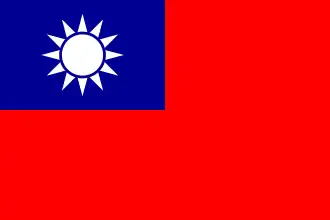
Image 6Flag of the Republic of China from 1928 to now (from History of China)
Image 17Red lanterns are hung from the trees during the Chinese New Year celebrations in Ditan Park (Temple of Earth) in Beijing. (from Chinese culture)
Image 18Tea caddy, Chinese - Indianapolis Museum of Art (from Chinese culture)
Image 19
Rulers of the world at the beginning of the 20th century
Image 52Photo showing serving chopsticks (gongkuai) on the far right, personal chopsticks (putongkuai) in the middle, and a spoon. Serving chopsticks are usually more ornate than the personal ones. (from Chinese culture)
Image 53Hair Ornament, China, c. 19th century (from Chinese culture)
Image 58Relief of a fenghuang in Fuxi Temple (Tianshui). They are mythological birds of East Asia that reign over all other birds. (from Chinese culture)
This is a list of recognized content, updated weekly by JL-Bot (talk · contribs) (typically on Saturdays). There is no need to edit the list yourself. If an article is missing from the list, make sure it is tagged (e.g. {{WikiProject China}}) or categorized correctly and wait for the next update. See WP:RECOG for configuration options.
Assess : rate the Unassessed China-related articles and Unknown-importance China-related articles, tag the talk pages of China-related articles with the {{WikiProject China}} banner.
Translate : please visit the Chinese translation department and the Chinese intertranswiki project for more details.
Verify :Transformers: Robots in Disguise (2015 TV series) - see Talk:Transformers: Robots in Disguise (2015 TV series)#In China on 1905.com from Dec 31, 2014 and Wikipedia talk:WikiProject Transformers/Archive 7#Transformers in (PR) China
The President of the Republic of China is the head of state of the Republic of China (ROC).
The Constitution names the president as head of state and commander-in-chief of the Republic of China Armed Forces (formerly known as the National Revolutionary Army). The president is responsible for conducting foreign relations, such as concluding treaties, declaring war, and making peace. The president must promulgate all laws and has no right to veto. Other powers of the president include granting amnesty, pardon or clemency, declaring martial law, and conferring honors and decorations.
The current President is Lai Ching-te(pictured), since May 20, 2024. Lai is a Taiwanese politician and former physician, who is currently serving as the eighth president of the Republic of China under the 1947 Constitution and the third president from the Democratic Progressive Party (DPP).
Related WikiProjects
You are invited to participate in WikiProject China, a WikiProject dedicated to developing and improving articles about China.



.jpg)


.png)


.jpg)


_(Dhondup_Wangchen_Headshot).jpg)


_female_3_crop.jpg)


-111425_(24150640974).jpg)


.svg.png)

_-_1958.213.b_-_Cleveland_Museum_of_Art.jpg)


.jpg)


.jpg)


.jpg)


.png)


_(cropped).jpg)


 wiki incubator Xiang (湘语)
 Commons
 Wikibooks
 Wikidata
 Wikinews
 Wikiquote
 Wikisource
 Wikiversity
 Wikivoyage
 Wiktionary
 List of all portals





 Random portal
 WikiProject Portals