Fadogia fuchsioides
Schweinf. ex Oliv.
RubiaceaeFruit

iNaturalist · cc-by-nc
(c) David Goyder, some rights reserved (CC BY-NC), uploaded by David Goyder
(c) David Goyder, some rights reserved (CC BY-NC), uploaded by David Goyder
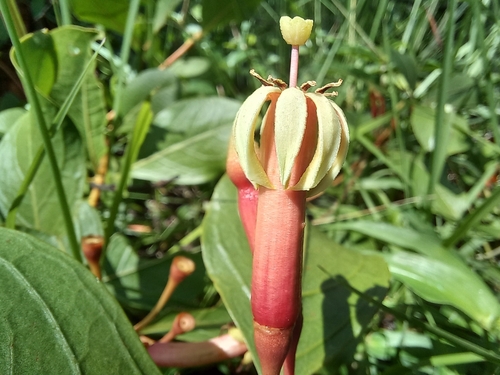
iNaturalist · cc-by-nc
(c) Nicholas Wightman, some rights reserved (CC BY-NC)
(c) Nicholas Wightman, some rights reserved (CC BY-NC)
What to Eat
Edible parts: Fruit pulp
The fruit pulp is edible.
Where to Find It
A tropical plant. It grows in open woodland. It is in higher rainfall areas and on rocky outcrops.
Africa, Angola, Central Africa, Congo DR, East Africa, Malawi, Tanzania, Zambia,
Countries: Angola, Burkina Faso, Burundi, Benin, Botswana, Congo (DRC), Central African Republic, Congo (Republic), Cote d'Ivoire, Cameroon, Cape Verde, Djibouti, Algeria, Egypt, Eritrea, Ethiopia, Gabon, Ghana, Gambia, Guinea, Equatorial Guinea, Guinea-Bissau, Kenya, Comoros, Liberia, Lesotho, Libya, Morocco, Madagascar, Mali, Mauritania, Mauritius, Malawi, Mozambique, Namibia, Niger, Nigeria, Rwanda, Seychelles, Sudan, Sierra Leone, Senegal, Somalia, South Sudan, Sao Tome & Principe, Eswatini, Chad, Togo, Tunisia, Tanzania, Uganda, South Africa, Zambia, Zimbabwe
How to Identify
A herb. It grows 30-150 cm tall. The leaves are in rings of 3-4. There are 1-3 flowers in a group.
Names & Synonyms
Kolobondo
Pachystigma fuchsioides (Schweinf. ex Oliv.) K. Schum.Temnocalyx fuchsioides (Schweinf. ex Oliv.) Robyns
References (3)
- Jardin, C., 1970, List of Foods Used In Africa, FAO Nutrition Information Document Series No 2.p 165 (As Temnocalyx fuchsioides)
- Malaisse, F., 1997, Se nourrir en floret claire africaine. Approche ecologique et nutritionnelle. CTA., p 69 (As Temnocalyx fuchsioides)
- World Checklist of Useful Plant Species 2020. Royal Botanic Gardens, Kew


