Terminalia bursarina
F. Muell.
Pirijpirij, Bendee

(c) geoffbyrne, some rights reserved (CC BY-NC)
(c) jake_barker1, some rights reserved (CC BY-NC)
What to Eat
Edible parts: Gum
The edible gum from the tree is eaten; if hardened, it can be softened by heating in fire.
Where to Find It
A tropical plant. It grows along the banks of rivers and creeks.
Australia*,
How to Identify
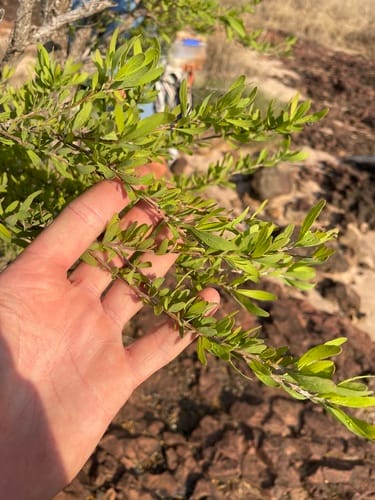
A small tree. It has a rough and dark-grey "crocodile" bark. The inner wood is hard and yellow. The leaves are arranged in a spiral. They are 1.5-5 cm long and 0.2-2.5 cm wide. They are crowded on small branches. The fruit are 0.8-1.5 cm long and 0.4-0.9 cm wide. They are green-brown and have 2 narrow wings and a short beak.
Wikipedia
Source ↗Terminalia bursarina, commonly known as bendee, is a tree of the family Combretaceae native to northern parts of Australia. The erect and straggly tree typically grows to a height of 8 metres (26 ft) in height and has deeply fissured bark. It blooms between June and September producing white-yellow flowers. The species is very similar to Terminalia canescens but has smaller leaves and fruits. It is in rock crevices and in river beds in the Kimberley region of Western Australia and the Northern Territory growing in sandy-stony soils over sandstone.
Production
The tree exudes gum which is eaten.
Notes
There are about 200-250 Terminalia species. They are tropical.
Names & Synonyms
References (2)
- Petheram, R.J. and Kok, B., 2003, Plants of the Kimberley Region of Western Australia. UWA Press p 525
- Wightman, Glenn et al. 1994, Gurindji Ethnobotany: Aboriginal Plant Use from Daguragu Northern Australia. Northern Territory Botanical Bulletin No 18. Parks and Wildlife Commission of the Northern Territory. p 50.


