Theophrasta jussieui
Lindl.

iNaturalist · cc-by-nc
(c) William Cinea, some rights reserved (CC BY-NC), uploaded by William Cinea
(c) William Cinea, some rights reserved (CC BY-NC), uploaded by William Cinea

wikimedia · cc0
Wikimedia Commons - Daderot
Wikimedia Commons - Daderot
What to Eat
Edible parts: Fruit, Seeds
The seeds are used to make bread. The fruit is also edible.
Where to Find It
A tropical plant. It grows from sea level to 1,000 m above sea level.
Dominican republic*, Haiti*, Hispaniola, South America, West Indies*,
Countries: Antigua & Barbuda, Argentina, Barbados, Bolivia, Brazil, Bahamas, Chile, Colombia, Cuba, Dominica, Dominican Republic, Ecuador, Grenada, French Guiana, Guyana, Haiti, Jamaica, St Kitts & Nevis, St Lucia, Peru, Puerto Rico, Paraguay, Suriname, Trinidad & Tobago, Uruguay, St Vincent, Venezuela
How to Identify
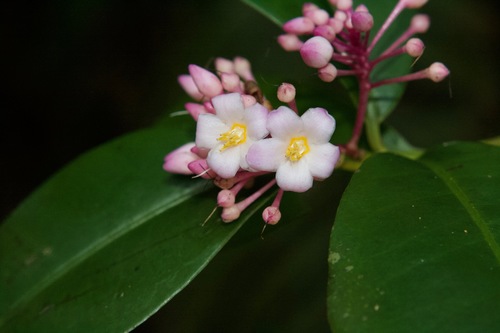
A plant with a short stem of about 5 cm across. It can grow 2 m tall. The stem is surrounded by a thick crown of leaves. These are 20-50 cm long by 5-10 cm wide. They have large teeth along the edge. The fruit is a fleshy berry. It is round and yellow with small brown dots. It is 2-4 cm across with many small seeds 1 cm long.
How to Grow
It grows from seed.
Notes
Also put in the family Theophrastaceae.
Names & Synonyms
Coque molle
Theophrasta densiflora DecneTheophrasta henrici Ham.
References (3)
- Hedrick, U.P., 1919, (Ed.), Sturtevant's edible plants of the world. p 648
- Menninger, E.A., 1977, Edible Nuts of the World. Horticultural Books. Florida p 121
- Plants of Haiti Smithsonian Institute http://botany.si.edu/antilles/West Indies