Thymbra spicata
L.
Black thyme, Za'atar hommar, Donkey hyssop
(c) Konrad and Roland Greinwald, some rights reserved (CC BY-NC), uploaded by Konrad and Roland Greinwald
(c) rana_el_zein, some rights reserved (CC BY-NC), uploaded by rana_el_zein
(c) Krylenko VV, some rights reserved (CC BY-NC), uploaded by Krylenko VV
What to Eat
Edible parts: Leaves, Spice, Leaves - tea
The plant is occasionally used as a condiment. Its essential oils have a flavour similar to those of Origanum syriacum, Thymus capitatus, and Satureia thymbra.
Where to Find It
It is a temperate plant. It grows on sunny slopes. It suits plant hardiness zone 8.
Europe, Greece, Israel, Mediterranean, Middle East, Turkey, Türkiye,
How to Identify
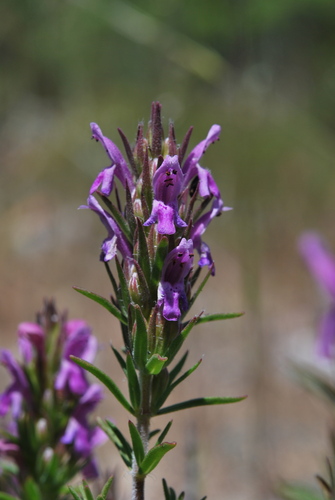
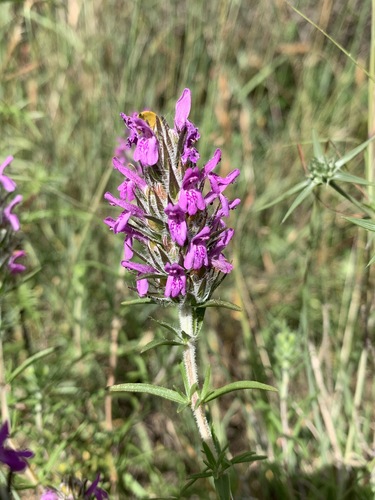
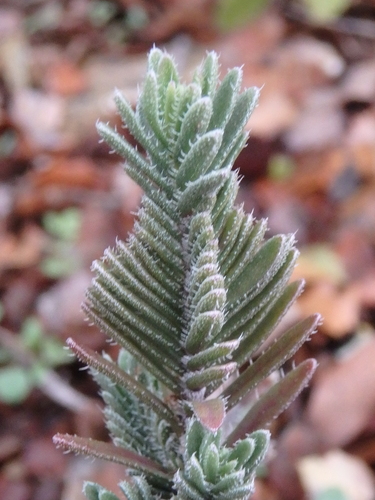
A small, low growing shrub. It grows 55 cm high. The leaves are smooth and narrow. The leaves overlap. They are entire and about 1.3 cm long. The flowers are pink to mauve. They are in spikes up to 10 cm long.
How to Grow
Succeeds in a sunny position in most well-drained soils. This species is not hardy in the colder areas of the country, it tolerates temperatures down to between -5 and -10°c. A good bee plant.
Propagation: Sow seed in spring in a greenhouse. Prick seedlings into individual pots when large enough to handle and grow on under glass for at least their first winter, then plant out in late spring or early summer after the last expected frosts. Take half-ripe cuttings in July/August in a frame. Divide plants in spring; larger divisions can go directly into permanent positions, while smaller ones are best potted up and grown on in light shade until established, then planted out in summer or the following spring.
Medicinal Uses
None known
Other Uses
The plant is used as an incense.
Wikipedia
Source ↗Thymbra spicata, also commonly known as spiked savoury, spiked thymbra, thyme spike and donkey hyssop, is a perennial-green dwarf shrub of the family Lamiaceae, native to Greece, Cyprus, Turkey, Syria, Lebanon, Israel, Palestine, Jordan, Iraq and Iran, having erect stems bearing strongly scented leaves, rich in polyphenols such as rosmarinic acid, carvacrol (CVL) and different flavonoids.
Notes
There are 2 or 3 Thymbra species.
Names & Synonyms
Cahter, Cehteri, Seyil kekigi, Zahter, Zehter
References (11)
- Demir, I. & Ayaz, N., 2022, Wild edible plants contributing to the traditional foods of Mardin (Turkey) Province. Indian Journal of Traditional Knowledge Vol 21(3), July 2022, pp 569-582
- Dogan, Y., 2012, Traditionally used wild edible greens in the Aegean Region of Turkey. Acta Societatis Botanicorum Poloniae 81(4): 329-342
- Dogan, Y. et al, 2013, Wild Edible Plants sold in the Local Markets of Izmir, Turkey. Pak. J. Bot. 45(S1): 177-184
- Ertug, F., 2004, Wild Edible Plants of the Bodrum Area. (Mugla, Turkey). Turk. J. Bot. 28 (2004): 161-174
- Ertug, F, Yenen Bitkiler. Resimli Türkiye Florası -I- Flora of Turkey - Ethnobotany supplement
- Facciola, S., 1998, Cornucopia 2: a Source Book of Edible Plants. Kampong Publications, p 137
- Gunes, S. et al, 2018, Survey of wild food plants for human consumption in Karaisali (Adana-Turkey). Indian Journal of Traditional Knowledge. Vol. 17(2), April 2018, pp 290-298
- Kaya, O. M., et al, 2020, An ethnobotanical research in Sanhurfa central district and attached Villages (Turkey). Indian Journal of Traditional Knowledge. Vol. 19(1) pp 7-23
- Lawton, B.P., 2002, Mints. A Family of Herbs and Ornamentals. Timber Press, Portland, Oregon. p 209
- Yesil, Y., et al, 2019, Wild edible plants in Yeşilli (Mardin-Turkey), a multicultural area. Journal of Ethnobiology and Ethnomedicine (2019) 15:52
- Yesil, Y., et al, 2019, Traditional knowledge of wild edible plants in Hasankeyf (Batman Province, Turkey). Acta Societatis Botanicorum Poloniae. 88(3):3633