Thymus praecox subsp. ligusticus
(Briq.) Paiva & Salgueiro
Wild thyme
(c) Stefan Gey, some rights reserved (CC BY-NC), uploaded by Stefan Gey

(c) Sten Porse, some rights reserved (CC BY-SA)

(c) Karl Gruber, some rights reserved (CC BY)
What to Eat
Edible parts: Leaves
This thyme has a strong scent similar to Oregano. It can be used in cuisine. Like other species of thyme, Thymus praecox is characterized by substantial differences in essential oil composition from plant to plant. Plants which differ in this way are known as chemotypes and a geographical population will generally contain a mix of chemotypes. For example, studies of chemotypes in Greenland, Iceland, Norway, England, Scotland, and Ireland show that chemotypes span those countries rather than being geographically localized. Some of those areas contain greater chemotype diversity than others.
Where to Find It
It is a temperate plant.
Britain, Europe,
How to Identify
A herb.
Wikipedia
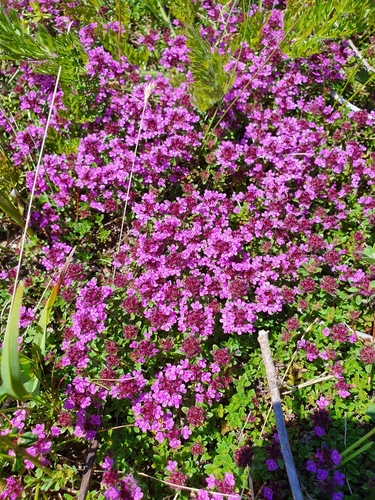
Source ↗Thymus praecox is a species of thyme. A common name is mother of thyme, but "creeping thyme" and "wild thyme" may be used where Thymus serpyllum, which also shares these names, is not found. It is native to central, southern, and western Europe.
Notes
There are between 300 and 400 Thymus species.
Names & Synonyms
References (2)
- Mabey, R., 1973, Food for Free. A Guide to the edible wild plants of Britain, Collins. p 1356 (As Thymus drucei)
- Morley, B. & Everard, B., 1970, Wild Flowers of the World. Ebury press. Plate 5 (As Thymus drucei)