Triticum dicoccoides
(Korn. ex Asch. & Graebn.) Schweinf.
Wild emmer

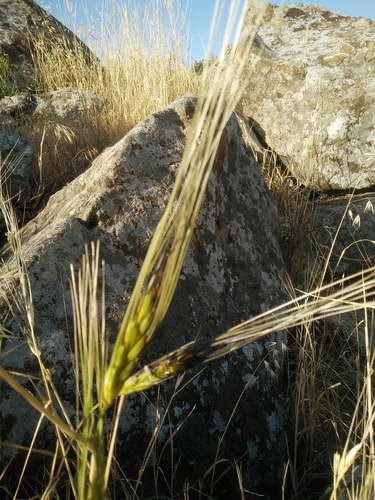
(c) mak, some rights reserved (CC BY-NC-ND), uploaded by mak
(c) דבורה שיצר, some rights reserved (CC BY-NC), uploaded by דבורה שיצר
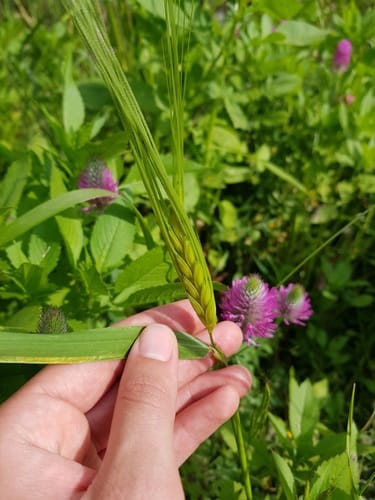
(c) s_alfonta, some rights reserved (CC BY-NC)
What to Eat
Edible parts: Seeds, Cereal
Emmer's main use is as food, though it is also used as fodder. Ethnographic evidence from Turkey and other emmer-growing areas suggests that emmer makes good bread (judged by the taste and texture standards of traditional bread); it was widely eaten as bread in ancient Egypt. In Armenian cuisine, emmer pilaf is cooked in sunflower oil. The pre-cooked emmer is fried in oil and then sautéed onions are added. In the second version, boiled water and emmer are added to the sautéed onion and then cooked until tender. In Armenia, emmer porridge with lamb called "kashovi" is widespread in the Shirak region, while lean kashovi is known in all regions of Armenia. Chopped lamb is added to cold water then boiled for 10 minutes, emmer and sautéed onion are added and cooked over a low heat until tender. Emmer is the most common variety of farro grown in Italy, specifically in certain mountain regions of Tuscany and Abruzzo, and can be found in most supermarkets and groceries. It is considered to be of higher quality for cooking than the other two grains and thus is sometimes called "true" farro. The whole grains can be cooked in water until soft and used as a side dish, or added into salads, soups and desserts. Emmer bread (pane di farro) can be found in bakeries in some areas. Emmer has also been used in beer production. Emmer has antihyperglycemic properties and antioxidant activity, which could be useful as part of a diet for type 2 diabetes in its early stages. As with all varieties and hybrids of wheat, emmer is unsuitable for people with gluten-related disorders, despite the popular claim that ancient grains contain less gluten.
Where to Find It
Probably in Syria and Palestine. It is probably the ancestor of Triticum dicoccum or Emmer.
Africa, Armenia, Caucasus, Mauritania, Mediterranean, Middle East, Palestine, Syria, West Africa,
How to Identify
A grass species in the Poaceae family, probably native to Syria and Palestine and likely the ancestor of cultivated emmer wheat.
References (6)
- Ber. Deut. Bot. Ges. 26a:310. 1908
- Facciola, S., 1998, Cornucopia 2: a Source Book of Edible Plants. Kampong Publications, p 181
- Haruntyunyan, M., et al, 2010, Red List assessment of nine Aegilops species in Armenia. Genet. Resour. Crop Evol. 57:1177-1189
- Jardin, C., 1970, List of Foods Used In Africa, FAO Nutrition Information Document Series No 2.p 9
- Purseglove, J.W., 1972, Tropical Crops. Monocotyledons. Longmans p 289
- Tanaka,


