Triticum timopheevii
(Zhuk.) Zhuk.
Sanduri, Tschalta sanduri, Zanduri wheat
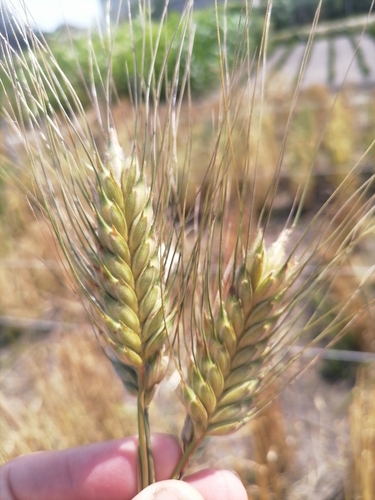
(с) Aliaksandr Mialik, некоторые права защищены (CC BY-NC), загрузил Aliaksandr Mialik
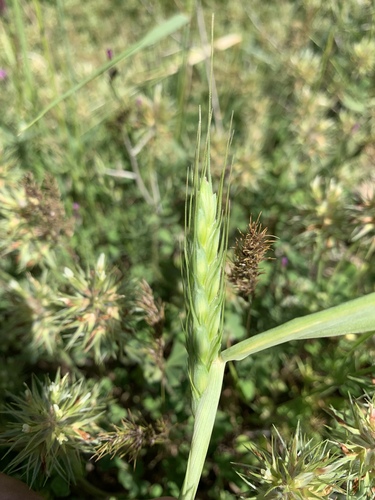
(с) Arya Aras, некоторые права защищены (CC BY-NC), загрузил Arya Aras

Wikimedia Commons - Tracey Slotta
What to Eat
Edible parts: Seeds, Cereal
The seed is cooked and most commonly ground into flour for use as a cereal in making bread, biscuits, and similar products.
Where to Find It
It is native to the Republic of Georgia.
Asia, Caucasus, Georgia, Iran, Iraq, Turkey, Türkiye,
How to Identify
An annual wheat with June to July flowering and August to September seed ripening. Wind-pollinated hermaphrodite thriving in sandy, loamy, or clay soils with good drainage and neutral to mildly alkaline pH ranges. Demands full sun exposure and moist soil. Not frost tender.
How to Grow
Succeeds in most well-drained soils in a sunny position. An ancient grain crop, it is still occasionally cultivated for its edible seed in Georgia and other areas in W. Asia. A very disease resistant plant.
Propagation: Sow seed in early spring or autumn directly in situ, barely covering it. Germination should occur within a few days.
Medicinal Uses
None known
Other Uses
The straw serves many purposes, including as a biomass fuel, thatching material, and garden mulch. Fibre extracted from the stems can be used to make paper: stems are harvested in late summer after seed collection, cut into usable pieces, soaked in clear water for 24 hours, cooked for 2 hours in lye or soda ash, then beaten in a ball mill for 1½ hours, producing a green-tan paper. Starch from the seed is used for laundering and sizing textiles, and can also be converted to alcohol for use as a fuel.
Wikipedia
Source ↗Triticum timopheevii, Timopheev's wheat or Zanduri wheat (from Georgian ზანდური), is a tetraploid wheat that has both cultivated and wild forms. It is believed to have evolved in isolation from the more common Triticum turgidum; hybrids between T. timopheevii and T. turgidum are reportedly sterile with "a considerable amount of chromosomal irregularities in meiosis." The wild form (formerly categorized as T. araraticum Jakubz.) can be found across south-eastern Turkey, north Iraq, west Iran and Transcaucasia - but the domesticated form is restricted to western Georgia.
Other Information
It is a cultivated food plant.
Names & Synonyms
References (7)
- Chemonics International Inc., 2000, Biodiversity Assessment of Georgia. USAID Contract.
- Facciola, S., 1998, Cornucopia 2: a Source Book of Edible Plants. Kampong Publications, p 183
- Plants for a Future database, The Field, Penpol, Lostwithiel, Cornwall, PL22 0NG, UK. http://www.scs.leeds.ac.uk/pfaf/
- Uphof,
- USDA, ARS, National Genetic Resources Program. Germplasm Resources Information Network - (GRIN). [Online Database] National Germplasm Resources Laboratory, Beltsville, Maryland. Available: www.ars-grin.gov/cgi-bin/npgs/html/econ.pl (10 April 2000)
- Wiersema, J. H. & Leon, B., 2013, World Economic Plants. A Standard Reference CRC Press. 2nd Ed. p 699
- Zeven, A. C. & de West, J. M. J., 1982, Dictionary of cultivated plants and their regions of diversity. Wageningen. p 94


