Tuber magnatum
(Pico) Vittadini
White truffle, Italian truffle, The Piedmont, Alba truffle, Winter black truffle
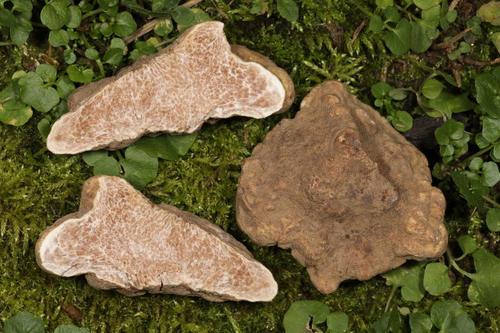
iNaturalist · cc-by-nc-sa
(c) John Plischke, some rights reserved (CC BY-NC-SA), uploaded by John Plischke
(c) John Plischke, some rights reserved (CC BY-NC-SA), uploaded by John Plischke

iNaturalist · cc-by-nc
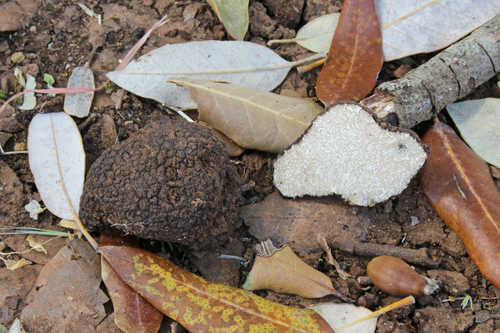
(c) Luca Sacchetti, some rights reserved (CC BY-NC)
(c) Luca Sacchetti, some rights reserved (CC BY-NC)

iNaturalist · cc-by-nc
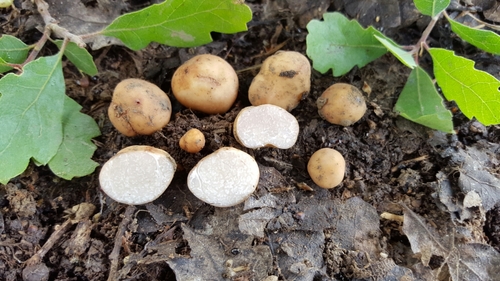
(c) Yibo Liu, some rights reserved (CC BY-NC)
(c) Yibo Liu, some rights reserved (CC BY-NC)
What to Eat
Edible parts: Mushroom, Herb, Spice, Fungus, Vegetable
White truffles are considered edible.
Where to Find It
It is a temperate plant.
Balkans, Britain, Bulgaria, Croatia, Europe, France, Italy, Japan, Mediterranean, Serbia, Slovenia, Switzerland,
Countries: Andorra, Albania, Austria, Bosnia & Herzegovina, Belgium, Bulgaria, Belarus, Switzerland, Cyprus, Czechia, Germany, Denmark, Algeria, Estonia, Egypt, Spain, Finland, France, United Kingdom, Greece, Croatia, Hungary, Ireland, Israel, Iceland, Italy, Japan, Lebanon, Liechtenstein, Lithuania, Luxembourg, Latvia, Libya, Morocco, Monaco, Moldova, Montenegro, North Macedonia, Malta, Netherlands, Norway, Poland, Portugal, Romania, Serbia, Russia, Sweden, Slovenia, Slovakia, San Marino, Syria, Tunisia, Turkey, Ukraine
How to Identify
A mushroom.
Wikipedia
Source ↗Tuber magnatum, the white truffle (Italian: tartufo bianco d'Alba), is a species of truffle in the order Pezizales and family Tuberaceae. It is mainly found in Italy, but also in other parts of Southern Europe, as well as Thailand.
Production
Fruiting bodies weighing 500 g can be found. It can only be stored for about 7 days.
Notes
There are about 100 Tuber species.
Names & Synonyms
Yidali baikiujun
Tuber griseum Pers.
References (14)
- Bianchini, F., Corbetta, F., and Pistoia, M., 1975, Fruits of the Earth. Cassell. p 118
- Cerne, M., 1992, Wild Plants from Slovenia used as Vegetables. Acta Horticulturae 318
- Facciola, S., 1998, Cornucopia 2: a Source Book of Edible Plants. Kampong Publications, p 256
- Hall, I. R., et al, 2003, Edible and Poisonous Mushrooms of the World. Timber Press. p 263, 316
- Hall, I. R. Ectomycorrhizal Fungi with Edible Fruiting Bodies, 3. Tuber magnatum, Tuberaceae. Economic Botany, Vol. 52, No. 2, pp. 192-200
- Jordan, P., 2000, The Mushroom Guide and Identifier, Hermes House, p 95
- Kaye, G.C., 1986, Wild and Exotic Mushroom Cultivation in North America
- Mattia, B., et al, 2009, The Cultivation of Truffles in Italy. Acta Botanica Yunnanica. 0253-2700 Suppl. XVI - 021-08
- Mulherin, J., 1994, Spices and natural flavourings. Tiger Books, London. p 61
- Pace, G., 1998, Mushrooms of the world. Firefly books. p 240
- Radomir, M., et al, 2018, Conservation and trade of wild edible mushrooms of Serbia – history, state of the art and perspectives. Nature Conservation 25: 31–53
- Schneider, E., 2001, Vegetables from Amaranth to Zucchini: The essential reference. HarperCollins. p 673
- Uphof,
- www.plantnames.unimelb.edu.au
More from Eutuberaceae
Tuber aestivum
Truffle, Summer truffle, Cook's truffle, Red-grained black truffle, Summer black truffle, Truffe de la Saint-Jean

Tuber aestivum var. uncinatum

Tuber borchii
March truffle, Tuscan white truffle

Tuber brumale var. moschatum
Tuber californicum
California truffle

Tuber excavatum
Hollowed truffle