Typhonium divaricatum
(L.) Decne.
iNaturalist · cc-by
(c) pbsg, some rights reserved (CC BY)
(c) pbsg, some rights reserved (CC BY)
iNaturalist · cc-by
(c) pbsg, some rights reserved (CC BY)
(c) pbsg, some rights reserved (CC BY)
iNaturalist · cc-by
(c) pbsg, some rights reserved (CC BY)
(c) pbsg, some rights reserved (CC BY)
What to Eat
Edible parts: Bulbs, Leaves
The bulbs and leaves are eaten, particularly in times of scarcity.
Where to Find It
It is a tropical plant.
Asia, China, Guam, India, Indonesia, SE Asia, Taiwan,
Countries: United Arab Emirates, Afghanistan, Armenia, Azerbaijan, Bangladesh, Bahrain, Brunei, Bhutan, China, Georgia, Indonesia, Israel, India, Iraq, Iran, Jordan, Japan, Kyrgyzstan, Cambodia, North Korea, South Korea, Kuwait, Kazakhstan, Laos, Lebanon, Sri Lanka, Myanmar, Mongolia, Maldives, Malaysia, Nepal, Oman, Philippines, Pakistan, Qatar, Saudi Arabia, Singapore, Syria, Thailand, Tajikistan, Timor-Leste, Turkmenistan, Turkey, Taiwan, Uzbekistan, Vietnam, Yemen
How to Identify
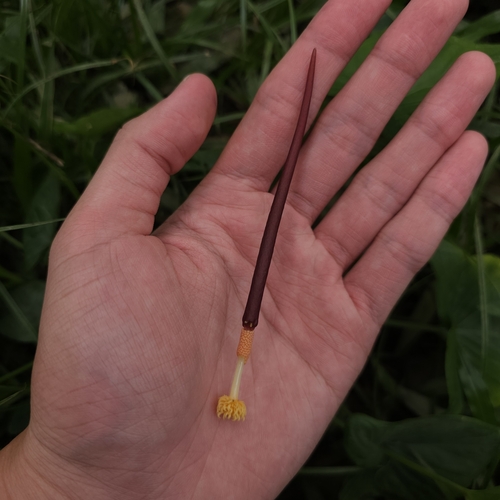
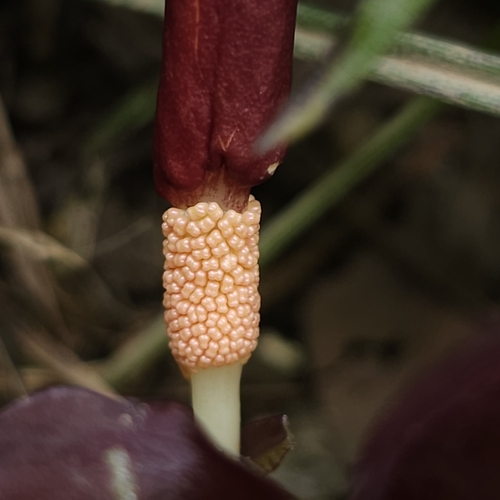
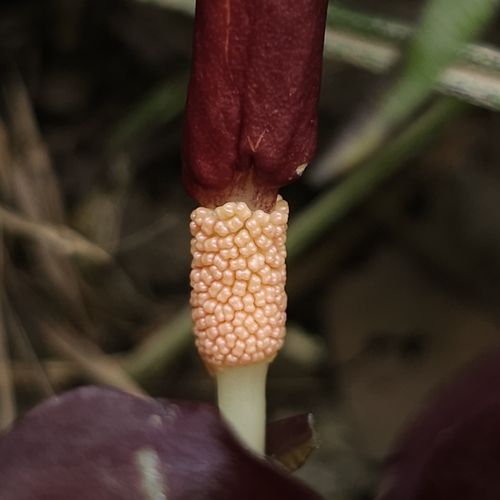
A taro family herb. It has underground tubers. The stems are short and have heart shaped leaves. The leaves are 15-18 cm long. Around the flower is a green spathe that narrows to a tip at the end. The fruit are oval berries with 1 or 2 seeds.
Notes
There are about 50 Typhonium species.
Names & Synonyms
Pantake
Arum divaricatum L.
References (4)
- Altschul, S.V.R., 1973, Drugs and Foods from Little-known Plants. Notes in Harvard University Herbaria. Harvard Univ. Press. Massachusetts. no. 148
- Ambasta, S.P. (Ed.), 2000, The Useful Plants of India. CSIR India. p 659
- Stone, B.,
- WATT


