Urochloa deflexa
(Schumach) H. Scholz
False signal grass, Guinea millet
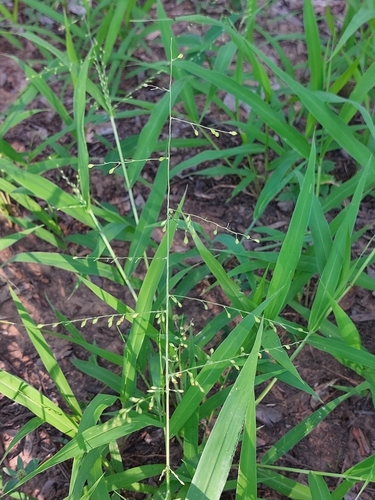
(c) Bart Wursten, some rights reserved (CC BY-NC)
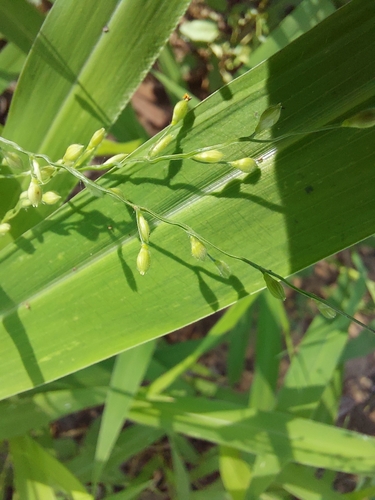
(c) Bart Wursten, some rights reserved (CC BY-NC)
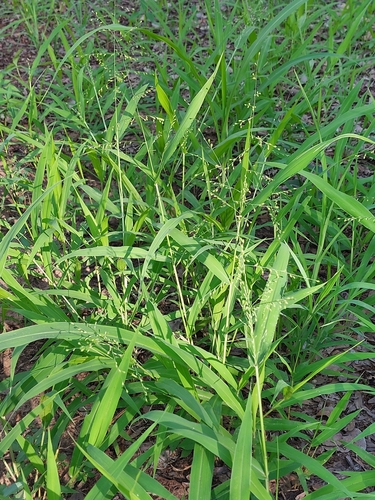
(c) Bart Wursten, some rights reserved (CC BY-NC)
What to Eat
Edible parts: Seeds, Cereal
Guinea millet is a grain that has been used for centuries as a grain in times of famine. In Ancient Africa, people of the Songhai Empire (modern day Mali) and the Bambara Empire (modern day Mali) would consume this grass and called it “paguiri” and “yaqué yaqué” respectively. In modern Sahel, it is harvested by local populations and nomadic tribes as a supplemental food source. Small millets of the Poaceae family are resilient and nutritious. Guinea millet and other small grains are as much as five-sevenfold better in terms of proteins, vitamins, fiber, and other macro- and micro- compounds. In addition, it has strong agronomic qualities such as not requiring much irrigation or pesticide use which make it easy to cultivate and manage. Thus, small millets are optimal to address food insecurity and its use as a substitute for larger grains (e.g. Rice and Wheat) are being studied.
Where to Find It
A tropical plant. It is resistant to drought. It can grow in light shade.
Africa, Angola, Asia, Benin, Botswana, Burkina Faso, Cameroon, Central Africa, Côte d'Ivoire, East Africa, Ethiopia, Gambia, Ghana, Guinea, Guinée, Guinea-Bissau, India, Ivory Coast, Kenya, Malawi, Mali, Middle East, Mozambique, Namibia, Nigeria, Pakistan, Senegal, Somalia, South Africa, Southern Africa, Sudan, Tanzania, Togo, Uganda, West Africa, Zambia, Zimbabwe, Yemen,
How to Identify
A millet grass which grows to 1 m tall. It forms loose tufts. It grows each year from seeds.
Wikipedia
Source ↗Urochloa deflexa, commonly known as Guinea millet, is an annual millet grass belonging to the grass family (Poaceae). It is native to many regions such as Africa, India, and Pakistan in both tropical and subtropical regions. It has been used as a supplemental food source among other cereal crops.
Production
Plants mature in 70-75 days.
Notes
There are 12 Urochloa species.
Names & Synonyms
References (8)
- Bull. Mus. Natl. Hist. Nat., B, Adansonia 11:443. 1990 ("1989")
- Burkill, H. M. ,1985, The useful plants of west tropical Africa, Vol 2
- Dalziel,
- Mutie, F. M., et al, 2023, Important Medicinal and Food Taxa (Orders and Families) in Kenya, Based on Three Quantitative Approaches. Plants 2023, 12, 1145
- Purseglove, J.W., 1972, Tropical Crops. Monocotyledons. Longmans p 143 (As Brachiaria)
- USDA, ARS, National Genetic Resources Program. Germplasm Resources Information Network - (GRIN). [Online Database] National Germplasm Resources Laboratory, Beltsville, Maryland. Available: www.ars-grin.gov/cgi-bin/npgs/html/econ.pl (10 April 2000)
- Wiersema, J. H. & Leon, B., 2013, World Economic Plants. A Standard Reference CRC Press. 2nd Ed. p 706
- World Checklist of Useful Plant Species 2020. Royal Botanic Gardens, Kew


