Viola brevistipulata
(Franch. & Sav.) W. Becker

(c) Keita Watanabe, some rights reserved (CC BY-NC), uploaded by Keita Watanabe
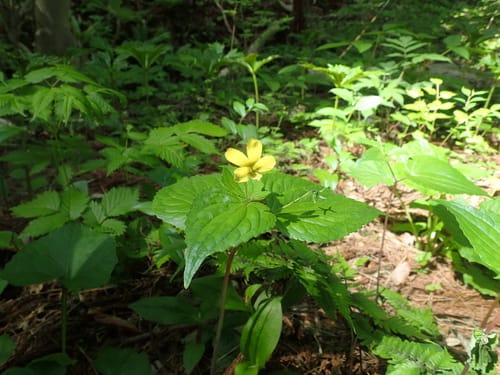
(c) hakkahamushi, some rights reserved (CC BY-NC)
What to Eat
Edible parts: Flowers, Leaves
Young leaves and flower buds can be eaten raw or cooked. When added to soup they thicken it in much the same way as okra. Caution is advised if the plant bears yellow flowers, as these can cause diarrhoea if eaten in large quantities. The leaves can be used to make a tea.
Where to Find It
It is a temperate plant.
Asia, Japan, Manchuria,
How to Identify
A perennial growing to 30cm tall with hermaphrodite flowers pollinated by insects. Adapts to light, medium, or heavy well-drained soils with mildly acid to neutral pH. Can grow in semi-shade or full sun and prefers moist soil conditions.
How to Grow
Propagation: Seed is best sown in autumn in a cold frame. Stored seed can be sown in early spring in a cold frame. Prick seedlings into individual pots when large enough to handle and plant out during summer. Divide plants in autumn or just after flowering. Larger divisions can go directly into permanent positions, but smaller divisions do best potted up and grown on in light shade in a greenhouse or cold frame until established, then planted out in summer or the following spring.
Medicinal Uses
None known
Other Uses
None known Special Uses
Wikipedia
A perennial growing to 30cm tall with hermaphrodite flowers pollinated by insects. Adapts to light, medium, or heavy well-drained soils with mildly acid to neutral pH. Can grow in semi-shade or full sun and prefers moist soil conditions.
Notes
There are about 500 Viola species.
References (2)
- Beih. Bot. Centralbl. 34:265. 1916
- Plants for a Future database, The Field, Penpol, Lostwithiel, Cornwall, PL22 0NG, UK. http://www.scs.leeds.ac.uk/pfaf/