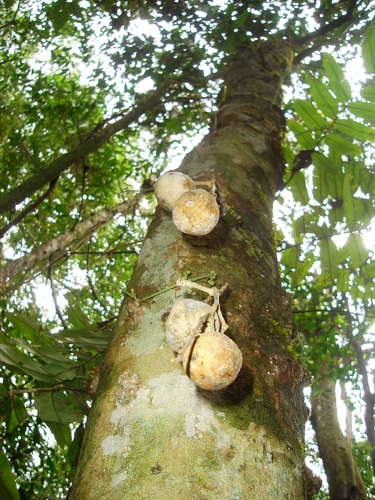
Viola mirabilis
L.
(c) 海野ふる子, some rights reserved (CC BY-NC), uploaded by 海野ふる子

(c) Мария Филатова, some rights reserved (CC BY-NC)

(c) Мария Филатова, some rights reserved (CC BY-NC)
What to Eat
Edible parts: Flowers, Leaves
Young leaves and flower buds can be eaten raw or cooked. When added to soup, they act as a thickener much like okra. The leaves can also be brewed into a tea.
Where to Find It
It is a temperate plant. It grows in forests and grassy slopes below 2,000 m above sea level.
Asia, China, Europe, Italy, Japan, Korea, Luxembourg, Mediterranean, Mongolia, Russia, Slovenia,
How to Identify
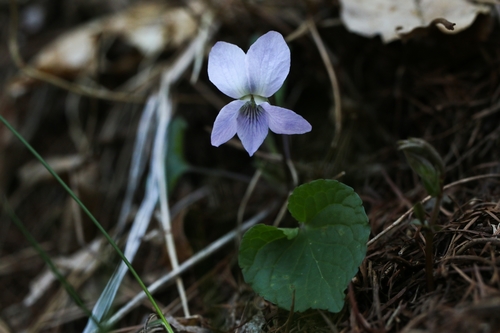
A herb. It keeps growing from year to year. It does not have a stem until flowering. It is then 6-23 cm tall. The flowers are purple or violet.
How to Grow
Prefers a cool moist well-drained humus-rich soil in partial or dappled shade and protection from scorching winds. Tolerates sandstone and limestone soils but becomes chlorotic if the pH is too high. Prefers a pH between 6 and 6.5. All members of this genus have more or less edible leaves and flower buds, though those species with yellow flowers can cause diarrhoea if eaten in large quantities.
Propagation: Seed is best sown in autumn in a cold frame. Stored seed can be sown in early spring in a cold frame. Prick out seedlings into individual pots when large enough to handle and plant out in summer. Divide plants in autumn or just after flowering. Larger divisions can go straight into permanent positions, but smaller divisions are better potted up and grown on in light shade in a greenhouse or cold frame until establishing well, then planted out in summer or the following spring.
Medicinal Uses
Cardiac.
Other Uses
No other uses known.
Wikipedia
Source ↗Viola mirabilis is a species of flowering plant belonging to the family Violaceae. It is native to temperate areas of Eurasia.
Notes
There are about 500 Viola species.
Names & Synonyms
References (4)
- http://www.botanic-gardens-ljubljana.com/en/plants
- Paoletti, M.G., Dreon, A.L., and Lorenzoni, G.G., 1995, Pistic, Traditional Food from Western Friuli, NE Italy. Economic Botany 49(1) pp 26-30
- Plants for a Future database, The Field, Penpol, Lostwithiel, Cornwall, PL22 0NG, UK. http://www.scs.leeds.ac.uk/pfaf/
- Sp. pl. 2:936. 1753