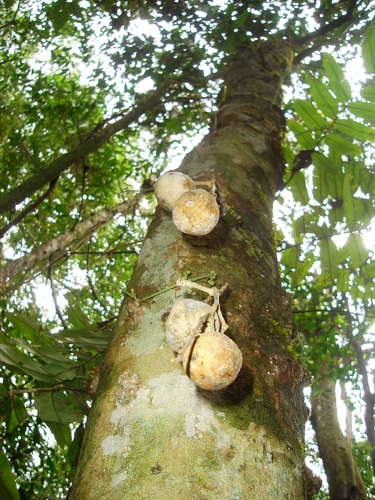
Viola palmata
Linn.
Wood violet, Palmate violet, Wild okra

(c) John Trent, some rights reserved (CC BY-NC-ND), uploaded by John Trent
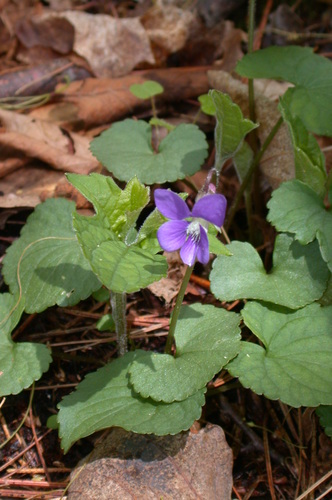
(c) mhough, some rights reserved (CC BY-NC), uploaded by mhough
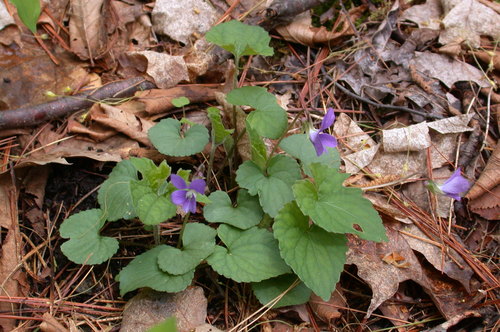
(c) mhough, some rights reserved (CC BY-NC), uploaded by mhough
What to Eat
Edible parts: Flowers, Leaves
Young leaves and flower buds — raw or cooked. A tea can be made from the leaves.
Where to Find It
It is a temperate plant. It grows on the edges of woodlands and in moist fields. It is often along streams and ponds. They do well in acidic soil.
North America, USA,
How to Identify
A herb. It keeps growing from year to year. It has a thick, long underground stem or rhizome. The leaves are 5-12 cm long. They are widest near the base and have 5-11 lobes. There can be teeth along the edge. The flowers are reddish-violet. They occur singly at the top of the flower stalk. They are 2-5 cm across. They have 5 petals and the side ones have a short spur to the back. The fruit is an oval capsule. It is 5-15 mm long.
How to Grow
Plants are grown by seeds or division of the roots.
Medicinal Uses
Emollient.
Other Uses
No other uses known.
Wikipedia
Source ↗Viola palmata, the trilobed violet, early blue violet, or wood violet (names it shares with other members of its genus), is a species of flowering plant in the family Violaceae. Viola palmata is native to southeastern Canada as well as the eastern half of the United States. Often confused with Viola triloba, V. palmata is a member of a class familiarly known as "blue stemless violets", characterized by its cleistogamous flowers on short prostrate peduncles, and often concealed under dead leaves or soil.
Notes
There are about 500 Viola species.
Names & Synonyms
References (5)
- Esperanca, M. J., 1988. Surviving in the wild. A glance at the wild plants and their uses. Vol. 2. p 356
- Hedrick, U.P., 1919, (Ed.), Sturtevant's edible plants of the world. p 680
- Kermath, B. M., et al, 2014, Food Plants in the Americas: A survey of the domesticated, cultivated and wild plants used for Human food in North, Central and South America and the Caribbean. On line draft. p 914
- Plants for a Future database, The Field, Penpol, Lostwithiel, Cornwall, PL22 0NG, UK. http://www.scs.leeds.ac.uk/pfaf/
- Sp. pl. 2:933. 1753