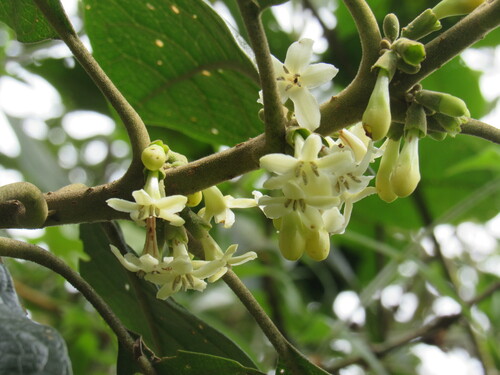
Vitex incisa
Lam.
LamiaceaeSeeds/Nuts

iNaturalist · cc-by
(c) Melissa McMasters, some rights reserved (CC BY)
(c) Melissa McMasters, some rights reserved (CC BY)

iNaturalist · cc-by
(c) Melissa McMasters, some rights reserved (CC BY)
(c) Melissa McMasters, some rights reserved (CC BY)

iNaturalist · cc-by
(c) Melissa McMasters, some rights reserved (CC BY)
(c) Melissa McMasters, some rights reserved (CC BY)
What to Eat
Edible parts: Seeds
The seeds are washed to remove their bitter element and then ground into flour.
Where to Find It
It is a temperate plant.
Asia, China,
Countries: United Arab Emirates, Afghanistan, Armenia, Azerbaijan, Bangladesh, Bahrain, Brunei, Bhutan, China, Georgia, Indonesia, Israel, India, Iraq, Iran, Jordan, Japan, Kyrgyzstan, Cambodia, North Korea, South Korea, Kuwait, Kazakhstan, Laos, Lebanon, Sri Lanka, Myanmar, Mongolia, Maldives, Malaysia, Nepal, Oman, Philippines, Pakistan, Qatar, Saudi Arabia, Singapore, Syria, Thailand, Tajikistan, Timor-Leste, Turkmenistan, Turkey, Taiwan, Uzbekistan, Vietnam, Yemen
How to Identify
A shrub in the Lamiaceae family found in temperate regions.
Medicinal Uses
Purified extracts are believed to have medicinal properties. Vitex negundo is used for treating stored garlic against pests. It is also listed as one of the ten herbal medicine approved by the Department of Health as a cough remedy in the Philippines, and sold under the trade names Ascof, Plemex, and Lagundex. In Malaysia, it is used in traditional herbal medicine for women's health, including treatments for regulating the menstrual cycle, fibrocystic breast disease and post-partum remedies.
Notes
Also put in the family Verbenaceae.
References (2)
- Encycl. 2:612. 1788
- READ,