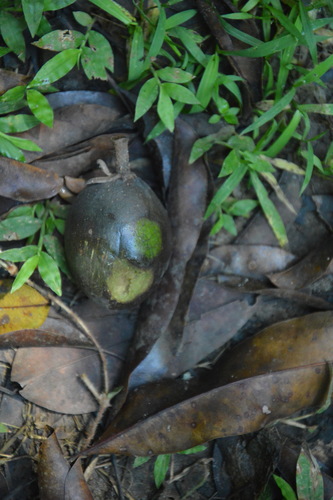
Argania spinosa
(L.) Skeels
Argan, Morocco iron-wood
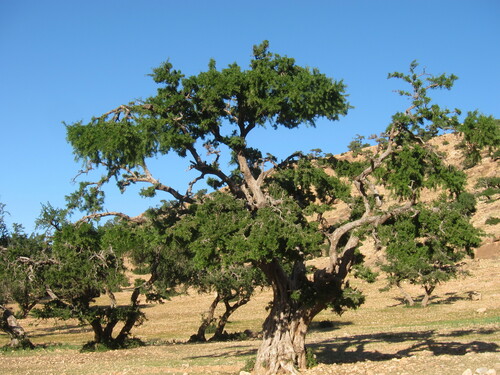
(c) César María Aguilar Gómez, some rights reserved (CC BY-NC)
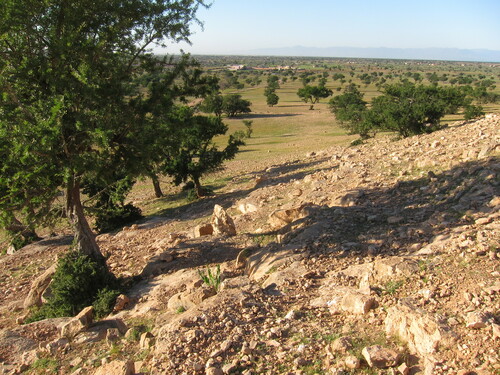
(c) César María Aguilar Gómez, some rights reserved (CC BY-NC)

(c) Maryam CHARKI, some rights reserved (CC BY-NC)
What to Eat
Edible parts: Nuts - oil, Leaves, Fruit, Gum
Edible Parts: Fruit Leaves Oil Seed Edible Uses: Chocolate Oil Edible portion: Nut - oil, Leaves, Fruit. An edible oil is obtained from the seed . The white seeds contain up to 50% of a light brown oil. This oil is an excellent source of vitamin E, and has a high nutritional value in the human diet. The locals mix oil with almonds and honey to make an almond butter; it also mixed with wheat germ and honey to make gruel. The residue from the kernels, after oil extraction, is a thick chocolate-coloured paste called 'amlou' which is sweetened and served as a dip for bread at breakfast time in Berber households. Its flavour is similar to that of peanut butter . The fruit are pressed for the oil which has an aroma and is used in cooking. The oil is cold pressed from the fruit. The oil is used like olive oil for cooking, frying and salad dressing.
Where to Find It
A tropical to Mediterranean climate plant. It grows in Southwest Morocco. It suits hot harsh environments and can tolerate brackish water. It can tolerate drought. It can tolerate frost. It grows in areas with an annual rainfall between 100-500 mm. It can grow in arid places.
Africa, Algeria, Amazon, Australia, Canary Islands, East Africa, Egypt, Europe, Haiti, Israel, Kenya, Libya, Mediterranean, Middle East, Morocco, North Africa, Peru, Spain, Sudan, West Indies,
How to Identify
A medium sized thorny evergreen tree. The leaves are small, oblong and hairless. They occur in clusters. The flowers are small and yellowish-green. The flowers are on the tips of the stems. The fruit are hard and green. They are like olives. The fruit have a stone with 3 kernels.
How to Grow
A plant of very arid areas, mainly in the subtropical areas of northwest Africa, but just entering the tropics in Mauritania, where it is found at elevations up to 1,500 metre. It grows best in areas where annual daytime temperatures are within the range 20 - 30°c, but can tolerate 10 - 35°c. Mature plants can be killed by temperatures of -2°c or lower, but new growth is severely damaged at 0°c. It prefers a mean annual rainfall in the range 200 - 300mm, but tolerates 100 - 400mm. Requires a sunny position. Succeeds in a wide range of soils, including very poor, dry soils. The tree is well suited to calcareous soils, sandy deposits and relatively poor semi desert soils conditions but not drifting sands or water-logged soils. Prefers a pH in the range 6.5 - 7.5, tolerating 6 - 8. Established plants are very drought tolerant - they can shed their foliage and remain in a state of dormancy for several years during prolonged droughts. Trees may start to bear when 5 - 6 years old from seed, and reach maximum production at the age of 60 years. Average fruit yield may be about 8 kg per tree. A long-lived species, with trees living for 200 - 400 years. Trees respond very well to coppicing.
Propagation: Seed
Medicinal Uses
Anticholesterolemic Digestive Tonic Vasodilator The oil from the seeds is rich in vitamin E and has properties which lower blood-cholesterol levels, stimulate circulation of the blood, facilitate digestion and strengthen the body's natural defences. It is used as a cure for chicken pox, to treat juvenile acne and help remove stretch marks on pregnant woman.
Other Uses
Charcoal Fencing Fuel Lighting Oil Shelterbelt Soap making Soil reclamation Soil stabilization Wood Other uses rating: Medium (3/5). Agroforestry Uses: Argania spinosa shields thin soils from erosion, especially in overgrazed lands. Its deep roots help to bind the soil, facilitate water infiltration and replenish groundwater, thus helping to stabilise environmental conditions. The tree provides valuable shade for humans and livestock as well protecting pasture grasses from the extreme evapotranspiration that would result from direct exposure to sunlight. Argan woodlands form a green belt that functions as a buffer against desert advancement in southern Morocco. The plant is used for fencing and windbreaks Other Uses: An oil obtained from the seed is used for lighting and to make soap. The wood is very hard, heavy and durable. It is very resistant to damage from wood-eating organisms. It is used in carpentry, for making agricultural implements and building poles. The wood is a good fuel and makes a very good charcoal. The seed shells are also burnt as a fuel. Suitable for xeriscaping Special Uses Carbon Farming Coppice Food Forest
Wikipedia
Source ↗An evergreen tree reaching 7 m tall with a 12 m spread, hardy to UK zone 10. Grows in light sandy, medium loamy, and heavy clay soils, including nutritionally poor soil. Requires full sun and prefers moist soil while tolerating drought. Flowers attract bees and butterflies. Suitable pH ranges from mildly acid to mildly alkaline.
Production
It is a long lived tree. Up to 1 kg of oil can be produced per tree. The nuts are ground to produce a paste and then water is added to extract the oil.
Other Information
It is an important oil in Morocco. It is an expensive oil sold to restaurants in Europe.
Notes
There is only one Argania species. It is rich in Vitamin E.
Names & Synonyms
Goat-tree
References (16)
- Bircher, A. G. & Bircher, W. H., 2000, Encyclopedia of Fruit Trees and Edible Flowering Plants in Egypt and the Subtropics. AUC Press. p 41 (As Argania sideroxylon)
- Facciola, S., 1998, Cornucopia 2: a Source Book of Edible Plants. Kampong Publications, p 226
- Hedrick, U.P., 1919, (Ed.), Sturtevant's edible plants of the world. p 71 (As Argania sideroxylon)
- Kiple, K.F. & Ornelas, K.C., (eds), 2000, The Cambridge World History of Food. CUP p 1721 (As Argania sideroxylon)
- Menninger, E.A., 1977, Edible Nuts of the World. Horticultural Books. Florida p 31 (As Argania sideroxylon)
- Mizrahi, Y. and Nerd, A. (1996). New crops as a possible solution to the troubled Israeli export market. In: J. Janick and J.E. Simon (eds). Progress in New Crops: Proceedings of the Third National New Crops Symposium. American Society of Horticultural Sciences. p. 56-64
- Morton, J. F. & Voss, G. L., 1987, The Argan Tree (Argania sideroxylon, Sapotaceae), a Desert Source of Edible Oil. Economic Botany 41(2) pp. 221-233
- Nassif, F., & Tanji, A., 2013, Gathered food plants in Morocco: The long forgotten species in Ethnobotanical Research. Life Science Leaflets 3:17-54
- Royal Botanic Gardens, Kew (1999). Survey of Economic Plants for Arid and Semi-Arid Lands (SEPASAL) database. Published on the Internet; http://www.rbgkew.org.uk/ceb/sepasal/internet [Accessed 10th June 2011]
- Spichiger, R., et al, 1990, Contribucion a la Flora de la Amazonia Peruana. Boissiera 44. p 374 (As Argania sideroxylon)
- U.S.D.A. Bur. Pl. Industr. Bull. 227:28. 1911
- van Wyk, B., 2005, Food Plants of the World. An illustrated guide. Timber press. p 70
- Wickens, G.E., 1995, Edible Nuts. FAO Non-wood forest products. FAO, Rome. p 79, 151
- Wiersema, J. H. & Leon, B., 2013, World Economic Plants. A Standard Reference CRC Press. 2nd Ed. p 66
- World Checklist of Useful Plant Species 2020. Royal Botanic Gardens, Kew (As Sideroxylon spinosum)
- www.worldagroforestrycentre.org/treedb/