Cryptocarya latifolia
Sonder
Ntonga nuts, Broad-leafed laurel
LauraceaeSeeds/Nuts
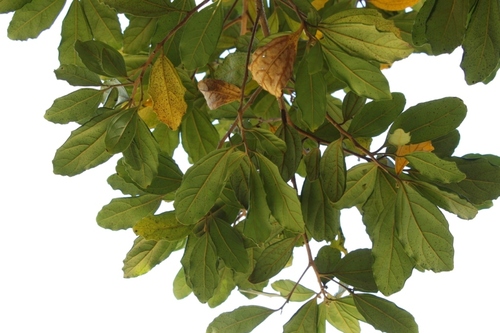
iNaturalist · cc-by-nc
(c) Sandra Falanga, some rights reserved (CC BY-NC), uploaded by Sandra Falanga
(c) Sandra Falanga, some rights reserved (CC BY-NC), uploaded by Sandra Falanga
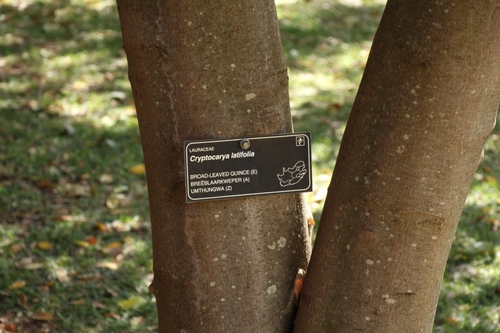
iNaturalist · cc-by-nc
(c) Sandra Falanga, some rights reserved (CC BY-NC), uploaded by Sandra Falanga
(c) Sandra Falanga, some rights reserved (CC BY-NC), uploaded by Sandra Falanga

iNaturalist · cc-by-nc
(c) graham_g, some rights reserved (CC BY-NC)
(c) graham_g, some rights reserved (CC BY-NC)
What to Eat
Edible parts: Nuts
The nuts are edible.
Where to Find It
It grows in evergreen forest.
Africa, South Africa, Southern Africa,
Countries: Angola, Burkina Faso, Burundi, Benin, Botswana, Congo (DRC), Central African Republic, Congo (Republic), Cote d'Ivoire, Cameroon, Cape Verde, Djibouti, Algeria, Egypt, Eritrea, Ethiopia, Gabon, Ghana, Gambia, Guinea, Equatorial Guinea, Guinea-Bissau, Kenya, Comoros, Liberia, Lesotho, Libya, Morocco, Madagascar, Mali, Mauritania, Mauritius, Malawi, Mozambique, Namibia, Niger, Nigeria, Rwanda, Seychelles, Sudan, Sierra Leone, Senegal, Somalia, South Sudan, Sao Tome & Principe, Eswatini, Chad, Togo, Tunisia, Tanzania, Uganda, South Africa, Zambia, Zimbabwe
How to Identify
A large tree. It grows up to 20 m tall. The bark is light brown. It has fine cracks along its length. The leaves are broadly oval. They are 5-10 cm long by 2-4 cm wide. They are leathery. They are dark green above with a velvety appearance and greenish-brown underneath. The edges are wavy. The leaf tapers towards the base. The flowers are small and 1.2 cm across. They occur in long slender branched sprays. They have a spidery appearance. The fruit head is round and 2 cm across. It becomes black when ripe.
Notes
There are about 200-250 Cryptocarya species.
Names & Synonyms
Broad-leafed wild quince
References (2)
- Palgrave, K.C., 1996, Trees of Southern Africa. Struik Publishers. p 178
- Wickens, G.E., 1995, Edible Nuts. FAO Non-wood forest products. FAO, Rome. p 138


