Pandanus luzonensis
Merr.
Alas-as

Wikimedia Commons - UPLB MNH Digital Archives

Wikimedia Commons - National Museum of Natural History
What to Eat
Edible parts: Nuts
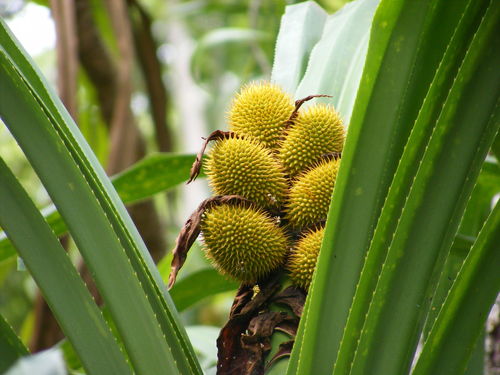
Although no specific records have yet been seen for this species, most members of this genus have more or less edible fruits, seeds and inner leaf bases. The cylindrical fruit is a syncarp made up of a number of individual drupes. Individual drupes are hard, woody wedges - each containing a few, slender seeds. Each wedge has a fleshy base imbued with a sweet-smelling, orange pulp that in many species has a delicious flavour. This pulp needs to be cooked in order to destroy a deleterious substance. The syncarp of this species is about 9cm diameter; the drupes yellowish-red, 35mm long. The seed often has a delicious nutty flavour when eaten raw or cooked, though it is fiddly to extract. Seeds contain 44 - 50% fat and 20 - 34% protein. Inner base of young leaves - raw.
Where to Find It
A tropical plant. It grows in secondary forests at low elevations.
Asia, Pacific, Philippines, SE Asia,
How to Identify
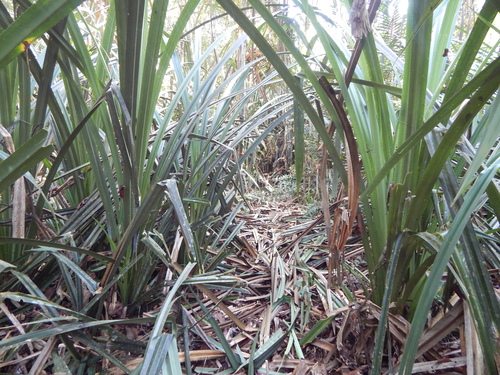
A slender evergreen tree. It grows 5-8 m tall. It has a few short prop roots. Male and female flowers are on separate plants. The fruiting head is 9 cm across.
How to Grow
Species in this genus generally grow well in most moist, well-dained soils and a sunny position Branches do not have dormant buds and so will not resprout if cut back into the old wood. A dioecious species, both male and female forms need to be grown if fruits and seed are required.
Propagation: Seed - best pre-soaked for 24 hours prior to sowing.
Medicinal Uses
The roots are stomachic. A decoction of the tips of fresh or dried prop roots is used as a diuretic. Thee pounded prop roots, combined with the leaves of Mentha arvensis in water, is used as a stomachic.
Other Uses
Although we have seen no specific records for this species, the leaves of most members of this genus are used locally for weaving a range of items such as mats, bags and baskets. The leaves, which are usually tough and fibrous, are long, narrow and sword-shaped and can easily be split into strips for weaving. The leaves of this species are 150 - 175cm long, about 27mm wide at the base with spiny, serrated margins.
Notes
There are about 600 Pandanus species. They grow in the tropics.
Names & Synonyms
References (2)
- Dept. Inter. Bur. Govt. Lab. Bull. 17: 6. T. 1-2. 1904
- Wickens, G.E., 1995, Edible Nuts. FAO Non-wood forest products. FAO, Rome. p172