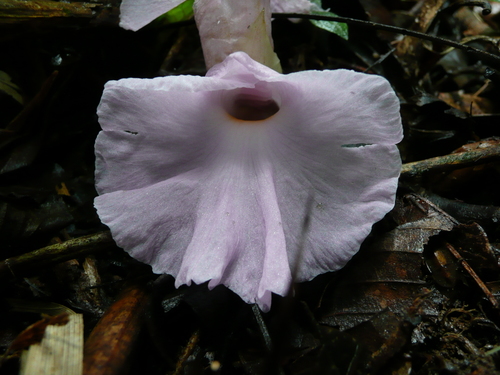
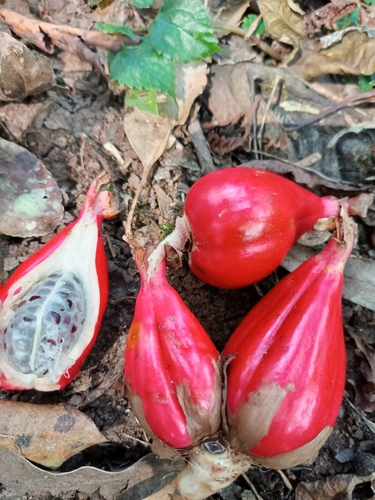
Curcuma rubescens
Roxb.
Ruby ginger
ZingiberaceaeRoots
iNaturalist · cc-by-nc
(c) Brodie Cass Talbott, some rights reserved (CC BY-NC), uploaded by Brodie Cass Talbott
(c) Brodie Cass Talbott, some rights reserved (CC BY-NC), uploaded by Brodie Cass Talbott
What to Eat
Edible parts: Rhizome, Root, Starch
The rhizomes yield a form of arrowroot starch.
Where to Find It
A tropical plant. It needs moist soil. It can stand light shade.
Asia, Australia, Bangladesh, India, Indonesia, Myanmar, North America, SE Asia, Thailand, USA,
Countries: United Arab Emirates, Afghanistan, Antigua & Barbuda, Armenia, Australia, Azerbaijan, Barbados, Bangladesh, Bahrain, Brunei, Bahamas, Bhutan, Belize, Canada, China, Costa Rica, Cuba, Dominica, Dominican Republic, Grenada, Georgia, Guatemala, Honduras, Haiti, Indonesia, Israel, India, Iraq, Iran, Jamaica, Jordan, Japan, Kyrgyzstan, Cambodia, St Kitts & Nevis, North Korea, South Korea, Kuwait, Kazakhstan, Laos, Lebanon, St Lucia, Sri Lanka, Myanmar, Mongolia, Maldives, Mexico, Malaysia, Nicaragua, Nepal, Oman, Panama, Philippines, Pakistan, Puerto Rico, Qatar, Saudi Arabia, Singapore, El Salvador, Syria, Thailand, Tajikistan, Timor-Leste, Turkmenistan, Turkey, Trinidad & Tobago, Taiwan, United States, Uzbekistan, St Vincent, Vietnam, Yemen
How to Identify
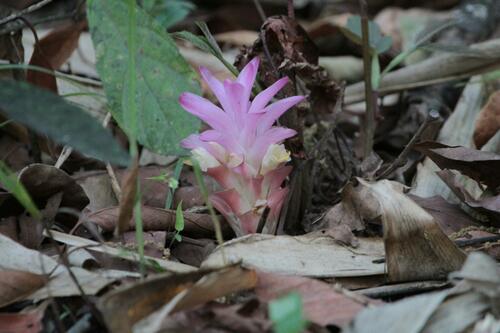
A large ginger family herb. It keeps growing from year to year. It grows 60-90 cm tall. The stems are red or purple. The flowers are white with purple tips.
How to Grow
Plants can be grown by rhizomes or offsets.
Other Information
It is sold in markets.
Notes
There are about 50 Curcuma species. They are mostly in SE Asia.
Names & Synonyms
Curcuma erubescens Wall. [Invalid]Curcuma longiflora Salisb.Curcuma rubricaulis Link
References (6)
- Ambasta, S.P. (Ed.), 2000, The Useful Plants of India. CSIR India. p 152
- Burkill, I.H., 1966, A Dictionary of the Economic Products of the Malay Peninsula. Ministry of Agriculture and Cooperatives, Kuala Lumpur, Malaysia. Vol 1 (A-H) p 714
- Hedrick, U.P., 1919, (Ed.), Sturtevant's edible plants of the world. p 254
- Hibbert, M., 2002, The Aussie Plant Finder 2002, Florilegium. p 78
- Singh, H.B., Arora R.K., 1978, Wild edible Plants of India. Indian Council of Agricultural Research, New Delhi. p12
- World Checklist of Useful Plant Species 2020. Royal Botanic Gardens, Kew