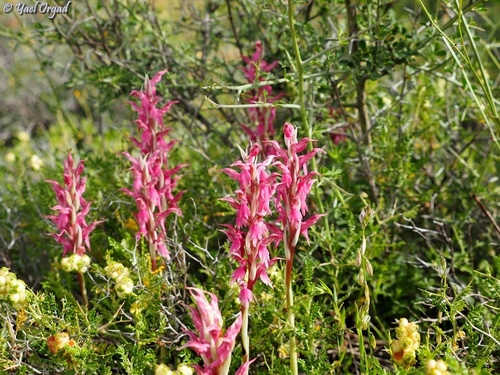
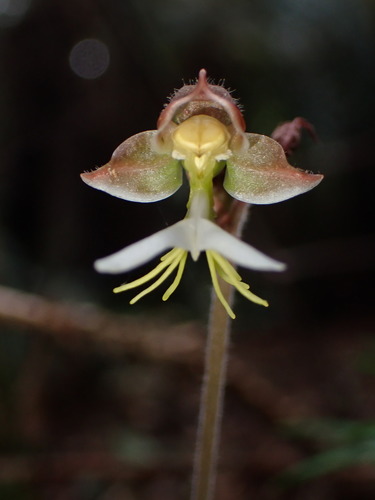
Eulophia campestris
Lindl.
Amrita
OrchidaceaeRoots

gbif · cc0
President and Fellows of Harvard College
President and Fellows of Harvard College

gbif · cc0
President and Fellows of Harvard College
President and Fellows of Harvard College

gbif · cc0
President and Fellows of Harvard College
President and Fellows of Harvard College
What to Eat
Edible parts: Tubers, Root
The tubers and roots are edible.
Where to Find It
It is a subtropical plant.
Asia, Bangladesh, India, Myanmar, SE Asia,
Countries: United Arab Emirates, Afghanistan, Armenia, Azerbaijan, Bangladesh, Bahrain, Brunei, Bhutan, China, Georgia, Indonesia, Israel, India, Iraq, Iran, Jordan, Japan, Kyrgyzstan, Cambodia, North Korea, South Korea, Kuwait, Kazakhstan, Laos, Lebanon, Sri Lanka, Myanmar, Mongolia, Maldives, Malaysia, Nepal, Oman, Philippines, Pakistan, Qatar, Saudi Arabia, Singapore, Syria, Thailand, Tajikistan, Timor-Leste, Turkmenistan, Turkey, Taiwan, Uzbekistan, Vietnam, Yemen
How to Identify
A subtropical ground orchid (Orchidaceae) with edible tubers and roots that grow in soil.
Medicinal Uses
The plant has medicinal benefits.
Notes
There are about 250 Eulophia species. They grow in the soil. It has medicinal benefits.
Names & Synonyms
Gamon-thanga-zin, Hattipaila, Me-pah, Salep, Salibmisri, Salum, Sudhamuli
Eulophia campestris Wall. ex Lindl.and others
References (4)
- Ambasta, S.P. (Ed.), 2000, The Useful Plants of India. CSIR India. p 211 (As Eulophia campestris)
- Anderson, M., 2002, The World Encyclopedia of Cacti and Succulents. Hermes House, New York. p 153 (Genus)
- Hedrick, U.P., 1919, (Ed.), Sturtevant's edible plants of the world. p 302 (As Eulophia campestris)
- Singh, H.B., Arora R.K.,1978, Wild edible Plants of India. Indian Council of Agricultural Research, New Delhi. p13 (As Eulophia campestris)