Casearia glomerata
Roxb. ex DC.
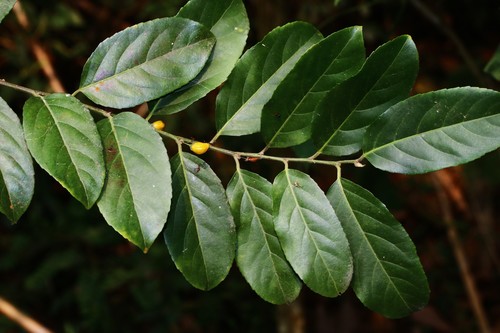
(c) 方伊琳(阿鈣), some rights reserved (CC BY-NC), uploaded by 方伊琳(阿鈣)
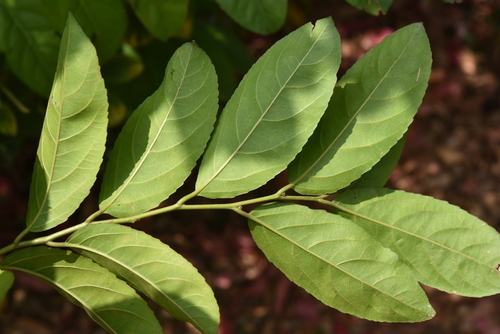
(c) 潘立傑 LICHIEH_PAN, some rights reserved (CC BY)
What to Eat
Edible parts: Leaves
The young shoots and leaves are eaten as a vegetable, typically cooked with rice or chicken. Harvested shoots can be stored for 4-5 days.
Known Hazards
Where to Find It
A tropical plant. In Sikkim it grows between 1,000-1,700 m above sea level.
Asia, Bhutan, China, Himalayas, India, Myanmar, Nepal, Northeastern India, SE Asia, Sikkim, Taiwan, Tibet, Vietnam,
How to Identify
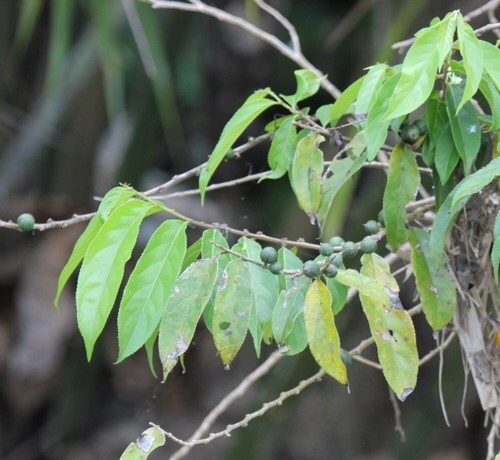
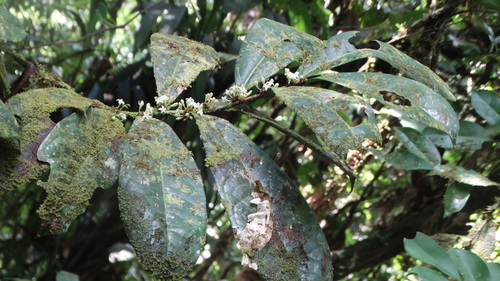
A small tree. It grows 4-10 m tall. It loses its leaves during the year. The crown is spreading. The leaves are narrowly oval and 7-12 cm long by 3-5 cm wide. The leaves turn copper colour before they fall. The flowers are small and greenish yellow. They are in dense groups. They fruit is 2 cm long and oval.
How to Grow
Propagation: The seed of species in this genus often has a short period of viability and so is best sown as soon as it is ripe. The seed is collected when the fruits start to open - leave them in the sun to open completely to release the seed, then rinse the seed in water to remove the arils. Sow the seed in a partially shaded position in a nursery seedbed, only just covering the seed, and keep moist. Germination rates vary, but can usually be expected to be low, with the seed sprouting within 20 - 30 days. When the seedlings are 3 - 5cm tall, pot them up into individual containers and they should be ready to plant out a few months later. Cuttings.
Medicinal Uses
The bark is bitter. The leaves are used in baths to treat rheumatism.. The fruit is diuretic. The above reports on medicinal use in S. America need to be further investigated. The reports refer to an Asian species that is said to be naturalized in the Guyanas. There are two very similar reports for another Asian native, Casearia graveolens (syn Casearia ovata). It would appear likely that at least one of this reports is eroneous.
Other Uses
The yellowish-white wood is moderately hard. It is used for building, charcoal and occasionally for tea-boxes. The plant can be grown as a pioneer species, providing shelter and protection for other tree species to become established.
Notes
There are 160-180 Casearia species. They are mostly in South America. 75 occur in tropical America. They have also been put in the plant family Flacourtiaceae.
Names & Synonyms
Barkunle, Daopenda, Dauphenda, Han o arung, Kunnan, Nuot chum, Tel bhuruki
References (10)
- Baro, D., Baruah, S. and Borthukar, S. K. 2015, Documentation on wild vegetables of Baksa district, BTAD (Assam). Scholars Research Library. Archives of Applied Science Research, 2015, 7 (9):19-27
- Dobriyal, M. J. R. & Dobriyal, R., 2014, Non Wood Forest Produce an Option for Ethnic Food and Nutritional Security in India. Int. J. of Usuf. Mngt. 15(1):17-37
- Dutta, U., 2012, Wild Vegetables collected by the local communities from the Churang reserve of BTD, Assam. International Journal of Science and Advanced Technology. Vol. 2(4) p 119
- Narzary, H., et al, 2013, Wild Edible Vegetables Consumed by Bodo tribe of Kokrajhar District (Assam), North-East India. Archives of Applied Science Research, 5(5): 182-190
- Patiri, B. & Borah, A., 2007, Wild Edible Plants of Assam. Geethaki Publishers. p 7
- Sarma, H., et al, 2010, Updated Estimates of Wild Edible and Threatened Plants of Assam: A Meta-analysis. International Journal of Botany 6(4): 414-423
- Singh, H.B., Arora R.K.,1978, Wild edible Plants of India. Indian Council of Agricultural Research, New Delhi. p 21
- Sundriyal, M., et al, 1998, Wild edibles and other useful plants from the Sikkim Himalaya, India. Oecologia Montana 7:43-54
- Sundriyal, M., et al, 2004, Dietary Use of Wild Plant Resources in the Sikkim Himalaya, India. Economic Botany 58(4) pp 626-638
- Wild edible plants of Himachal Pradesh