Embelia gamblei
Kurz.
PrimulaceaeLeaves

gbif · cc0
GBIF
GBIF

gbif · cc0
GBIF
GBIF

gbif · cc0
GBIF
GBIF
What to Eat
Edible parts: Leaves
The leaves are eaten.
Where to Find It
It is a subtropical plant. It grows in evergreen broad-leaved forests between 2,000-2,700 m above sea level in SW China.
Asia, China, Himalayas, India, Myanmar, Northeastern India, SE Asia, Sikkim, Tibet,
Countries: United Arab Emirates, Afghanistan, Armenia, Azerbaijan, Bangladesh, Bahrain, Brunei, Bhutan, China, Georgia, Indonesia, Israel, India, Iraq, Iran, Jordan, Japan, Kyrgyzstan, Cambodia, North Korea, South Korea, Kuwait, Kazakhstan, Laos, Lebanon, Sri Lanka, Myanmar, Mongolia, Maldives, Malaysia, Nepal, Oman, Philippines, Pakistan, Qatar, Saudi Arabia, Singapore, Syria, Thailand, Tajikistan, Timor-Leste, Turkmenistan, Turkey, Taiwan, Uzbekistan, Vietnam, Yemen
How to Identify
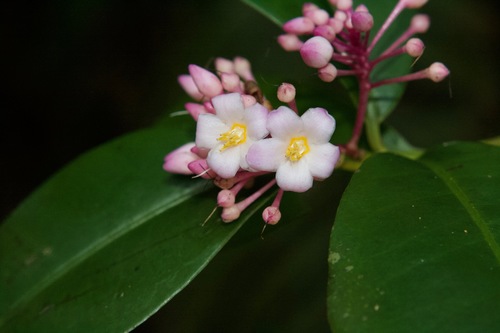
A shrub. It lies along the ground. The branches have rusty hairs. The branches are angled. The leaves are narrowly oval and 15-30 cm long by 6-9 cm wide. They have rusty hairs underneath. The flowers are dull yellowish-green. The fruit are round, red and 3-4 mm across.
Notes
There are 132 Embelia species. Also put in the family Myrsinaceae.
Names & Synonyms
Amili, Amilpate, Amilpati, Patiamlo
References (4)
- Ambasta, S.P. (Ed.), 2000, The Useful Plants of India. CSIR India. p 194
- Savita, et al, 2006, Studies on wild edible plants of ethnic people in east Sikkim. Asian J. of Bio Sci. (2006) Vol. 1 No. 2 : 117-125
- Singh, H.B., Arora R.K.,1978, Wild edible Plants of India. Indian Council of Agricultural Research, New Delhi. p 25
- Wild edible plants of Himachal Pradesh