Diospyros sylvatica
Roxb.
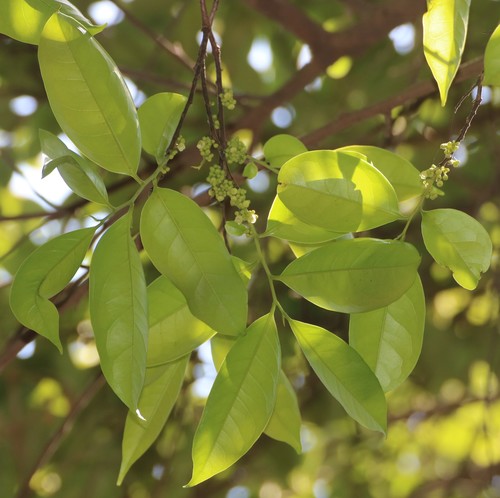
(c) Shiwalee Samant, some rights reserved (CC BY-NC), uploaded by Shiwalee Samant
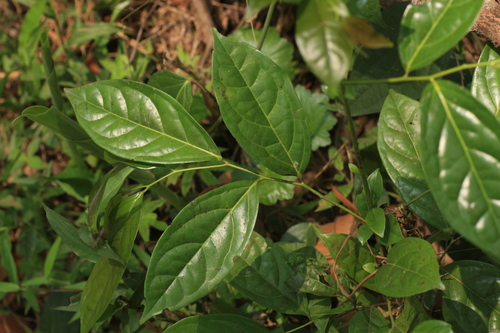
(c) madhavan a.p, some rights reserved (CC BY)
What to Eat
Edible parts: Fruit, Seeds
The young fruit and seeds are edible.
Where to Find It
A tropical plant. It grows in south India. It grows in evergreen forests up to 1,400 m above sea level. It grows on limestone slopes.
Asia, Cambodia, India, Indochina, Malaysia, Northeastern India, SE Asia, Sri Lanka,
How to Identify
A tree. It grows 10-35 m tall. The bark is grey brown and smooth. The leaves are simple and alternate. They are 6-15 cm long by 3-6 cm wide. They are oval. The base is twisted and they taper to the tip. Male and female flowers are separate. Male flowers are green and in groups and female flowers are usually single. The fruit are round and 1-2 cm across.
Production
Trees flower in July and August.
Notes
There are about 485 species of Diospyros mostly in the tropics.
Names & Synonyms
Akkasarali, Bilisarali, Gada, Gadaluti, Kalicha, Kalidukha, Kauchia, Kchahs, Kchas, Khalijya, Khanhchas, Krorchas, Modhurokhaliya, Tella-gada
References (6)
- Ambasta, S.P. (Ed.), 2000, The Useful Plants of India. CSIR India. p 178
- Behera K. K., et al, 2008, Wild Edible Plants of Mayurbhanj District, Orissa, India. J. Econ. Taxon. Bot. Vol. 32 (Suppl.) pp 305-314
- Jayaraman, U., & Singh, V., 1987, A Census of Edible Species of Diospyros L. in India. J. Econ. Tax. Bot. Vol. 10 No. 2 pp 416-419
- Phon, P., 2000, Plants used in Cambodia. © Pauline Dy Phon, Phnom Penh, Cambodia. p 243
- Singh, H.B., Arora R.K.,1978, Wild edible Plants of India. Indian Council of Agricultural Research, New Delhi. p 56
- Turreira Garcia, N., et al, 2017, Ethnobotanical knowledgeof the Kuy and Khmer people in Prey Lang, Cambodia. Cambodian Journal of Natural History 2017 (1): 76-101


