Olea dioica
Roxb.
(c) Mayuresh Kulkarni, some rights reserved (CC BY-NC), uploaded by Mayuresh Kulkarni

(c) Dinesh Valke, some rights reserved (CC BY-SA)
What to Eat
Edible parts: Fruit
The fruit are eaten.
Where to Find It
It is a tropical plant. In grows in evergreen and moist deciduous forest. It grows up to 1,200 m above sea level.
Asia, Australia, India, Indochina, Laos, Myanmar, SE Asia,
How to Identify
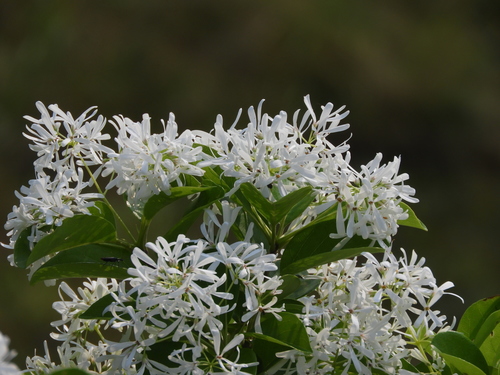
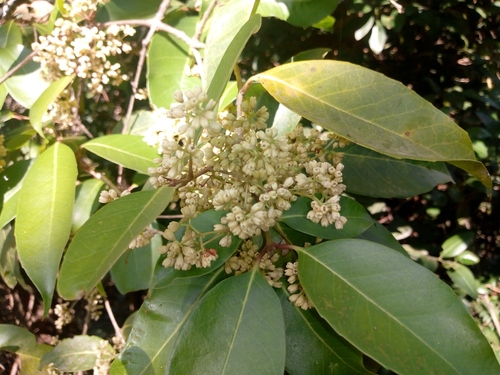
A tree. It grows 15 m tall. The bark is brown and rough. The young branches are angular. The leaves are simple and opposite. The bases overlap. The leaf blade is 8-18 cm long by 2-8 cm wide. They are narrowly oval and there are teeth along the edge. The flowers are in groups in the axils of leaves. They are creamy white. The fruit is fleshy and oval. They are blue when ripe. There is one seed.
Notes
There are over 40 Olea species.
Names & Synonyms
Akki, Atta-jam, Bonbholuka, Chapu, Edana, Etala, Hak-hpu, Hejjeakerkal, Irippa, Kalo, Karambu, Karivetti, Koli, Kyamuna, Lauki, Parjamb, Payar, Poreng, Thitsibo, Timburnyok, Yedalei
References (6)
- Ambasta, S.P. (Ed.), 2000, The Useful Plants of India. CSIR India. p 407
- Fl. ind. 1:105. 1820
- Green, P. S., 2003, Synopsis of the Oleaceae from the Indian Sub-Continent. Kew Bulletin, Vol. 58, No. 2 (2003), pp. 257-295
- Khaple, A. K., Gurav, M. & Hubballi, S., Population Studies of Wild Edible Fruit Tree Species in Kodagu. International Journal of Life Sciences Vol. 1 No. 3
- Singh, H.B., Arora R.K.,1978, Wild edible Plants of India. Indian Council of Agricultural Research, New Delhi. p 77
- Yesodharan, K. & Sujana, K. A., 2007, Wild edible plants traditionally used by the tribes in the Parambokulam Wildlife Sanctuary, Kerala, India. Natural Product Radiance 6(1) pp 74-80