Chrysopogon fulvus
(Spreng.) Choiv.
PoaceaeSeeds/Nuts

iNaturalist · cc-by-nc
(c) Noopur🍀, some rights reserved (CC BY-NC), uploaded by Noopur🍀
(c) Noopur🍀, some rights reserved (CC BY-NC), uploaded by Noopur🍀
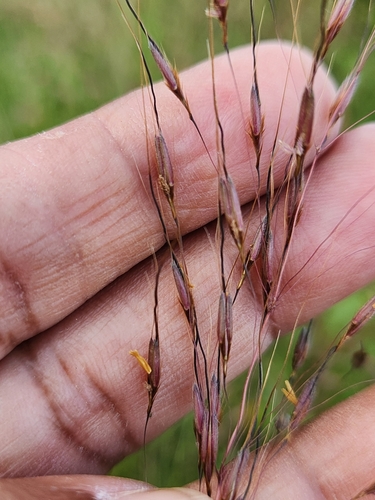
iNaturalist · cc-by-nc
(c) Kobita Dass Kolli, some rights reserved (CC BY-NC), uploaded by Kobita Dass Kolli
(c) Kobita Dass Kolli, some rights reserved (CC BY-NC), uploaded by Kobita Dass Kolli
What to Eat
Edible parts: Seeds, Cereal
The seeds are eaten as a cereal.
Where to Find It
A tropical plant.
Asia, India,
Countries: United Arab Emirates, Afghanistan, Armenia, Azerbaijan, Bangladesh, Bahrain, Brunei, Bhutan, China, Georgia, Indonesia, Israel, India, Iraq, Iran, Jordan, Japan, Kyrgyzstan, Cambodia, North Korea, South Korea, Kuwait, Kazakhstan, Laos, Lebanon, Sri Lanka, Myanmar, Mongolia, Maldives, Malaysia, Nepal, Oman, Philippines, Pakistan, Qatar, Saudi Arabia, Singapore, Syria, Thailand, Tajikistan, Timor-Leste, Turkmenistan, Turkey, Taiwan, Uzbekistan, Vietnam, Yemen
How to Identify
A tufted perennial grass from the tropical regions, belonging to a genus with 25 species.
Wikipedia
Source ↗Chrysopogon fulvus, called Guria grass, red false beard grass, and reddish-yellow beardgrass, is a species of grass (family Poaceae), subfamily Panicoideae. It is native to the Indian subcontinent and Southeast Asia, and has been introduced to Florida. It is a palatable pasture grass, relished by oxen. It does well in semi-arid conditions.
Notes
There are 25 Chrysopogon species.
Names & Synonyms
Gogar, Goria
Chrysopogon montanus Trin.
References (2)
- Fl. somala 1:327. 1929
- Singh, H.B., Arora R.K.,1978, Wild edible Plants of India. Indian Council of Agricultural Research, New Delhi. p 84


