Astelia nervosa
Hook.f.
Bush flax, Kakaha, Mountain astelia
(c) reinderw, some rights reserved (CC BY-NC), uploaded by reinderw

(c) Kristian Verden, some rights reserved (CC BY-NC), uploaded by Kristian Verden

(c) Damon H, some rights reserved (CC BY), uploaded by Damon H
What to Eat
Edible parts: Fruit, Berries
Edible Parts: Fruit Edible Uses: Fruit - raw. Sweet, fleshy and juicy, it is pleasant to eat.
Where to Find It
It is best in moist, swampy soils. It needs a sheltered partly shaded position. It suits hardiness zones 8-10.
Australia, New Zealand*,
How to Identify
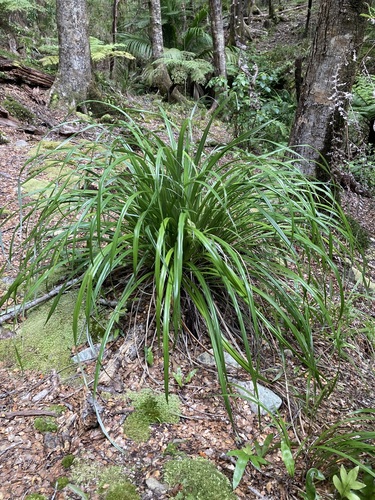
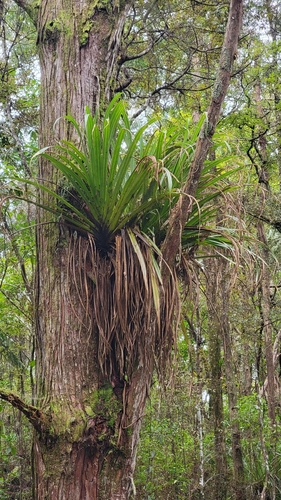
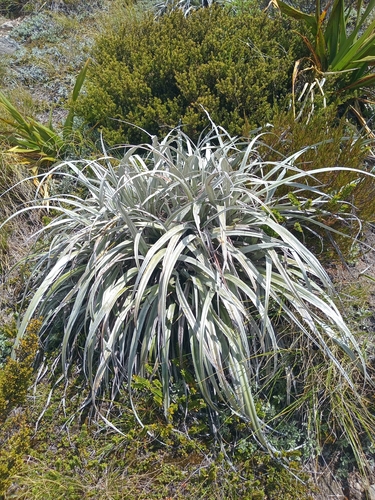
A clump forming plant. It grows 0.9-2 m high and spreads 1.5 m wide. The leaves are long and grass like. They can be reddish, silver or green. The leaves are 0.6-2 m long. The fruit are berries which sit in little cups.
How to Grow
Requires a damp humus-rich fertile soil in sun or semi-shade, sheltered from cold drying winds. Also succeeds in clay soils. It only succeeds in a sunny position if the soil does not dry out. Plants are hardy to about -10°c, but are best when grown in moist maritime gardens. Dioecious. Male and female plants must be grown if seed is required. Plants seldom fruit in cultivation.
Propagation: Seed - sow late winter in a greenhouse. Germination can be very slow, sometimes taking more than 12 months. When they are large enough to handle, prick the seedlings out into individual pots and grow them on in light shade for at least the first winter in a greenhouse. Plant out in late spring or early summer once they are 15cm or more tall. Division in spring.
Medicinal Uses
None known
Other Uses
Fibre A soft brown fibre is obtained from the leaves. It has a variety of uses. Special Uses
Wikipedia
Source ↗Astelia nervosa, also known as mountain astelia or, along with a number of other species, as bush flax, is a herbaceous plant native to New Zealand. A. nervosa has long, flexible, leathery leaves that are light green and grey in colour. The flowers are light brown to red in colour. The mature fruits are generally orange. It is found in lowland to low alpine areas from the southern North Island south to Stewart Island. It was first described by Joseph Banks and Daniel Solander in Joseph Dalton Hooker's 1853 publication Botany of the Antarctic Voyage Volume 2. Flora Novae Zelandiae.
Notes
There are about 25 Astelia species.
Names & Synonyms
References (8)
- Bircher, A. G. & Bircher, W. H., 2000, Encyclopedia of Fruit Trees and Edible Flowering Plants in Egypt and the Subtropics. AUC Press. p 45
- Bodkin, F., 1991, Encyclopedia Botanica. Cornstalk publishing, p 111
- Crowe, A., 1997, A Field Guide to the Native Edible Plants of New Zealand. Penguin. p 68
- Cundall, P., (ed.), 2004, Gardening Australia: flora: the gardener's bible. ABC Books. p 199
- Fl. nov.-zel. 1:260. 1853
- Plants for a Future database, The Field, Penpol, Lostwithiel, Cornwall, PL22 0NG, UK. http://www.scs.leeds.ac.uk/pfaf/
- Ryan, S., 2008, Dicksonia. Rare Plants Manual. Hyland House. p 97
- Skinner, G. & Brown, C., 1981, Simply Living. A gatherer's guide to New Zealand's fields, forests and shores. Reed. p 35