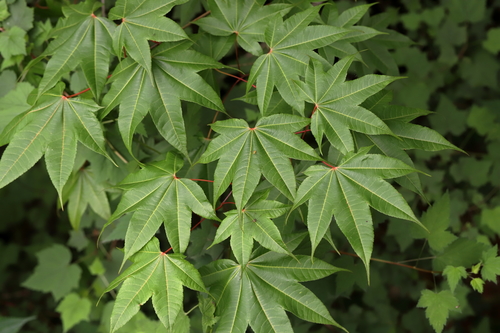
Aesculus x carnea
Hayne
Red Horse chestnut, Pink Horse Chestnut
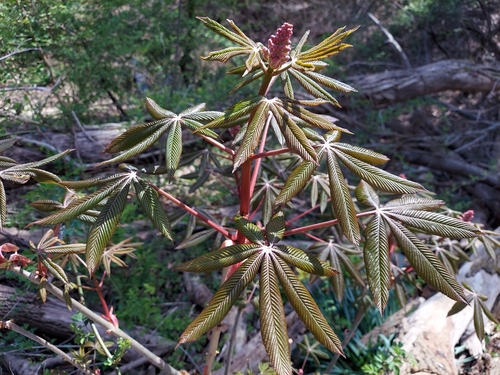
(c) the swamp ass, some rights reserved (CC BY)
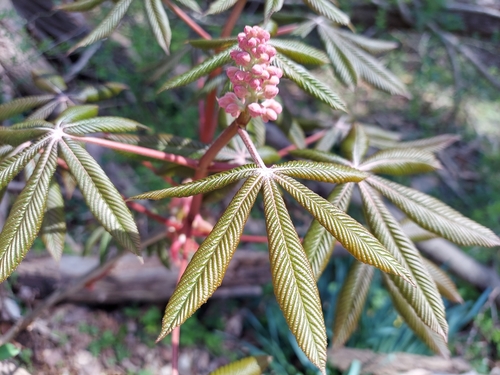
(c) the swamp ass, some rights reserved (CC BY)
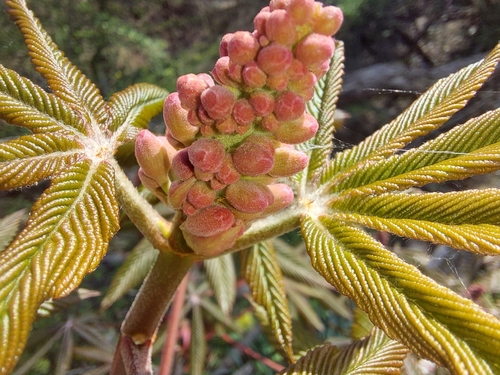
(c) the swamp ass, some rights reserved (CC BY)
What to Eat
Edible parts: Seeds
No details specific to this species are recorded, but the following almost certainly applies. The seed can be cooked, or dried, ground into a flour, and used as a gruel. It is about 20 mm in diameter and easy to harvest, but is rich in saponins that must be removed before eating. Based on practice documented for A. californica, one method involves slow-roasting the nuts (which renders the saponins harmless), slicing them thinly, placing them in a cloth bag, and rinsing in a stream for 2–5 days. Most minerals and other nutrients will also be lost during this process.
Known Hazards
Where to Find It
It is a temperate plant. Dormant trees tolerate temperatures down to -15°C. It suits hardiness zones 6-9. Arboretum Tasmania.
Australia, Canada, China, Europe, Germany, North America, Tasmania,
How to Identify
A deciduous tree. It grows 20 m tall. The bark is reddish-brown. The leaves are divided like fingers on a hand into 5-7 lobes. These are long but fattened and have sharp teeth. The leaflets can be twisted. The leaves are 25 cm long. The flowers are creamy white with red blotches. They are in a spreading panicle. This can be 20 cm long. The fruit are fairly smooth and 4 cm across. The fruit contain up to 3 seeds.
How to Grow
Prefers a deep loamy well-drained soil but is not too fussy. The dormant tree tolerates temperatures down to at least -15°c, though the young growth in spring can be damaged by late frosts. It prefers a continental climate, growing best in eastern and south-eastern England. There are some named forms selected for their ornamental value. Most members of this genus transplant easily, even when fairly large. Abnormal cell development in this species may result in eruptions on trunks over 30cm in diameter - these ultimately decay. Although a hybrid species, it breeds true from seed due to a doubling of the chromosomes.
Propagation: Sow seed outdoors or in a cold frame as soon as it is ripe, as it germinates almost immediately and has very limited viability — it must not be allowed to dry out. Stored seed should be soaked for 24 hours before sowing, though even then germination cannot be guaranteed. Sow with the scar facing downward. Seedlings started in a cold frame should be potted up in early spring and planted out in summer. This species is a garden hybrid but breeds relatively true from seed.
Medicinal Uses
The plant is used in Bach flower remedies; the keywords for prescribing it are 'Excessive fear' and 'Anxiety for others'.
Other Uses
Saponins in the seed serve as a soap substitute. To extract them, chop the seed into small pieces and infuse in hot water; the liquid can be used to wash the body or clothes, though it leaves a lingering odour of horse chestnuts.
Wikipedia
Source ↗A deciduous tree reaching 25 m tall at a slow growth rate. Hardy to UK zone 4 and not frost tender. Hermaphroditic flowers appear in July, with seeds ripening by September. Bee-pollinated. Tolerates light sandy, medium loamy, and heavy clay soils with good drainage. Grows in mildly acid, neutral, or mildly alkaline conditions. Adapts to semi-shade or full sun and prefers consistently moist soil.
Notes
There are 15 Aesculus species.
Names & Synonyms
References (9)
- Coombes, A.J., 2000, Trees. Dorling Kindersley Handbooks. p 178
- Cundall, P., (ed.), 2004, Gardening Australia: flora: the gardener's bible. ABC Books. p 106
- Dendrol. Fl. 43. 1822 (Guimpel et al., Abbild. fremd. Holzart. 25, t. 22. 1821?)
- Etherington, K., & Imwold, D., (Eds), 2001, Botanica's Trees & Shrubs. The illustrated A-Z of over 8500 trees and shrubs. Random House, Australia. p 78
- Farrar, J.L., 1995, Trees of the Northern United States and Canada. Iowa State University press/Ames p 159
- Joyce, D., 1998, The Garden Plant Selector. Ryland, Peters and Small. p 107
- Lord, E.E., & Willis, J.H., 1999, Shrubs and Trees for Australian gardens. Lothian. p 46
- Plants for a Future database, The Field, Penpol, Lostwithiel, Cornwall, PL22 0NG, UK. http://www.scs.leeds.ac.uk/pfaf/
- Ryan, S., 2008, Dicksonia. Rare Plants Manual. Hyland House. p 5