Carapa grandiflora
Sprague
Djoun

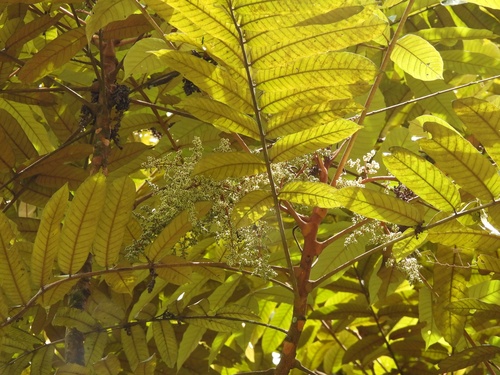
(c) Susanne Spindler, some rights reserved (CC BY-NC-ND), uploaded by Susanne Spindler
What to Eat
Edible parts: Seeds - oil
The seeds are processed to produce edible oil.
Where to Find It
A tropical plant. It grows near rivers and in lowland and lower mountain forests. In Nigeria it is recorded up to 1,800 m above sea level.
Africa, Burundi, Central Africa, Central America, East Africa, Nigeria, Rwanda, Tanzania, Uganda, West Africa,
How to Identify
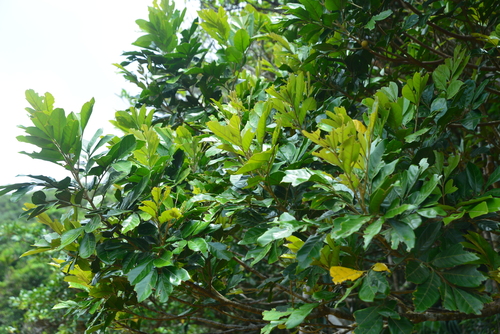
A tree. The trunk is fluted. It grows 25 m tall. The leaves are alternate and compound with an even number of leaflets along the stalk. There are 6-18 leaflets. The leaves are crowded towards the ends of the branches. The leaflets are opposite. The leaves are 1.5 m long. The blades are 40 cm long by 16 cm wide. The leaves are bright red when young. They are oval and unequal and wedge shaped at the base and taper to the tip. The flowers are in a pyramid shaped group. The fruit is a flattened round shape and 12-15 cm across.
Notes
There are 25 Carapa species. There are 3 Carapa species in tropical America.