Claviceps purpurea
(Fr.) Tul
Ergot
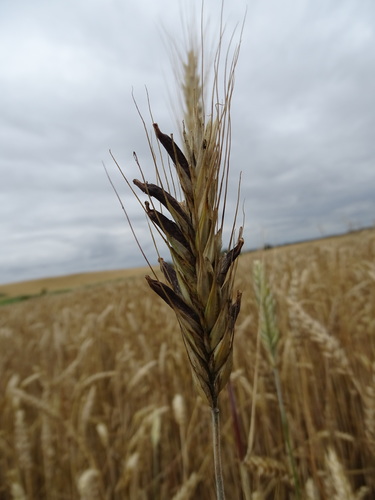
(c) Grzegorz Grzejszczak, some rights reserved (CC BY-SA), uploaded by Grzegorz Grzejszczak

(c) Radovan Bednár, some rights reserved (CC BY-NC)
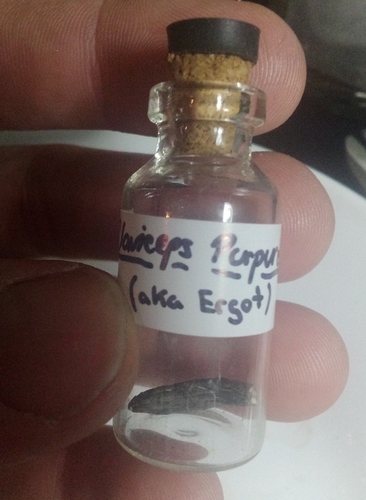
(c) Christian Ree, some rights reserved (CC BY-NC)
What to Eat
Edible parts: Poisonous
This poisonous fungus yields alkaloids only to be used by medical practitioners.
Known Hazards
Documented Toxic Effects
Source: Encyclopedia of Life TraitBank. Toxicity often varies by plant part — consult the hazards section above for preparation-specific details.
Where to Find It
Asia, India, Worldwide,
How to Identify
A parasitic fungus that grows on rye and cereals, belonging to the family Clavicipitaceae.
Wikipedia
Source ↗Claviceps purpurea is an ergot fungus that grows on the ears of rye and related cereal and forage plants. Consumption of grains or seeds contaminated with the survival structure of this fungus, the ergot sclerotium, can cause ergotism in humans and other mammals. C. purpurea most commonly affects outcrossing species such as rye (its most common host), as well as triticale, wheat and barley. It affects oats only rarely.
Notes
It is used in medicine.
References (3)
- Ambasta, S.P. (Ed.), 2000, The Useful Plants of India. CSIR India. p 131
- Bremness, L., 1994, Herbs. Collins Eyewitness Handbooks. Harper Collins. p 287
- Brown, D., 2002, The Royal Horticultural Society encyclopedia of Herbs and their uses. DK Books. p 173