Sapindus trifoliatus
Linn.
Soap-nut tree of South India
(c) T R Shankar Raman, some rights reserved (CC BY), uploaded by T R Shankar Raman

(c) Dinesh Valke, some rights reserved (CC BY-SA)

(c) Dinesh Valke, some rights reserved (CC BY-SA)
What to Eat
Edible parts: Fruit, Caution
The fruit is edible and is commonly used for making soap.
Known Hazards
Where to Find It
A tropical plant. It grows along the coast and in lowland areas in West Africa. It grows in mixed forests between 200-1,500 m above sea level.
Africa, Asia, Cameroon, Central Africa, India, Indochina, Indonesia, Myanmar, Pakistan, SE Asia, Sri Lanka, Thailand, West Africa,
How to Identify
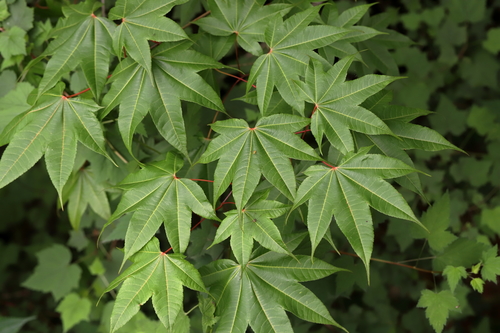
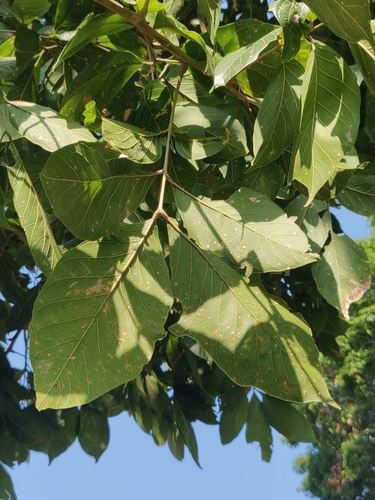
A large tree. The leaves are 15-30 cm long. They have 2-3 pairs of leaflets. These are 8-18 cm long by 5-8 cm wide. They are narrowly sword shaped. The fruit has 2-3 lobes. There is one seed in each cell. The seeds are black and 6-9 mm long.
How to Grow
Plants can be grown from seeds.
Propagation: Seed - Greenwood cuttings.
Other Uses
The fruit is rich in saponins. It is used as a substitute for soap in washing clothes, particularly delicate and natural fabrics. It is also used for removing the tarnish from, and restoring, silver objects. The wood is hard. It is used for making various small articles. The root, bark and fruit are used in native medicine;
Wikipedia
Source ↗Sapindus trifoliatus, the South India soapnut or three-leaf soapberry, is a species of flowering plant in the family Sapindaceae, native to Pakistan, India, Bangladesh, the Andaman Islands, Myanmar, and Sri Lanka, and introduced to eastern tropical Africa, Rodrigues, and Trinidad and Tobago. An evergreen tree reaching 25 m (82 ft), its seeds are rich in saponins, and are both collected in the wild and cultivated to make soap for washing fabrics.
Production
In southern India plants flower and fruit December to April.
Other Information
It is cultivated.
Notes
The fruit are used for soap.
Names & Synonyms
Chavakari, Kinpadi, Pohon lerak tigadaun
References (11)
- Ajesh, T. P., et al, 2012, Ethnobotanical Documentation of Wild Edible Fruits used by Muthuvan Tribes of Idukki, Kerala-India. International Journal of Pharma and Bio Sciences 3(3): 479-487
- Ambasta S.P. (Ed.), 2000, The Useful Plants of India. CSIR India. p 547
- Burkill, H. M., 1985, The useful plants of west tropical Africa, Vol. 5. Kew.
- Burkill, I.H., 1966, A Dictionary of the Economic Products of the Malay Peninsula. Ministry of Agriculture and Cooperatives, Kuala Lumpur, Malaysia. Vol 2 (I-Z) p 1994
- Davis, S.D., Heywood, V.H., & Hamilton, A.C. (eds), 1994, Centres of plant Diversity. WWF. Vol 1 or 2. p 117 (As Sapindus laurifolius)
- Flora of Pakistan. www.eFloras.org
- Sp. pl. 1:367. 1753
- Sukarya, D. G., (Ed.) 2013, 3,500 Plant Species of the Botanic Gardens of Indonesia. LIPI p 495
- Symb. bot. 3:54. 1794 (As Sapindus laurifolius)
- World Checklist of Useful Plant Species 2020. Royal Botanic Gardens, Kew
- Zeven, A. C. & de West, J. M. J., 1982, Dictionary of cultivated plants and their regions of diversity. Wageningen. p 79