Phyllostachys angusta
McClure
Stone bamboo, Chinese edible bamboo, Chinese fish-rod bamboo
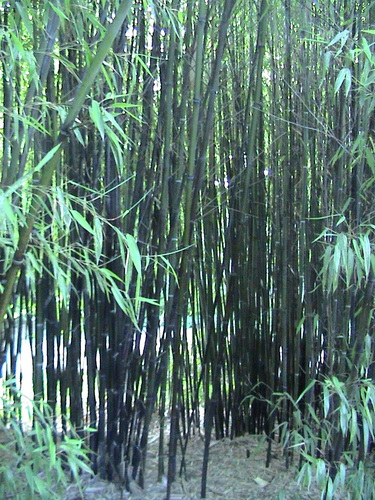
(c) maestro_rojo, some rights reserved (CC BY-NC), uploaded by maestro_rojo
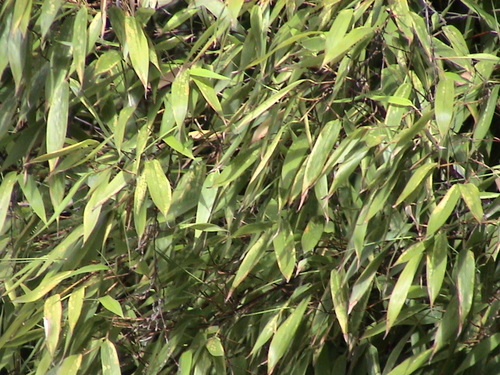
(c) maestro_rojo, some rights reserved (CC BY-NC), uploaded by maestro_rojo
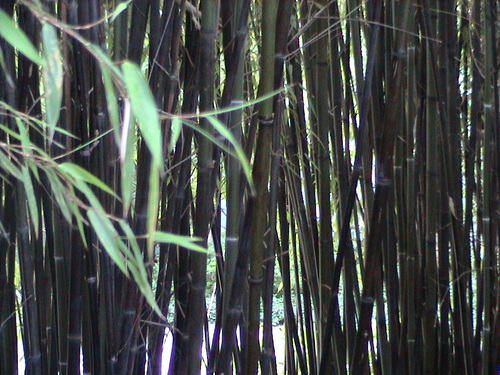
(c) maestro_rojo, some rights reserved (CC BY-NC), uploaded by maestro_rojo
What to Eat
Edible parts: Shoots
The young spring shoots are harvested for cooking when they reach about 8cm above ground, cut approximately 5cm below soil level. The shoots are 3–4cm in diameter, boil well without bitterness, and are considered good quality eating.
Where to Find It
It is a temperate plant.
Asia, China*, North America, USA,
How to Identify
A bamboo. It has creeping rhizomes or underground stems. The culms are 7.5 m long and 2.5 cm across. The internodes are 15-19 cm long. The shoots are 20 cm long.
How to Grow
Prefers a rich damp soil in a sheltered position and some shade. Grows well in a woodland. This species is not hardy in the colder areas of the country, it tolerates temperatures down to between -5 and -10°c. Closely related to P. flexuosa. This is a good companion species to grow in a woodland because the plants have shallow root systems that do not compete with deep tree roots. This species is notably resistant to honey fungus. Plants only flower at intervals of many years. When they do come into flower most of the plants energies are directed into producing seed and consequently the plant is severely weakened. They sometimes die after flowering, but if left alone they will usually recover though they will look very poorly for a few years. If fed with artificial NPK fertilizers at this time the plants are more likely to die.
Propagation: Surface sow fresh seed in a greenhouse at around 20°C, keeping the compost consistently moist. Germination is usually fairly quick with good-quality seed, though it may take 3–6 months. Grow seedlings in light shade under glass until large enough to plant out. Seed is rarely available. Divide clumps in spring as new growth begins — divisions from open ground transplant poorly and should be potted and kept under cover until at least late spring. Carry out division during wet weather; small divisions establish more reliably than large clumps. Alternatively, large divisions can be lifted and moved directly to their permanent positions if misted or drenched frequently until established. Basal cane cuttings can also be taken in spring.
Medicinal Uses
None known.
Other Uses
The canes are very hard and suited to making fine furniture. Tough splints from the culms are well suited to weaving fine bamboo articles.
Wikipedia
Source ↗Phyllostachys angusta is a species of bamboo found in Anhui, Fujian, Henan, Jiangsu, Zhejiang provinces of China.
Other Information
It is popular in China. It has a good taste and hard texture.
Notes
There are about 50-80 Phyllostachys species. They are mostly in China but also in the Himalayas and Japan.
Names & Synonyms
Sah chu
References (6)
- Crawford, M., 2012, How to grow Perennial Vegetables. Green Books. p 75
- Facciola, S., 1998, Cornucopia 2: a Source Book of Edible Plants. Kampong Publications, p 46
- http://www.plantnames.unimelb.edu.au/sorting/Bamboos_Edible.html
- Hu, Shiu-ying, 2005, Food Plants of China. The Chinese University Press. p 293
- J. Wash. Acad. Sci. 35:278. 1945
- Woodward, P., 2000, Asian Herbs and Vegetables. Hyland House. p 27


