Gynochthodes sublanceolata
Miq.
Thao nuai
RubiaceaeLeaves
iNaturalist · cc-by-nc
(c) bowuzhizhi, some rights reserved (CC BY-NC)
(c) bowuzhizhi, some rights reserved (CC BY-NC)
iNaturalist · cc-by-nc
(c) bowuzhizhi, some rights reserved (CC BY-NC)
(c) bowuzhizhi, some rights reserved (CC BY-NC)
iNaturalist · cc-by
(c) Samuel Lee, some rights reserved (CC BY)
(c) Samuel Lee, some rights reserved (CC BY)
What to Eat
Edible parts: Leaves
The young leaves are cooked and served as a vegetable.
Where to Find It
A tropical plant. It is found in areas of scrub by the sea.
Asia, Indochina, SE Asia, Thailand,
Countries: United Arab Emirates, Afghanistan, Armenia, Azerbaijan, Bangladesh, Bahrain, Brunei, Bhutan, China, Georgia, Indonesia, Israel, India, Iraq, Iran, Jordan, Japan, Kyrgyzstan, Cambodia, North Korea, South Korea, Kuwait, Kazakhstan, Laos, Lebanon, Sri Lanka, Myanmar, Mongolia, Maldives, Malaysia, Nepal, Oman, Philippines, Pakistan, Qatar, Saudi Arabia, Singapore, Syria, Thailand, Tajikistan, Timor-Leste, Turkmenistan, Turkey, Taiwan, Uzbekistan, Vietnam, Yemen
How to Identify
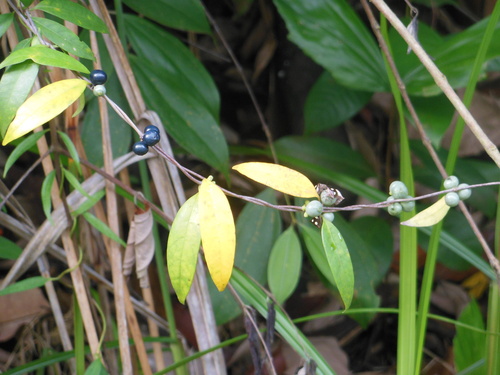
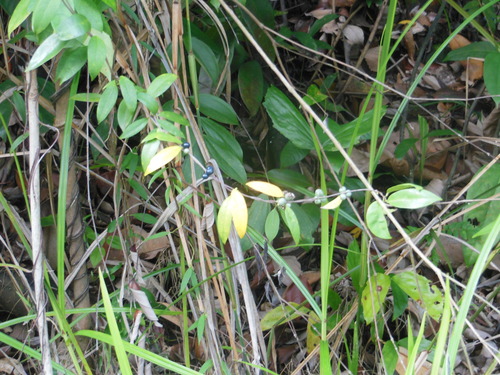
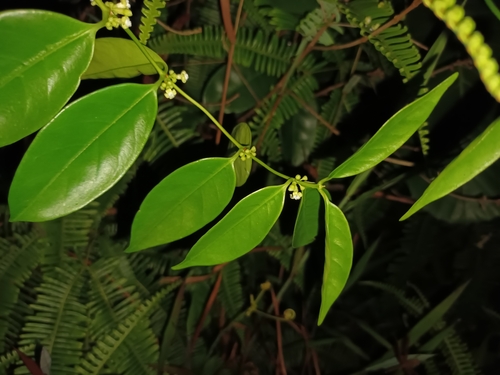
A climbing shrub. The stem is smooth and it has slender branches. The leaves are opposite and entire. They are sword shaped and rough. They are 6.5-7.5 cm long by 4-6.5 cm wide. They are dark green. The flowers are in a tuft or hanging head in the axils of leaves. They are small and white. The fruit is a fleshy one with a hard stone. It is 7.5-15 mm long and greenish-white. There are 2-4 hard stones which are flattened on one side.
Notes
There are about 20 Gynochtodes species.
References (1)
- Jacquat, C., 1990, Plants from the Markets of Thailand. D.K. Book House p 88


