Garcinia pseudoguttifera
Seemann
Bulu
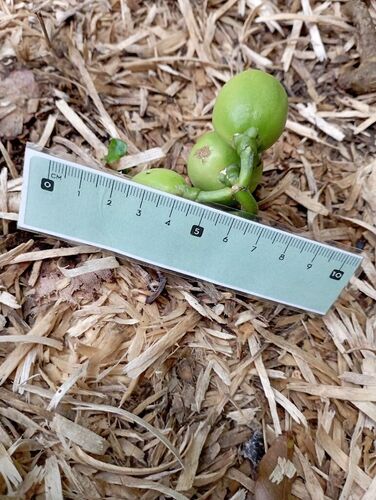
(c) jacob_m678, some rights reserved (CC BY-NC)
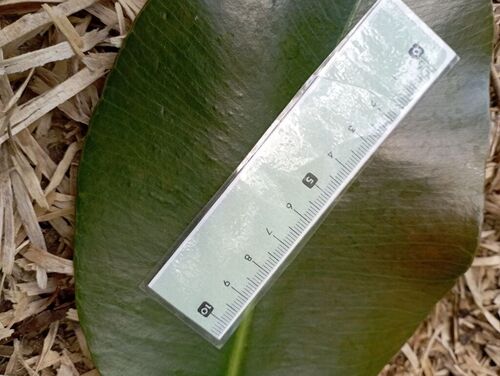
(c) jacob_m678, some rights reserved (CC BY-NC)
What to Eat
Edible parts: Fruit
The ripe fruit are eaten raw.
Where to Find It
A tropical plant. In Fiji it grows from sea level to 1,150 m altitude. In Vanuatu it grows to 600 m altitude. It grows in damp soil in the shade of larger trees.
Fiji, Pacific, Solomon Islands, Tonga, Vanuatu,
How to Identify
A tree. It can be compact or spreading. It grows 4-25 m high. The sap is yellow or pale. The trunk is straight and 30 cm across. The leaves are simple and opposite. They are dark green and oval. They are 6-11 cm long and 10-17 cm wide. They are rough. The leaf stalk is 2-3 cm long and reddish at the base. The flowers have pale yellow petals. The fruit are green but turn red when ripe. The flowers and fruit occur throughout the year. The fruit are 3-5 cm long by 3-6 cm wide. There are 2 flattened seeds. These have 3-4 slight ridges.
How to Grow
Plants can flower and produce fruit all year round. A dioecious species, both male and female forms usually need to be grown if fruit and seed are required. At least some dioecious Garcinia species, however, are able to produce fertile seed even in the absence of fertilization (asexual reproduction). Such seeds would be expected to be genetically identical to the parent
Propagation: Seed - we have no specific information on this species, but the seed of most members of the genus can be slow to germinate, even if sown fresh, often taking 6 months or more.
Medicinal Uses
An extract from the leaves is sometimes used as a pain reliever, and an oil from the fruit is used as a perfume. The wood is sometimes used as timber. The fruit is occasionally eaten.
Other Uses
An oil obtained from the fruit is used as a perfume. An abundant yellow or pale latex is produced from the trunk. No uses are given. The wood is sometimes used as a timber.
Wikipedia
Source ↗Garcinia pseudoguttifera, known as the mo'onia tree in its native range, is a species of flowering tree in the family Clusiaceae (Guttiferae). The specific epithet (pseudoguttifera) comes from Greek pseudo (= false) and Neo-Latin guttifera (= gum-bearing plant).
Notes
There are about 300 Garcinia species.
Names & Synonyms
Buluwai, False Kau yalewa, Mali, Mbulu, Mbukuwai, Mo'onia, Sarosaro, Suere
References (7)
- Reis, S. V. and Lipp, F. L., 1982, New Plant Sources for Drugs and Foods from the New York Botanical Garden herbarium. Harvard. p 187
- Franklin, J., Keppel, G., & Whistler, W., 2008, The vegetation and flora of Lakeba, Nayau and Aiwa Islands, Central Lau Group, Fiji. Micronesica 40(1/2): 169–225, 2008
- GTZ 1996, A Guide to some Indigenous Fijian Trees. GTZ Suva. p 55
- Smith, A.C., 1981, Flora Vitiensis Nova: A New flora of Fiji, Hawai Botanical Gardens, USA Vol 2 p 343
- Walter, A. & Sam C., 2002, Fruits of Oceania. ACIAR Monograph No. 85. Canberra. p 173, 280
- Wheatley, J.I., 1992, A Guide to the Common Trees of Vanuatu. Department of Forestry, Republic of Vanuatu. p 72
- Whistler, W.A., 2004, Rainforest Trees of Samoa. Isle Botanica Honolulu, Hawaii. p 40


