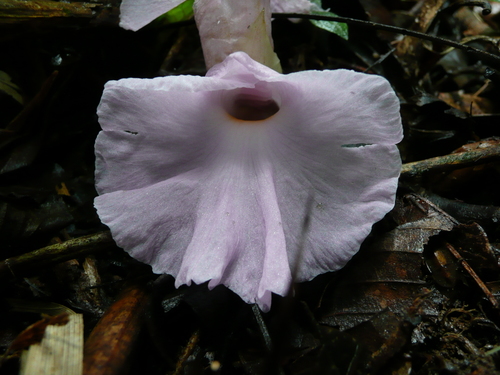
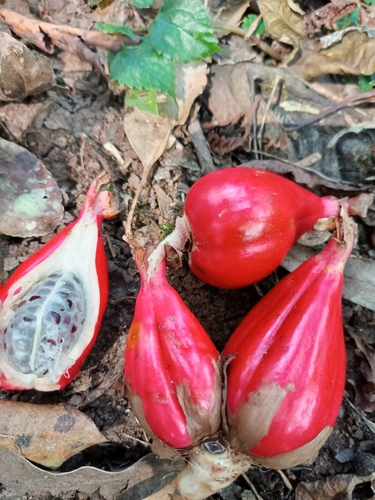
Alpinia elegans
(Presl.) K. Schumann

(c) Myan Babes Oquendo, some rights reserved (CC BY-NC), uploaded by Myan Babes Oquendo

(c) Myan Babes Oquendo, some rights reserved (CC BY-NC)
What to Eat
Edible parts: Fruit, Rhizomes - spice, Root, Vegetable, Seeds
The pulp around the seeds is eaten. The rhizomes are used as a spice, and the roots, seeds, and fruit are consumed as vegetables.
Where to Find It
A tropical plant.
Asia, Pacific, Philippines, SE Asia,
How to Identify
A tropical herb in the ginger family (Zingiberaceae), one of about 200–230 Alpinia species found mainly in tropical and subtropical regions.
How to Grow
Plants in this genus generally grow best in a sunny or partially sunny position in a moist, fertile soil. Plants flower all year round.
Propagation: Seed - Division of the rhizome.
Medicinal Uses
A decoction of the rhizomes is taken as a treatment for haemoptysis.The young rhizomes are soaked in water and the infusion is drunk as a remedy for headache. The leaves, pounded with a little salt, are rubbed on paralyzed parts of a patient. The juice expressed from young stems is used as a treatment for urticaria.
Wikipedia
Source ↗Alpinia elegans is a species of flowering plants in the ginger family, Zingiberaceae. It is found in Asia (the Philippines, Indonesia).
Notes
There are about 200-230 Alpinia species. They are mostly tropical and subtropical.
Names & Synonyms
References (6)
- Altschul, S.V.R., 1973, Drugs and Foods from Little-known Plants. Notes in Harvard University Herbaria. Harvard Univ. Press. Massachusetts. no. 442
- Bircher, A. G. & Bircher, W. H., 2000, Encyclopedia of Fruit Trees and Edible Flowering Plants in Egypt and the Subtropics. AUC Press. p 21
- Burkill, I.H., 1966, A Dictionary of the Economic Products of the Malay Peninsula. Ministry of Agriculture and Cooperatives, Kuala Lumpur, Malaysia. Vol 2 (I-Z) p 1325
- Reis, S. V. and Lipp, F. L., 1982, New Plant Sources for Drugs and Foods from the New York Botanical Garden herbarium. Harvard. p 31 (As Kolowratia elegans)
- Siemonsma, J. S. & Kasem Piluek, eds. 1993. Vegetables. In: Plant Resources of South-East Asia (PROSEA) 8:312
- World Checklist of Useful Plant Species 2020. Royal Botanic Gardens, Kew