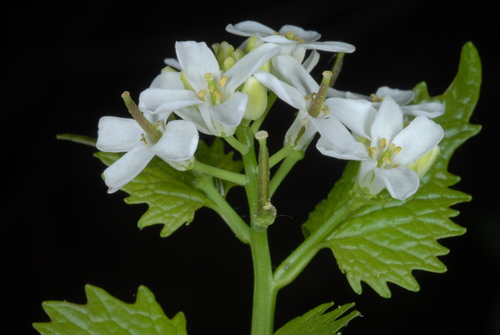
Lepidium bidentatum
Montin
Scurvy grass, Pepperwort
BrassicaceaeLeaves

iNaturalist · cc-by
(c) Forest and Kim Starr, some rights reserved (CC BY)
(c) Forest and Kim Starr, some rights reserved (CC BY)

iNaturalist · cc-by
(c) Kevin Faccenda, some rights reserved (CC BY)
(c) Kevin Faccenda, some rights reserved (CC BY)
What to Eat
Edible parts: Leaves
The leaves are eaten raw or cooked as a relish and are pungent.
Where to Find It
A tropical plant. It grows on limestone, basalt rock and coral sand close to the sea. It can grow in sandy soil.
Hawaii, Kiribati, Marquesas, Pacific, Society Is., Tuamotu, USA,
Countries: Australia, Fiji, Micronesia, Kiribati, Marshall Islands, Nauru, New Zealand, French Polynesia, Papua New Guinea, Palau, Solomon Islands, Tonga, Tuvalu, United States, Vanuatu, Samoa
How to Identify
A cabbage family herb. It is low lying and succulent. It can grow 50 cm tall. The leaves are leathery and green. The flowers are white and in clusters.
How to Grow
Plants can be grown from seeds.
Notes
There are about 150 Lepidium species.
Names & Synonyms
Fish Poison, Kunana, Naunau
Lepidium piscidium G. Forst.
References (4)
- Altschul, S.V.R., 1973, Drugs and Foods from Little-known Plants. Notes in Harvard University Herbaria. Harvard Univ. Press. Massachusetts. no. 1333
- Hedrick, U.P., 1919, (Ed.), Sturtevant's edible plants of the world. p 377 (As Lepidium piscidium)
- Nova Acta Phys.-Med. Acad. Caes. Leop.-Carol. Nat. Cur. 6:324, t. 5. 1778
- Whistler, A. S., Edible vascular plants of the Line Islands. Pacific Health Dialog. Vol. 3 No. 2