Avena barbata
Pott. ex Link
Bearded Oats, Slender oat
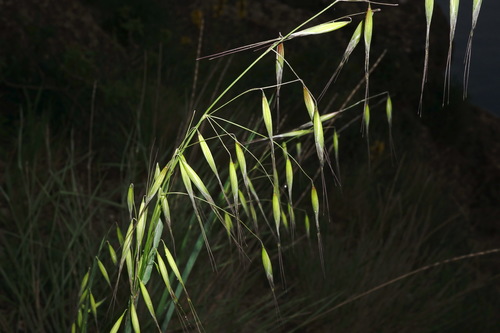
(c) Сергей, some rights reserved (CC BY-NC), uploaded by Сергей
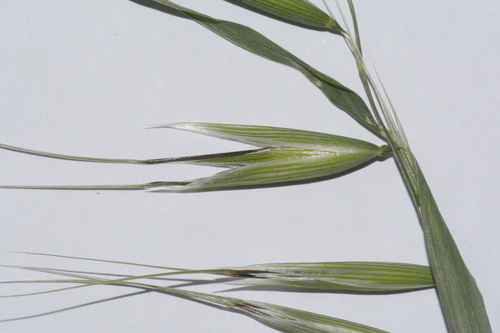
(c) Pat Enright, some rights reserved (CC BY-NC), uploaded by Pat Enright
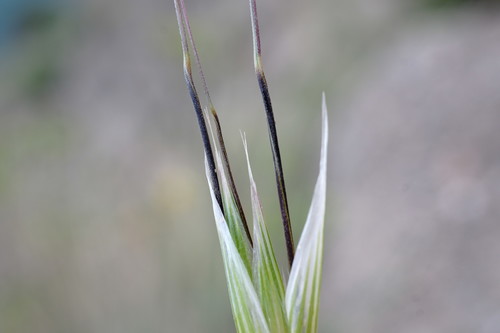
(c) Сергей, some rights reserved (CC BY-NC), uploaded by Сергей
What to Eat
Edible parts: Seeds, Cereal
Edible Parts: Seed Edible Uses: Coffee Seed - cooked. Rather small. The seed ripens in the latter half of summer and, when harvested and dried, can store for several years. It has a floury texture and a mild, somewhat creamy flavour. It can be used as a staple food crop in either savoury or sweet dishes. The seed can be cooked whole, though it is more commonly ground into a flour and used as a cereal in all the ways that oats are used, especially as a porridge but also to make biscuits, sourdough bread etc. The seed can also be sprouted and eaten raw or cooked in salads, stews etc. The roasted seed is a coffee substitute.
Where to Find It
It grows in Mediterranean climates. It grows in pasture land. In Argentina it grows from sea level to 2,300 m above sea level. Tasmanian Herbarium.
Albania, Argentina, Asia, Australia, Brazil, Central Asia, Chile, Europe, France, Greece, Himalayas, India, Italy, Mediterranean, Middle East, Nepal, Pakistan, Portugal, Saudi Arabia, South America, Spain, Syria, Tajikistan, Tasmania, Turkey, Türkiye, Uruguay, USA,
How to Identify
An erect, tufted annual grass. It grows 75 cm high. The sheaths are open to the base. The lower part is hairy. The flowers are in groups of 2 or 3. They are clustered in spikelets and these are grouped in a head up to 30 cm long. The spikelets are 18-30 mm long and drooping.
How to Grow
Succeeds in any moderately fertile soil in full sun. A triploid species, it is rarely cultivated for its edible seed. Oats are in general easily grown plants but, especially when grown on a small scale, the seed is often completely eaten out by birds. Some sort of netting seems to be the best answer on a garden scale.
Propagation: Seed - sow in situ in early spring or in the autumn. Only just cover the seed. Germination should take place within 2 weeks.
Medicinal Uses
None known
Other Uses
Fibre Mulch Paper Thatching The straw has a wide range of uses such as for bio-mass, fibre, mulch, paper-making and thatching. Some caution is advised in its use as a mulch since oat straw can infest strawberries with stem and bulb eelworm. Special Uses
Wikipedia
Source ↗Avena barbata is a species of wild oat known by the common name slender wild oat. It has edible seeds. It is a diploidized autotetraploid grass (2n=4x=28). Its diploid ancestors are A. hirtula Lag. and A. wiestii Steud (2n=2x=14), which are considered Mediterranean and desert ecotypes, respectively, comprising a single species. A. wiestii and A. hirtula are widespread in the Mediterranean Basin, growing in mixed stands with A. barbata, though they are difficult to tell apart. This is a winter annual grass with thin tillers (stems) growing up to 60 to 80 centimeters in maximum height, but known to sometimes grow taller. The bristly spikelets are 2 to 3 centimeters long, not counting the bent awn which is up to 4 centimeters in length. Avena barbata largely reproduces by selfing in natural populations, with very low rates of outcrossing. A. barbata is native to central Asia (as far east as Pakistan) and the Mediterranean Basin. As an introduced species it also occurs in other Mediterranean-like habitats of New Zealand, Australia, South Africa, Argentina, Chile, Brazil, and Uruguay. In Europe it has been reported in Finland, France, Germany, Norway, Bulgaria, and Austria. In North America it is an introduced species and noxious weed, where it is especially widespread in California. In California it has displaced native species of grass. It is also found in Oregon, Washington, Hawaii, Massachusetts, Nevada, Arizona, and New Mexico. Genetic evidence indicates that A. barbata in Argentina and California originated from Spain, during the Spanish colonization of the Americas.
Notes
There are about 25 Avena species.
Names & Synonyms
Bearded oat. Spanish: Avena delgada; Avena loca. French: Avoine a deux barbes; Avoine barbue. Portuguese: balanco-bravo. Austria: bart-Hafer. Brazil: aveia-barbada; aveia-brava. Germany: Wilder Hafer. Italy: Avena a due barbe. Norway: skjegghavre. USA: slender oats; slender wildoat.
References (18)
- Al-Sodany, Y. M., et al, 2013, Medicinal Plants in Saudi Arabia: I. Sarrwat Mountains at Taif, KSA. Academic Journal of Plant Sciences 6 (4): 134-145
- Ambasta S.P. (Ed.), 2000, The Useful Plants of India. CSIR India. p 63
- Blamey, M and Grey-Wilson, C., 2005, Wild flowers of the Mediterranean. A & C Black London. p 525
- Curtis, W.M., & Morris, D.I., 1994, The Student's Flora of Tasmania. Part 4B St David's Park Publishing, Tasmania, p 236
- Dashorst, G.R.M., and Jessop, J.P., 1998, Plants of the Adelaide Plains & Hills. Botanic Gardens of Adelaide and State Herbarium. p 174
- Flora of Australia Volume 49, Oceanic Islands 1, Australian Government Publishing Service, Canberra. (1994) p 456
- Flora of Pakistan. www.eFloras.org
- Harris, S., Buchanan, A., Connolly, A., 2001, One Hundred Islands: The Flora of the Outer Furneaux. Tas Govt. p 115
- Holden, J.H.W., 1979, Oats, in Simmonds N.W.,(ed), Crop Plant Evolution. Longmans. London. p 86
- Hussey, B.M.J., Keighery, G.J., Cousens, R.D., Dodd, J., Lloyd, S.G., 1997, Western Weeds. A guide to the weeds of Western Australia. Plant Protection Society of Western Australia. p 42
- J. Bot. (Schrader) 1799(2,2):314. 1800
- Lamp, C & Collet F., 1989, Field Guide to Weeds in Australia. Inkata Press. p 31
- Lamp, C.A., Forbes, S.J. and Cade, J.W., 1990, Grasses of Temperate Australia. Inkata Press. p 90
- Lazarides, M. & Hince, B., 1993, Handbook of Economic Plants of Australia, CSIRO. p 29
- Paczkowska, G. & Chapman, A.R., 2000, The Western Australian Flora. A Descriptive Catalogue. Western Australian Herbarium. p 98
- Plants for a Future database, The Field, Penpol, Lostwithiel, Cornwall, PL22 0NG, UK. http://www.scs.leeds.ac.uk/pfaf/
- Tasmanian Herbarium Vascular Plants list p 82
- Tozer, F., 2007, The Uses of Wild Plants. Green Man Publishing. p 44


