Azorina vidalii
H. C. Watson.) Feer.

(c) nhfeniak, some rights reserved (CC BY-NC)
(c) Ivo Rosa, some rights reserved (CC BY), uploaded by Ivo Rosa

(c) A Rocha Portugal, some rights reserved (CC BY-NC), uploaded by A Rocha Portugal
What to Eat
Edible parts: Leaves
Edible Parts: Leaves Shoots Edible Uses: Leaves - raw. An excellent sweet flavour, the leaves can be used like lettuce in salads, though the plant is not very productive. It is important to only harvest individual side leaves, if the growing tip is harvested the shoot will usually die off.
Where to Find It
It is a Mediterranean climate plant. It grows naturally in the Azores of Portugal. It grows on sea cliffs. It needs full sun or light shade. It grows on rocky, free-draining soils often in exposed sites. It is damaged by frost.
Australia, Azores, Europe, Mediterranean, Portugal, Slovenia, Tasmania,
How to Identify
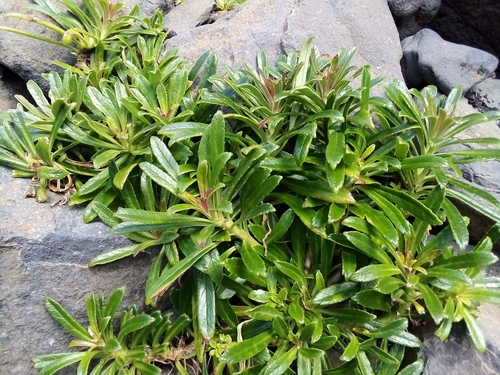
An evergreen shrub. It grows 0.6-2 m tall. The stems are woody and branched. The leaves are spoon shaped with teeth around the edge. They are 5-15 cm long. They are crowded towards the ends of the stems. The flowers are in loose spikes. They are bell shaped and hang down. They are white or pink. They are 5 cm long.
How to Grow
Plants are grown from seed. They can be grown from softwood cuttings.
Propagation: Seed - surface sow in mid spring in a greenhouse. Germination usually takes place within 2 - 4 weeks at 18°c. When they are large enough to handle, prick the seedlings out into individual pots and grow them on in a greenhouse for at least their first winter. Plant them out into their permanent positions in late spring or early summer, after the last expected frosts.
Medicinal Uses
None known
Other Uses
None known Special Uses
Wikipedia
Source ↗Azorina vidalii is a small evergreen shrub reaching 0.3 m tall and wide. It grows year-round and flowers from June to July, with seeds ripening July to August. The plant is hermaphroditic and insect-pollinated. It thrives in light sandy or medium loamy, well-drained soils across mildly acidic to basic pH ranges. It requires full sun and tolerates both dry and moist conditions. Hardy to UK zone 9 and frost tender.
Notes
There is only one Azorina species.
Names & Synonyms
References (5)
- Bodkin, F., 1991, Encyclopedia Botanica. Cornstalk publishing, p 121 (As Azorina violalli)
- Bot. Jahrb. Syst. 12:611. 1890
- Hibbert, M., 2002, The Aussie Plant Finder 2002, Florilegium. p 36
- Marinelli, J. (Ed), 2004, Plant. DK. p 170
- Plants for a Future database, The Field, Penpol, Lostwithiel, Cornwall, PL22 0NG, UK. http://www.scs.leeds.ac.uk/pfaf/


