Zingiber chrysostachys
Ridley
Lempui
ZingiberaceaeRoots

gbif · cc-by
Royal Botanic Gardens, Kew
Royal Botanic Gardens, Kew

gbif · cc-by
Royal Botanic Gardens, Kew
Royal Botanic Gardens, Kew
What to Eat
Edible parts: Rhizomes, Root
The rhizomes can be used as a substitute for ginger.
Where to Find It
A tropical plant. It grows in evergreen forest and dry bamboo forest on limestone hills. It grows between 200-1400 m altitude.
Asia, Indochina, Malaysia, SE Asia, Thailand,
Countries: United Arab Emirates, Afghanistan, Armenia, Azerbaijan, Bangladesh, Bahrain, Brunei, Bhutan, China, Georgia, Indonesia, Israel, India, Iraq, Iran, Jordan, Japan, Kyrgyzstan, Cambodia, North Korea, South Korea, Kuwait, Kazakhstan, Laos, Lebanon, Sri Lanka, Myanmar, Mongolia, Maldives, Malaysia, Nepal, Oman, Philippines, Pakistan, Qatar, Saudi Arabia, Singapore, Syria, Thailand, Tajikistan, Timor-Leste, Turkmenistan, Turkey, Taiwan, Uzbekistan, Vietnam, Yemen
How to Identify
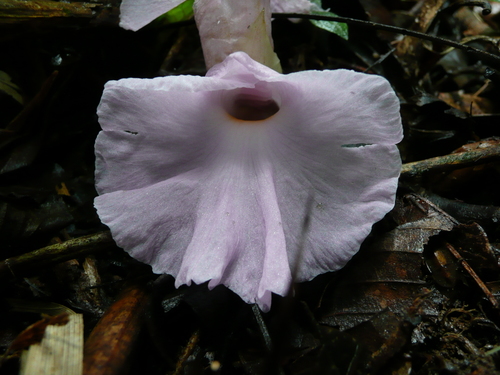
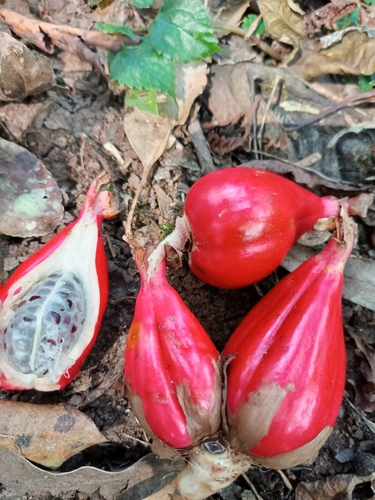
A ginger family herb which keeps growing from year to year. It has rhizomes or underground stems. It has leafy shoots 60-100 cm tall. The leaves are sword shaped and 12-17 cm long by 4-5.5 cm wide. The flowers are tightly clustered on a flower stalk which arises separately from the underground stem. This is 7-10 cm long. The flower spike is 10 cm long by 4 cm wide. It has bright yellow bracts.
References (4)
- Burkill, I.H., 1966, A Dictionary of the Economic Products of the Malay Peninsula. Ministry of Agriculture and Cooperatives, Kuala Lumpur, Malaysia. Vol 2 (I-Z) p 2337
- Lim, T. K., 2015, Edible Medicinal and Non Medicinal Plants. Volume 9, Modified Stems, Roots, Bulbs. Springer p 87
- Lim, T. K., 2016, Edible Medicinal and Non-Medicinal Plants: Volume 12 Modified Stems, Roots p 8
- PROSEA handbook Volume 13 Spices. p 267