Zingiber griffithii
Baker
(c) danmarquand, some rights reserved (CC BY-NC)
(c) danmarquand, some rights reserved (CC BY-NC)
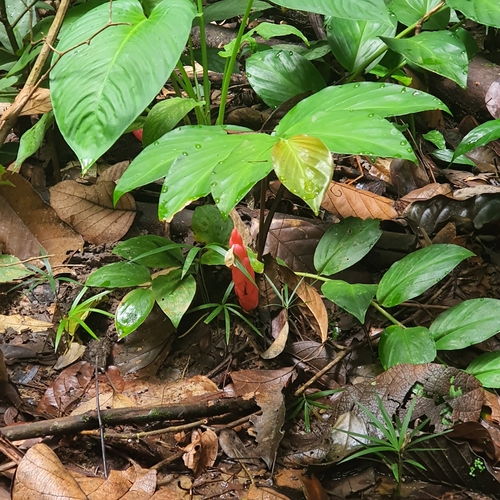
(c) pbsg, some rights reserved (CC BY), uploaded by pbsg
What to Eat
Edible parts: Rhizome, Root, Spice
The rhizome is spicy and used as a spice or root vegetable.
Where to Find It
A tropical plant. It grows in lowland forests. It is mostly in moist locations and shady sites in soil rich in humus.
Asia, Indochina, Indonesia, Malaysia, SE Asia,
How to Identify
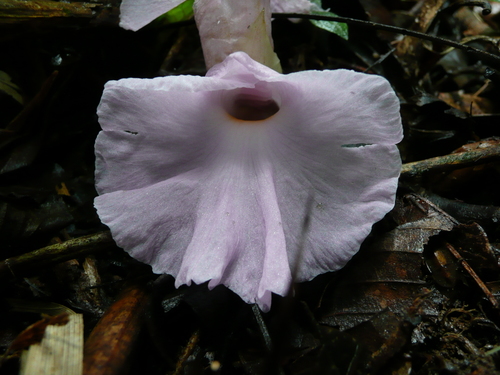
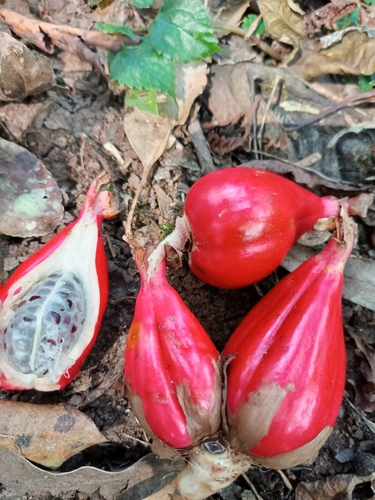
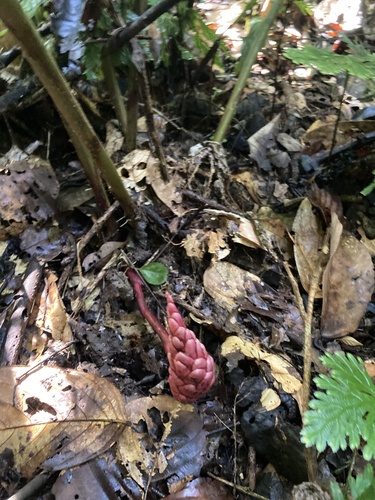
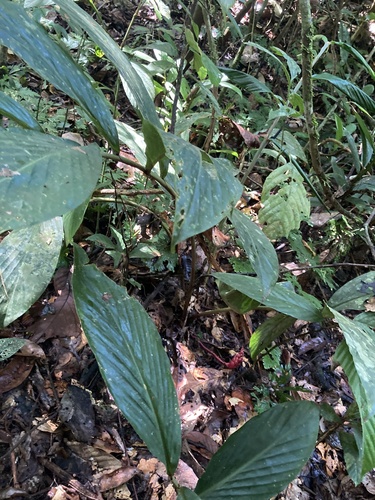
A ginger family herb that keeps growing from year to year. It has underground stems. The leafy shoots grow 1.2 m tall. The leaves are broadly sword shaped. They are 15-25 cm long by 5-8 cm wide. There are very fine silky hairs underneath. The flowers are in a compact spike. This is on a separate flower stalk. This is 4-15 cm long. The bracts are red and 2.5-4 cm long by 1.5-2.5 cm wide. The spike is 10-15 cm long by 1.5-3.5 cm wide. The fruit is a capsule. It is about 2 cm long. The seed are deep red.
Names & Synonyms
Bola bukit, Tepus huma, Tepus kechil, Tepus merah
References (2)
- Burkill, I.H., 1966, A Dictionary of the Economic Products of the Malay Peninsula. Ministry of Agriculture and Cooperatives, Kuala Lumpur, Malaysia. Vol 2 (I-Z) p 2338
- PROSEA handbook Volume 13 Spices. p 267