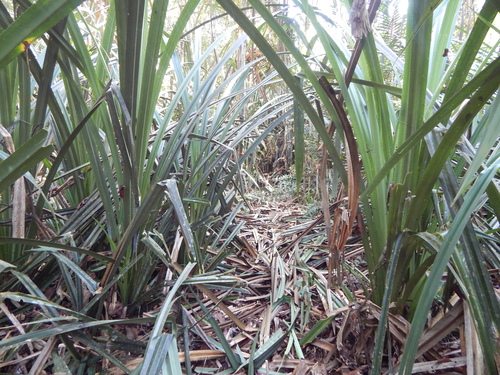
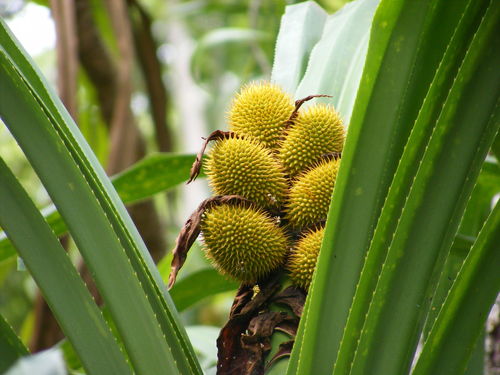
Pandanus kaida
Kurz
Hillside screw-pine, Spiny straps
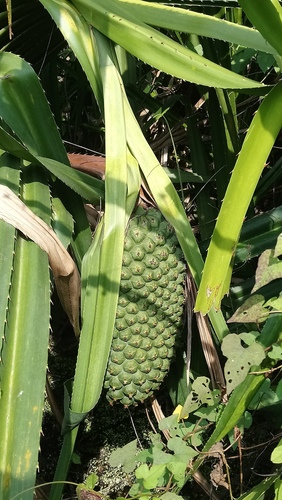
(c) Andrey Efremov, some rights reserved (CC BY-NC), uploaded by Andrey Efremov
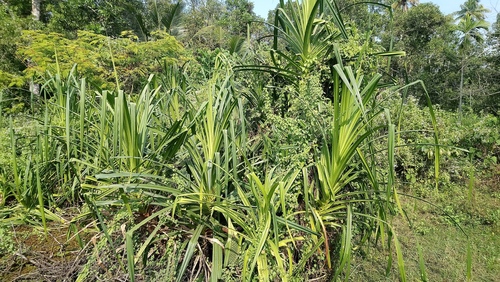
(c) Andrey Efremov, some rights reserved (CC BY-NC), uploaded by Andrey Efremov
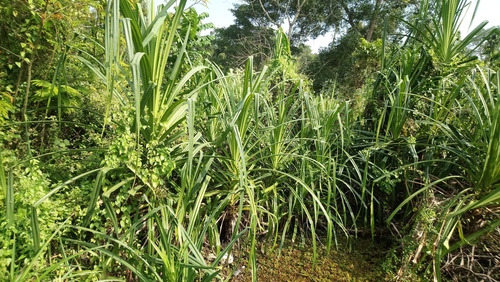
(c) Andrey Efremov, some rights reserved (CC BY-NC), uploaded by Andrey Efremov
What to Eat
Edible parts: Shoots
live fencing; medicinal; pollen-insect repellent. leaves- mats, boxes, hats.
Where to Find It
A tropical plant. It grows in shade in monsoon mixed forests a kilometre from the seashore in China.
Asia, China, Indochina, Malaysia, SE Asia, Sri Lanka, Thailand, Vietnam,
How to Identify
A screwpine. It is a large herb. It grows 1-3 m tall. The leaves are long and narrow. They have spines along the edge. They are 100 cm long by 3-5 cm wide. Male and female flowers are separate. Male flowers are in groups with spathes 45 cm long. There are 150 fruit in an oval head. The individual seeds are 3 cm long.
How to Grow
It is used as a hedge.
Wikipedia
Source ↗Pandanus kaida is a monocot species of plant in the family Pandanaceae. It is cultivated and native to Cambodia, China, India, Sri Lanka, Thailand, and Vietnam. Provided the appearance of its fruit, the species is sometimes referred to as the false pineapple, despite not belonging to the pineapple genus.
Names & Synonyms
References (4)
- Asiat. Soc. Bengal Pt. 2, Nat. Hist. 38(2):148, 1869
- Burkill, I.H., 1966, A Dictionary of the Economic Products of the Malay Peninsula. Ministry of Agriculture and Cooperatives, Kuala Lumpur, Malaysia. Vol 2 (I-Z) p 1676
- Hu, Shiu-ying, 2005, Food Plants of China. The Chinese University Press. p 281 (As Pandanus forceps)
- PROSEA (Plant Resources of South East Asia) handbook, Volume 2, 1991, Edible fruits and nut. p 243