Alpinia blepharocalyx
K. Schum.
Medu

iNaturalist · cc-by-nc
(c) BioM_Akekachoke.B, some rights reserved (CC BY-NC)
(c) BioM_Akekachoke.B, some rights reserved (CC BY-NC)
iNaturalist · cc-by-nc
(c) BioM_Akekachoke.B, some rights reserved (CC BY-NC)
(c) BioM_Akekachoke.B, some rights reserved (CC BY-NC)
iNaturalist · cc-by-nc
(c) BioM_Akekachoke.B, some rights reserved (CC BY-NC)
(c) BioM_Akekachoke.B, some rights reserved (CC BY-NC)
What to Eat
Edible parts: Fruit, Flowers
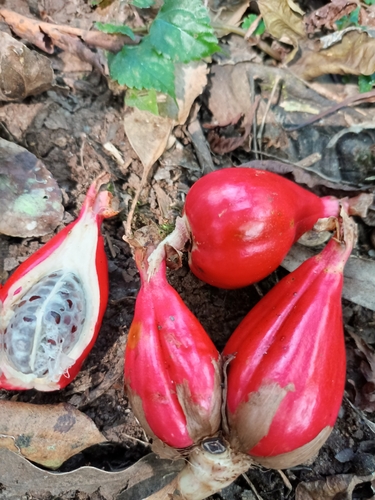
The fruit and flowers are eaten raw.
Where to Find It
A tropical plant. It grows in Yunnan in China between 600-1200 m above sea level. It grows in secondary forest.
Asia, Bangladesh, China, India, Indochina, Laos, Myanmar, SE Asia, Thailand, Vietnam,
Countries: United Arab Emirates, Afghanistan, Armenia, Azerbaijan, Bangladesh, Bahrain, Brunei, Bhutan, China, Georgia, Indonesia, Israel, India, Iraq, Iran, Jordan, Japan, Kyrgyzstan, Cambodia, North Korea, South Korea, Kuwait, Kazakhstan, Laos, Lebanon, Sri Lanka, Myanmar, Mongolia, Maldives, Malaysia, Nepal, Oman, Philippines, Pakistan, Qatar, Saudi Arabia, Singapore, Syria, Thailand, Tajikistan, Timor-Leste, Turkmenistan, Turkey, Taiwan, Uzbekistan, Vietnam, Yemen
How to Identify
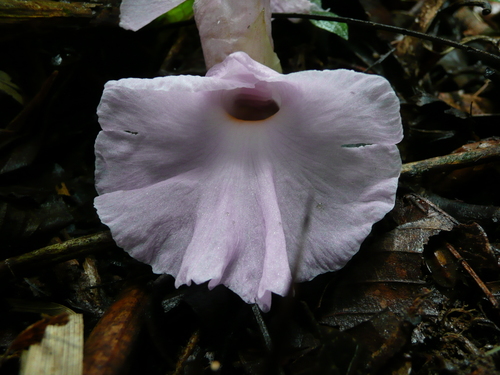
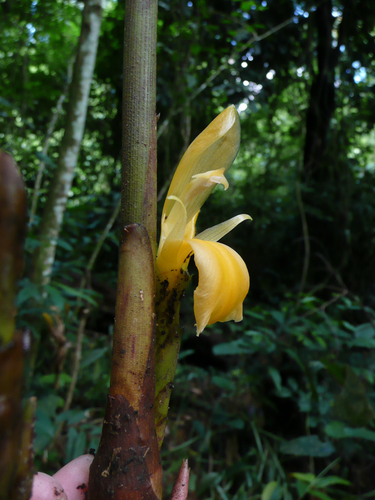
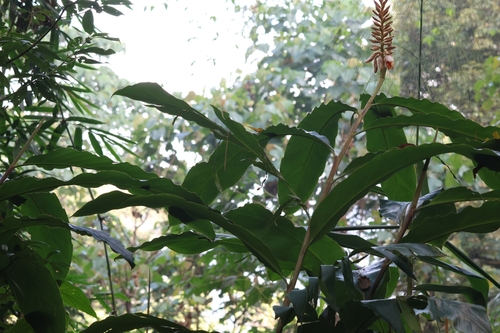
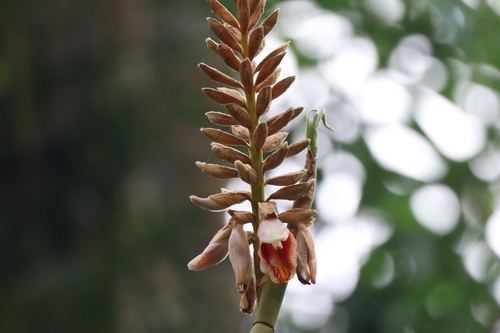
A ginger family herb. The false stems are 1-3 m tall. The leaves are pale green underneath. They are sword shaped and 45-60 cm long by 4-15 cm wide. The flowering stalks are 20-30 cm long and drooping. The flowers are red and yellow.
Notes
There are about 200-230 Alpinia species. They are mostly tropical and subtropical. Not in The Plant List.
Names & Synonyms
Ge bo bao, Ma ga
Alpinia blepharocalyx K. Schum.Languas blepharocalyx (K. Schum.) Hand.-Mazz.
References (5)
- Aiguo, C. & Zhiling, D., 2001, Managing Agricultural Resources for Biodiversity Conservation. Case Study Yunnan, Southwest China. Environment Liaison Center International. p 42
- Cao, Y., et al, 2020, Ethnobotanical study on wild edible plants used by three trans-boundary ethnic groups in Jiangcheng County, Pu’er, Southwest China. Journal of Ethnobiology and Ethnomedicine (2020) 16:66
- Jin, Chen et al, 1999, Ethnobotanical studies on Wild Edible Fruits in Southern Yunnan: Folk Names: Nutritional Value and Uses. Economic Botany 53(1) pp 2-14 (As Alpinia blepharocalyx)
- Liu, Yi-tao, & Long, Chun-Lin, 2002, Studies on Edible Flowers Consumed by Ethnic Groups in Yunnan. Acta Botanica Yunnanica. 24(1):41-56 (As Alpinia blepharocalyx)
- Xu, Z., Tao, G. & Tan, J., 1988, Tropical Wild Flowers and Plants in Xishuangbanna, Agricultural Publishing House. photo 47 (As Alpinia blepharocalyx)