Crocus neapolitanus
Mord. et Loisel
Crocus
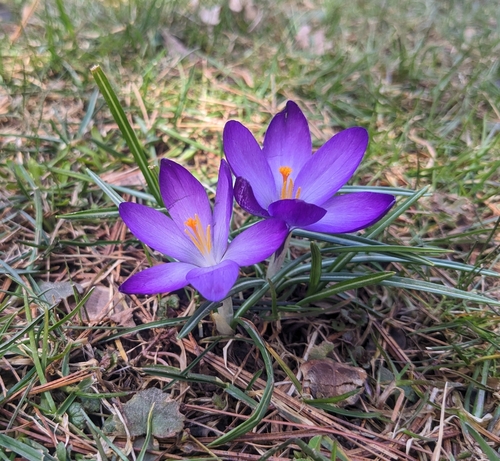
iNaturalist · cc-by-nc
(c) Silas Wareham, some rights reserved (CC BY-NC), uploaded by Silas Wareham
(c) Silas Wareham, some rights reserved (CC BY-NC), uploaded by Silas Wareham
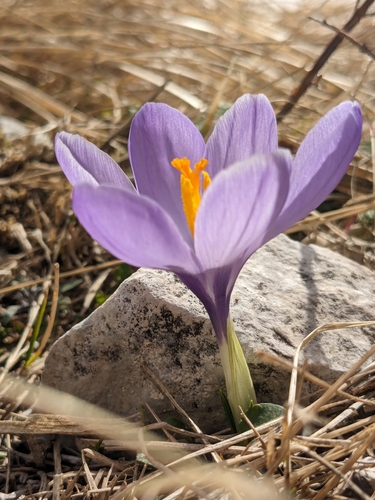
iNaturalist · cc-by-nc
(c) mircogruppi, some rights reserved (CC BY-NC), uploaded by mircogruppi
(c) mircogruppi, some rights reserved (CC BY-NC), uploaded by mircogruppi
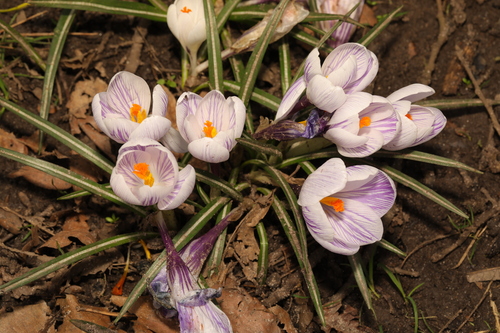
iNaturalist · cc0
no rights reserved, uploaded by Stephen James McWilliam
no rights reserved, uploaded by Stephen James McWilliam
What to Eat
Edible parts: Fruit, Flowers - spice
The fruit is eaten as a snack, and the flowers are used as a spice.
Where to Find It
It needs a well-drained soil. It needs an open sunny position. It is resistant to frost but damaged by drought.
Australia, Balkans, Bosnia, Europe*, France, Italy, Mediterranean,
Countries: Andorra, Albania, Austria, Australia, Bosnia & Herzegovina, Belgium, Bulgaria, Belarus, Switzerland, Cyprus, Czechia, Germany, Denmark, Algeria, Estonia, Egypt, Spain, Finland, France, United Kingdom, Greece, Croatia, Hungary, Ireland, Israel, Iceland, Italy, Lebanon, Liechtenstein, Lithuania, Luxembourg, Latvia, Libya, Morocco, Monaco, Moldova, Montenegro, North Macedonia, Malta, Netherlands, Norway, Poland, Portugal, Romania, Serbia, Russia, Sweden, Slovenia, Slovakia, San Marino, Syria, Tunisia, Turkey, Ukraine
How to Identify
A plant that keeps growing from year to year. It grows 12 cm high and spreads 7 cm wide. The stems is slender, erect and flowering. The leaves are long, green and narrow. The flowers are white to purple. They are tube shaped and expand. They occur singly at the top of the plant.
How to Grow
Plants can be grown from division.
Notes
There are about 80 Crocus species.
Names & Synonyms
Croco, Safran, Zafferano selvatico
References (4)
- Bodkin, F., 1991, Encyclopedia Botanica. Cornstalk publishing, p 299
- Pieroni, A., 1999, Gathered wild food plants in the Upper Valley of the Serchio River (Garfagnana), Central Italy. Economic Botany 53(3) pp 327-341
- Redzic, S. J., 2006, Wild Edible Plants and their Traditional Use in the Human Nutrition in Bosnia-Herzegovina. Ecology of Food and Nutrition, 45:189-232
- Rivera, D. et al, 2006, Gathered Mediterranean Food Plants - Ethnobotanical Investigations and Historical Development, in Heinrich M, Müller WE, Galli C (eds): Local Mediterranean Food Plants and Nutraceuticals. Forum Nutr. Basel, Karger, 2006, vol 59, pp 18–74


