Setaria intermedia
Roem. & Schult.
PoaceaeSeeds/Nuts
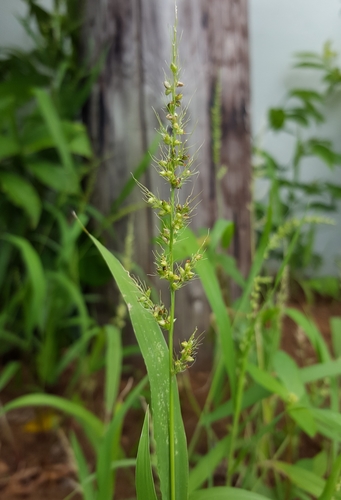
iNaturalist · cc-by-nc
(с) François Rousseu, некоторые права защищены (CC BY-NC), загрузил François Rousseu
(с) François Rousseu, некоторые права защищены (CC BY-NC), загрузил François Rousseu
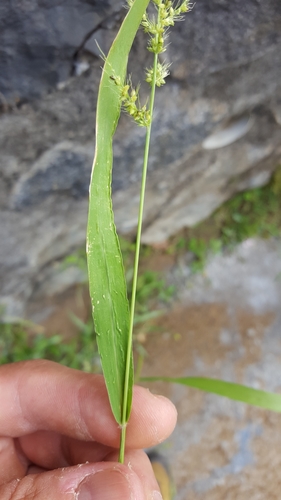
iNaturalist · cc-by-nc
(с) François Rousseu, некоторые права защищены (CC BY-NC), загрузил François Rousseu
(с) François Rousseu, некоторые права защищены (CC BY-NC), загрузил François Rousseu
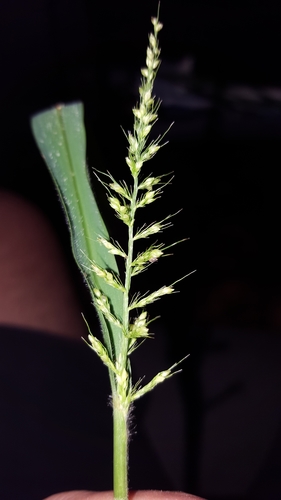
iNaturalist · cc-by-nc
(с) François Rousseu, некоторые права защищены (CC BY-NC), загрузил François Rousseu
(с) François Rousseu, некоторые права защищены (CC BY-NC), загрузил François Rousseu
What to Eat
Edible parts: Seeds, Grain
The seeds and grain are edible.
Where to Find It
It is a tropical plant. It grows between 90-1,800 m above sea level in Nepal.
Africa, Asia, Bhutan, China, Himalayas, India, Japan, Malaysia, Myanmar, Nepal, Pakistan, Polynesia, Russia, SE Asia, Sri Lanka,
Countries: United Arab Emirates, Afghanistan, Armenia, Angola, Azerbaijan, Bangladesh, Burkina Faso, Bahrain, Burundi, Benin, Brunei, Bhutan, Botswana, Congo (DRC), Central African Republic, Congo (Republic), Cote d'Ivoire, Cameroon, China, Cape Verde, Djibouti, Algeria, Egypt, Eritrea, Ethiopia, Gabon, Georgia, Ghana, Gambia, Guinea, Equatorial Guinea, Guinea-Bissau, Indonesia, Israel, India, Iraq, Iran, Jordan, Japan, Kenya, Kyrgyzstan, Cambodia, Comoros, North Korea, South Korea, Kuwait, Kazakhstan, Laos, Lebanon, Sri Lanka, Liberia, Lesotho, Libya, Morocco, Madagascar, Mali, Myanmar, Mongolia, Mauritania, Mauritius, Maldives, Malawi, Malaysia, Mozambique, Namibia, Niger, Nigeria, Nepal, Oman, Philippines, Pakistan, Qatar, Russia, Rwanda, Saudi Arabia, Seychelles, Sudan, Singapore, Sierra Leone, Senegal, Somalia, South Sudan, Sao Tome & Principe, Syria, Eswatini, Chad, Togo, Thailand, Tajikistan, Timor-Leste, Turkmenistan, Tunisia, Turkey, Taiwan, Tanzania, Uganda, Uzbekistan, Vietnam, Yemen, South Africa, Zambia, Zimbabwe
How to Identify
An annual grass. The lower sections of the stem can lie along the ground and form roots at the nodes. The stems are 15-100 cm tall. The leaf blades are 5-20 cm long and 2-10 mm wide. The flower panicles are contracted and 3-10 cm long.
How to Grow
The seed only remain viable for a short time.
Production
In Rajasthan in India the seed are produced August to November.
Names & Synonyms
Arranki gaddi, Dodda-antapurlai hullu, Kari-ottai hullu
Panicum tomentosum RoxbSetaria tomentosa (Roxb.) Kunthand others
References (3)
- Ambasta, S.P. (Ed.), 2000, The Useful Plants of India. CSIR India. p 571 (As Setaria tomentosa)
- Revis. gramin. 47. 1829 (As Setaria tomentosa)
- Singh, V. and Singh, P., 1981, Edible Wild Plants of Eastern Rajasthan. J. Econ. Tax. Bot. Vol 2 pp 197-207 (As Setaria tomentosa)


