Amorphophallus commutatus
(Schott) Engl. in DC.
Dragon stalk yam
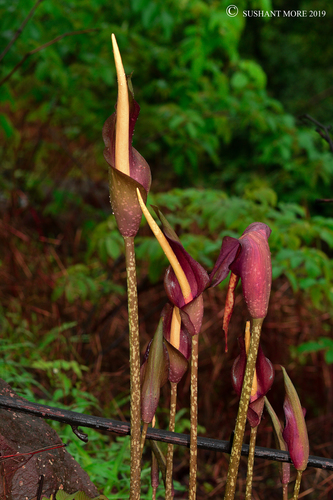
no rights reserved, uploaded by S.MORE
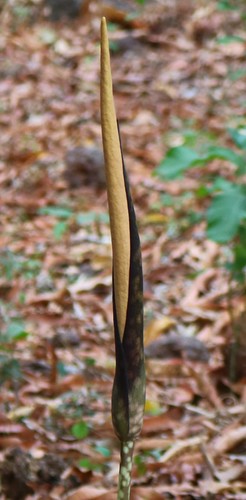
(c) Shiwalee Samant, some rights reserved (CC BY-NC)
What to Eat
Edible parts: Leaves, Leaf stalk, Corm, Flowers, Root, Vegetable
The tuber, leaves, leaf stalks, and flowers are all used as vegetables; the leaf stalk and blade are typically mixed with sour plants like tamarind before eating.
Known Hazards
Where to Find It
A tropical plant.
Asia, India,
How to Identify
A herb which forms a large tuber. The plant keeps growing from year to year. It develops flowers before it forms leaves. There is a single leaf divided into 3 parts. The mature flower has a bad smell.
Wikipedia
Source ↗Amorphophallus commutatus, or dragon stalk yam (Marathi- shevale, mogari kanda; Hindi- jungli suran), is a plant species in the family Araceae. Amorphophallus is a large genus of some 170 tropical and subtropical tuberous herbaceous plants, which includes the world's largest flower, titan arum.
Notes
There are about 170-200 Amorphophallus species.
Names & Synonyms
Jangali-suran, Jangli suran, Sherla, Sheval, Shevalkand
References (7)
- Bandana, P. & Debabrata, P., 2015, Wild Edible Plant Diversity and its Ethno-medicinal use by Indigenous Tribes of Koraput, Odisha, India. Research Journal of Agriculture and Forestry Sciences. Vol. 3(9), 1-10, October (2015)
- Dobriyal, M. J. R. & Dobriyal, R., 2014, Non Wood Forest Produce an Option for Ethnic Food and Nutritional Security in India. Int. J. of Usuf. Mngt. 15(1):17-37
- Jadhav, V. D. et al, 2011, Documentation and ethnobotanical survey of wild edible plants from Kolhapur district. Recent Research in Science and Technology. 3(12): 58-63
- Kuvar, S. D. & Shinde, R. D., 2019, Wild Edible Plants used by Kokni Tribe of Nasik District, Maharashtra. Journal of Global Biosciences. Volume 8, Number 2, 2019, pp. 5936-5945
- Nilegaonkar, S., et al, 1985, Nutritional Evaluation of some wild food plants from the Pune and Nieghbouring districts, Maharashtra state: Part 1. J. Econ. Tax. Bot. Vol. 6 No. 3 pp 629-635
- Patil, M. V. & Patil, D. A., 2000, Some More Wild Edible Plants of Nasik District (Maharashtra). Ancient Science of Life Vol. X1X (3&4): 102-104
- Shah, G.L., 1984, Some economically important plant of Salsette Island near Bombay. J. Econ. Tax. Bot. Vol. 5 No. 4 pp 753-765


