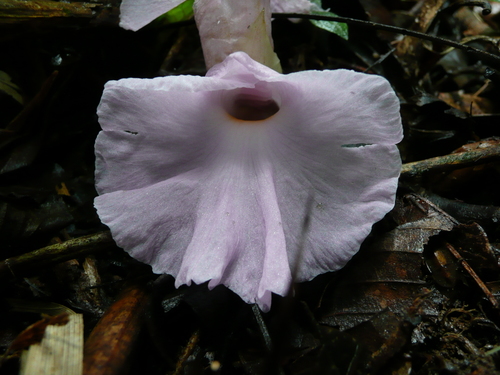
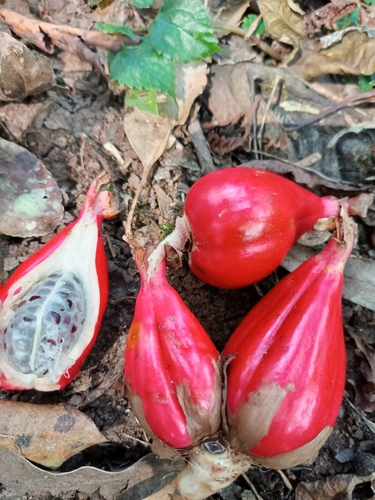
Amomum stenocarpum
Valeton
Kaol haol

gbif · cc-by
Royal Botanic Gardens, Kew
Royal Botanic Gardens, Kew

gbif · cc-by
Royal Botanic Gardens, Kew
Royal Botanic Gardens, Kew

gbif · cc-by
Royal Botanic Gardens, Kew
Royal Botanic Gardens, Kew
What to Eat
Edible parts: Seeds, Spice, Fruit
The seeds are used as a spice. The green fruit and seeds are eaten.
Where to Find It
A tropical plant. It occurs in Sumatra.
Asia, Indonesia*, SE Asia,
Countries: United Arab Emirates, Afghanistan, Armenia, Azerbaijan, Bangladesh, Bahrain, Brunei, Bhutan, China, Georgia, Indonesia, Israel, India, Iraq, Iran, Jordan, Japan, Kyrgyzstan, Cambodia, North Korea, South Korea, Kuwait, Kazakhstan, Laos, Lebanon, Sri Lanka, Myanmar, Mongolia, Maldives, Malaysia, Nepal, Oman, Philippines, Pakistan, Qatar, Saudi Arabia, Singapore, Syria, Thailand, Tajikistan, Timor-Leste, Turkmenistan, Turkey, Taiwan, Uzbekistan, Vietnam, Yemen
How to Identify
A large ginger family herb. It can grow 3 m tall. The leaves are sword shaped and 90 cm long by 13 cm wide. The fruit are green and 2.5 cm long.
Medicinal Uses
The stem juice is used to treat cough.
Notes
There are about 150 Amomum species. They are mostly tropical.
References (2)
- Burkill, I.H., 1966, A Dictionary of the Economic Products of the Malay Peninsula. Ministry of Agriculture and Cooperatives, Kuala Lumpur, Malaysia. Vol 1 (A-H) p 133
- World Checklist of Useful Plant Species 2020. Royal Botanic Gardens, Kew