Piper trichostachyon
(Miq.)C. DC.
Pouched pepper
iNaturalist · cc-by-nc
(c) Pramod Appaso Kumbhar, certains droits réservés (CC BY-NC), publiées par Pramod Appaso Kumbhar
(c) Pramod Appaso Kumbhar, certains droits réservés (CC BY-NC), publiées par Pramod Appaso Kumbhar

iNaturalist · cc-by-sa
(c) Dinesh Valke, certains droits réservés (CC BY-SA)
(c) Dinesh Valke, certains droits réservés (CC BY-SA)

iNaturalist · cc-by-sa
(c) Dinesh Valke, certains droits réservés (CC BY-SA)
(c) Dinesh Valke, certains droits réservés (CC BY-SA)
What to Eat
Edible parts: Fruit, Spice
The unripe fruit are used as a spice, added to vegetables and preserved in pickles.
Where to Find It
A tropical plant. It grows in evergreen forests and moist deciduous forests. It occurs in the Western Ghats in India.
Asia, India,
Countries: United Arab Emirates, Afghanistan, Armenia, Azerbaijan, Bangladesh, Bahrain, Brunei, Bhutan, China, Georgia, Indonesia, Israel, India, Iraq, Iran, Jordan, Japan, Kyrgyzstan, Cambodia, North Korea, South Korea, Kuwait, Kazakhstan, Laos, Lebanon, Sri Lanka, Myanmar, Mongolia, Maldives, Malaysia, Nepal, Oman, Philippines, Pakistan, Qatar, Saudi Arabia, Singapore, Syria, Thailand, Tajikistan, Timor-Leste, Turkmenistan, Turkey, Taiwan, Uzbekistan, Vietnam, Yemen
How to Identify
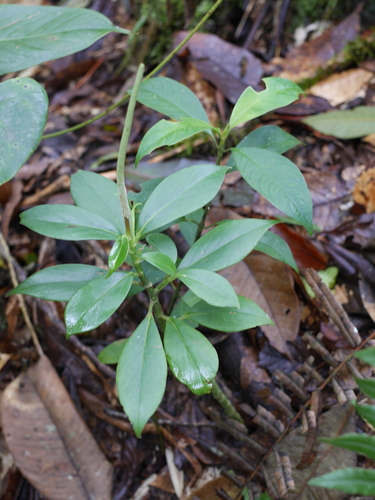
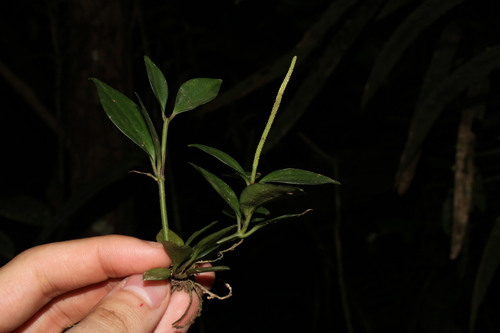
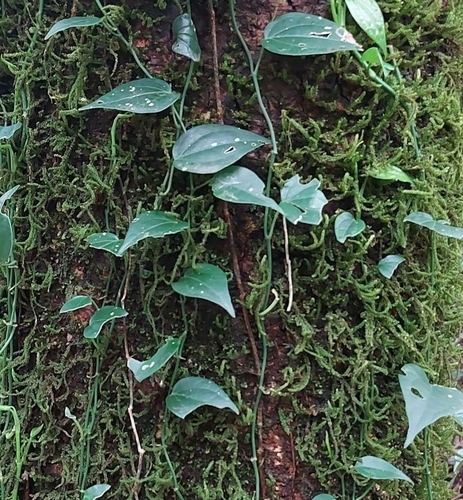
A stout woody climber. The leaves are 8-12 cm long by 3-6 cm wide. They are narrowly oval and taper to the tip. The leaf stalk is 1-2 cm long. The spikes are 10 cm long. They are stout and drooping. The bracts are fleshy and form into a fleshy cup. The fruit is a berry 6 mm long and wide. It is yellowish red.
Production
In south India is flowers and fruits March to April.
Names & Synonyms
Mirch
Muldera trichostachya Miq.
References (2)
- Ambasta, S.P. (Ed.), 2000, The Useful Plants of India. CSIR India. p 461
- Prakash, V., & Mehrotra B.N., 1987, Ethnobotanical Studies on the Flora of Khandala, Maharashtra State. J. Econ. Tax. Bot. Vol. 9 No. 1 pp 205-208