Beckmannia eruciformis
(L.) Host.
Sloughgrass
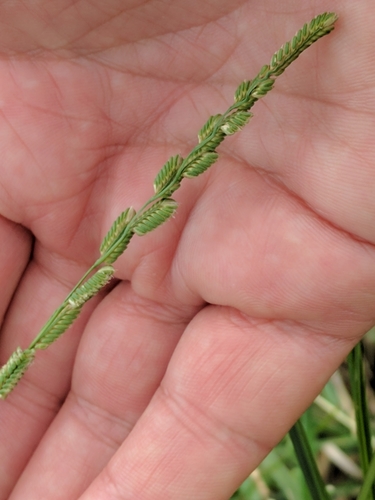
(c) Almantas Kulbis, some rights reserved (CC BY-NC), uploaded by Almantas Kulbis
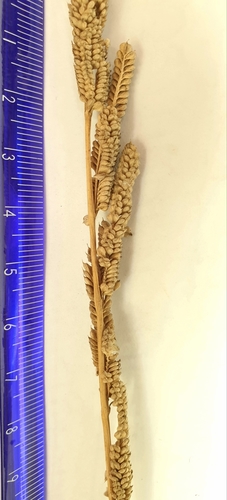
(c) Tatyana Zarubo, some rights reserved (CC BY-NC), uploaded by Tatyana Zarubo
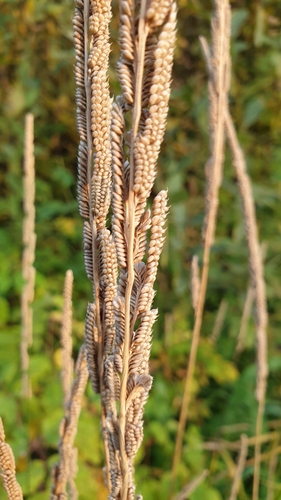
(c) Tatyana Zarubo, some rights reserved (CC BY-NC), uploaded by Tatyana Zarubo
What to Eat
Edible parts: Seeds, Cereal
Edible Parts: Seed Edible Uses: Seed - cooked. A mild flavour, it can be ground into a flour and used as a cereal. The seed is very small but is easily harvested. It does then have to be separated from its husk, which is a very fiddly operation. Some N. American Indian tribes burn the husks of grass seeds.
Where to Find It
It is a temperate plant.
Asia, Canada, Europe, Japan, North America, USA,
How to Identify
An annual grass. It is tall. The leaves are flat. The flowering shoots are at the top of the plant.
How to Grow
Propagation: Seed - surface sow in spring in pots in a cold frame. Do not let the soil dry out. Very quick germination. When they are large enough to handle, prick the seedlings out into individual pots and plant them out into their permanent positions in the summer. If there is sufficient seed, it can be sown in situ in the spring. Division in spring. Very easy, larger divisions can be planted straight into their permanent positions whilst smaller clumps are best potted up and kept in a cold frame until they are growing away well.
Medicinal Uses
None known
Other Uses
Bedding The plant is used for making bedding and pillows. Special Uses
Wikipedia
Source ↗Beckmannia eruciformis, the European slough-grass or slough grass, is an annual or short lived perennial in the grass family, Poaceae, found in shallow marshes or sloughs, and used for animal fodder and forage.
Notes
There are only two Beckmannia species.
References (6)
- Beckstrom-Sternberg, Stephen M., and James A. Duke. "The Foodplant Database." http://probe.nalusda.gov:8300/cgi-bin/browse/foodplantdb.(ACEDB version 4.0 - data version July 1994)
- Bircher, A. G. & Bircher, W. H., 2000, Encyclopedia of Fruit Trees and Edible Flowering Plants in Egypt and the Subtropics. AUC Press. p 55
- Hedrick, U.P., 1919, (Ed.), Sturtevant's edible plants of the world. p 91
- Icon. descr. gram. austriac. 3:5, t. 6. 1805
- Menninger, E.A., 1977, Edible Nuts of the World. Horticultural Books. Florida p 146
- Plants for a Future database, The Field, Penpol, Lostwithiel, Cornwall, PL22 0NG, UK. http://www.scs.leeds.ac.uk/pfaf/


